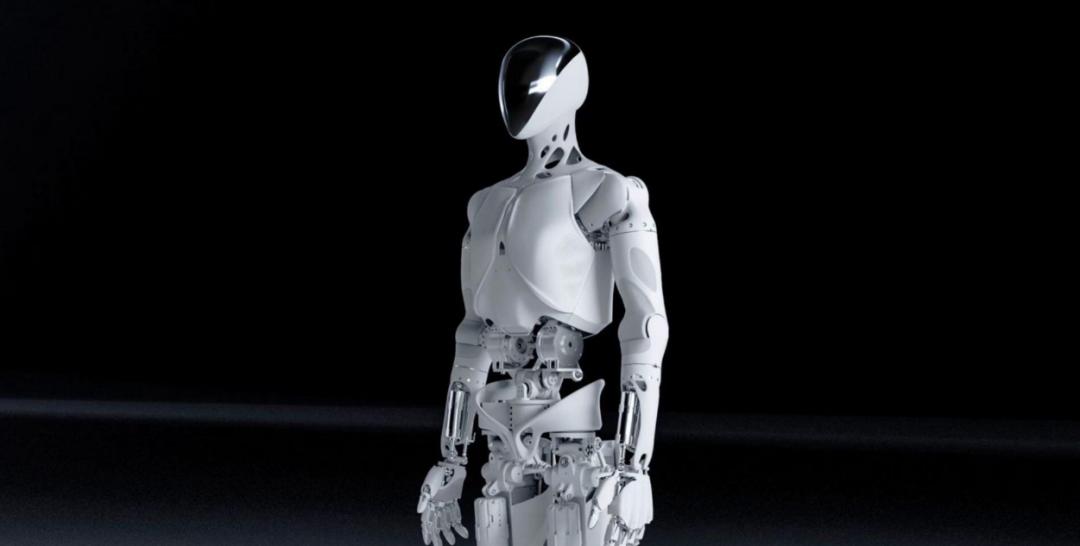
特斯拉擎天柱机器人

Search documents
奇点已至:解读马斯克2026年三小时重磅谈话
Sou Hu Cai Jing· 2026-01-12 12:31
Group 1 - The core judgment from Elon Musk is that the technological singularity is not a future event but is happening now, with AI advancements occurring at an unprecedented pace [6][58]. - Musk predicts that by 2026, Artificial General Intelligence (AGI) will be fully realized, and by 2030, AI will surpass the total intelligence of all humans combined [7][58]. - The rapid progress in AI is driven more by algorithm optimization than by hardware improvements, leading to exponential growth in capabilities [8][9]. Group 2 - Musk forecasts that Tesla's Optimus robot will exceed the surgical capabilities of top human doctors within three years and that by 2040, the number of robots will surpass 10 billion, exceeding the global human population [13][15]. - The rapid advancement of robots is attributed to three exponential growth factors: AI software capabilities, AI chip performance, and electromechanical flexibility [15][16]. - In the medical field, Musk predicts that within five years, everyone on Earth will have access to better healthcare than the current U.S. president, fundamentally changing the distribution of medical resources [18][19]. Group 3 - Musk argues that the future unit of wealth will be energy (watts) rather than currency, as the ability to harness energy will determine a nation's strength in the AI era [22][23]. - He highlights that the next bottleneck in AI development will not be chip production but rather the availability of electrical power [23][24]. - Musk envisions a future where space-based solar energy collection will provide a sustainable solution to energy needs, reducing reliance on terrestrial energy sources [26]. Group 4 - Musk describes a "prosperity era" where the cost of goods approaches zero due to AI and robots producing everything, leading to a fundamental shift in economic structures [26][27]. - He warns of a tumultuous transition period of 3-7 years, where traditional job structures will collapse, leading to significant societal divides between those who benefit from AI and those who do not [29][31]. - The current education system is under scrutiny, with a declining belief in the importance of college education as AI becomes capable of providing superior personalized learning experiences [32][34]. Group 5 - Musk emphasizes the need for individuals to embrace AI as a tool rather than a threat, as those who adapt will significantly outperform those who do not [43][44]. - He suggests that saving for retirement may become irrelevant in a future where wealth is redefined, urging a focus on health, curiosity, and the search for meaning instead [45][46]. - The energy and AI sectors are identified as key areas for future investment and career opportunities, as they are positioned for exponential growth [49].


8点1氪:山姆回应“麻薯盒内出现活老鼠”;水银体温计明年起禁产;京东外卖回应“随心囤”Bug :将承担商家全部损失
36氪· 2025-12-10 00:33
Group 1: Sam's Club Incident - A consumer reported finding a live mouse in a delivery bag containing a box of 24 pieces of Member's Mark mochi purchased via the Sam's Club app [3][5] - Sam's Club stated that the initial investigation indicated the mouse likely entered the bag during the time it was left at the pickup point, which is outdoors and surrounded by vegetation [5] - The company has apologized for the incident and committed to improving packaging management and delivery services [5] Group 2: Market Movements - Bubble Mart's stock price has dropped nearly 44% over four months, resulting in a market value loss exceeding 200 billion HKD (approximately 180 billion RMB) [12][13] - Deutsche Bank's report indicated that Bubble Mart plans to significantly increase the production of its Labubu toys from 10 million units in the first half of the year to an average of 50 million units per month by the end of the year, warning that mass production could signal a decline in brand popularity [13] Group 3: Regulatory Changes - China will ban the production of mercury-containing thermometers and blood pressure monitors starting January 1, 2026, due to safety concerns regarding mercury's toxicity [6][7] Group 4: Corporate Developments - SpaceX is reportedly planning an IPO in 2026, aiming to raise over 30 billion USD with a target valuation of approximately 1.5 trillion USD [7] - Xiaomi has initiated personnel adjustments in its China operations, affecting key roles in mobile phones, automotive, and major appliances, in response to recent performance pressures [16]
看好镁合金加速上车
2025-12-08 00:41
Summary of Key Points from Conference Call Industry Overview - The focus is on the magnesium alloy industry, particularly its application in the automotive and robotics sectors, driven by the need for lightweight materials and cost reduction strategies in electric vehicles [1][3]. Core Insights and Arguments - **Cost Pressure on Electric Vehicle Manufacturers**: Electric vehicle companies are under significant cost pressure, making magnesium alloys an attractive option due to their lightweight properties and relatively low prices, especially in light of potential changes in subsidy policies [1][3]. - **Price Dynamics of Magnesium and Aluminum**: Currently, the price ratio of magnesium to aluminum is deviating from the theoretical value of 1.3, with the current ratio at 0.8. This indicates a cost advantage for magnesium alloys, especially as aluminum prices may rise due to electricity shortages [1][3]. - **Policy Support for Lightweighting**: Future changes in consumption tax from displacement-based to weight-based taxation will further incentivize the use of magnesium alloys in vehicles, as the penetration rate of aluminum alloys is already high [1][3]. - **Advancements in Production Technology**: Improvements in production processes, such as semi-solid die casting, have increased yield rates and expanded the application of magnesium alloys from small components to larger parts like transmission housings and electric drive housings [1][3]. - **Performance in Robotics**: Magnesium alloys exhibit superior performance in robotics, including a 30% weight reduction and a 40%-50% increase in impact energy absorption compared to aluminum. This makes them suitable for critical components in robots, enhancing overall performance and battery life [4]. Challenges in Transitioning to Magnesium Alloys - **Barriers for Aluminum Companies**: Companies transitioning from aluminum to magnesium face challenges such as mold changes, process adjustments, and equipment tuning. This transition typically requires 9-12 months for technical adjustments and an additional 1.5-2 years for mass production [5]. Market Positioning and Competitive Advantage - **First-Mover Advantage**: Companies like Xianju Pharmaceutical, Huayang Group, and Wan Feng Aowei's Meiriding, which have already established production capacity, are expected to gain a competitive edge as they can quickly respond to market demands and secure a stable supply chain [2][6].
从交通工具到智能体,具身智能开启了汽车产业万亿新赛道
3 6 Ke· 2025-11-10 08:01
Core Insights - The "14th Five-Year Plan" identifies embodied intelligence as a core growth point for future industries, marking a significant transition in the automotive sector from "transportation tools" to "intelligent mobility entities" [1][2] - The synergy between policy support and technological advancements is reshaping the automotive industry, driving a shift from traditional manufacturing to a comprehensive "intelligent manufacturing + services" model [1][2] Policy and Hardware Empowerment - The strategic positioning of embodied intelligence in the "14th Five-Year Plan" is part of a systematic approach to strengthen manufacturing and digitalization in China, with the automotive industry as a key application area [2] - The Ministry of Industry and Information Technology is focusing on critical technologies such as automotive AI and operating systems, while pilot cities for "vehicle-road-cloud integration" are being rapidly developed to support the application of embodied intelligent vehicles [2] Technological Synergy - The Xiaopeng Iron Robot utilizes AI chips and systems that leverage the company's long-term investments in intelligent driving, showcasing a shared technological foundation between automotive and robotics sectors [3][5] - The collaboration between automotive companies and robotics is becoming a trend, with companies like Changan and Huawei extending their technological capabilities across both domains [5][6] Industry Transformation - The emergence of embodied intelligence is shifting the competitive landscape of the automotive industry from hardware manufacturing to intelligent capabilities, prompting traditional automakers to evolve into "intelligent operators" [6][9] - The integration of robotics into automotive manufacturing processes is demonstrating the feasibility of transferring automotive technologies to robotics, thereby creating natural technological barriers for automotive companies [6][8] Market Expansion and Future Potential - The integration of embodied intelligence is leading to diverse application scenarios, expanding the automotive industry's boundaries from manufacturing to service sectors [10][12] - The market potential for embodied intelligence in the automotive sector is projected to grow significantly, with estimates suggesting a shift from a billion-dollar to a trillion-dollar market, driven by advancements in technology and supportive policies [12][13]


特斯拉世界模拟器亮相ICCV!VP亲自解密端到端自动驾驶技术路线
量子位· 2025-10-27 05:37
Core Viewpoint - Tesla has unveiled a world simulator for autonomous driving, showcasing its potential to generate realistic driving scenarios and enhance the training of AI models for self-driving technology [1][4][12]. Group 1: World Simulator Features - The simulator can create new challenging scenarios for autonomous driving tasks, such as unexpected lane changes by other vehicles [4][5]. - It allows AI to perform driving tasks in existing scenarios, avoiding pedestrians and obstacles [7][9]. - The generated scenario videos can also serve as a gaming experience for human users [9]. Group 2: End-to-End AI Approach - Tesla's VP Ashok Elluswamy emphasized that end-to-end AI is the future of autonomous driving, applicable not only to driving but also to other intelligent scenarios like the Tesla Optimus robot [12][13][14]. - The end-to-end neural network utilizes data from various sensors to generate control commands for the vehicle, contrasting with modular systems that are easier to develop initially but less effective in the long run [17]. - The end-to-end approach allows for better optimization and handling of complex driving situations, such as navigating around obstacles [18][21]. Group 3: Challenges and Solutions - One major challenge for end-to-end autonomous driving is evaluation, which Tesla addresses with its world simulator that trains on a vast dataset [22][24]. - The simulator can also facilitate large-scale reinforcement learning, potentially surpassing human performance [24]. - Other challenges include the "curse of dimensionality," interpretability, and safety guarantees, which require processing vast amounts of data [26][27][28]. Group 4: Data Utilization - Tesla collects data equivalent to 500 years of driving every day, using a complex data engine to filter high-quality samples for training [29][30]. - This extensive data collection enhances the model's generalization capabilities to handle extreme situations [30]. Group 5: Technical Approaches in the Industry - The industry is divided between two main approaches: VLA (Vision-Language Architecture) and world models, with companies like Huawei and NIO representing the latter [38][39]. - VLA proponents argue it leverages existing internet data for better understanding, while world model advocates believe it addresses the core issues of autonomous driving [41][42]. - Tesla's approach is closely watched due to its historical success in selecting effective strategies in autonomous driving development [43][44].

过去半年,全球存储芯片价格持续上涨|首席资讯日报
首席商业评论· 2025-10-05 05:02
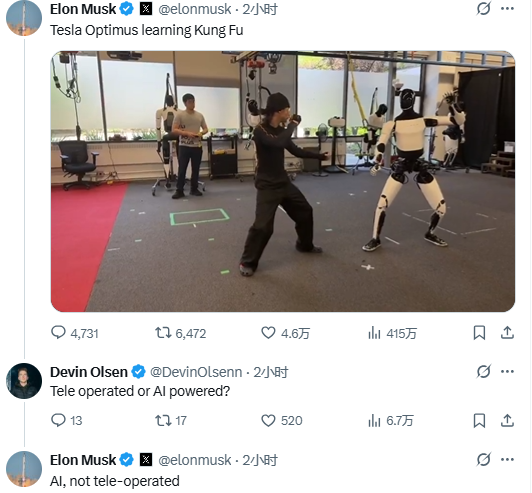
Group 1 - Spring Airlines is reportedly considering a Hong Kong IPO, potentially raising several hundred million dollars, but has stated that there are currently no such plans in place [2] - The National Foreign Exchange Administration clarified that recent adjustments to policies regarding foreign individuals purchasing property in China do not constitute a significant policy change, but rather an optimization of the payment review process [3] - The passing of Zeng Yu, Vice President of Yujian Technology, due to a sudden illness, highlights the need for the tech industry to focus on the health and work-life balance of its elite [4] Group 2 - During the National Day holiday, over 6.4 million vehicles crossed the Hong Kong-Zhuhai-Macao Bridge, with a 21% increase in vehicle flow compared to the previous year [5] - The UK government reported that 259,000 counterfeit toys were intercepted this year, with 90% being fake Labubu toys, indicating a growing scale of counterfeit toy production [6] - Shanghai welcomed over 15.1 million tourists in the first four days of the National Day holiday, marking a 23.74% year-on-year increase [8] Group 3 - OpenAI's CEO Sam Altman is actively seeking financing and manufacturing partners globally to meet the company's increasing demand for computing power [9] - Global prices for storage chips have been rising steadily over the past six months, with major manufacturers like Samsung and SanDisk adjusting their prices, leading to significant stock price increases for companies like Micron and Kioxia [10] - Tesla's CEO Elon Musk shared a video of the Tesla Optimus robot learning martial arts, showcasing advancements in AI-driven robotics [11]

马斯克发布特斯拉擎天柱机器人学功夫视频
Xin Lang Cai Jing· 2025-10-04 07:18
Core Insights - Elon Musk shared a video on the X platform showcasing Tesla's Optimus robot learning skills, indicating a focus on AI-driven capabilities rather than remote operation [1] Group 1 - The video demonstrates Tesla's advancements in AI technology for robotics [1] - Musk clarified that the robot operates on AI, emphasizing autonomy over remote control [1]

全球产业趋势跟踪周报:OpenAI进军消费电子领端侧AI硬件潮,特斯拉机器人持续推进落地-20250922
CMS· 2025-09-22 14:02
Group 1 - OpenAI is entering the consumer electronics market, emphasizing the integration of AI hardware and software as a key competitive advantage. The company has signed contracts with major assembly manufacturers and is actively recruiting talent from Apple to enhance its hardware capabilities [2][3][12] - The new OpenAI device is positioned as a "third core device," designed for lightweight portability and capable of environmental sensing and voice interaction. It aims to redefine the concept of computing and is expected to enter mass production between 2026 and 2027, with a target shipment of 100 million units [14][15][22] - The report highlights the growing trend of edge AI hardware, with various companies, including Google and Apple, developing their own AI-integrated devices to enhance user interaction and experience [16][20][39] Group 2 - Tesla is making significant progress in the deployment of its humanoid robots, with reports of a potential contract to supply 10,000 Optimus Gen3+ robots to PharmAGRI for agricultural and pharmaceutical applications. This development is expected to reshape market perceptions of robot applications [41][47] - The global service robot market is projected to grow significantly, reaching approximately $62.85 billion by 2025 and potentially exceeding $170.2 billion by 2032, indicating a robust growth trajectory compared to the industrial robot market [47][52]
放眼全球,谁在跨界做具身智能?
Huan Qiu Shi Bao· 2025-09-13 03:30
Core Insights - The article discusses the rise of embodied intelligence, highlighting its integration across various industries such as automotive, manufacturing, and the internet, driven by both established giants and emerging startups [8][11][12] - The competition in embodied intelligence is characterized by a lack of established templates, requiring continuous experimentation and deep engagement with practical scenarios to navigate the future landscape [8][11] Industry Trends - Embodied intelligence is seen as a key area for growth, with significant investments from companies like BYD and partnerships like the one between Bosch and Beijing Galaxy General Robotics focusing on smart manufacturing and robotics [9][10] - The automotive sector is identified as a major application area for embodied intelligence, with companies like Xpeng showcasing humanoid robots in manufacturing settings [9][10] Technological Developments - The development of humanoid robots is a focal point, with companies like Hexagon and Tesla leading innovations in hardware and AI integration, which are crucial for overcoming supply chain and manufacturing challenges [10][15] - The emergence of platforms like Nvidia's Isaac GR00T N1 model aims to accelerate the development of humanoid robots, indicating a trend towards open-source and customizable solutions [15] Market Dynamics - The market for embodied intelligence is expected to grow significantly, with estimates suggesting it could become a trillion-dollar industry, similar to previous technological revolutions [11][18] - Companies are entering the embodied intelligence space for various reasons, including seeking new growth avenues, strategic positioning against technological disruption, and addressing internal efficiency needs [11][12] Challenges and Barriers - The implementation of embodied intelligence faces several challenges, including the need for robust digital infrastructure and high-quality data for effective training of AI systems [12][13] - The complexity of integrating various technologies and ensuring effective collaboration among hardware and software components is a significant hurdle for companies [13][14] Future Outlook - The future ecosystem of embodied intelligence may consist of a few dominant platform giants alongside numerous application-focused companies, creating a complex and dynamic market landscape [19][20] - The potential for embodied intelligence to transform various sectors, from manufacturing to healthcare, is immense, with predictions of a collaborative future between humans and robots [18][21]
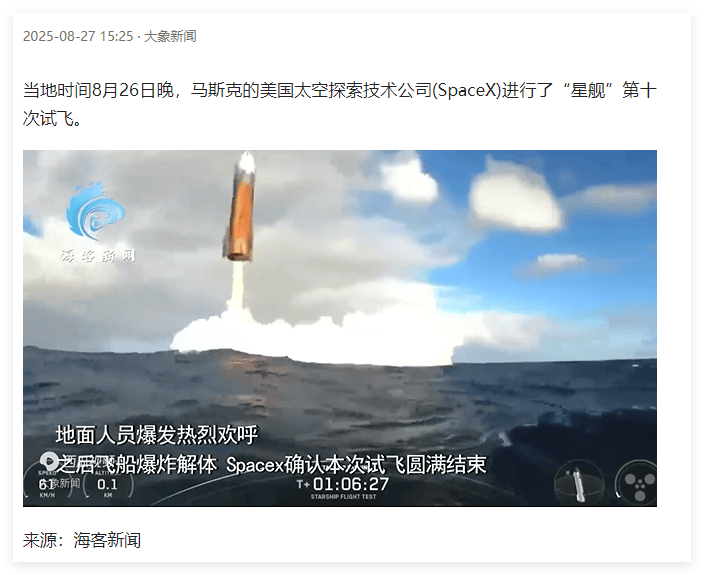
空天母舰和星际战舰雏形:马斯克5000吨星舰第十次发射成功 ——今年的3大科技成果
Sou Hu Cai Jing· 2025-08-31 03:06
Group 1 - The core achievement of the year includes NVIDIA's foundational advancements in AI, which encompass a range of powerful chips, world models, digital twins, and new-generation robotics hardware and software, significantly pushing the AI ecosystem forward [1][2] - OpenAI's release of GPT-5 marks a significant step towards general artificial intelligence (AGI), showcasing versatility across multiple disciplines such as mathematics, physics, and programming, indicating a competitive landscape for AGI development [2][4] - SpaceX's successful test flight of the Starship, after nine previous failures, demonstrates progress in space exploration technology, with plans for future missions to Mars [4][6] Group 2 - The Starship rocket, measuring approximately 120 meters in length and weighing 5,000 tons, consists of a two-stage design that is fully reusable, with future iterations expected to increase in weight [6][8] - SpaceX aims to launch an unmanned Starship to Mars by the end of 2026, with plans for potential manned missions and infrastructure development on Mars by 2028 [8][9] - The successful test flight of the Starship not only represents a step towards interstellar travel but also hints at the emergence of concepts like "space aircraft carriers" and advanced aerospace technologies [9][11] Group 3 - The development of new nuclear energy technologies and advancements in AI and robotics are expected to facilitate the creation of large-scale space vehicles capable of operating beyond the atmosphere [11][13] - Within the next decade, the industry anticipates the emergence of massive space carriers, potentially exceeding tens of thousands of tons, revolutionizing space travel and exploration [13]