ModelArts

Search documents
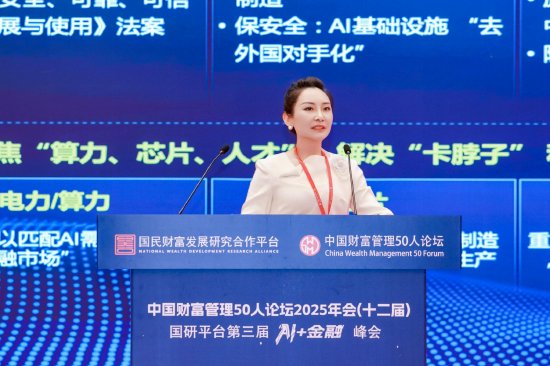
华为赵蕊:金融AI成功90%取决于工程能力 战略目标需从“可用”转向“好用”
Xin Lang Cai Jing· 2025-12-30 01:39
Core Insights - The core theme of the China Wealth Management 50 Forum 2025 Annual Meeting is "Towards the Construction of a Financial Power during the 14th Five-Year Plan" [1] AI Application in Finance - AI applications in the financial industry are transitioning from the "usable" stage to the "useful" stage, with 90% of success depending on engineering capabilities [3][8] - The development of large models is entering the "Agentic" era, where AI will autonomously complete tasks and create business value [3][8] - AI will lead to structural changes in financial institutions, reshaping competitive barriers in five key areas: 1. Redefining traffic entry points from passive app clicks to proactive intent recognition through intelligent services 2. Redefining financial products and services for deep customization 3. Restructuring the entire user journey to make financial services more inclusive 4. Redefining operational objects and forms, with intelligent assistants becoming the main channel influencing customer mindset 5. Ultimately affecting talent and organization, moving towards a "human-machine coexistence" state [3][8] Huawei's AI Strategy - Huawei's financial AI strategy aims to support the industry in moving from "usable" to "useful," providing a full-stack capability from advanced Ascend computing power to a one-stop AI development platform (ModelArts) and an intelligent agent development and operation platform (Versatile Agent) [3][8] - The strategy includes talent training courses and focuses on three typical scenarios co-created with leading financial institutions [3][8] Specific Use Cases - In mobile banking app scenarios, Huawei uses models like Pangu 7B to enhance service accuracy to over 95% while optimizing computing power and reducing costs, achieving end-to-end latency under 2 seconds [4][9] - In intelligent risk control scenarios, the core solution involves converting expert experience into "thinking chain" data and using large models with "slow thinking" capabilities for reinforcement learning, ensuring real-time updates and high accuracy of risk control models [4][9] - For report generation (applicable to credit and investment research), an innovative "Deep Research" development paradigm allows intelligent agents to automatically organize tasks and generate high-quality reports through repeated interactions with external data sources and knowledge bases [4][10] Engineering Challenges and Recommendations - The financial industry, characterized by strong regulation and high standards, faces challenges in engineering rather than merely applying generic models or external knowledge bases [5][10] - To address systemic latency, accuracy, humanization, and cost issues, strong dynamic business orchestration capabilities are required, along with complex model tuning, intelligent agent tuning, system integration, and full-link monitoring [5][10] - Eight recommendations for financial institutions include: 1. AI should be a company-level strategy led by top management 2. Business departments must deeply participate in building integrated teams of technology, business, and data 3. Focus on "useful" applications rather than "showcase" applications, paying attention to actual usage metrics 4. Adopt diversified models and open architectures 5. Combine engineering experience from professional fields 6. Build enterprise-level AI pipelines and regulatory-compliant governance systems 7. Develop high-quality datasets 8. Recognize that 90% of success depends on engineering capabilities [6][10]

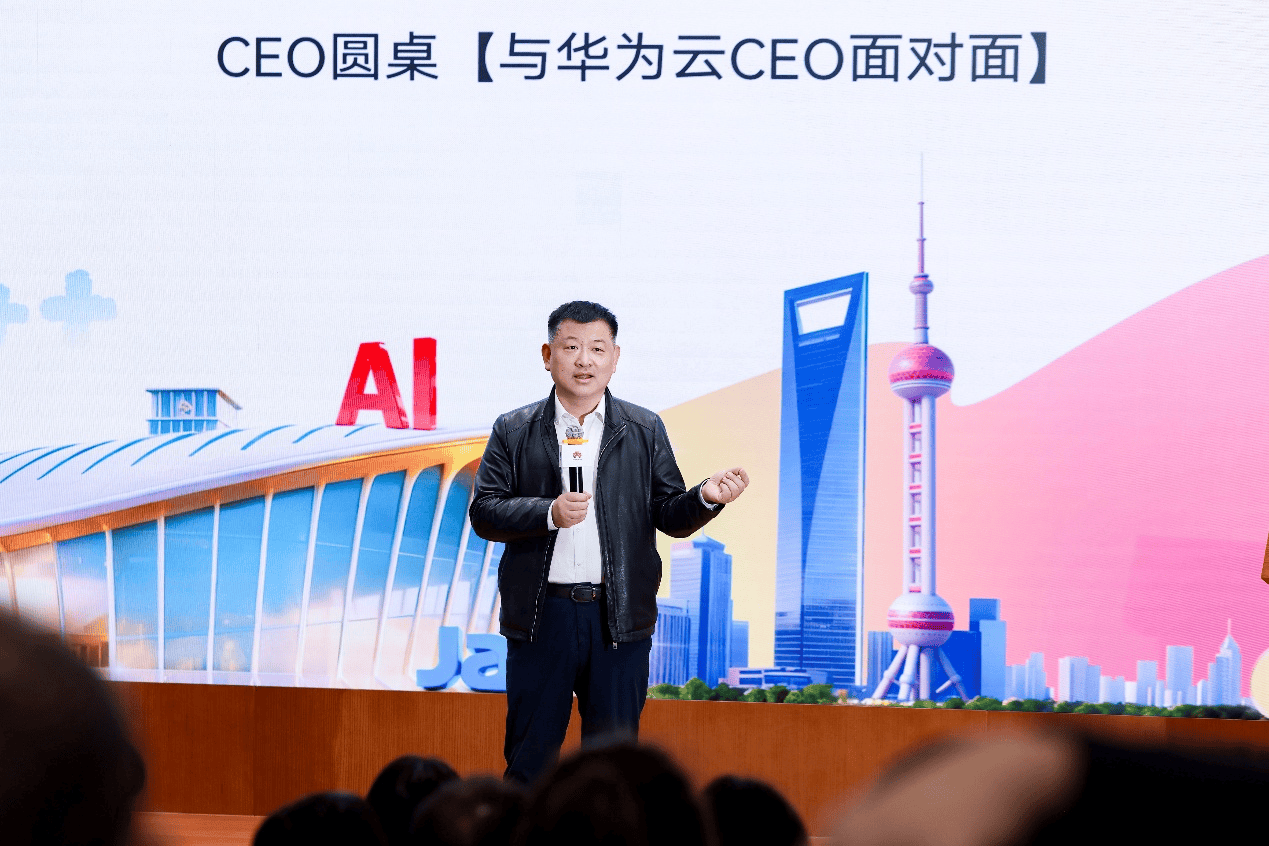
华为云CEO周跃峰:携手开发者,在“黑土地”上打造行业AI“梦工厂”
Sou Hu Cai Jing· 2025-12-28 03:49
Core Insights - Huawei Cloud aims to build an "AI dream factory" by collaborating with developers to enhance productivity in various industries through an open vertical community [1][3] Group 1: Strategic Vision - Huawei Cloud's core positioning is to empower industry AI with a "fertile black land" concept, emphasizing that the cloud is not just a commercial platform but an open and prosperous community [3] - The company plans to establish multiple vertical developer communities, such as the embodied intelligence development community and the "Magic Engine Community," to lower barriers for robot development and promote clinical applications of medical AI [3][4] Group 2: Resource Allocation - To achieve its AI dream factory goal, Huawei Cloud will concentrate more resources and manpower on the AI sector, leveraging its strengths in computing and networking hardware to build robust domestic infrastructure [3] - The company will provide an open ModelArts platform supporting various models and third-party models, along with intelligent programming tools and platforms to create a fertile ground for innovation [3] Group 3: Ecosystem Development - Huawei Cloud has over 10 million developers and more than 50,000 partners, continuously empowering developer growth through initiatives like "Wotuyun Chuang" and various training and competition programs [4] - The company suggests developers focus on two key areas: utilizing "model + agent" to replicate human experiential knowledge and optimizing complex decision-making systems through AI [4]
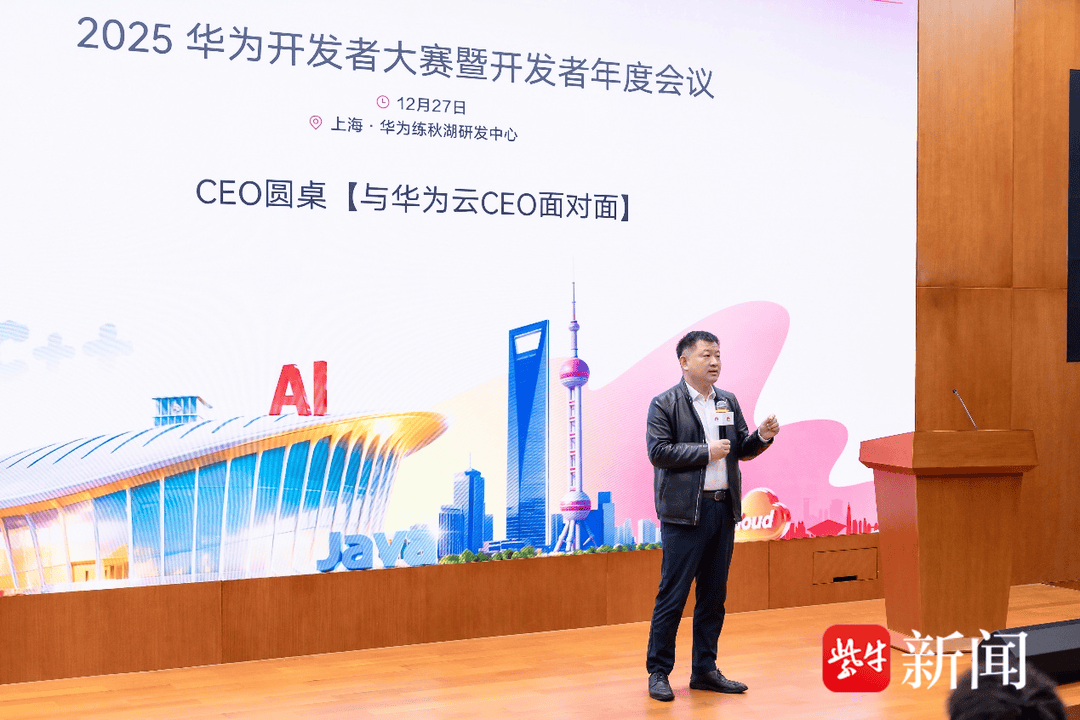
华为云CEO周跃峰:携手开发者打造行业AI“梦工厂”,赋能千行万业AI落地
Sou Hu Cai Jing· 2025-12-27 14:05
Core Insights - Huawei Cloud aims to create an "AI dream factory" by collaborating with developers to enhance productivity across various industries through an open vertical community [1][3] Group 1: Strategic Vision - Huawei Cloud's core positioning focuses on addressing the actual needs of diverse industries, emphasizing that the cloud is not just a commercial platform but an open and prosperous community [3] - The company plans to establish multiple vertical developer communities, such as the embodied intelligence development community and the "Magic Engine Community," to lower barriers for robot development and promote clinical applications of medical AI [3][4] Group 2: Resource Allocation - To achieve its AI dream factory goal, Huawei Cloud will concentrate more resources and personnel on the AI sector, leveraging its strengths in computing and networking hardware to build robust domestic infrastructure [3] - The company will provide an open ModelArts platform supporting various models and third-party models, along with intelligent programming tools like CodeArts, to create a fertile ground for innovation [3][4] Group 3: Developer Ecosystem - Huawei Cloud has surpassed 10 million developers and over 50,000 partners, continuously empowering developer growth through initiatives like "Wotu Cloud Creation," CodeLabs, training, and competitions [4] - The company encourages developers to focus on two main areas: replicating human experiential knowledge using "model + agent" and optimizing complex decision-making systems through AI [4]
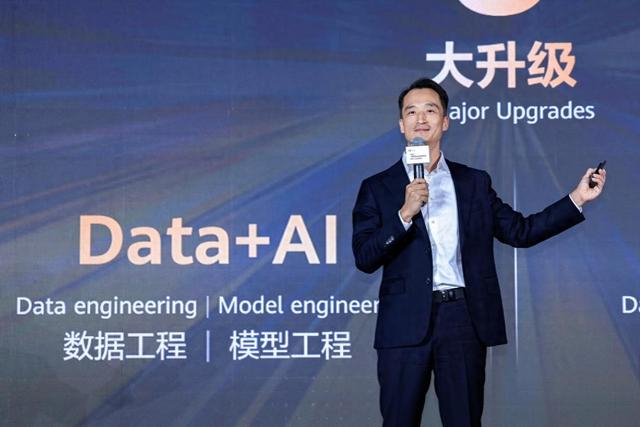
华为云肖霏:助力政企构建数据+AI双引擎,加速数智跃迁
Xin Lang Cai Jing· 2025-09-20 05:35
Core Insights - Huawei's Global Hybrid Cloud Integration Summit highlighted the theme of "Data + AI Dual Engine Driving Accelerated Digital Transformation for Government and Enterprises" [1] - The launch of Huawei Cloud Stack 8.6 focuses on continuous innovation in four areas: cloud foundation, data + AI, application modernization, and integrated operations [1][5] Group 1: Digital Transformation and AI Integration - The focus of enterprises has shifted from "computing power construction anxiety" to "technology application pressure" in AI integration [3] - Non-structured data utilization has increased by 60% annually over the past two years, accelerating the release of data value for intelligent upgrades [3] - The "Green Beautiful Channel" traffic model developed by Yunnan Jiaotong improved accuracy by 20% compared to general models and enhanced toll station traffic prediction accuracy by approximately 10% [3][4] Group 2: Industrial Applications of AI - AI capabilities are being applied in complex industrial processes, such as steel production, to enhance efficiency [4] - China Aluminum Corporation collaborated with Huawei to implement AI across eight business areas, achieving full-process intelligence from perception to decision-making [4] Group 3: Financial Sector Innovations - Huawei Cloud is exploring multi-Agent collaboration solutions to enhance service experience and efficiency in the financial sector [5] - The integration of various applications aims to address challenges such as system integration difficulties and long development cycles [5] Group 4: Huawei Cloud Stack 8.6 Upgrades - Huawei Cloud Stack 8.6 introduces significant enhancements in cloud foundation, data + AI capabilities, application modernization, and integrated operations [5][7] - The new version optimizes computing power usage and management, reducing model deployment time and enhancing operational efficiency [7] - Data engineering capabilities have been improved to ensure data trustworthiness and manageability during circulation [8] Group 5: Application Modernization and Development Tools - The introduction of GaussDB's three-tier pooled distributed architecture significantly boosts database performance and security [8] - CodeArts Doer enhances the entire development process, with over 6,000 developers at Postal Savings Bank utilizing it to generate over 290,000 lines of code [8] Group 6: Future Directions and Client Engagement - Huawei Cloud aims to enhance operational efficiency through AI-driven tools for knowledge Q&A, data retrieval, and fault diagnosis [9] - The company has gained the trust of over 5,500 global clients and is committed to continuous investment in cloud platform and service competitiveness [9]