
昇腾算力底座

Search documents
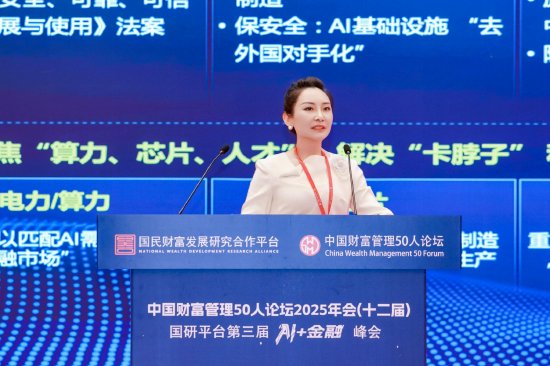
华为赵蕊:金融AI成功90%取决于工程能力 战略目标需从“可用”转向“好用”
Xin Lang Cai Jing· 2025-12-30 01:39
Core Insights - The core theme of the China Wealth Management 50 Forum 2025 Annual Meeting is "Towards the Construction of a Financial Power during the 14th Five-Year Plan" [1] AI Application in Finance - AI applications in the financial industry are transitioning from the "usable" stage to the "useful" stage, with 90% of success depending on engineering capabilities [3][8] - The development of large models is entering the "Agentic" era, where AI will autonomously complete tasks and create business value [3][8] - AI will lead to structural changes in financial institutions, reshaping competitive barriers in five key areas: 1. Redefining traffic entry points from passive app clicks to proactive intent recognition through intelligent services 2. Redefining financial products and services for deep customization 3. Restructuring the entire user journey to make financial services more inclusive 4. Redefining operational objects and forms, with intelligent assistants becoming the main channel influencing customer mindset 5. Ultimately affecting talent and organization, moving towards a "human-machine coexistence" state [3][8] Huawei's AI Strategy - Huawei's financial AI strategy aims to support the industry in moving from "usable" to "useful," providing a full-stack capability from advanced Ascend computing power to a one-stop AI development platform (ModelArts) and an intelligent agent development and operation platform (Versatile Agent) [3][8] - The strategy includes talent training courses and focuses on three typical scenarios co-created with leading financial institutions [3][8] Specific Use Cases - In mobile banking app scenarios, Huawei uses models like Pangu 7B to enhance service accuracy to over 95% while optimizing computing power and reducing costs, achieving end-to-end latency under 2 seconds [4][9] - In intelligent risk control scenarios, the core solution involves converting expert experience into "thinking chain" data and using large models with "slow thinking" capabilities for reinforcement learning, ensuring real-time updates and high accuracy of risk control models [4][9] - For report generation (applicable to credit and investment research), an innovative "Deep Research" development paradigm allows intelligent agents to automatically organize tasks and generate high-quality reports through repeated interactions with external data sources and knowledge bases [4][10] Engineering Challenges and Recommendations - The financial industry, characterized by strong regulation and high standards, faces challenges in engineering rather than merely applying generic models or external knowledge bases [5][10] - To address systemic latency, accuracy, humanization, and cost issues, strong dynamic business orchestration capabilities are required, along with complex model tuning, intelligent agent tuning, system integration, and full-link monitoring [5][10] - Eight recommendations for financial institutions include: 1. AI should be a company-level strategy led by top management 2. Business departments must deeply participate in building integrated teams of technology, business, and data 3. Focus on "useful" applications rather than "showcase" applications, paying attention to actual usage metrics 4. Adopt diversified models and open architectures 5. Combine engineering experience from professional fields 6. Build enterprise-level AI pipelines and regulatory-compliant governance systems 7. Develop high-quality datasets 8. Recognize that 90% of success depends on engineering capabilities [6][10]

行业智能化进入深水区:华为如何帮千行万业跨过“AI鸿沟”?
Sou Hu Cai Jing· 2025-12-28 01:00
Core Insights - The article emphasizes the significance of AI as a central theme in both China and the global industry over the past year, with a prediction that by 2026, over 80% of enterprises will utilize generative AI APIs or models, a significant increase from less than 5% in early 2023 [1] Infrastructure Foundation - The essence of industry intelligence is data-driven value reconstruction, necessitating a robust infrastructure that supports high-speed data flow, secure storage, and efficient computing [4] - Huawei's solution is the creation of an "AI Ready" foundation that integrates network, storage, computing, and cloud capabilities, transitioning from "AI-adapted" to "AI-native" infrastructure [4] - A case study highlights Huawei's collaboration with Guangdong Power Grid to implement a "5G + microwave self-organizing network" solution for real-time video transmission in areas lacking communication networks [4] Storage Breakthroughs - In the storage domain, Huawei partnered with Shanghai Media Group to develop a comprehensive digital foundation for ultra-high-definition content, utilizing distributed storage to manage vast amounts of media efficiently [5] Enhanced Computing Power - Huawei's collaboration with Southern Power Grid led to the development of the "Big Watt-CV" model, which improved defect identification efficiency by five times and achieved an average accuracy rate of over 90% [7] ACT Implementation Path - Huawei has established the "ACT" three-step approach to effectively leverage AI across various industries: Assess high-value scenarios, Calibrate industry models, and Transform through large-scale deployment [8][10] - The first step involves identifying the most valuable processes for AI transformation, exemplified by a project with China Baowu Steel that improved furnace temperature prediction accuracy to over 90%, saving approximately 10 million yuan annually [9] - The second step focuses on calibrating general AI models to industry-specific needs, as demonstrated in a partnership with Bank of Communications that enhanced business feedback accuracy to 90% [9] - The final step emphasizes the large-scale deployment of AI agents, significantly reducing development time and increasing efficiency by tenfold [10] Collaborative Ecosystem - The article highlights the necessity of collaboration among hardware manufacturers, software developers, integrators, and consulting firms to create comprehensive industry solutions [12] - Huawei's partnership with over 57,000 enterprises aims to drive industry intelligence, exemplified by a joint project with China National Petroleum Corporation that drastically reduced processing time for seismic data [12] Solutions for SMEs - Huawei's "Kunling" initiative addresses the challenges faced by small and medium-sized enterprises (SMEs) in adopting intelligent solutions, offering a one-stop solution that covers key operational areas [13] Distribution Model Transformation - Huawei has shifted from a product distribution model to a one-stop solution distribution model, optimizing the development, sales, and delivery of scene-based solutions [15] Future Outlook - The article concludes that the path to industry intelligence is clear, with a structured approach to overcoming challenges in infrastructure, AI integration, and ecosystem collaboration, paving the way for accelerated digital transformation across various sectors [16]
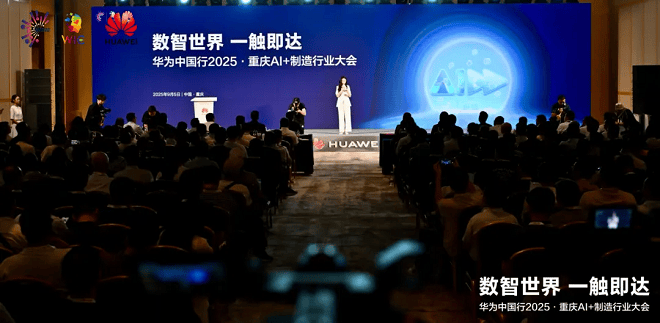
数智世界 渝见未来|华为中国行2025·重庆AI+制造行业大会成功举办
Sou Hu Cai Jing· 2025-09-06 17:38
Group 1 - The core theme of the event is the deep integration of AI and manufacturing, with Huawei leading the charge in innovation and practical applications [2][32] - The conference aims to explore the latest trends in AI and manufacturing, discussing pathways for industrial upgrades and transformations [1][2] - Chongqing is positioned as a significant modern manufacturing base in China, with a focus on building a robust AI-enabled manufacturing ecosystem [4][25] Group 2 - Huawei emphasizes a comprehensive approach to AI empowerment in manufacturing, from top-level methodologies to foundational technical support [2][32] - The "AI + Manufacturing" strategy is highlighted, aiming to create a complete pathway for intelligent upgrades across various industries [2][32] - The event showcases Huawei's commitment to fostering collaboration with local enterprises and partners to enhance the digital transformation of the manufacturing sector [24][25] Group 3 - The "Tian Gong Huan Xin" action plan in Chongqing aims for full digital transformation of industrial enterprises by 2027, with a focus on AI integration by 2029 [8][9] - Key principles include a comprehensive approach to digital transformation across the entire supply chain, with a focus on industry-specific strategies [8][9] - The plan also emphasizes financial support and the cultivation of professional service providers to facilitate the transition [9] Group 4 - Huawei's strategy includes a dual approach of horizontal systematic construction and vertical scenario breakthroughs to accelerate the intelligent transformation of enterprises [11][14] - The focus is on integrating AI into core production systems, moving from efficiency enhancement to value creation in manufacturing processes [14][15] - The collaboration with partners aims to build a data-driven management system that supports AI applications across various manufacturing stages [24][25] Group 5 - The unveiling of the "Sailis Super Factory Smart Park" represents a significant milestone in Huawei's "AI + Manufacturing" strategy, showcasing successful collaboration outcomes [18][19] - Long-term partnerships with companies like Sailis and Chang'an Automobile are aimed at driving the transition from traditional manufacturing to smart manufacturing [20][21] - The event included practical demonstrations of smart manufacturing solutions, enhancing understanding of AI integration in real-world scenarios [28][29]
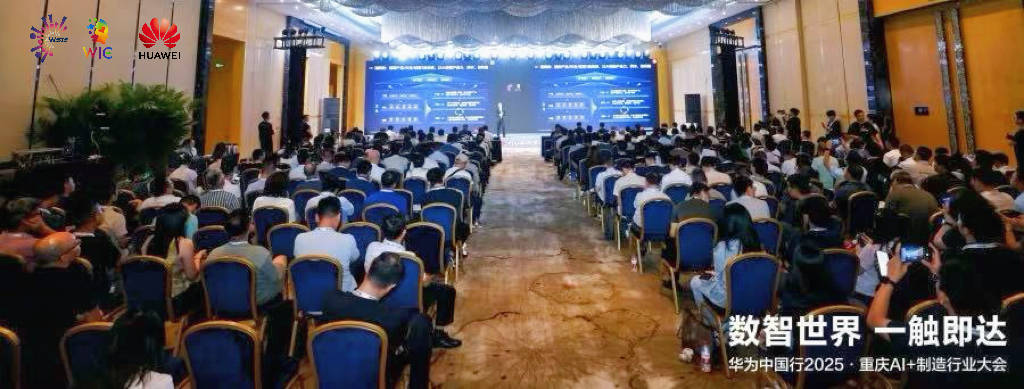
数智世界 渝见未来|华为中国行2025·重庆AI+制造行业大会成功举办
Sou Hu Cai Jing· 2025-09-06 10:50
Core Viewpoint - The 2025 World Intelligent Industry Expo and the Huawei China Tour 2025 Chongqing AI + Manufacturing Industry Conference highlight the integration of AI and manufacturing, showcasing Huawei's commitment to driving this transformation through innovation and collaboration with various stakeholders [1][3]. Group 1: Event Overview - The conference gathered government officials, manufacturing industry leaders, technical experts, and partners to explore the deep integration of AI and manufacturing [1]. - The event emphasized the importance of AI in enhancing manufacturing processes and discussed practical paths for industrial upgrades [3]. Group 2: Huawei's Role and Strategy - Huawei aims to accelerate the intelligent upgrade of various industries by leveraging its manufacturing background and digital technology expertise, focusing on a comprehensive path empowered by AI [3]. - The company promotes a philosophy of "originating from manufacturing, understanding manufacturing, and serving manufacturing," which underpins its approach to supporting the digital transformation of manufacturing enterprises [6][32]. Group 3: Local Government Initiatives - The Chongqing government is actively promoting a modern manufacturing cluster system and a technology innovation layout, aiming to enhance the application of AI across various industries [4]. - The "Tian Gong Huan Xin" action plan aims for full digital transformation coverage of industrial enterprises by 2027 and deeper AI integration by 2029 [7]. Group 4: Industry Insights and Trends - The trend towards full-factor intelligence in manufacturing is recognized as a definitive direction, with Huawei emphasizing its role in facilitating this transition through its ICT capabilities [6]. - The integration of AI into core production systems is accelerating, with a focus on both horizontal systematic construction and vertical scenario breakthroughs to achieve comprehensive intelligence [10]. Group 5: Collaborative Efforts and Innovations - Huawei and its partners are developing a "super factory" model, exemplified by the launch of the "Sailis Super Factory Smart Park Global Model Point," which represents a significant achievement in the AI + manufacturing strategy [19]. - The collaboration aims to shift the automotive industry from a manufacturing-driven model to a dual-driven model of data and AI [19]. Group 6: Future Directions and Goals - Huawei plans to build a "manufacturing + AI" hub in Chongqing, focusing on collaborative efforts to enhance the digital transformation of enterprises across various sectors [23]. - The company is committed to creating a comprehensive infrastructure that supports intelligent connectivity, storage, computing, and platforms to facilitate the digital transformation of businesses [13].
机器人导购、视觉称重、无感离场、智能补货…… AI深度融入龙岗超市
Shen Zhen Shang Bao· 2025-07-17 16:39
Group 1 - The integration of AI in supermarkets is transforming the shopping experience, with features like AI shopping assistants, smart scales, and instant delivery services becoming commonplace [1][2] - The sp@ce Tianhong Supermarket 3.0 in Longgang District, Shenzhen, showcases advanced AI capabilities, including an AI assistant named "Xiao Tian" that provides product recommendations based on customer preferences [1][3] - The collaboration between Tianhong and Huawei has led to the development of a "smart retail model," enhancing customer experience through AI-driven recommendations and efficient checkout processes [1][3] Group 2 - Modern urban consumers prioritize health and convenience, leading to supermarkets like Aeon SM dedicating over 60% of their space to fresh produce and offering traceability for food products [2][3] - Self-checkout areas in Aeon SM stores have increased efficiency, with over 60% of transactions now conducted through self-service, significantly reducing wait times for customers [2][3] - The sp@ce Tianhong Supermarket promotes "small portion economy" to cater to single and small-family households, offering smaller packaging options to minimize waste [2][3] Group 3 - Digital tools are enhancing operational efficiency in supermarkets, with employees using handheld devices for inventory management and customer service, leading to quicker restocking and improved customer satisfaction [3] - Both Aeon and Tianhong are leveraging customer relationship management (CRM) systems to analyze member data, optimizing product offerings and personalized promotions [3] - The integration of AI across various operational aspects, from AI shopping assistants to supply chain management, is driving a shift towards data-driven retail practices [3]


全国首个开源机器人操作系统发布 深企集体秀人工智能和机器人硬实力
Shen Zhen Shang Bao· 2025-04-09 22:39
Core Viewpoint - The event in Guangzhou highlighted advancements in artificial intelligence and robotics, showcasing significant contributions from Shenzhen-based companies like Huawei, Tencent, and others in the fields of computing chips, large models, industry applications, and robotics [1] Group 1: M-Robots OS Launch - Shenzhen Kaihong Digital Industry Development Co., Ltd. launched the first open-source multi-machine collaborative robot operating system in China, M-Robots OS 1.0, marking a new phase in robot operating systems focused on collaborative intelligence [2] - The CEO of Shenzhen Kaihong emphasized the challenges in the global robotics industry, including ecosystem fragmentation and high development costs due to incompatible hardware and software [2] - M-Robots OS offers four differentiated capabilities: real-time collaboration, multi-hardware compatibility, AI-native support, and low-threshold development, with plans for commercial testing in industrial production lines by 2025 [2] Group 2: Robotics Applications Expansion - Shenzhen-based company Leju announced the delivery of its 100th full-size humanoid robot in January, with delivery volume doubling by March, aiming to establish benchmark applications in industrial quality inspection and power inspection [4] - Leju and Shenzhen Kaihong are collaborating to create a talent cultivation platform for humanoid robots, focusing on various educational levels to foster innovation and development in the open-source ecosystem [4] - Two humanoid robots, Aelos Kaihong version and "Kua Fu," were introduced, targeting education and research applications, respectively, and promoting cross-domain collaboration in robotics [4] Group 3: AI and Large Models - Tencent is set to launch the official version of its advanced model, Mix Yuan T1, which is designed to facilitate the application of robots in various scenarios [5] - Tencent has engaged in collaborations with over 40 domestic robotics companies, nearly 20 of which are based in Guangdong province, to support the practical application of robotics [5] - Huawei's marketing director revealed that over 80 partners have built large model application integrated machines based on Huawei's Ascend computing platform, which are currently in use across 200 enterprises [6]