NVIDIA OSMO

Search documents
NVIDIA Announces Open Physical AI Data Factory Blueprint to Accelerate Robotics, Vision AI Agents and Autonomous Vehicle Development
Globenewswire· 2026-03-16 20:37
Core Viewpoint - NVIDIA has introduced the NVIDIA Physical AI Data Factory Blueprint, an open reference architecture aimed at unifying and automating the generation, augmentation, and evaluation of training data for physical AI systems, thereby reducing costs, time, and complexity in large-scale training [1]. Group 1: Blueprint Features and Benefits - The blueprint allows developers to utilize NVIDIA Cosmos™ open world foundation models and coding agents to convert limited training data into extensive and diverse datasets, including rare edge cases that are typically difficult to capture [2]. - It serves as a single reference architecture that transitions teams from raw data to model-ready training sets through modular and automated workflows, enhancing the efficiency of data processing [4]. - The blueprint is designed to facilitate massive-scale data processing, synthetic data generation, reinforcement learning, and evaluation of physical AI models for various applications, including vision AI agents and autonomous vehicles [15]. Group 2: Collaborations and Integrations - NVIDIA is collaborating with Microsoft Azure and Nebius to integrate the blueprint with their cloud services, enabling developers to leverage accelerated computing power for high-volume training data generation [3]. - Microsoft Azure is incorporating the Physical AI Data Factory Blueprint into an open physical AI toolchain available on GitHub, which integrates with various Azure services to provide enterprise-grade workflows for training physical AI systems [8]. - Nebius has integrated NVIDIA OSMO into its AI Cloud, allowing developers to deploy production-ready data pipelines tailored to their needs, enhancing the overall physical AI stack [10]. Group 3: Industry Adoption - Leading physical AI developers such as FieldAI, Hexagon Robotics, Linker Vision, Milestone Systems, Skild AI, Uber, and Teradyne Robotics are utilizing the blueprint to accelerate the development of robotics, vision AI agents, and autonomous vehicles [3][15]. - Early users like Milestone Systems, Voxel51, and RoboForce are leveraging the blueprint on Nebius infrastructure to expedite model development for video analytics AI agents and autonomous systems [11].


物理AI迎“ChatGPT时刻”!黄仁勋开源“超级大脑”扩大机器人朋友圈
Jin Rong Jie· 2026-01-06 14:40
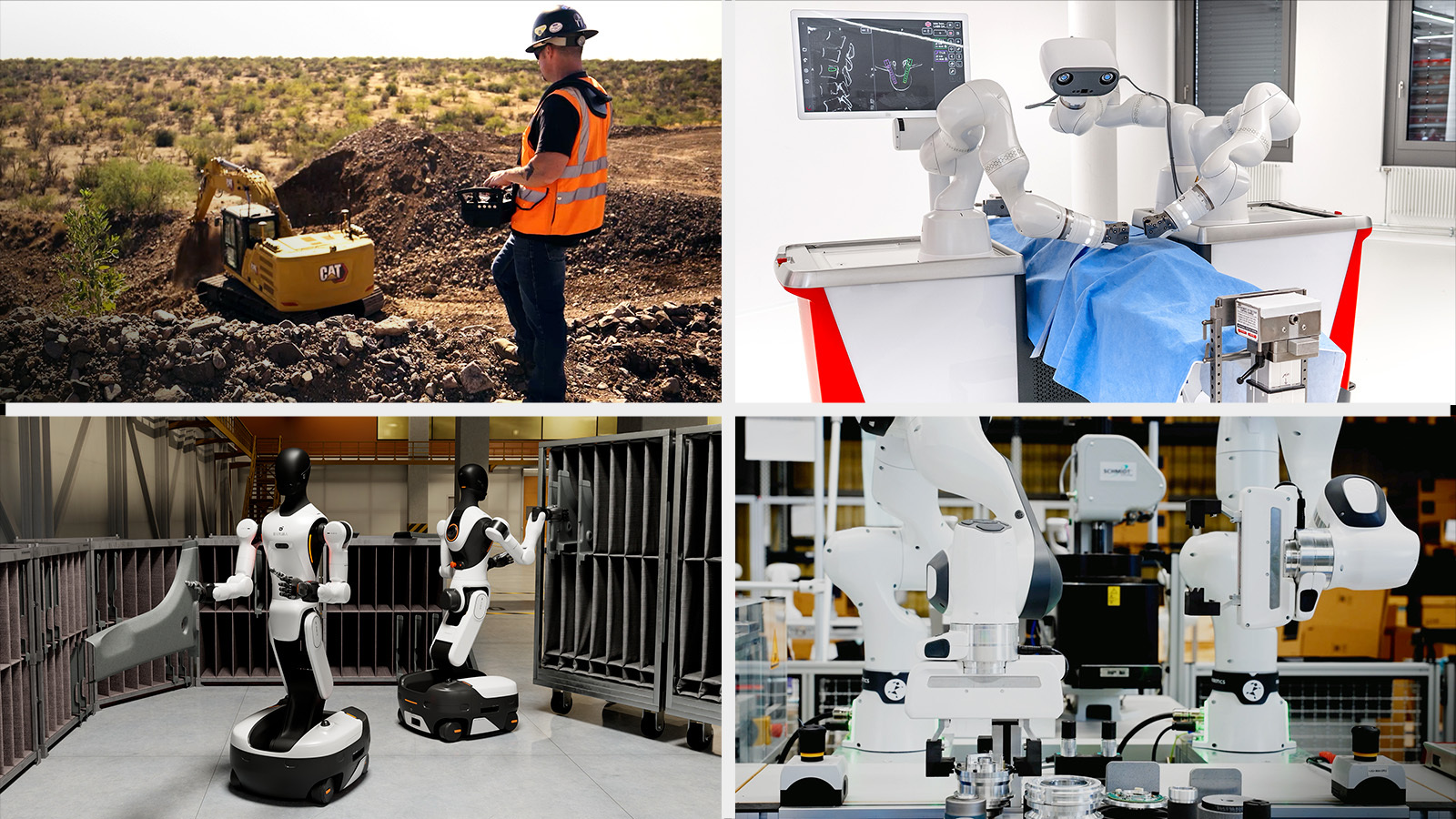
Core Insights - The "ChatGPT moment" for Physical AI has arrived, marking a significant shift of AI technology from virtual screens to the physical world, leading to a transformative phase in the robotics industry [1][2] Group 1: Physical AI Development - Huang emphasized the four stages of AI evolution: Perception, Generation, Agentic, and Physical AI, with the latter enabling models to understand real-world physical laws [2] - The introduction of three core open-source models aims to lower the development barrier for Physical AI, creating a closed-loop technology from environmental cognition to action execution [2][4] - The NVIDIA Cosmos Transfer 2.5 and Cosmos Predict 2.5 models can generate synthetic data that adheres to physical laws, providing a safe virtual testing environment for developers [2] Group 2: Cognitive Reasoning and Robotics - The NVIDIA Cosmos Reason 2 visual language model enhances machines' human-like visual reasoning and decision-making capabilities [3] - The NVIDIA Isaac GR00T N1.6 model achieves a 40% increase in task success rates and reduces training time from three months to 36 hours, improving data efficiency by 60 times [3] Group 3: Open-source Ecosystem - NVIDIA's collaboration with Hugging Face integrates GR00T models and Isaac Lab-Arena into the LeRobot open-source library, connecting 2 million NVIDIA developers with 13 million Hugging Face AI builders [5] - NVIDIA has contributed 650 open-source models and 250 datasets to Hugging Face, leading in resource download volume within the open-source community [5] Group 4: Hardware Upgrades - The new Jetson T4000 module, based on the Blackwell architecture, offers a fourfold performance increase over its predecessor, while the Jetson Thor robot computer is becoming a focal point for industry collaboration [6] - The IGX Thor platform is set to launch, catering to various computational needs in industrial edge scenarios [6] Group 5: Industry Collaboration and Applications - A diverse range of robots, including humanoid, wheeled, and surgical assistance robots, showcased the cross-domain adaptability of Physical AI technology [7] - Major industry players like Franka Robotics and Mercedes-Benz are leveraging NVIDIA's technology to enhance robot training and develop AI-driven products for smart transportation [7]

NVIDIA Releases New Physical AI Models as Global Partners Unveil Next-Generation Robots
Globenewswire· 2026-01-05 22:04
Core Insights - NVIDIA has introduced new open models, frameworks, and AI infrastructure for physical AI, aiming to enhance robotics across various industries [2][4] - The company emphasizes the transformative potential of AI-driven robotics, likening the current advancements to a "ChatGPT moment" for the robotics sector [4] Group 1: New Technologies and Models - NVIDIA's new technologies are designed to accelerate workflows in robot development, enabling the creation of generalist-specialist robots capable of learning multiple tasks [2][4] - The company is releasing open models that allow developers to focus on next-generation AI robots without the need for resource-intensive pretraining [5] - New models available on Hugging Face include GR00T-enabled workflows for simulating and training robot behaviors, which can reduce incident resolution times by 50% for companies like Salesforce [5] Group 2: Collaboration and Community - NVIDIA is collaborating with Hugging Face to integrate open-source technologies into the LeRobot framework, enhancing access to development tools for a community of 2 million robotics developers and 13 million AI builders [12][13] - The integration of NVIDIA's Isaac and GR00T technologies into LeRobot aims to streamline the development process for robotics [13][14] Group 3: Simulation and Development Frameworks - NVIDIA has released new open-source frameworks on GitHub to simplify complex robot training workflows and accelerate the transition from research to real-world applications [8][9] - The Isaac Lab-Arena framework provides a collaborative system for large-scale robot policy evaluation and benchmarking in simulation [9] - OSMO, a cloud-native orchestration framework, allows developers to manage workflows across various compute environments, enhancing development cycles [10][11] Group 4: Industry Adoption and Applications - Global industry leaders such as Boston Dynamics, Caterpillar, and LG Electronics are utilizing NVIDIA's robotics stack to launch new AI-driven robots [3][18] - Humanoid robot developers are adopting NVIDIA Jetson Thor to meet the computing requirements for advanced humanoid robots [15][21] - Companies like LEM Surgical are leveraging NVIDIA technologies for healthcare applications, such as training autonomous surgical robots [6][18] Group 5: Product Launches and Innovations - The NVIDIA Jetson T4000 module, powered by the Blackwell architecture, offers 4x greater performance than its predecessor and is priced at $1,999 for bulk orders [22] - NVIDIA IGX Thor is set to extend robotics capabilities to the industrial edge, enhancing AI computing for various applications [23][24] - Caterpillar is expanding its collaboration with NVIDIA to integrate advanced AI and autonomy into construction and mining equipment [25]