Nescafé

Search documents
Nestlé S.A. (OTC:NSRGY) Reports Strong Financial Performance
Financial Modeling Prep· 2026-02-19 15:00
Core Insights - Nestlé reported basic earnings per share of $4.55 and underlying EPS of $5.72, with underlying EPS down 1.8% in constant currency [3] - The company achieved revenue of approximately $115.9 billion, down 2.0% on a reported basis but with 3.5% organic growth [3] - Following the earnings announcement, Nestlé's shares rose by 3%, with a reported 4% organic sales growth rate in Q4, exceeding the consensus of 3.55% [3] Financial Performance - For 2025, Nestlé's underlying trading operating profit margin was 16.1%, with expectations for organic sales growth between 3% and 4% in 2026 [4] - The company has a price-to-earnings (P/E) ratio of approximately 19.84 and a price-to-sales ratio of about 2.25 [5] - Nestlé's debt-to-equity ratio is 2.26, indicating a higher level of debt compared to equity, and the current ratio is 0.71, reflecting its ability to cover short-term liabilities [5] Strategic Initiatives - Nestlé is undergoing a strategic restructuring, including plans to divest its water business and sell its remaining ice cream business to Froneri [4] - The divestment of the water business, which includes brands like Henniez and Perrier, is expected to be completed by 2027 [4] - This restructuring aligns with CEO Philipp Navratil's strategy to focus on the company's core strengths [4]


Nestlé to Shed Ice-Cream Business in Shake-Up
Yahoo Finance· 2026-02-19 14:24
Core Viewpoint - Nestlé is offloading its remaining ice-cream business and pulling back from several brands as part of a broader strategy to revitalize the company under new CEO Philipp Navratil following recent setbacks and management changes [1][4]. Group 1: Company Strategy - The company will reorganize around four main categories: coffee, petcare, nutrition, and food, to better align with changing consumer preferences and reduce costs [2]. - Nestlé plans to sell its remaining ice-cream operations to its Froneri joint venture, where it holds a 50% stake, which was established in 2016 to manage some of its ice-cream brands, including Häagen-Dazs [2]. - Discussions have begun to offload its waters and premium beverages division, which includes brands like Perrier and San Pellegrino, as part of a trend in the food and beverage industry to streamline portfolios [3]. Group 2: Leadership and Management Changes - Investors were keenly awaiting updates from Nestlé regarding its future direction under Navratil, who took over in September after the ousting of former CEO Laurent Freixe [4]. - Navratil has indicated a willingness to explore further business trims and has already announced plans to cut 16,000 jobs [5]. - Despite investor interest, Navratil has not prioritized the potential sale of Nestlé's 20% stake in cosmetics company L'Oréal, stating that the company is content with its holdings [5][6]. Group 3: Market Reaction - Following the announcements, shares in Nestlé experienced an increase, reflecting positive investor sentiment towards the company's strategic direction [7].
Nestle plans sale of ice cream business as fourth-quarter sales growth beats estimates
CNBC· 2026-02-19 08:28
Group 1 - Nestle shares increased by 3% following a fourth-quarter organic sales growth of 4%, surpassing analyst expectations of 3.55% [1] - For 2026, Nestle aims for organic sales growth of 3% to 4% and an improvement in its underlying trading operating profit margin, which was 16.1% in 2025 [1] Group 2 - Nestle plans to sell its remaining ice cream business to Froneri, a joint venture with PAI, and has initiated the process to divest its water business, expecting deconsolidation by 2027 [2] - Under the leadership of CEO Philipp Navratil and Chairman Pablo Isla, the company is focusing on streamlining operations and prioritizing resources on four core businesses [3] Group 3 - An infant formula recall has negatively impacted trust in the business, with Nestle indicating a 20 basis point negative impact on organic growth guidance and reporting 1.7 billion francs in restructuring costs related to the recall [4]
Full-year results 2025 and strategic update: Strong momentum, accelerating strategic change
Globenewswire· 2026-02-19 06:00
Core Insights - Nestlé reported a positive performance in 2025, achieving a real internal growth (RIG) of 0.8% and organic growth of 3.5%, despite a challenging external environment [2][4][29] - The company is accelerating its strategic focus on four core businesses: Coffee, Petcare, Nutrition, and Food & Snacks, which together account for approximately 70% of sales [3][8][16] - Nestlé's financial performance included a free cash flow of CHF 9.2 billion and a proposed dividend increase to CHF 3.10 per share, reflecting a commitment to shareholder returns [4][43][44] Financial Performance - Total reported sales decreased by 2.0% to CHF 89.5 billion, with a gross profit margin of 45.6%, down 110 basis points from the previous year [4][33][41] - Underlying trading operating profit (UTOP) was CHF 14.4 billion, a decrease of 8.4%, with a UTOP margin of 16.1% [4][36] - Net profit fell by 17.0% to CHF 9.0 billion, with basic earnings per share decreasing to CHF 3.51 [4][41] Strategic Focus - The company is prioritizing RIG-led growth and expanding its high-potential growth platforms to represent 30% of sales, supported by an additional CHF 0.6 billion investment in 2026 [3][19][28] - Nestlé is simplifying its organizational structure to enhance local accountability and drive efficiencies, with a target of CHF 1 billion in annual savings by 2027 [21][22][26] - The integration of Nutrition and Nestlé Health Science into a single business aims to strengthen category leadership and drive synergies [8][17] Market Trends - Organic growth in developed markets was 2.3%, while emerging markets saw a higher growth rate of 5.4%, indicating a robust performance across various regions [32][51] - E-commerce sales grew by 13.5%, reaching 20.5% of total Group sales, highlighting the importance of digital channels in driving growth [32][82] - The company experienced significant improvements in market share trends, with billionaire brands showing positive growth for the first time in over a decade [30][31] Cost Management - Nestlé's Fuel for Growth program exceeded its savings target, achieving CHF 1.1 billion in savings, which supported margin delivery despite inflationary pressures [35][36] - The company is focused on optimizing working capital and capital expenditures, with a disciplined approach to cash generation and capital allocation [23][24] Future Guidance - For 2026, Nestlé expects organic growth to be in the range of 3% to 4%, with RIG anticipated to accelerate, despite potential impacts from the infant formula recall [10][14][28] - The UTOP margin is expected to improve compared to 2025, with free cash flow projected to exceed CHF 9 billion [14][28]

Nestlé weighs divestment of Blue Bottle Coffee chain
Yahoo Finance· 2025-12-02 09:46
Core Viewpoint - Nestlé is exploring strategic options for its Blue Bottle Coffee business, including a potential divestment, as part of a broader restructuring initiative led by new CEO Philipp Navratil [1][5]. Group 1: Strategic Review - Nestlé has engaged Morgan Stanley to assist in examining options for Blue Bottle Coffee, which may include selling the business [1][3]. - The review is part of a larger effort to simplify Nestlé's portfolio and reduce direct involvement in physical retail operations [1][5]. Group 2: Historical Context - Nestlé acquired a controlling interest in Blue Bottle Coffee in 2017 for approximately $700 million, viewing it as a premium addition to its coffee portfolio [2]. - A potential sale of Blue Bottle Coffee is expected to occur at a lower valuation than the original acquisition price [2]. Group 3: Competitive Landscape - The move to potentially divest Blue Bottle Coffee mirrors actions taken by Coca-Cola, which is also exploring options for its Costa Coffee chain [3]. - Coca-Cola is working with Lazard to discuss potential sales with bidders, including private equity firms [3]. Group 4: Business Operations - Blue Bottle Coffee operates around 100 outlets in the US and Asia, in addition to selling packaged coffee and branded merchandise [4]. - Nestlé is considering scenarios where it could sell the physical cafés while retaining control over Blue Bottle's intellectual property, allowing continued distribution of branded products [4]. Group 5: Broader Portfolio Assessment - The review of Blue Bottle Coffee is part of a wider reassessment of Nestlé's portfolio, which includes plans to divest several vitamin and supplement brands and its water division [6].
Nestlé sweetens digital future with upgrade to SAP S/4HANA Cloud Private Edition
Retail Times· 2025-10-31 09:37
Core Insights - Nestlé S.A. has successfully completed its first major upgrade to SAP S/4HANA Cloud Private Edition, covering 112 countries, with more expansions planned in Europe and the Americas [1][2] - The upgrade involved over 50,000 employees and was completed in under 20 hours, setting a new benchmark for digital transformation in the fast-moving consumer goods (FMCG) industry [2] - This upgrade is part of Nestlé's strategic transformation journey to adapt to evolving consumer expectations and new technologies [3] Company Strategy - Nestlé aims to build a future-ready enterprise that operates smarter and faster, leveraging a unified ERP system for enhanced visibility and efficiency across its value chain [4] - The upgrade to SAP S/4HANA Cloud Private Edition will enable Nestlé to accelerate the rollout of new products and innovations, improving data-driven insights and operational processes [4] - The integration of AI and automation will enhance Nestlé's ability to respond to consumer needs and optimize operations, ensuring a robust omni-channel experience [5] Industry Impact - Nestlé's successful implementation of SAP S/4HANA Cloud Private Edition demonstrates how large-scale operations can leverage cutting-edge technology for innovation and operational optimization [5] - The upgrade positions Nestlé to anticipate consumer trends and deliver exceptional experiences, reinforcing its status as a forward-thinking global brand [5]


Nestlé CEO sends workers harsh warning
Yahoo Finance· 2025-10-18 14:37
Core Insights - Nestlé's new CEO Philipp Navratil is implementing significant changes, including a workforce reduction of 16,000 jobs, which represents 6% of its global workforce [1][4][6] - The company aims to achieve cost savings of $3.79 billion by 2027, indicating a strategic shift towards efficiency and resource allocation [3][9] Company Actions - The job cuts will include approximately 12,000 white-collar roles and 4,000 positions in manufacturing and supply chain [4] - The workforce reduction is part of a broader strategy to enhance performance and shareholder value, with a focus on prioritizing high-potential opportunities [9] Financial Performance - Nestlé reported a strong third quarter with organic sales growth of 4.3%, up from an average of 2.9% in the first half of the year [7] - However, sales in the Americas declined by 0.4%, despite a pricing increase of 2.9% [7] Sales Distribution - North America accounts for 35% of Nestlé's sales, amounting to $40.5 billion, followed by Europe at 24% ($27.88 billion), Asia, Oceania, and Africa at 21% ($24.23 billion), Latin America at 14% ($15.9 billion), and Greater China at 6% ($6.81 billion) [5][8]
Nestlé to axe 16,000 jobs as new chief targets sales growth
The Guardian· 2025-10-16 07:52
Core Viewpoint - Nestlé plans to cut 16,000 jobs over the next two years to reduce costs and increase sales, representing nearly 6% of its global workforce [1][2]. Group 1: Job Cuts and Leadership Changes - The job cuts will consist of 12,000 white-collar professionals and 4,000 in manufacturing and supply chain roles [1]. - Philipp Navratil, the new CEO, emphasizes the need for rapid change and has accelerated the cost-saving plan initiated by his predecessor [2][3]. Group 2: Financial Goals and Performance - Nestlé aims to achieve savings of SFr3 billion (£2.8 billion) by 2027, an increase from the previous target of SFr2.5 billion [3]. - The company reported a 1.9% year-on-year decline in sales to SFr65.9 billion in the first nine months, primarily due to negative foreign exchange impacts of 5.4%, while organic sales grew by 3.3% [4]. Group 3: Investment and Market Strategy - Navratil stated that the company will invest boldly and drive innovation to enhance growth and value creation [4]. - Sales growth was driven by inflationary pressures leading to price increases, particularly in coffee and confectionery, with double-digit percentage increases in some markets [5]. Group 4: Regional Performance - All regions achieved organic growth, with emerging markets expanding at 5.2% and developed markets at 2.1% [7]. Group 5: Analyst Insights - Analysts note that the new CEO is willing to take drastic actions to reverse Nestlé's current challenges, indicating a shift from traditional practices [8].
Nine-month sales 2025: Positive trends; focus on driving growth
Globenewswire· 2025-10-16 05:00
Core Insights - Nestlé is focusing on driving Real Internal Growth (RIG) and has increased its savings target to CHF 3.0 billion by the end of 2027 to enhance operational efficiency and shareholder value [2][4][10]. Sales Performance Summary - Total reported sales for the first nine months of 2025 were CHF 65.9 billion, a decrease of 1.9% compared to the previous year. Organic growth (OG) was 3.3%, with RIG at 0.6% and pricing steady at 2.8% [11][10]. - In Q3 2025, OG was 4.3%, with RIG recovering to 1.5%, driven by growth investments and improved pricing strategies [12][10]. Geographic Performance - Zone Americas achieved 2.5% OG in the first nine months, with Latin America leading at 6.8% OG, primarily driven by pricing in confectionery and coffee [15][17]. - Zone Asia, Oceania, and Africa (AOA) reported 2.7% OG, with strong contributions from Central & West Africa and South Asia, while Greater China faced challenges with a decline in sales [20][21]. - Zone Europe experienced 4.3% OG, driven by coffee and confectionery, with targeted pricing to address input cost inflation [26][27]. Category Performance - Powdered and liquid beverages were the largest growth contributors with 7.5% OG, primarily driven by pricing adjustments in coffee [45]. - Confectionery saw an 8.0% OG, led by pricing strategies, particularly for KitKat [45]. - PetCare reported a slowdown with 1.2% OG, while milk products and ice cream achieved 1.8% OG, supported by strong performance from dairy brands [46]. Strategic Initiatives - The company is committed to a rigorous approach to resource allocation, focusing on high-potential opportunities and driving innovation [3][10]. - A planned global headcount reduction of approximately 16,000 over the next two years aims to enhance productivity and operational efficiency [8][10]. - Nestlé is focused on delivering free cash flow above CHF 8 billion in 2025, with a commitment to sustainable shareholder returns [10].

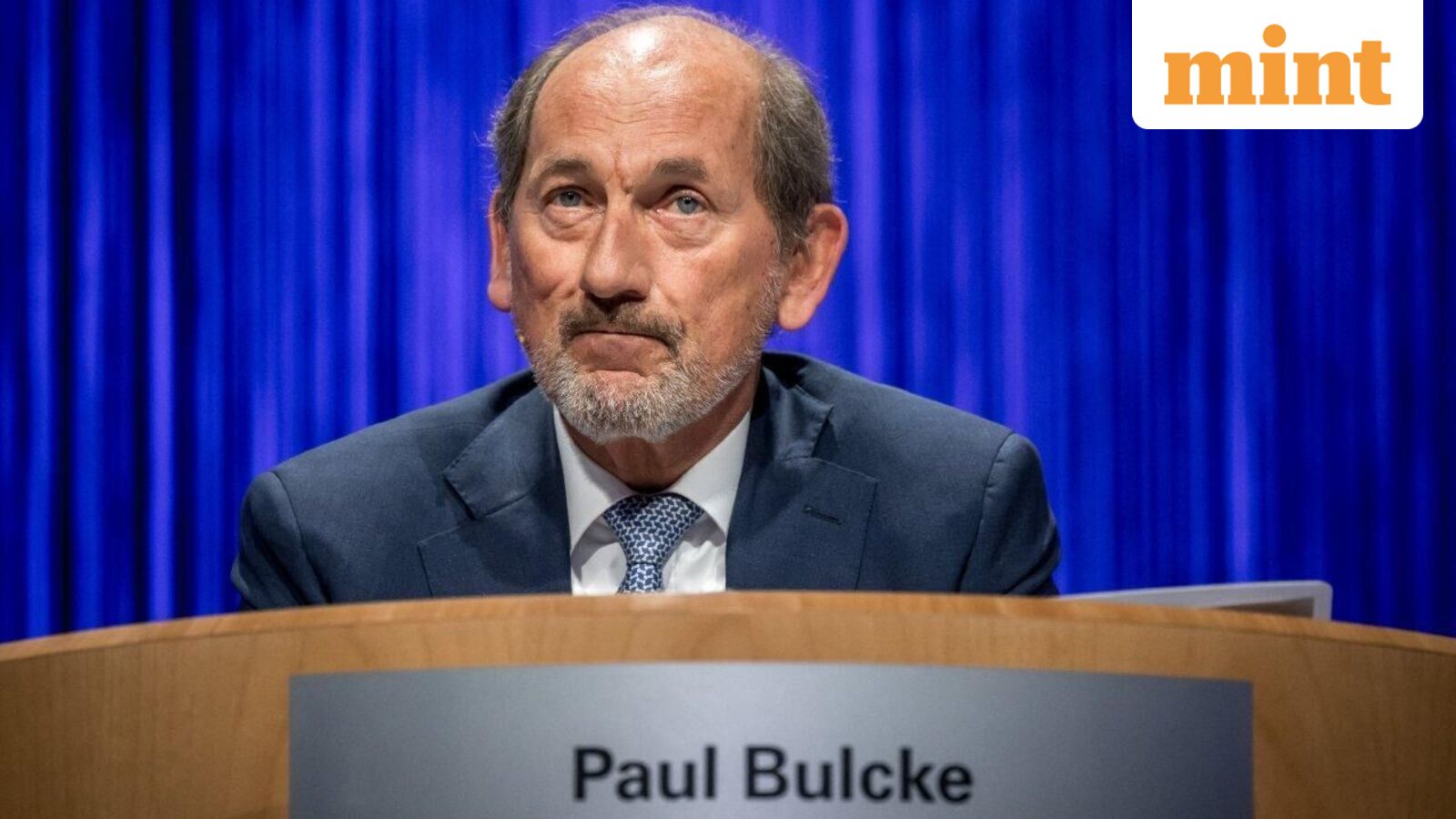
Nestlé Chairman Paul Bulcke resigns after CEO Laurent Freixe's dismissal over ‘undisclosed relationship’
MINT· 2025-09-16 20:46
Core Insights - Nestlé's chairman Paul Bulcke will step down, with former Inditex CEO Pablo Isla taking over on October 1 [1] - Bulcke's resignation follows the dismissal of CEO Laurent Freixe due to an undisclosed romantic relationship, raising questions about Bulcke's leadership [2] - Bulcke stated that it is the right time for a transition to new leadership for a fresh perspective [3] Company Challenges - Nestlé is under pressure from investors and analysts to streamline operations amid a challenging consumer market [3] - The company has experienced slowed revenue growth, with shares dropping over 40% since 2022, and rising costs [4] - Nestlé's debt levels have surpassed those of competitors like Unilever, contributing to investor concerns [4] Leadership Changes - Bulcke's shareholder support has declined, with only 84.8% backing during his re-election in April, compared to nearly 96% in 2017 [5] - Dick Boer will become Lead Independent Director and Vice Chairman, while Marie-Gabrielle Ineichen-Fleisch will serve as Vice Chair of the Board starting October 1 [5]