New Energy Vehicle

Search documents
中国焦点:短期风险与中期机遇-China Matters_ Near-term Risks and Medium-term Opportunities
2026-03-24 01:27
Summary of Key Points from the Conference Call Industry Overview - The focus is on the Chinese economy, particularly its macroeconomic indicators and the impact of global energy prices on growth and inflation. Core Insights and Arguments 1. **Macroeconomic Performance**: January-February macro data exceeded expectations, leading to an increase in the Q1 real GDP growth forecast from 5.0% to 5.5% qoq annualized. However, the Q2 forecast was lowered from 4.5% to 4.0% due to energy supply shocks [2][16][21]. 2. **Energy Dependency**: Although nearly half of China's oil imports pass through the Strait of Hormuz, only about 5% of China's total energy consumption is reliant on these imports, as coal constitutes 60% of energy consumption, mostly produced domestically [2][17]. 3. **Inflation Forecasts**: CPI and PPI inflation forecasts for 2026 have been raised to 1.0%, up from 0.6% and -0.7% respectively, due to rising oil prices impacting domestic fuel costs [22][23]. 4. **Investment Trends**: Fixed Asset Investment (FAI) data showed unusual growth, but caution is advised as it may not reflect broader investment trends. The China Investment Tracker indicates a more moderate deceleration in investment growth [9][16]. 5. **Export Dynamics**: Chinese exports may face pressure from low-income emerging markets (EM) that are vulnerable to energy price shocks. However, strong global demand could benefit Chinese exports if supply chains are disrupted elsewhere [32][33][40]. 6. **Medium-term Opportunities**: The ongoing Middle East conflict may lead to increased global demand for energy security products, where China has a competitive advantage in sectors like EVs and renewable energy [37][40]. Additional Important Insights 1. **Market Resilience**: Chinese equities and FX have outperformed compared to other countries amid the Middle East conflict, indicating resilience to energy supply shocks [17][24]. 2. **Government Measures**: The Chinese government has implemented measures to mitigate the impact of rising oil prices, including stockpiling crude oil and adjusting domestic fuel pricing systems [21][22]. 3. **Historical Context**: The current economic situation is compared to past events, such as the Global Financial Crisis, highlighting the potential for significant export declines if global demand weakens [32][33]. 4. **Technological Focus**: The 15th Five-Year Plan emphasizes technological innovation and manufacturing competitiveness, which may further enhance China's export capabilities in energy-related sectors [37][40]. This summary encapsulates the key points discussed in the conference call, providing insights into the current state and future outlook of the Chinese economy and its interaction with global energy markets.

2026年两会未来能源&具身智能产业政策专题:能源启新程,具身驭未来
GUOTAI HAITONG SECURITIES· 2026-03-11 02:30
Investment Rating - The report highlights that future energy and embodied intelligence have been included in the government work report, indicating a positive investment outlook for these sectors [9]. Core Insights - The government aims to establish a growth and risk-sharing mechanism for future industries, including future energy, quantum technology, embodied intelligence, brain-computer interfaces, and 6G [10]. - A national low-carbon transition fund will be set up to foster new growth points such as hydrogen energy and green fuels, emphasizing the importance of green and low-carbon economies [10]. - The report outlines significant achievements in future energy, including the completion of the first batch of "Shago Desert" renewable energy base projects and a non-fossil energy consumption ratio reaching 21.7% [9]. Summary by Sections Future Energy and Embodied Intelligence in Government Work Report - Future energy and embodied intelligence are recognized as key future industries, with notable achievements in renewable energy and technological advancements in AI and robotics [9]. - The government plans to enhance policies for green low-carbon development and implement a dual control system for carbon emissions [10]. "14th Five-Year" Plan Outline Draft - The draft outlines 17 major projects focusing on future energy and embodied intelligence, including the development of new industries like embodied intelligence and green hydrogen [12]. - Infrastructure projects include the construction of integrated renewable energy bases and modern energy systems [12]. Industry Perspectives from the "Two Sessions" - Industry representatives emphasize the need for building industrial chains, expanding application scenarios, and improving legal regulations in both future energy and embodied intelligence sectors [14]. - Suggestions include increasing R&D investment in embodied intelligence and promoting the deployment of humanoid robots and autonomous driving technologies [15].
东风集团股份:1-2月累计汽车销量为22.8万辆 同比增长约1.2%
Jin Rong Jie· 2026-03-06 13:13
Core Viewpoint - Dongfeng Motor Group reported a total vehicle sales of 228,518 units for January-February 2026, representing a year-on-year increase of approximately 1.2% [1] Group 1: Overall Sales Performance - The parent company, Dongfeng Motor Group Co., Ltd., achieved cumulative vehicle sales of 295,939 units for January-February, reflecting a year-on-year growth of about 6.3% [1] - Dongfeng Motor Co., Ltd., a subsidiary, recorded cumulative vehicle sales of 18,275 units for January-February, showing a year-on-year decline of approximately 0.9% [1] Group 2: New Energy Vehicle Sales - New energy vehicle sales reached 67,163 units for January-February, marking a significant year-on-year increase of approximately 51.8% [1]

用电数据见证浙企加速跑
Xin Hua Cai Jing· 2026-02-27 09:51
Core Insights - Zhejiang Province's electricity consumption during the Spring Festival reached 7.446 billion kilowatt-hours, with significant year-on-year growth in the primary, secondary, and tertiary industries [1] - The rapid recovery of the consumption market and service sector is indicated by the quick resumption of operations in industries such as accommodation, transportation, and information software services [1][2] - Over 4,700 industrial enterprises in Zhejiang maintained daily electricity consumption above 80% of normal levels during the Spring Festival, reflecting a strong production atmosphere [1] Industry Performance - The high-tech and advanced manufacturing sectors showed robust recovery, with the new materials industry and "new three items" (new energy vehicles, lithium batteries, and photovoltaic products) experiencing a 44.1% increase in daily electricity consumption [2] - The information transmission, software, and IT services sector saw a 15.1% year-on-year increase in daily electricity consumption, with internet data services growing by 230.2% [2] - The electrical machinery and equipment manufacturing industry recorded a 36.52% increase in daily electricity consumption during the Spring Festival [3] Economic Outlook - The data reflects a strong operational momentum among Zhejiang enterprises, showcasing their commitment to meeting production targets and enhancing quality [3] - The province is making significant strides towards achieving its economic and social development goals for the year, supported by the acceleration of resumption of work and production [3]
新城市志|三省一市增速均跑赢全国,长三角凭什么
Xin Lang Cai Jing· 2026-01-31 06:04
Core Insights - The Yangtze River Delta (YRD) region has achieved impressive economic growth, with a total economic output surpassing 34.66 trillion yuan in 2025, an increase of 1.49 trillion yuan from the previous year, and a rise of 7.06 trillion yuan since the beginning of the 14th Five-Year Plan [1][3] - All provinces in the YRD outperformed the national average growth rate of 5.0%, with Shanghai, Jiangsu, Zhejiang, and Anhui recording growth rates of 5.4%, 5.3%, 5.5%, and 5.5% respectively [3][4] Economic Performance - Shanghai's GDP reached 56,708.71 billion yuan, Jiangsu at 142,351.5 billion yuan, Zhejiang at 94,545 billion yuan, and Anhui at 52,989 billion yuan, collectively adding 1.49 trillion yuan compared to the previous year [3][4] - The YRD's GDP share of the national total increased from 24.1% to 24.7% from 2021 to 2025, indicating a significant contribution to national economic growth [3] New Economic Milestones - The YRD welcomed new members to its "trillion GDP city club," with Wenzhou in Zhejiang surpassing the trillion yuan mark at 10,213.9 billion yuan, and Xuzhou in Jiangsu expected to follow suit [4] - A total of 11 cities in the YRD are now part of this club, including major cities like Shanghai, Suzhou, and Hangzhou [4] Sectoral Highlights - In specific sectors, Shanghai's fixed asset investment grew by 4.6%, while Jiangsu's productive service industry contributed 77.4% to the growth of all regulated service industries [6][10] - Zhejiang's per capita disposable income exceeded 70,000 yuan for the first time, and Anhui led the nation in automotive and new energy vehicle production [6][10] Innovation and Technology - The YRD has become a hub for technological innovation, with nearly one-third of China's 26 national advanced manufacturing clusters located in the region [8] - Shanghai's three leading industries—integrated circuits, biomedicine, and artificial intelligence—saw a manufacturing output growth of 9.6% [8] Structural Transformation - Jiangsu's high-tech industry accounted for 52.1% of the regulated industrial output, with high-tech manufacturing value-added growing by 11.9% [10] - Zhejiang's private enterprises and digital economy saw a 7.2% increase in industrial output, contributing significantly to GDP growth [10] Integration and Connectivity - The YRD has made significant progress in infrastructure connectivity, resolving historical issues with inter-provincial "broken roads" and investing over 130 billion yuan in railway construction in 2025 [12][15] - A collaborative innovation system has been established, enhancing resource allocation and optimizing industrial chains across the region [12][15] Global Competitiveness - With all provinces in the YRD now part of the "trillion-dollar foreign trade club," the region is enhancing its global competitiveness through platforms like the Belt and Road Initiative and free trade zones [16] - The YRD's economic output has reached levels comparable to major developed economies, indicating a successful regional integration model [16]

Do Wall Street Analysts Like General Motors Stock?
Yahoo Finance· 2026-01-29 13:49
Core Viewpoint - General Motors (GM) is experiencing stock price growth due to reduced electric vehicle losses, share buybacks, and onshoring efforts, despite mixed financial results in Q4 2025 [2][4]. Financial Performance - GM's total revenue for Q4 2025 decreased by 5.1% year-over-year to $45.29 billion, missing analysts' estimates [4]. - The adjusted EPS for Q4 2025 was $2.51, reflecting a 30.4% increase from the previous year and surpassing Wall Street expectations [4]. - For the current quarter, analysts predict a 1.1% year-over-year decline in EPS to $2.75, while for fiscal year 2026, a 15.9% increase in EPS to $12.28 is expected [5]. Stock Performance - GM's stock has increased by 69.7% over the past 52 weeks and 58.8% over the last six months, outperforming the S&P 500 Index, which gained 15% and 9.2% respectively during the same periods [2][3]. - The stock reached a 52-week high of $87.31 on January 27 but has since declined by 2.8% from that peak [2]. Market Position - GM's new energy vehicle (NEV) sales in China approached 1 million units in 2025, indicating strong performance in the growing EV market [4]. - Among 27 Wall Street analysts, GM's stock is rated as a "Moderate Buy," with 14 "Strong Buy" ratings, reflecting a more bullish sentiment compared to the previous month [6].

温州新晋“万亿之城” 长三角“深水博弈”开场
2 1 Shi Ji Jing Ji Bao Dao· 2026-01-27 16:19
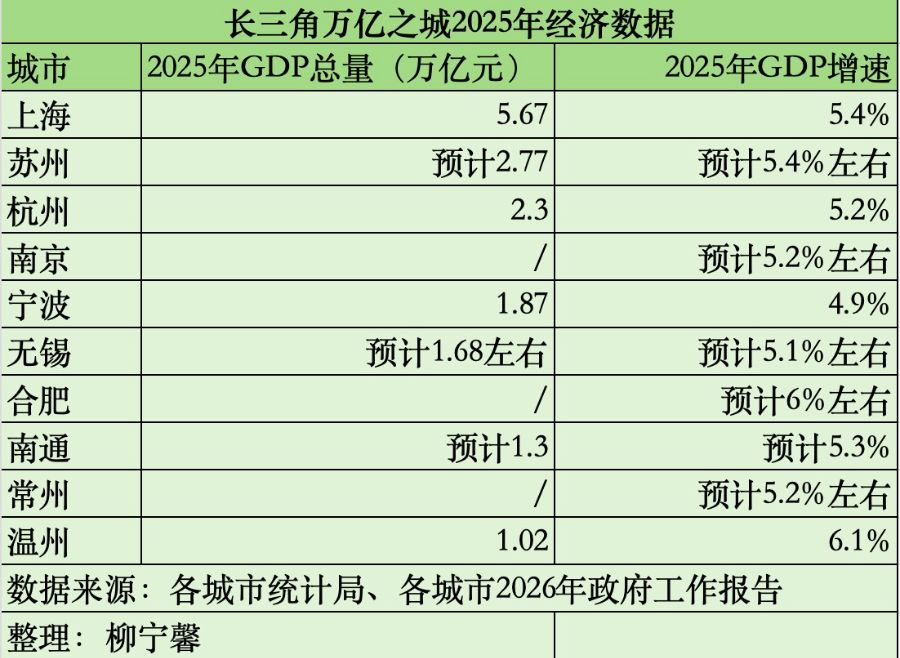
Core Insights - The Yangtze River Delta region is witnessing a significant increase in the number of cities with a GDP exceeding 1 trillion yuan, reaching a total of 10 by 2025, with Shanghai leading at 5.67 trillion yuan [1][2] - The focus of urban competition is shifting from merely achieving a trillion GDP to enhancing the quality and sustainability of economic growth, emphasizing innovation, industrial structure, and living standards [2][6] Economic Data Summary - Shanghai's GDP is projected to be 5.67 trillion yuan with a growth rate of 5.4% in 2025 [1][3] - Suzhou's GDP is expected to reach 2.77 trillion yuan, while Nanjing is approaching the 2 trillion yuan mark [2][4] - Hangzhou's GDP is estimated at 2.3 trillion yuan, with a growth rate of 5.2% [1][3] - Ningbo's GDP is projected at 1.87 trillion yuan, growing at 4.9% [1][4] - Wenzhou has recently crossed the 1 trillion yuan threshold, achieving a GDP of 1.02 trillion yuan with a growth rate of 6.1% [1][5] Industrial Development Trends - Shanghai is focusing on high-end industrial clusters, with significant growth in advanced manufacturing sectors such as integrated circuits (15.1% growth) and artificial intelligence (13.6% growth) [3][8] - Hangzhou is emphasizing the integration of digital economy with advanced manufacturing, with notable growth in new energy vehicles and industrial robots [4][9] - Suzhou is transitioning from traditional manufacturing to a modern industrial system, targeting sectors like biomedicine and high-end medical devices [8][10] - Wenzhou's economic growth is driven by its manufacturing sector, with strategic emerging industries and high-tech sectors showing substantial growth [5][11] Future Industry Layout - Cities in the Yangtze River Delta are actively planning for future industries, focusing on sectors like quantum technology, synthetic biology, and advanced semiconductor materials [10][11] - The competition among cities is increasingly defined by their ability to innovate and create sustainable industrial ecosystems rather than just GDP figures [6][7] Long-term Competitiveness Factors - Key variables for long-term competitiveness include the originality and resilience of industrial ecosystems, efficiency in innovation and technology transfer, and the ability to attract and retain talent [11][12] - Cities are encouraged to create favorable living conditions and cultural experiences to enhance their attractiveness to talent [11]
温州新晋“万亿之城”,长三角“深水博弈”开场
2 1 Shi Ji Jing Ji Bao Dao· 2026-01-27 12:33
Core Viewpoint - The quality of industries is becoming a longer-term competitive variable for the trillion GDP cities in the Yangtze River Delta region, shifting the focus from mere GDP scale to the quality and sustainability of development [1][4]. Economic Data Summary - In 2025, the total number of trillion GDP cities in the Yangtze River Delta will increase to 10, with Shanghai leading at 5.67 trillion yuan and new entrant Wenzhou reaching 1.02 trillion yuan [2][3]. - Expected GDP growth rates for 2025 include: Suzhou at approximately 5.4%, Hangzhou at 5.2%, Nanjing at around 5.2%, and Ningbo at 4.9% [2][3]. Industry Development Trends - The new industrial layout in the Yangtze River Delta is focusing on high-end industrial clusters and the extension of new tracks based on existing manufacturing strengths [3][10]. - Shanghai's GDP growth is supported by new momentum in industries such as integrated circuits and artificial intelligence, with respective growth rates of 15.1% and 13.6% [5]. - Hangzhou's economy is characterized by a strong service sector, contributing 73.8% to its GDP, with significant growth in the digital economy [6][12]. - Wenzhou's manufacturing sector is evolving towards technology-intensive and intelligent production, with strategic emerging industries growing by 14.4% [8][12]. Long-term Competitiveness Factors - Key variables for long-term competitiveness include the originality and resilience of the industrial ecosystem, innovation efficiency, and the ability to attract and retain talent [13]. - The focus is shifting from GDP scale to the health of industries, innovation density, and sustainable growth metrics as new evaluation criteria for urban competitiveness [10][13].
全国机动车保有量达4.69亿辆!新能源汽车保有量4397万辆!
Xin Lang Cai Jing· 2026-01-26 11:09
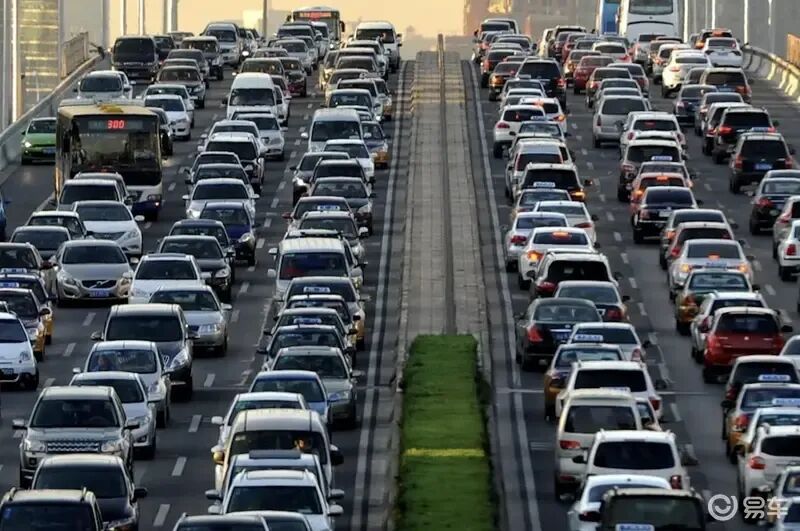
Core Insights - By 2025, the total number of motor vehicles in China is projected to reach 469 million, with 366 million being cars, and the number of motor vehicle drivers is expected to be 559 million, including 525 million car drivers [1][4]. Group 1: Vehicle Registration and Ownership - In 2025, 35.35 million new motor vehicles are expected to be registered, with 26.19 million of those being cars. This marks the 11th consecutive year that new vehicle registrations exceed 30 million [3][8]. - There are 103 cities in China with car ownership exceeding one million, an increase of seven cities compared to 2024. Among these, 47 cities have over two million cars, 27 cities have over three million, and seven cities have over five million [3][8]. Group 2: New Energy Vehicles - By the end of 2025, the number of new energy vehicles is projected to reach 43.97 million, accounting for 12.01% of the total number of cars. Among these, 30.22 million are expected to be pure electric vehicles, making up 68.74% of new energy vehicles [3][8]. - In 2025, 12.93 million new energy vehicles are expected to be registered, which represents 49.38% of all new car registrations, reflecting an increase of 1.68 million vehicles or 14.93% compared to 2024 [3][8]. Group 3: Used Vehicle Market - The number of vehicle transfer registrations continues to grow, indicating an active used car market. In 2025, a total of 41.11 million vehicle transfer registrations are expected, with 38.41 million being car transfers, representing 93.44% of the total [3][8]. - Since 2020, the volume of used car transaction registrations has exceeded that of new car registrations for six consecutive years [3][8]. Group 4: Driver Licensing - By the end of 2025, the number of motor vehicle drivers is expected to reach 559 million, with car drivers making up 93.87% of this total. Additionally, 20.51 million new driver licenses are projected to be issued in 2025 [4][9]. - The implementation of online services for license and registration processes has been promoted, with 116 million online transactions expected in 2025 [6][11].
城市24小时 | 强势登顶,安徽拿下“双料”第一
Mei Ri Jing Ji Xin Wen· 2026-01-22 15:53
Group 1: Automotive Industry in Anhui - Anhui province is projected to produce 3.6865 million vehicles in 2025, including 1.7941 million new energy vehicles, both ranking first in the country [1] - Anhui is the first province in China to export over 1 million vehicles annually, with an expected export volume of 1.228 million vehicles in 2025, marking a 28.7% increase [1] - The automotive industry in Anhui has become the first single industry in the province to exceed 100 billion yuan in annual export value [1] Group 2: Industry Structure and Development - Anhui has established a complete automotive industry chain, with over 3,000 component manufacturers covering various sectors such as power batteries, electric motors, and intelligent networking [2] - Hefei and Wuhu are emerging as key cities in the automotive sector, with Hefei's new energy vehicle production expected to reach 1.376 million units in 2024, ranking second nationally [2] - Wuhu, driven by Chery Group, accounted for 46.2% of Anhui's total vehicle production in 2024 and nearly 80% of its export volume [2] Group 3: Strategic Initiatives - The "14th Five-Year Plan" for Anhui emphasizes the development of strategic emerging industries, particularly in intelligent connected new energy vehicles [3] - Anhui is implementing the "Hui Dong Global" initiative to promote international cooperation and open innovation in the automotive industry [3]