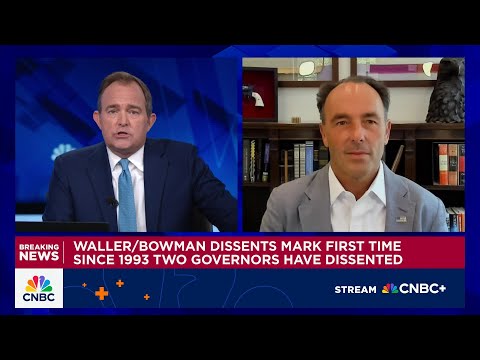
Nvidia H20 chips

Search documents
Trump 2.0, stocks soar again, gold hits records, AI boom rolls on — Yahoo Finance's 2025 year in review
Yahoo Finance· 2025-12-31 11:00
Group 1 - The announcement of the $500 billion "Stargate" project aims to build AI infrastructure in the US, with key figures like SoftBank CEO Masayoshi Son, OpenAI chief Sam Altman, and Oracle CEO Larry Ellison present [1] - Bitcoin reached a record high above $109,000 shortly before Trump's swearing-in, following its first-time crossing of $100,000 in December 2024 [1] - The S&P 500 closed at a record high on Trump's third full day in office, indicating strong market sentiment [7] Group 2 - Nvidia's stock fell 17%, losing nearly $600 billion in market value after a Chinese startup released a competitive AI model, raising concerns about the costs of AI development [8] - Trump's second trade war began with tariffs on imports from Canada, Mexico, and China, which faced legal challenges throughout the year [9] - Intel appointed Lip-Bu Tan as its new CEO, leading to a nearly 80% increase in its stock value [10] Group 3 - Oracle's stock surged nearly 40% after reporting a 360% increase in future revenue from customer contracts, largely tied to OpenAI [32] - Nvidia and OpenAI announced a landmark deal where Nvidia committed to investing up to $100 billion into OpenAI, raising discussions about circular financing in the AI sector [35] - Nvidia became the first company to surpass a market capitalization of $5 trillion [39]
Market Surges as Trump Team Considers Easing Nvidia Chip Sales to China; Ford Reaffirms Strong Outlook
Stock Market News· 2025-11-21 19:08
Market Overview - The financial markets experienced a rebound on November 21, 2025, with the S&P 500 and NASDAQ 100 reaching session highs, recovering from earlier volatility [2] - This market upswing was supported by indications from New York Fed President John Williams regarding potential additional rate cuts by the Federal Reserve in December [2] Nvidia (NVDA) - The Trump administration is considering allowing the sale of Nvidia's H200 chips to China, which could significantly impact current export restrictions and the global AI chip market [9] - Nvidia shares rose by 1.9% following the news, despite previous restrictions that had reduced its market share in China [3][9] Ford Motor Company (F) - Ford's shares surged by 4.3% after reaffirming its 2025 adjusted EBIT guidance of $6 billion to $6.5 billion and adjusted free cash flow outlook of $2 billion to $3 billion [4][9] - This reaffirmation came after a fire at a key aluminum supplier, Novelis Oswego, which had raised concerns among investors [4] Brazil-U.S. Trade Relations - Brazil's Vice President Geraldo Alckmin reported progress in tariff negotiations with the U.S., with 22% of Brazilian exports still facing a 40% tariff, reduced from 36% [5][9] - The U.S. has recently rolled back tariffs on over 200 Brazilian products, indicating a commitment to further reduce or eliminate remaining tariffs [5] Federal Reserve Developments - The Federal Reserve Board extended the public comment period for its proposal to improve transparency and accountability in stress test models until February 21, 2026 [6][9]



中国 8 月月度数据发布:温和复苏展开-China monthly data outlook_ A modest recovery unfolded in August
2025-09-08 06:23
Summary of Key Points from J.P. Morgan's China Monthly Data Outlook Industry Overview - The report focuses on the **Chinese economy** and its performance in August 2025, highlighting the resilience shown in the first half of the year despite tariff pressures [1][2]. Core Insights and Arguments - **Economic Resilience**: The Chinese economy exceeded the government's GDP growth target in the first half of the year, driven by fiscal support and strong export performance [1]. - **Domestic Demand Lag**: Domestic demand has been weak, with July data showing a significant drop in investment and retail sales. Notably, Fixed Asset Investment (FAI) fell by **5.2% year-on-year**, marking the largest decline since early 2020 [1]. - **Auto Sales Decline**: Auto sales were a major contributor to the decline in consumer demand, attributed to fewer price cuts and slower subsidy delivery [1]. - **Investment Stagnation**: Investment stalled across various sectors, including manufacturing, infrastructure, and real estate, due to factors such as weather-related construction delays and insufficient funding for infrastructure projects [1]. - **PMI Data Improvement**: August PMI data indicated a modest recovery, with both manufacturing and services PMIs rising, suggesting continued production growth [3]. - **Future Outlook**: The forecast for GDP growth in the third quarter is expected to slow to **3% quarter-on-quarter annualized rate**, down from **4.1% in the second quarter**. The anticipated slowdown is attributed to diminishing fiscal policy support and a shift in focus towards domestic demand [4]. Additional Important Insights - **Fiscal Policy Constraints**: The remaining government bond quota for the rest of the year is estimated at **3.4 trillion yuan**, which is lower than the **3.8 trillion yuan** for 2024, indicating a reduction in fiscal policy space [4]. - **Investment and Production Challenges**: Anti-involution policies are expected to continue impacting investment and production in sectors with excess capacity, although these policies will be data-dependent and not overly aggressive [3]. - **Consumer Price Trends**: Consumer prices in China are projected to remain low, with an average of **0.2% year-on-year** for 2023 and 2024, and a forecast of **0.0%** for 2025 [11]. This summary encapsulates the key points from the J.P. Morgan report, providing insights into the current state and future outlook of the Chinese economy.
Markets Mixed As Powell Highlights Jobs, AI Impact, And Rate Cuts
Forbes· 2025-08-25 13:50
Market Overview - The stock market experienced mixed results, with tech shares negatively impacting performance; the Nasdaq Composite fell by 0.6%, while the S&P 500 rose by 0.3% and the Dow Jones Industrial Average increased by 1.5% [2] - Small cap stocks showed the best performance, gaining 3.3% [2] Federal Reserve Insights - Federal Reserve Chairman Jerome Powell's speech at Jackson Hole highlighted the focus on the job market, noting recent weaknesses [3] - The current job market challenges may stem from trade policy changes and the impact of Artificial Intelligence (AI) on hiring practices [4] Employment Trends - There is a slowdown in job creation, particularly affecting entry-level positions, which could have long-term consequences on wage levels for recent graduates [4] Interest Rate Expectations - Following Powell's speech, the probability of a quarter-point rate cut in September rose above 90%, but has since decreased to 83% [5] Economic Data Releases - Upcoming economic reports include Durable Goods orders, expected to decline by 4%, and the Personal Consumption Expenditures (PCE) Index, which will be released later in the week [6] Nvidia and Chip Sector Developments - Nvidia accounts for 8% of the S&P 500 and is set to report earnings soon; the company is facing challenges as China has halted purchases of Nvidia H20 chips due to security concerns [7][10] - The geopolitical landscape raises questions about the ability of adversaries to develop competitive chip technology [8] Tariff News - Canada announced the removal of a 25% tariff on $21 billion of U.S. imports, effective September 1, while maintaining tariffs on U.S. steel, aluminum, and autos [9] Earnings Reports - Upcoming earnings reports include major retailers and tech companies, with Nvidia being a key focus due to its significant market presence [10]
中国周报-市场上涨 2 - 3%;中国推出两项利息补贴计划;7 月信贷和经济活动数据普遍走弱-China Weekly Kickstart_ Markets rallied 2-3%; China launched two interest subsidy programs; July credit and activity data broadly weakened and missed expectations
2025-08-18 01:00
Summary of Key Points from the Conference Call Industry Overview - The report covers the Chinese market, specifically focusing on the performance of various sectors and macroeconomic indicators. [1][12] Core Insights and Arguments - **Market Performance**: MXCN and CSI300 indices gained 2.5% and 2.4% respectively, with notable outperformance in Brokers (+10.3%), Semiconductors (+9.1%), and Insurance (+8.1%) sectors. [1] - **Interest Subsidy Programs**: The Ministry of Finance launched two temporary interest subsidy programs aimed at household consumer loans and targeted service businesses. [1] - **Credit and Economic Activity**: July credit and activity data showed a significant decline, with net new loan growth turning negative for the first time in 20 years. [1] - **Inflation Trends**: CPI inflation decreased to 0.0% year-on-year, while PPI deflation remained deep at -3.6% year-on-year in July. [1] - **Foreign Investment**: Southbound capital saw inflows of US$4.9 billion this week, with a record-high daily inflow of US$4.6 billion on Friday. [1] - **Property Market Divergence**: Data from 70 cities indicated a continuing divergence in property prices between top-tier and lower-tier cities. [1] Earnings and Valuations - **Earnings Growth Forecast**: The I/B/E/S consensus for 2025/26 EPS growth is projected at 4%/14% for MXCN and 15%/12% for CSI300. [9] - **Sector Performance**: Real Estate and Growth sectors outperformed with growth rates of 4.3% and 3.9% respectively, while Utilities and Beta sectors lagged with declines of -2.4% and -3.9%. [2][3] Policy and Regulatory Environment - **Government Support for Private Sector**: President Xi emphasized the importance of healthy, high-quality development for the private sector in a recent article published in the Qiushi Journal. [5] - **Tech Sector Caution**: Chinese authorities have warned tech firms regarding the purchase of Nvidia H20 chips, indicating regulatory scrutiny in the tech sector. [1] Additional Insights - **Current Account Surplus**: The 25Q2 Balance of Payments data indicated a solid current account surplus, leading to an upward revision of the BBOP forecast. [1] - **Visa Initiatives**: China plans to introduce a new visa type for eligible foreign young science and technology professionals, aiming to attract talent. [1] - **Production Suspension**: CATL has suspended production at a major lithium mine pending license renewal, highlighting regulatory impacts on resource sectors. [1] Conclusion - The Chinese market is experiencing a mixed performance with significant sectoral divergences and macroeconomic challenges. The government's proactive measures in interest subsidies and talent attraction are aimed at stabilizing the economy amidst declining credit growth and inflationary pressures.
Nvidia Vs. AMD: Who Gets Hit Harder By The 15% China Revenue Tax?
Benzinga· 2025-08-12 17:03
Core Insights - NVIDIA and AMD have agreed to pay 15% of their AI chip revenue from China to the U.S. government, marking a significant shift in government intervention in tech sales [1][2] - NVIDIA's AI chip sales to China account for approximately 13% of its total revenue, equating to around $17 billion, while AMD's exposure is higher at 24%, or about $6.2 billion [2][3] - The revenue-sharing arrangement introduces uncertainty regarding future regulations and government levies, impacting both companies' profit margins and strategic decisions [2][3] Company Exposure - NVIDIA's lower dependence on the Chinese market may provide some protection against margin compression compared to AMD [2][3] - AMD's greater reliance on China necessitates a reevaluation of pricing strategies and potential diversification efforts to mitigate risks [3][4] Strategic Implications - Both companies face challenges from the revenue-sharing deal, but AMD's larger exposure places it in a more precarious position [4] - Investors should closely monitor how NVIDIA and AMD manage the balance between revenue generation and regulatory risks in the evolving geopolitical landscape [3][4]


Nvidia, AMD to pay 15% of China chip sale revenues to US: report
New York Post· 2025-08-11 00:09
Core Points - Nvidia and AMD have agreed to share 15% of their revenues from chip sales in China with the US government to obtain export licenses for their semiconductors [1][2][7] - The revenue share specifically applies to Nvidia's H20 chips and AMD's MI308 chips [1][7] - The US Commerce Department recently issued licenses to Nvidia for exporting H20 chips to China, reversing a previous ban [6] Group 1 - The revenue-sharing arrangement was a condition for obtaining export licenses for the Chinese market, which were granted last week [2] - Nvidia has not shipped H20 chips to China for several months but hopes that export control rules will allow for competition in China and globally [3][4] - The H20 chip was tailored specifically for the Chinese market to comply with the Biden-era AI chip export controls [6]

Nvidia's set to regain some China access. But it still faces eroding AI chip market share
CNBC· 2025-08-04 07:35
Core Insights - Nvidia's H20 chips are set to return to the Chinese market following assurances from the Trump administration, but market experts predict a less enthusiastic reception due to increased competition and regulatory scrutiny [1][2] - Despite the return of H20 chips, Nvidia's market share in China's AI chip sector is expected to decline from 66% in 2024 to 54% by 2025, as domestic competitors gain traction [2] - The rise of Chinese AI chipmakers, such as Huawei, Cambricon, and Hygon, is attributed to U.S. export controls, which have limited competition from advanced global alternatives [4] Market Dynamics - The localization ratio of China's AI chip market is projected to increase significantly from 17% in 2023 to 55% by 2027, indicating a shift towards domestic production [4] - Analysts suggest that while Nvidia may experience some recovery in China, it faces potential market share erosion as customers may have found success with local rivals during the H20 export restrictions [4] - Bernstein's forecasts are based on the assumption that U.S. chip restrictions will remain stable, allowing Chinese companies to continue developing advanced chips, which could diminish demand for older U.S. products [5]

Nvidia's China-bound H20 AI chips face Beijing scrutiny over ‘tracking' and security concerns
CNBC· 2025-07-31 06:18
Core Insights - Nvidia is heavily reliant on the Chinese market, particularly for data centers, gaming, and AI applications [1] - Recent meetings between Nvidia and Chinese officials have raised national security concerns regarding the H20 chips, which had export restrictions lifted [2][3] - The Cyberspace Administration of China (CAC) has requested Nvidia to provide documentation on security risks associated with its H20 chips [3] - American lawmakers are advocating for mandatory tracking features in advanced chips to address security vulnerabilities [4][5] - Nvidia has placed orders for 300,000 H20 chipsets with TSMC to meet the demand from China, despite concerns from U.S. lawmakers about the implications for Beijing's AI capabilities [6] Regulatory and Security Concerns - Nvidia's H20 chips are under scrutiny for potential security vulnerabilities and backdoors, as highlighted by the CAC [3] - The CAC's statement indicates that American AI experts have identified tracking and remote shutdown capabilities in Nvidia's chips [4] - Proposed legislation by U.S. lawmakers aims to empower authorities to remotely disable chips used without proper licenses, targeting chip smuggling and export loopholes [5] Market Dynamics - Nvidia's engagement with Chinese officials reflects the balancing act between maintaining market access and addressing security concerns [2][3] - The demand for Nvidia's H20 chips in China is significant, prompting the company to increase production orders [6]
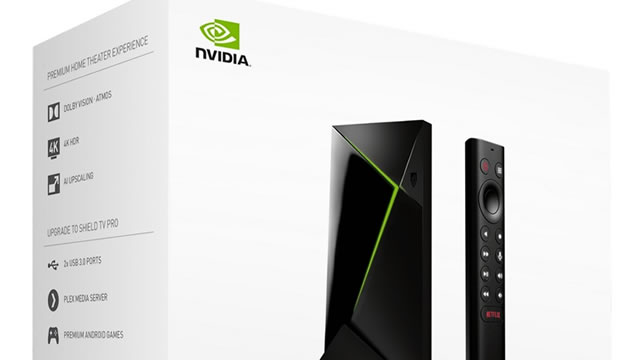
Fed's too restrictive and rates have to come down, says Hayman Capital's Kyle Bass
CNBC Television· 2025-07-30 19:08
Economic Outlook & Monetary Policy - Consumption growth has slowed significantly, from 3% last year to only 1% this year, marking the first two descents since 1993 focused on consumer behavior and the labor market [1] - With inflation around 2-4% and short rates at 43%, the Fed's monetary policy is considered too restrictive, suggesting potential for more rate cuts than the dot plot indicates [1] Geopolitical Risks & US-China Relations - Despite potential diplomatic efforts, both the US and China are reportedly preparing for potential conflict over Taiwan [1] - The exchange of Nvidia H20 chips for rare earth magnets is viewed as a questionable transaction, potentially enabling China's military advancements [1] - Concessions to China are seen as enabling the modernization of their combat forces, particularly in AI capabilities [1] US-Russia Relations & Sanctions - President Trump is setting a deadline for a peace deal between Russia and Ukraine, threatening stricter sanctions if no progress is made [1] - The US has the ability to impose more impactful sanctions on Russia by targeting remaining foreign correspondent banks that facilitate dollar transactions [2][3]