
OceanStor Dorado

Search documents
重构基石:存算分离驱动金融核心进化
Jin Rong Shi Bao· 2025-10-28 13:21
Core Insights - The financial industry is undergoing a profound paradigm shift driven by real-time trading, intelligent risk control, and personalized services, which are now essential capabilities rather than mere concepts [1] - The "2025 Smart Finance Core Database Transformation Practice Seminar" held in Suzhou gathered industry experts to explore the latest trends and pathways for core system transformation [1] - There is a consensus in the industry that the separation of storage and computing has evolved from a technical option to a strategic cornerstone, defining the pace and pattern of financial innovation for the next decade [1] Group 1: Challenges of Traditional Systems - The traditional tightly-coupled architecture in the financial industry has reached its limits, necessitating a break from the "storage-computing integration" to fully unleash data potential [2] - Key issues with the existing architecture include performance bottlenecks, lack of agility, and operational complexity, which threaten business continuity [3] Group 2: Advantages of Storage-Computing Separation - Storage-computing separation is not merely a technical fix but a systemic upgrade that enhances data flow and system responsiveness [4] - This architecture provides four core values: extreme reliability, flexible elastic scaling, simplified operational management, and an open ecosystem that supports various database types [4][5] Group 3: Evolution of Databases - The new generation of databases, when combined with storage-computing separation, can significantly enhance performance, as demonstrated by a rural commercial bank that increased its transaction capacity from 1 million to 15 million daily transactions [6] - Modern databases support mixed workloads and are evolving towards advanced distributed architectures, showcasing substantial improvements in transaction processing capabilities [6] Group 4: Future of Financial Technology - The financial industry is witnessing a structural migration from traditional systems to intelligent frameworks, marking a transition from "accounting" to "intelligence" [8] - As of the end of 2024, distributed database instances in Chinese banks have increased from 3.9% in 2018 to 23.8%, with some banks reaching 100%, indicating a shift towards a new phase centered on intelligent infrastructure [8] - The ongoing digital transformation in finance is not just about cloud systems and intelligent applications but also about reconstructing the foundational architecture for the next decade [8][9]
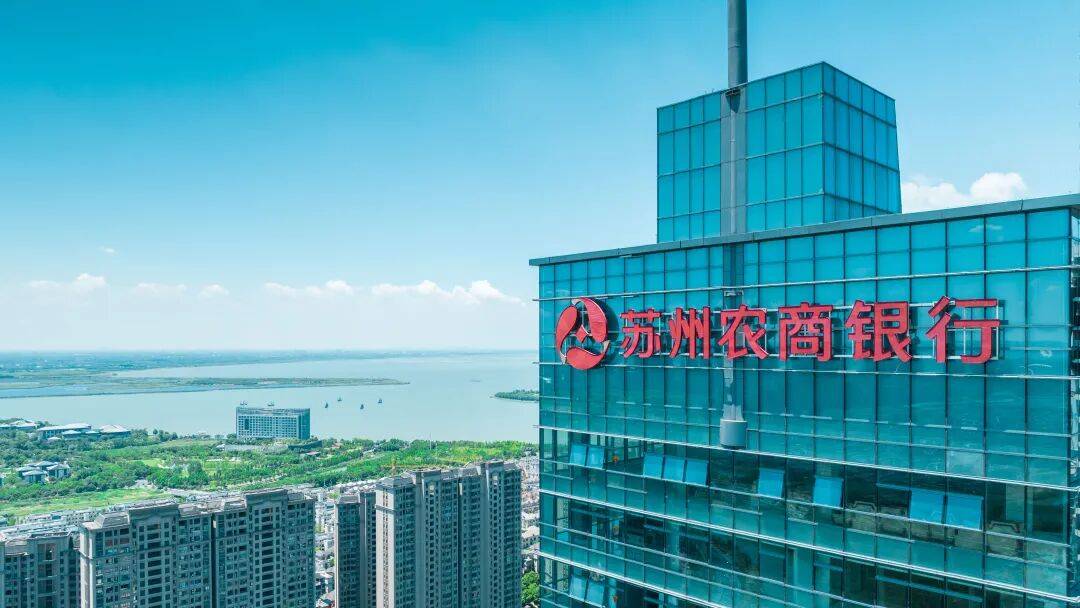
太湖之畔的数字蝶变:苏州农商银行携手华为筑牢金融新核心
Sou Hu Cai Jing· 2025-10-14 23:26
Core Insights - Suzhou Rural Commercial Bank, established in 2004, has evolved into a key player in local financial services, focusing on rural finance and innovation through technology [1][3] - The bank is undergoing a digital transformation to overcome challenges posed by traditional banking structures and increasing competition from larger banks and internet financial services [3][5] Group 1: Digital Transformation Challenges - The bank's traditional systems are becoming bottlenecks, hindering business growth and innovation due to outdated infrastructure [3][5] - There is a pressing need for a more flexible and efficient core banking system to meet the demands of online marketing and digital risk control [3][5] Group 2: Technological Collaboration - Suzhou Rural Commercial Bank has partnered with Huawei to implement a "separation of storage and computing" architecture, utilizing GaussDB and OceanStor Dorado to enhance system performance and security [5][6] - This new architecture allows for centralized management of storage resources, significantly improving system elasticity and reducing total cost of ownership (TCO) [5][6] Group 3: Performance Improvements - The implementation of the new system has led to a transformation in the bank's IT infrastructure, enabling faster loan approvals and seamless transaction processing [6][7] - The bank can now offer real-time, accurate financial services, enhancing customer experience and operational efficiency [7] Group 4: Strategic Positioning - The collaboration with Huawei positions Suzhou Rural Commercial Bank as a national benchmark for financial transformation, showcasing how smaller banks can leverage technology for growth [6][7] - The bank's focus on innovation and digitalization is expected to drive its future success and strengthen its competitive edge in the financial sector [6][7]

华为智慧油气解决方案
华为· 2025-10-14 06:37
Investment Rating - The report does not explicitly state an investment rating for the industry Core Insights - The report emphasizes the importance of digital transformation in the oil and gas industry, highlighting the need for advanced ICT capabilities to enhance operational efficiency and reduce costs Summary by Sections Exploration and Development Computing Center - Current challenges include high costs and inefficiencies due to fragmented software procurement and deployment, leading to low software utilization rates [9][10] - The proposed solution involves a centralized computing center leveraging Huawei Cloud for flexible resource allocation and unified management of software and data, enhancing collaboration and efficiency [11][14] - The solution claims an 8x improvement in processing efficiency, reducing processing time from 456 hours to 55 hours [14] Oil and Gas Exploration Data Storage - The report identifies a significant increase in data volume, with project data potentially reaching hundreds of PB, posing challenges in capacity, performance, and cost [21] - The solution includes high-performance storage systems designed to handle large volumes of seismic data with improved reliability and efficiency, achieving a 30% performance improvement and a 30% cost reduction [26][28] Smart Oilfield Solutions - The smart oilfield solution integrates edge computing and AI technologies to enhance operational management and data analysis capabilities [41] - Key benefits include a 50% reduction in manual inspection workload, a 20% decrease in digital investment costs, and a 30% reduction in energy consumption [45] Integrated Network Solutions - The report discusses the need for a unified industrial network to support various operational scenarios, emphasizing the use of advanced technologies like Wi-Fi 6 and 5G for reliable data transmission [74][76] - The proposed network solutions aim to ensure stable connectivity, data security, and simplified management across diverse operational environments [76][80] AI and Big Data Applications - The report highlights the development of AI models for predictive maintenance and operational optimization, which can significantly enhance efficiency and safety in oil and gas operations [57][63] - Successful case studies demonstrate the effectiveness of these AI applications in reducing operational risks and improving response times [60][66]