PICC中国养殖业风险巨灾模型

Search documents
科技赋能农业防灾减灾
Jin Rong Shi Bao· 2026-02-11 01:21
Core Viewpoint - The article highlights the importance of agricultural disaster prevention and reduction systems, emphasizing the role of insurance as a financial tool to mitigate agricultural risks and support modern agricultural production [1][2]. Group 1: Agricultural Risk Reduction Initiatives - The company has established 40 agricultural risk reduction service centers nationwide, collaborating with local governments and research institutions to conduct disaster warnings, agricultural training, and emergency dispatch [2]. - A total of 52 risk reduction demonstration gardens have been created in partnership with major grain producers, utilizing IoT devices for soil moisture, crop growth, and pest monitoring to enable early risk identification and intervention [2]. Group 2: Technological Empowerment in Agriculture - The company has developed a specialized risk reduction service system called "Stable Agriculture," integrating multi-source data such as meteorology and remote sensing to enable risk identification, prediction, and intervention [3]. - In the Guangdong region, a tailored disaster reduction service platform for lychee production has been implemented, resulting in a 25% reduction in labor costs and a 20% decrease in pesticide and fertilizer usage, leading to a financial saving of 500 yuan per acre [3]. Group 3: Comprehensive Monitoring and Intervention - The company connects to 3,213 national meteorological stations for real-time and long-term weather forecasts, employing satellite remote sensing and AI pest identification models for comprehensive monitoring [3]. - In collaboration with meteorological departments, the company has conducted 1,974 hail prevention operations in Yunnan, protecting nearly 900,000 acres of economic crops in 2025 [3]. Group 4: Innovations in Livestock Insurance - The company has developed a proprietary "PICC China Livestock Risk Catastrophe Model," utilizing data from nearly 1.8 billion insurance claims to enhance risk assessment and management in the livestock sector [4]. - This model addresses regional risk disparities in traditional pricing models, playing a crucial role in product design, loss assessment, and risk reduction services in livestock insurance [4].
【金融街发布】中国人保财险发布“PICC中国养殖业风险巨灾模型”
Zhong Guo Jin Rong Xin Xi Wang· 2025-10-30 08:23
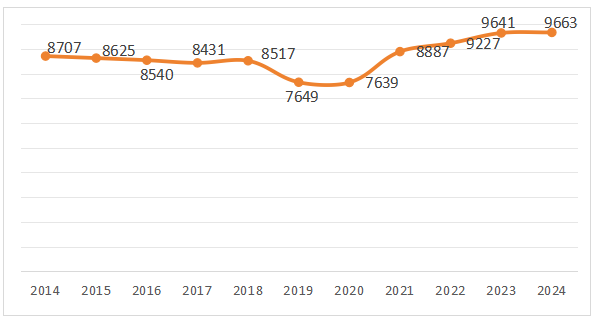
Core Viewpoint - The 2025 Central Document No. 1 emphasizes the need to enhance the supply guarantee capacity of important agricultural products, with livestock farming playing a crucial role in ensuring national food security and promoting rural economic prosperity [1]. Industry Overview - The livestock industry in China has shown steady development, with total production of pork, beef, mutton, and poultry reaching 96.63 million tons in 2024, reflecting a year-on-year growth of approximately 0.2% [1]. - Despite this growth, the industry faces significant risks, particularly from animal diseases and natural disasters, which can adversely affect livestock output and economic benefits [1]. Risk Management Innovations - China Pacific Insurance (PICC) has developed the "PICC China Livestock Catastrophe Model," the first of its kind independently created by a Chinese insurance company, aimed at enhancing risk management in the livestock sector [3][5]. - The model incorporates advanced concepts and technologies from domestic and international catastrophe modeling, addressing various risk factors including infectious diseases, non-infectious diseases, and meteorological disasters [3][5]. - Utilizing a robust data foundation from nearly 1.8 billion risk-related insurance and claims records, the model covers over 2,800 counties in China and includes multiple disease causative agents and disaster types [3][5]. Future Directions - PICC plans to continue optimizing the catastrophe model and engage in extensive technical exchanges with industry stakeholders to explore more advanced risk assessment methods, thereby contributing to the high-quality development of China's livestock industry [5].