Peroni

Search documents
Asahi domestic beer sales remain under pressure
Yahoo Finance· 2026-02-12 13:14
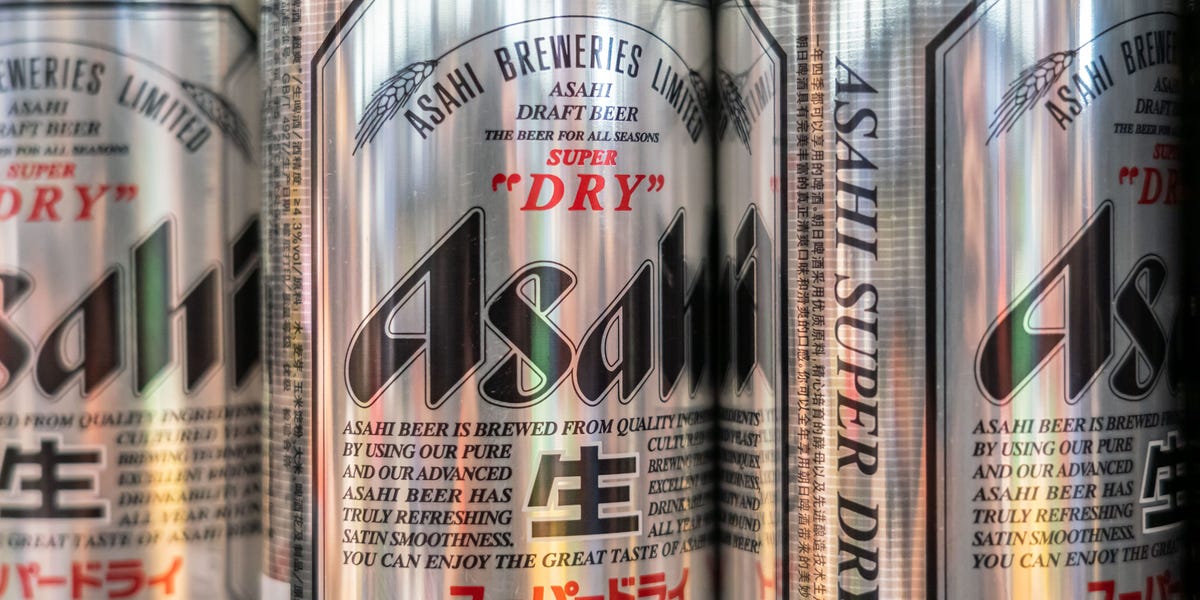
Group 1 - Asahi Group Holdings' beer sales in Japan declined again in January due to the ongoing impact of a cyberattack that occurred in September [1][4] - Sales of "beer-type beverages" from the domestic Asahi Breweries unit fell 11% year-on-year in January, with Super Dry volumes down 9% compared to January 2025 [2] - Ready-to-drink (RTD) sales dropped 14% and wine sales decreased by 13%, while sales of whiskey and spirits grew by 16% [2] Group 2 - The Asahi Soft Drinks division reported a 16% decrease in sales, although the food business experienced a mid-single-digit sales increase [3][2] - Domestic logistics operations have normalized, allowing for the resumption of shipments for all products except certain discontinued items and new product launches [3] - The cyberattack led to a systems failure that affected production and distribution, but Asahi's factories resumed operations a week later [4]
Is Boston Beer's Innovation Pipeline Driving New Category Share?
ZACKS· 2026-01-26 16:15
Core Insights - Boston Beer Company's innovation pipeline is central to its strategy as consumer demand shifts towards flavored, functional, and spirits-adjacent offerings, with the "beyond beer" category now accounting for the majority of company volume [2] - The company is focusing on innovation to compete for younger, diverse consumers, even as overall industry volumes face pressure [2] Innovation and Product Development - Sun Cruiser is highlighted as a top volume gainer in ready-to-drink spirits, supported by rapid distribution expansion and strong on-premise traction [3] - Innovations within established franchises like Twisted Tea Light and Truly Unruly are helping to defend market share and improve product mix [3][4] - The innovation strategy is aimed at expanding pack formats, alcohol profiles, and usage occasions without overextending the product portfolio [3] Financial Performance and Market Position - Innovation is contributing to a favorable product mix and margin expansion, allowing Boston Beer to reinvest in advertising and local activation while maintaining strong profitability and cash generation [4] - Although not all innovations immediately offset declines in mature segments, the pipeline is driving incremental category participation and positioning the company for future share gains [4] Industry Challenges - The broader alcohol industry is experiencing volume pressure as consumers moderate discretionary spending and shift towards fewer drinking occasions [5] - Increased competition in ready-to-drink beverages and flavored malt drinks has intensified promotional activity, raising the risk of margin dilution [5] - Execution risks associated with new product launches require sustained marketing support and distributor focus, with input cost volatility and regulatory scrutiny adding uncertainty [6][7] Competitive Landscape - Molson Coors Beverage Company's innovation strategy is focused on expanding beyond traditional beer, with early traction in premium brands and flavored alcohol offerings [8] - Diageo Plc is broadening its category reach with a focus on ready-to-drink and non-alcoholic offerings to attract younger consumers [9][10] - Brown-Forman Corporation is driving category share through premium extensions and innovations in ready-to-drink offerings, despite facing pressure in core whiskey volumes [11]

Asahi moves for Diageo’s Kenya business in $2.3bn deal
Yahoo Finance· 2025-12-17 10:46
Core Viewpoint - Asahi Group Holdings is acquiring Diageo's business in Kenya for $2.3 billion, which includes a 65% stake in East African Breweries and a 53.7% shareholding in UDVK, marking Asahi's first asset acquisition in the region [1][2] Group 1: Acquisition Details - The acquisition includes Diageo's majority stake in East African Breweries, which markets popular beer brands such as Tusker and Serengeti Lager [1] - Asahi aims to establish a foundation for medium- to long-term growth in Kenya and the East African market, driven by population growth and economic expansion [2] - Diageo has previously engaged in asset disposals in Africa, including the sale of its stake in Guinness Ghana Breweries for $81 million [2][3] Group 2: Strategic Implications - Diageo will enter into long-term licensing agreements and transitional service agreements with EABL, allowing EABL to produce Diageo's spirits brands under license [4] - The transaction is expected to deliver significant value for Diageo shareholders and strengthen its balance sheet, with a focus on maintaining a target leverage ratio of 2.5 to three times [6] - Asahi plans to maintain EABL's listing status and will not increase its stake beyond 65% [6] Group 3: Management Perspectives - Diageo's interim CEO indicated that the company could make substantial changes to its product portfolio through further asset disposals [5] - Asahi's CEO highlighted the high-quality nature of the acquired business, emphasizing its strong market position and commitment to sustainable growth and local economic development [7]

Can Molson Coors' Premium Bets Make Up for Sluggish Beer Demand?
ZACKS· 2025-12-12 15:56
Core Insights - Premiumization is a key strategy for Molson Coors Beverage Company (TAP) to counteract declining beer demand, focusing on higher-margin brands to stabilize performance amid inflation and demographic shifts [1][4][8] - The company is investing in above-premium brands like Blue Moon and Peroni, and expanding Ready-to-Drink (RTD) innovations to enhance market presence [1][2][3] - Peroni experienced a 25% volume growth in Q3 2025, indicating strong potential for premium brands to improve revenue quality and market share [3][8] Industry Challenges - Premium brands currently represent a small portion of Molson Coors' total volume, making it difficult to fully offset declines in core segments, particularly in flavors and economy [4][8] - The beer industry is projected to contract by 4-6% in the second half of 2025, posing challenges for premiumization efforts as macroeconomic pressures affect lower-income consumers [4][5] Financial Performance - Molson Coors shares have decreased by 1.6% over the past six months, contrasting with a 1.8% growth in the Zacks Beverages - Soft Drinks industry [6] - The stock is trading at a forward P/E ratio of 8.53X, which is below the industry average of 14.35X, suggesting it is undervalued and may present a compelling investment opportunity [9]


Molson Coors Beverage Company (NYSE:TAP) 2025 Conference Transcript
2025-12-02 18:47
Summary of Molson Coors Beverage Company Conference Call Company Overview - **Company**: Molson Coors Beverage Company (NYSE:TAP) - **New CEO**: Rahul Goyal, appointed on October 1st, 2025, with 24 years of experience at Molson Coors [2][5] Industry Context - **U.S. Beer Industry**: Facing significant challenges with industry volumes projected to decline by 46% this year [5] - **Macro Issues**: Inflation and other macroeconomic factors are impacting the business, similar to other Consumer Packaged Goods (CPG) companies [5][6] Key Challenges and Opportunities - **Challenges**: - Declining beer category volumes, with historical trends showing a consistent decline [9] - External pressures such as inflation and consumer health concerns [9][10] - **Opportunities**: - **Portfolio Strength**: A broad portfolio catering to various consumer needs, including core brands like Coors Light and Miller Lite [6][10] - **Infrastructure and Capabilities**: Strong distribution network and brewery infrastructure in profitable markets [7][56] - **Financial Health**: Improved balance sheet with strong free cash flow and lower leverage ratios [7][57] Growth Strategy - **Midterm Growth Outlook**: The company aims to stabilize and grow the beer category back to a positive growth range [9][11] - **Core Brands Focus**: Emphasis on maintaining and growing market share for core brands, with specific strategies for Miller Lite and Coors Light [12][15] - **Above Premium Segment**: Targeting an increase in the above premium mix from 27% to about one-third over the next few years, with successes in brands like Peroni [16][17] - **Economy Portfolio**: Plans to invest in economy brands like Miller High Life and Keystone Light to regain lost market share [23][25] International Operations - **Canada**: Positive market share growth despite a soft industry, with Coors Light being the number one brand [31][32] - **U.K.**: Continued premiumization efforts with brands like Madrà, despite competitive pressures [32][33] Cost Management - **COGS Pressure**: The Midwest Premium is a significant cost challenge, with prices rising from $0.20 to around $0.86-$0.87 [34][35] - **Cost Mitigation**: Implementing cost-saving programs and closing underperforming breweries to manage costs [37][39] Marketing and Brand Support - **Marketing Strategy**: Current marketing levels are deemed appropriate, with a focus on optimizing spend rather than increasing it significantly [40][41] - **Brand Support**: Continued investment in core brands and new brands like Fever-Tree to drive growth [44][45] M&A Strategy - **M&A Approach**: Open to larger transactions than the previous "String of Pearls" strategy, focusing on filling portfolio gaps, particularly in spirits-based RTDs [46][48] - **Capital Allocation**: Prioritizing a strong balance sheet while considering M&A opportunities and returning cash to shareholders through buybacks and dividends [53][54] Conclusion - **Key Takeaways**: The company emphasizes its diverse portfolio, strong infrastructure, and financial health as critical components for navigating current challenges and pursuing growth opportunities [57][58]
Molson Coors(TAP) - 2025 Q3 - Earnings Call Transcript
2025-11-04 14:32
Financial Data and Key Metrics Changes - Third quarter consolidated net sales revenue decreased by 3.3% [19] - Underlying pre-tax income fell by 11.9% [19] - Underlying earnings per share declined by 7.2% [19] - A non-cash partial goodwill impairment charge of $3.6 billion was recorded [21] - Non-cash intangible asset impairment charges amounted to $274 million [21] Business Line Data and Key Metrics Changes - U.S. beer industry volume was down by 4.7% based on internal estimates [19] - U.S. volume share decreased by 40 basis points [19] - Contract brewing negatively impacted Americas financial volume by 450,000 hectoliters, equating to a 3 percentage point headwind [19] - EMEA and APAC volumes continued to be pressured due to soft market demand [19] Market Data and Key Metrics Changes - The macro environment has pressured demand across regions, particularly affecting lower-income and Hispanic consumers in the U.S. [8][9] - The company anticipates lower year-end U.S. distributor inventory levels compared to year-end 2024 [23] - The Midwest premium pricing has remained elevated, with costs expected to exceed the prior year by $40-$55 million [25] Company Strategy and Development Direction - The company aims to focus on building strong and scalable brands in both beer and beyond beer [10] - There is a commitment to premiumization, particularly in the above-premium segment, where the company is underindexed in the U.S. [12] - The company plans to implement structural changes to enhance agility and decision-making at the local level [16] - A corporate restructuring plan is in place to create a leaner organization, reducing salaried headcount by approximately 400 positions [17] Management's Comments on Operating Environment and Future Outlook - Management believes the current industry softness is cyclical rather than structural, with expectations for recovery as macro issues subside [9][44] - The company is committed to returning to growth, supported by a healthy balance sheet and strong free cash flow [9] - Future results are expected to take time, but there is confidence in the brand portfolio and strategic plans [18] Other Important Information - The company remains committed to its dividend and share repurchase program, viewing its stock as a compelling investment [18] - The guidance for 2025 has been reaffirmed, with expectations to come in at the low end of prior ranges for key metrics [22] Q&A Session Summary Question: What are the biggest opportunities and challenges ahead for the new CEO? - The new CEO highlighted the need to strengthen core brands and address share losses in the economy and flavor categories, while also focusing on premiumization opportunities [30] Question: Can you provide insights on the fourth quarter's top-line guidance? - The CFO indicated expectations for better performance in EMEA, APAC, and Canada, along with softer comps from contract brewing in the U.S. [32] Question: What are the pressures facing the beer category, and why is it considered cyclical? - Management noted that while there are structural issues, current pressures are largely due to macroeconomic factors, and they expect recovery as these issues are resolved [44] Question: How does the company plan to balance investments between beer and beyond beer? - The CEO emphasized the importance of supporting core beer brands while also seeking growth in the beyond beer segment, indicating a balanced approach to capital allocation [78] Question: What is the expected impact of the restructuring on the organization? - The restructuring aims to enhance agility and speed in decision-making, allowing for a more localized approach to market execution [76]
Molson Coors(TAP) - 2025 Q3 - Earnings Call Transcript
2025-11-04 14:32
Financial Data and Key Metrics Changes - Third quarter consolidated net sales revenue decreased by 3.3% [19] - Underlying pre-tax income fell by 11.9% [19] - Underlying earnings per share declined by 7.2% [19] - The U.S. beer industry volume was down by 4.7% based on internal estimates [19] - A non-cash partial goodwill impairment charge of $3.6 billion was recorded [21] Business Line Data and Key Metrics Changes - U.S. volume share decreased by 40 basis points, with better performance in the on-premise channel compared to off-premise [19] - Contract brewing negatively impacted Americas financial volume by 450,000 hectoliters, equating to a 3 percentage point headwind [19] - EMEA and APAC volumes continued to be pressured due to soft market demand and heightened competition [19] Market Data and Key Metrics Changes - The macro environment has pressured demand across regions, particularly affecting lower-income and Hispanic consumers in the U.S. [8][9] - The company believes the current industry softness is cyclical rather than structural [9][44] Company Strategy and Development Direction - The company aims to focus on building strong and scalable brands in both Beer and Beyond Beer [10] - There is a commitment to premiumization, particularly in the U.S. market where the company is underindexed in above-premium segments [12][44] - The company plans to implement structural changes to enhance agility and decision-making at the local level [16][76] - A corporate restructuring plan is in place to create a leaner organization, reducing salaried headcount by approximately 400 positions or 9% [17] Management's Comments on Operating Environment and Future Outlook - Management acknowledges the challenges posed by macroeconomic factors but remains confident in the company's ability to return to growth [5][9] - The company expects to reaffirm its 2025 guidance but anticipates results at the low end of prior ranges for key metrics [22] - Management emphasizes the importance of maintaining a healthy balance sheet and strong free cash flow while investing in growth opportunities [18] Other Important Information - The company is committed to its dividend and share repurchase program, viewing its stock as a compelling investment [18] - The company plans to redeploy savings from restructuring to invest in key brands and commercial capabilities [17][70] Q&A Session Questions and Answers Question: What are the biggest opportunities and challenges ahead for the new CEO? - The new CEO highlighted the need to strengthen core brands and address share losses in the economy and flavor categories while capitalizing on opportunities in above-premium segments [30] Question: Can you provide insights on the implied improvement for the fourth quarter? - The company expects better top-line performance in EMEA, APAC, and Canada, along with softer comps from contract brewing in the U.S. [32] Question: What pressures are facing the beer category, and why is it believed to be cyclical? - Management noted that the beer category has faced structural issues but believes current challenges are cyclical due to macroeconomic factors [44] Question: How does the company plan to balance investments between Beer and Beyond Beer? - The company intends to maintain a strong focus on beer while also investing in Beyond Beer to ensure it becomes a significant growth driver [78]
Molson Coors(TAP) - 2025 Q3 - Earnings Call Transcript
2025-11-04 14:30
Financial Data and Key Metrics Changes - Third quarter consolidated net sales revenue decreased by 3.3% [23] - Underlying pretax income fell by 11.9% [23] - Underlying earnings per share declined by 7.2% [23] - U.S. beer industry volume was down by 4.7% based on internal estimates [23] - A non-cash partial goodwill impairment charge of $3.6 billion was recorded [26] Business Line Data and Key Metrics Changes - U.S. volume share decreased by 40 basis points, with better performance in the on-premise channel compared to off-premise [24] - Contract brewing was a 450,000 hectoliter headwind to Americas financial volume [24] - EMEA and APAC volumes continued to be pressured by soft market demand [25] Market Data and Key Metrics Changes - The macro environment has pressured demand across regions, particularly affecting lower-income and Hispanic consumers in the U.S. [9] - The Midwest premium pricing remained elevated but within expected ranges [25] Company Strategy and Development Direction - The company aims to focus on building strong and scalable brands in both beer and Beyond Beer [10] - Plans to prioritize investments in core and economy beer portfolios while transforming above-premium and Beyond Beer portfolios [11] - The company intends to increase focus on economy brands and capitalize on the success of brands like Banquet [12][13] - A corporate restructuring plan is being implemented to create a leaner organization and optimize cost structures [20] Management's Comments on Operating Environment and Future Outlook - Management believes the current industry softness is cyclical and expects to return to growth [9] - The company is committed to improving shareholder value and maintaining a disciplined capital allocation approach [21] - Management acknowledges the challenges posed by macroeconomic factors but remains confident in the company's ability to navigate these headwinds [9][21] Other Important Information - The company expects to reaffirm its 2025 guidance, anticipating declines in key metrics [27] - Year-end U.S. distributor inventory levels are expected to be lower compared to year-end 2024 [28] Q&A Session Summary Question: What are the biggest opportunities and challenges ahead for the new CEO? - The new CEO highlighted the importance of listening to employees and customers, focusing on strengthening core brands and addressing gaps in the economy and flavor categories [37][39] Question: Can you provide insights on the implied improvement for Q4? - Management expects better top-line performance in EMEA, APAC, and Canada, along with lower G&A expenses due to reduced incentive compensation [40][41] Question: What are the pressures facing the beer category, and why is it considered cyclical? - Management noted that the beer category has faced structural issues but believes the current challenges are largely cyclical due to macroeconomic factors [52][53] Question: How does the company plan to address the upcoming bond maturity? - The company will review its debt as it approaches maturity, maintaining a focus on its leverage ratio [68] Question: What is the outlook for the economy portfolio? - The management emphasized the need to support the economy portfolio through appropriate marketing, innovation, and regional strategies [96]
Molson Coors(TAP) - 2025 Q3 - Earnings Call Transcript
2025-11-04 14:30
Financial Data and Key Metrics Changes - Consolidated net sales revenue decreased by 3.3% in Q3 2025 [18] - Underlying pre-tax income declined by 11.9% [18] - Underlying earnings per share fell by 7.2% [18] - The U.S. beer industry volume was down by 4.7% based on internal estimates [18] - A non-cash partial goodwill impairment charge of $3.6 billion was recorded [19] Business Line Data and Key Metrics Changes - U.S. volume share decreased by 40 basis points, with better performance in the on-premise channel compared to off-premise [18] - Contract brewing was a 450,000 hectoliter headwind to the Americas financial volume [18] - Volume in the Americas and APAC continued to be pressured across all regions due to soft market demand [18] Market Data and Key Metrics Changes - The macro environment in Europe contributed to continued industry softness, impacting demand [7] - The Midwest premium pricing remained elevated, with marketing expenses increasing while G&A decreased due to lower incentive compensation [18] Company Strategy and Development Direction - The company aims to focus on building strong and scalable brands in both beer and beyond beer [8] - There is a commitment to premiumization, particularly in the above-premium segment, where the company is underindexed in the U.S. [10] - The company plans to invest in core and economy beer portfolios while transforming above-premium and beyond beer portfolios [8][10] - A corporate restructuring plan is being implemented to create a leaner organization and reinvest in key brands and capabilities [15][16] Management's Comments on Operating Environment and Future Outlook - Management believes the current industry softness is cyclical and expects a return to growth as macro issues are resolved [7][42] - The company is committed to returning cash to shareholders while also looking for scalable and accretive M&A opportunities [16][48] - Management expressed confidence in the company's ability to navigate near-term challenges and return to top and bottom-line growth [7][17] Other Important Information - The company expects to reaffirm its 2025 guidance but anticipates coming in at the low end of prior ranges for key metrics [20] - Year-end U.S. distributor inventory levels are expected to be lower compared to year-end 2024 [21] Q&A Session Questions and Answers Question: What are the biggest opportunities and challenges ahead for the new CEO? - The new CEO highlighted the need to strengthen core brands and address share losses in the economy and flavor categories while recognizing the strong foundation of the company [28] Question: Can you provide insights on the implied improvement for Q4? - Management expects better top-line performance in the Americas, APAC, and Canada, driven by lapping softer comps from contract brewing [31] Question: How do you view the pressures facing the beer category? - Management believes the current pressures are cyclical, influenced by macroeconomic factors, and expects a return to pre-2025 levels once these issues are resolved [42] Question: What is the company's approach to capital deployment and M&A? - The company aims to be disciplined in capital deployment, focusing on accretive deals that fill portfolio gaps while maintaining a strong balance sheet [48] Question: How will the restructuring improve agility and speed? - The restructuring is designed to bring leadership closer to market execution, enabling quicker decision-making and resource allocation [70]
Why Japan is about to run out of its favorite beer
Business Insider· 2025-10-03 04:45
Core Points - Asahi Group Holdings is facing a significant operational disruption due to a cyberattack that has halted production in most of its 30 facilities in Japan since September 29, 2025 [1][2] - The company reported first-half 2025 sales of 1,360 billion yen, approximately $9.24 billion, and its stock price has declined over 6.5% in the past five days and about 7% over the past year [3] - Japanese retailers, including Family Mart and 7-Eleven, have warned of low supply of Asahi products, including Asahi Super Dry beer, due to the suspension of orders and shipments [8][9] Company Operations - The cyberattack has led to the suspension of order and shipment operations in Japan, as well as a pause in call center activities, including customer service [2] - Asahi Group Holdings confirmed that there has been no leakage of customer data, but it has not provided an estimated timeline for recovery from the system failure [2] Market Impact - The disruption in production and supply chain is expected to affect the availability of Asahi's products in retail stores, leading to potential shortages [8][9] - The company's stock performance reflects investor concerns, with a notable decline in share value over the recent period [3]