
Play商店

Search documents
安卓终究活成了iOS
猿大侠· 2026-03-22 04:11
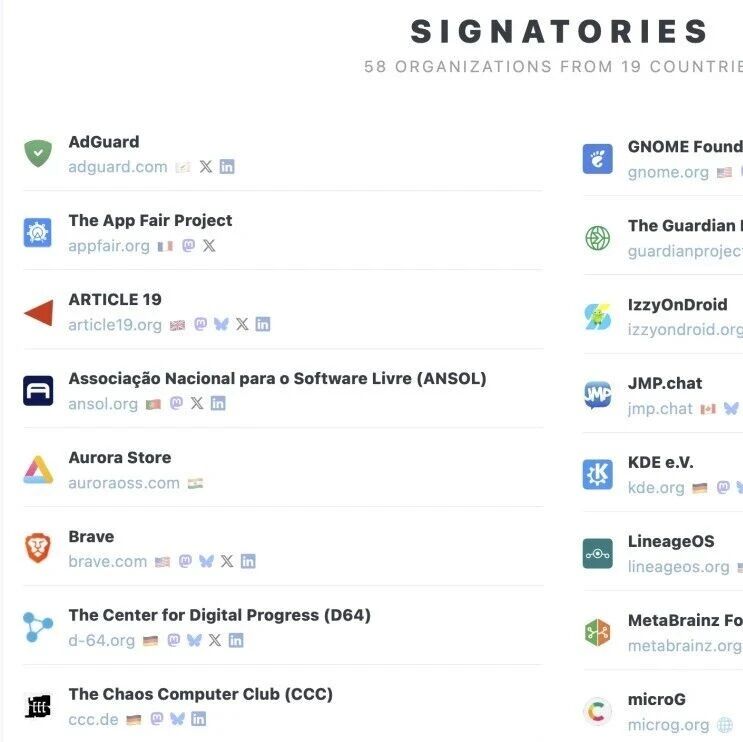
Core Viewpoint - Google has announced a new "advanced process" for sideloading applications on Android, which includes a mandatory 24-hour cooling-off period for users attempting to install apps from unverified developers, marking a significant shift towards a more closed ecosystem [1][3]. Group 1: Developer Verification and Community Response - Starting in 2026, all developers distributing apps on Android must complete identity verification, including submitting personal information and paying a $25 registration fee, affecting not only Play Store developers but also those using alternative distribution channels [3][6]. - This policy has faced strong opposition from the open-source community, with 58 tech companies and non-profits, including the Electronic Frontier Foundation, urging Google to retract the policy, arguing it could lead to censorship of apps [3][5]. - F-Droid criticized Google's commitment to not eliminating sideloading as contradictory, suggesting that the new strategy aims to control all Android developers [5][6]. Group 2: Sideloading Process and User Experience - The new sideloading process requires users to complete six core steps, including enabling developer mode, confirming no external influence, restarting the device, and undergoing a 24-hour waiting period before installation [10][11]. - Google claims that for "advanced users," this process will only need to be completed once, while a "restricted distribution account" option allows developers to share apps with up to 20 devices without full verification [11][12]. - The design of this process aims to make sideloading a more deliberate action, reducing impulsive installations from unverified sources [11][12]. Group 3: Security vs. User Freedom - Critics argue that the 24-hour cooling-off period may not effectively prevent scams, as fraudsters could simply wait until the next day to contact users again [12][14]. - Google's executives have defended the new measures as necessary for user safety, emphasizing the need for a balance between openness and security in the Android ecosystem [14][20]. - The ongoing tension between security and user freedom raises questions about who defines the boundaries of openness in smartphone ecosystems, potentially disadvantaging average users while favoring technically skilled individuals [16][18][20].


谷歌调整Android应用安装政策,允许高阶用户自主选择未验证应用
Huan Qiu Wang Zi Xun· 2025-11-13 03:51
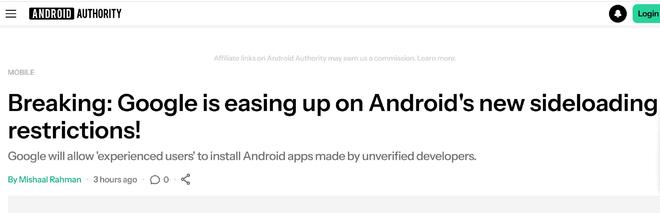
Core Points - Google has announced a significant adjustment to its Android application installation policy, introducing an "Advanced Process" for developers and advanced users to install unverified applications at their own risk, optimizing the previously controversial "full block on unverified app installations" plan [1][2] - The initial policy, announced in late August, aimed to restrict users from installing applications created by unverified developers starting next year, which raised concerns among tech enthusiasts and independent developers about the potential reduction in sideloading options [1][2] Group 1 - The "Advanced Process" specifically addresses the concerns of users with higher risk tolerance who need to download unverified applications, with a core design aimed at preventing fraudulent inducement behaviors [2] - Clear risk warnings will be set within the process to ensure users are fully aware of the security risks associated with installing unverified applications, ultimately leaving the installation decision entirely in the hands of the users [2] - Google is currently collecting early user feedback on this feature and plans to release more implementation details in the coming months [2] Group 2 - Concurrently, Google has launched a developer verification early access program, allowing developers who distribute applications outside of the Play Store to complete identity verification in advance of the developer verification requirements set to be implemented next year [2] - Developers distributing applications through the Play Store will also gradually receive registration invitations for this verification process [2]
谷歌强推安卓单色图标功能:系统自动重绘未适配应用
Huan Qiu Wang Zi Xun· 2025-09-16 08:21
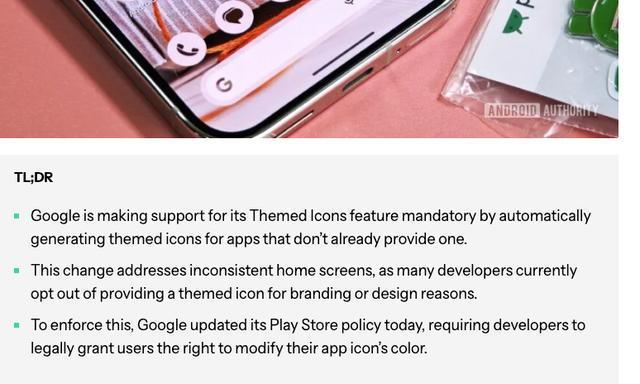
Core Insights - Google is accelerating the implementation of a "monochrome icon" feature in the Android ecosystem to address the issue of inconsistent app icon styles on the home screen [1][3] - The latest Android 16 QPR2 Beta 1 version introduces an automatic redraw mechanism that converts non-adapted app icons into monochrome styles using a color filtering algorithm [1][3] Group 1 - The traditional model required developers to provide monochrome icons for theme integration, but many opted out due to brand recognition and design complexity, leading to a chaotic user interface [3] - The new update allows Google to use algorithms to automatically identify the primary color of an app's original icon and generate a monochrome variant that complies with Material You design standards [3] - The algorithm has been trained on thousands of app icons to retain brand characteristics while avoiding copyright disputes [3] Group 2 - To ensure the functionality's implementation, Google is updating the Play Store Developer Distribution Agreement (DDA) with new key terms [3] - Developers must grant users a "non-exclusive, global, and perpetual" license to modify app icon colors or themes and display the modified versions [3] - This new clause takes immediate effect for new developers, while existing developers must comply by October 15, 2025, or risk app removal [3]
苹果(AAPL.US)警告英国新规:将危及用户隐私与安全,并阻碍创新
智通财经网· 2025-08-28 13:35
Core Viewpoint - Apple warns that upcoming mobile market reforms in the UK aimed at promoting competition may ultimately harm users and developers [1] Group 1: Company Concerns - Apple expresses concerns that EU-style regulations in the UK could undermine user expectations for privacy and security protections [1] - The company believes these reforms could hinder innovation and compel them to provide technology to foreign competitors for free [1] Group 2: Regulatory Context - The UK's Competition and Markets Authority (CMA) announced in July that Apple and Google's Android system owner must enhance competition in the app distribution sector [1] - The CMA proposed designating both companies as having "strategic market status" due to their dominant positions in the mobile ecosystem [1] Group 3: Market Share Data - According to Kantar data, Google's Android system holds a 61% market share in the UK, while Apple's iOS system accounts for 38% [1] - Google operates the Play Store and Chrome browser, while Apple manages the App Store and Safari browser [1] Group 4: Upcoming Decisions - The CMA is expected to make a final decision on this matter in October [1]


英监管机构加大对苹果(AAPL.US)、谷歌(GOOGL.US)垄断调查力度 或认定具备“战略性市场地位”
智通财经网· 2025-07-23 12:50
Core Viewpoint - The UK Competition and Markets Authority (CMA) is intensifying its scrutiny of Apple and Google due to their dominant positions in the mobile ecosystem, proposing to classify both companies as having "Strategic Market Status" (SMS) [1] Group 1: Regulatory Scrutiny - The CMA initiated an investigation in January, stating that Apple and Google possess "large and entrenched market power" in the UK's digital economy [1] - If designated as having SMS, the CMA will gain legal authority to mandate changes to business practices that harm market competition [1] Group 2: Focus of Investigation - The investigation is examining whether Apple and Google create barriers for competitors, favor their own applications and services, and impose unfair terms on developers attempting to distribute apps via the App Store or Google Play [1] Group 3: European Regulatory Challenges - Apple was fined €500 million in April for violating the EU's Digital Markets Act (DMA), while Google faces accusations of favoring its own services and restricting app developers [1] - Google is also appealing a €4.1 billion antitrust fine from 2018 [1] Group 4: Market Share Data - According to Kantar, Google's Android system holds a 61% market share in the UK, while Apple's iOS accounts for 38% [2] - Google operates the Play Store and Chrome browser, while Apple controls the App Store and Safari browser [2]