Project Maven

Search documents
How The Palantir CEO Says Its Impacting Modern Warfare
CNBC· 2026-03-13 20:00
CNBC got an inside look at Palantir's annual Artificial Intelligence Platform conference, where leaders are convening from Fortune 500 companies including GE Aerospace, Nvidia, Worldview, as well as partners in the U.S. government, including the Navy. They're all here to learn about Palantir's artificial intelligence technology. Now the commercial business is booming, revenue up 137% year over year in the fourth quarter.But what's really at the forefront of everyone's minds is Palantir's role in the Middle ...



Palantir's technology gives the West a critical edge in Middle East, CEO Alex Karp says
CNBC· 2026-03-12 21:59
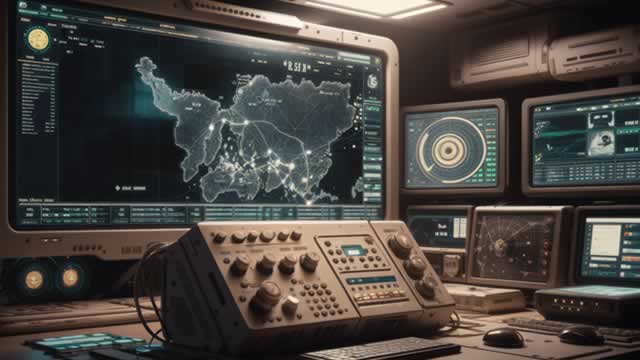
Core Insights - Palantir's CEO Alex Karp emphasized that artificial intelligence is providing the U.S. and its allies with a strategic advantage in the ongoing conflict in Iran and the broader Middle East [1] - Karp highlighted the unique American nature of the AI revolution and its implications for military capabilities [1] - The company's Project Maven is a key AI surveillance tool that integrates real-time data, which has been utilized in significant military operations [2][3] Company Performance - Palantir's U.S. commercial revenue surged by 137% in the fourth quarter, reaching $507 million [4] - The company's stock has increased by 12% this month, contrasting with a 1.6% decline in the Nasdaq [5] Industry Context - The use of AI in military operations is transforming the nature of conflicts, as evidenced by recent attacks on data centers in the Middle East [3] - U.S. data centers are increasingly recognized as national security assets, crucial for hosting digital infrastructure for governments and large corporations [4]

现代战争正在因为AI进入新形态
虎嗅APP· 2026-03-02 09:43
Core Viewpoint - The article discusses the evolving nature of warfare, highlighting a shift from traditional large-scale battles to targeted eliminations of key individuals, influenced by advancements in AI and organizational structures [2][9][67]. Group 1: Evolution of Warfare - Warfare is increasingly characterized by the "physical disappearance" of key figures rather than large-scale territorial conquests [2]. - Modern military operations follow a cold, repetitive pattern: long-term surveillance, continuous modeling, anomaly triggering, and instant strikes [6]. - Historical analysis shows a clear technological evolution in high-value target strikes, moving from reliance on traditional intelligence to real-time systems and algorithms [7]. Group 2: AI and Warfare - AI is transforming battlefield perception, allowing machines to continuously and actively sense the battlefield, marking a significant shift in warfare logic [14][15]. - The integration of AI into military decision-making processes is deepening, with AI becoming part of the "commander's cognitive system" [34]. - The emergence of a centralized cognitive system in warfare combines global multi-dimensional perception, real-time data connectivity, AI analysis, and automated action generation [26]. Group 3: Modern Warfare Principles - The principles of modern warfare emphasize intelligence priority, data quantification, and real-time feedback, compressing decision-making cycles to milliseconds [37][38][40]. - The concept of "decapitation" has evolved into a calculable outcome based on network science, where high-value targets are easily identified by algorithms [44][46]. - The speed of information flow and the sophistication of intelligent algorithms are now more critical than traditional military assets [49]. Group 4: Future of Warfare - Future conflicts will increasingly resemble a cold, super-system that silently identifies and eliminates key nodes obstructing its operation, rather than traditional military engagements [67]. - The convergence of digitalization, real-time connectivity, and AI algorithms exposes the vulnerabilities of traditional organizational structures [64]. - The arrival of AGI (Artificial General Intelligence) is expected to push these developments to their physical limits, fundamentally altering the nature of warfare [69].

从干洗店到伊丽莎白女王工程奖,李飞飞逆行硅谷技术神话,聚焦AI去人性化风险
3 6 Ke· 2025-11-21 10:18
Core Insights - Fei-Fei Li was awarded the Queen Elizabeth Prize for Engineering in Spring 2025 for her foundational contributions to computer vision and deep learning, particularly as a core advocate of the ImageNet project [1][2] - Li emphasizes that engineering is not just about computational power and algorithms, but also about responsibility and empathy, warning against the dehumanization risks posed by AI [2][12] Group 1: Achievements and Contributions - Li's research has enabled machines to perceive the world in a way that closely resembles human vision, marking a significant milestone in AI development [1][8] - The ImageNet project, initiated in 2007, has been pivotal in shifting the paradigm towards data-driven deep learning methods, which became mainstream after the 2012 ImageNet competition [8][9] Group 2: Ethical Considerations and Social Impact - Li advocates for a human-centered approach to AI, stressing that technology must align with human values and needs, and warns against the over-commercialization and militarization of AI [10][12] - She has called for the establishment of ethical regulatory mechanisms for AI, emphasizing the urgency of integrating legal frameworks to ensure responsible AI development [17][20] Group 3: Personal Background and Perspective - Li's immigrant background and experiences as a woman in technology have shaped her unique perspective on the societal implications of AI, allowing her to recognize structural biases within the tech ecosystem [4][22] - Despite her significant contributions, Li expresses discomfort with being labeled as a "godmother of AI," advocating for a broader representation of women in the field [23][29] Group 4: Challenges and Controversies - The ImageNet dataset has faced criticism for potential racial biases, prompting discussions about the ethical implications of AI training data [26][28] - Li's position as a prominent figure in AI raises questions about the balance between human-centered values and the commercial pressures of the tech industry, highlighting the complexities of her role [31][34]

Palantir insider sales intensify; Is PLTR stock in trouble?
Finbold· 2025-06-11 09:28
Core Insights - Insiders at Palantir are selling shares despite the stock's rise due to lucrative government contracts, raising concerns about confidence in the company's future [1][4][5] Insider Transactions - Shyam Sankar, CTO of Palantir, sold 405,000 shares on June 10, valued at approximately $53.49 million based on an average price of $132.07 per share [1][2] - Other executives, including director Alexander Moore, have also sold significant amounts of stock, with Moore selling 80,000 shares for about $9.6 million on June 6 and previously 20,000 shares for $1.68 million on April 1 [3][4] - In late May, executives sold over $124 million in stock, including $50 million by CEO Alex Karp and $43 million by Executive VP Stephen Andrew [4] Company Performance and Valuation - Palantir has secured significant government contracts, including a $1.3 billion extension of its Project Maven contract with the U.S. Department of Defense, indicating strong growth fundamentals [6] - The stock has increased by 76% year-to-date, closing at $132, up 0.57% on the last trading day [6] - Despite the growth, analysts express caution regarding the high valuation of Palantir, with a consensus predicting a 23% decline in stock price over the next 12 months, targeting $101 [8]