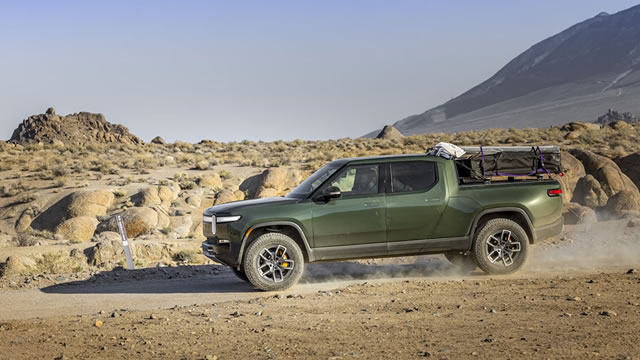
R1S SUV

Search documents
Tesla vs. Rivian: Which EV Maker's Stock Is the Better Buy?
The Motley Fool· 2026-03-26 07:05
Core Insights - Tesla remains the leading player in the electric vehicle (EV) market with a market capitalization exceeding $1 trillion, while Rivian is attempting to catch up [1] - Rivian has signed a significant contract with Uber to deploy up to 50,000 autonomous robotaxis by 2031, with Uber potentially investing up to $1.25 billion based on performance milestones [2] - Rivian's current market cap is $19 billion, and it holds less than 1% of the global market share, indicating substantial growth potential [3] Rivian Overview - Founded in 2009, Rivian initially aimed to create a hybrid sports car but has since focused on electric trucks and SUVs, including the R1S SUV and R1T pickup [4] - Rivian has a partnership with Amazon, having produced over 30,000 electric delivery vans for the company [6] - In 2025, Rivian delivered 42,247 vehicles, a decrease of 18% from the previous year, attributed to the expiration of federal EV tax credits and reduced demand [7] Tesla Overview - Tesla delivered 1.63 million vehicles in 2025, down from 1.78 million the previous year, facing challenges from competition and reduced profit margins [8] - Tesla's revenue for 2023 was $96.77 billion, with a net income of $14.99 billion and a gross margin of 15.4% [9] - The company is shifting focus towards robotics, discontinuing the Model S and Model X to allocate resources for the production of Optimus robots [10] Market Dynamics - The EV market is experiencing increased competition, leading to price cuts by Tesla, while revenue from its energy generation and storage segment has risen significantly [9] - Analysts predict a $9 trillion market for humanoid robots by 2050, with Tesla's Optimus potentially capturing $450 billion of that market [12] - The rising gasoline prices are expected to boost the popularity of EVs, especially if vehicle prices continue to decline [12] Investment Considerations - For investors seeking a pure-play EV stock, Rivian presents a compelling option due to its partnership with Uber, which enhances its visibility and capital for vehicle development [13] - Tesla's broader positioning in robotics and existing infrastructure offers a more extensive opportunity, making it an attractive investment in its own right [13]


Uber to invest up to $1.25 billion in Rivian as part of robotaxi deal
Reuters· 2026-03-19 12:02
Core Insights - Uber will invest up to $1.25 billion in Rivian as part of a deal to deploy 10,000 fully autonomous R2 SUVs as robotaxis starting in 2028 [1][4] - The initial investment will be $300 million, with the remaining funds contingent on Rivian meeting specific autonomous milestones by 2031 [2][6] - Uber has the option to purchase an additional 40,000 robotaxis beginning in 2030 [4][6] Investment and Deployment - The investment is structured with an initial commitment of $300 million, with further funding dependent on performance milestones [2][6] - The deployment of Rivian's R2 robotaxis will begin in major cities like San Francisco and Miami [4][5] - If all milestones are met, thousands of Rivian R2 robotaxis could be operational across 25 cities in the U.S., Canada, and Europe by the end of 2031 [5] Industry Context - Interest in driverless taxis has increased recently, driven by advancements in artificial intelligence and technology partnerships [2] - Rivian is preparing to launch its smaller, more affordable R2 SUVs, which are expected to support the robotaxi initiative [3] - Uber is positioning itself as a marketplace for various robotaxi operators, collaborating with multiple companies in the autonomous vehicle sector, including Waymo and Nvidia [5][6]

Why TD Cowen Turned Bullish on Rivian Automotive (RIVN) Ahead of the R2 Launch
Yahoo Finance· 2026-03-18 14:14
Core Viewpoint - Rivian Automotive, Inc. is considered a strong growth stock, particularly due to the anticipated launch of its lower-priced R2 platform, which is expected to significantly increase vehicle demand and sales volume [1][2]. Group 1: R2 Platform Launch - The R2 lineup was disclosed on March 12, 2026, featuring a launch variant starting at $57,990 and an entry configuration expected at $45,000 [2]. - TD Cowen analyst Itay Michaeli upgraded Rivian to Buy from Hold and raised the price target to $20, citing the R2 as a key volume driver compared to the higher-priced R1 vehicles [1]. Group 2: Financial Performance - In 2025, Rivian delivered 42,247 vehicles and reported a consolidated gross profit of $144 million, a significant recovery from a gross loss of $1.2 billion in 2024 [3]. - The company has guided for vehicle deliveries of 62,000 to 67,000 in 2026, indicating a positive growth trajectory [3]. Group 3: Company Overview - Rivian designs and manufactures electric vehicles, with its current lineup including the R1T pickup and R1S SUV, while the R2 aims to broaden the addressable market with a more affordable option [4].
Here's Why Rivian (RIVN) Stock Is a Buy Before March 12
Yahoo Finance· 2026-03-06 17:20
Core Viewpoint - Rivian is set to launch its new R2 SUV on March 12, 2026, which is crucial for the company's future growth and could present a significant investment opportunity before the event [1]. Production and Sales - Rivian has faced challenges in ramping up production since its IPO, with vehicle production increasing from 24,337 in 2022 to 57,232 in 2023, but then declining to 49,476 in 2024 and 42,284 in 2025 [2]. - The company attributes these production declines to supply chain issues, reduced EV subsidies, rising interest rates, and fierce competition in the premium EV sector [3]. R2 SUV Launch - The R2 SUV is priced at approximately $45,000, which is $30,000-$40,000 less than the R1T and R1S, aiming to capture a broader market [3]. - The R2's design is more cost-effective to produce, featuring fewer electronic control units and simpler components, which will help maintain gross margins [4]. Production Capacity Expansion - Rivian plans to open a new plant in Georgia to alleviate production pressure from its Illinois facility and aims to triple its total production capacity by 2028 [5]. - Successful production and sales of the R2 could enhance brand recognition and establish a stronger foundation for future higher-end models, such as the R3 SUV expected in late 2026 or early 2027 [5]. Financial Outlook - Rivian's stock is currently trading at $15 per share, over 80% below its IPO price, and is valued at less than three times its projected sales for the year [6]. - Analysts predict that if Rivian successfully expands its market with the R2 and additional vehicles, its revenue could increase from $5.4 billion in 2025 to $16.3 billion by 2028, with adjusted EBITDA expected to turn positive by that time [6]. Market Comparison - The launch of the R2 is likened to Tesla's introduction of the Model 3, which significantly boosted Tesla's stock value, suggesting that Rivian's stock could similarly appreciate if the R2 is successful [7].
2 EV Stocks to Buy in March
Yahoo Finance· 2026-03-05 18:22
Industry Overview - The electric vehicle (EV) market has experienced rapid expansion over the past decade, but growth is now cooling due to reduced government subsidies, tariffs affecting cross-border shipments, and macroeconomic challenges impacting consumer spending [1] - Despite these challenges, the global EV market is projected to grow at a 32.5% CAGR from 2025 to 2030, driven by automakers launching more affordable and efficient EVs [2] Company Analysis: Nio - Nio is a Chinese EV manufacturer known for its battery-swapping technology, with over 3,500 battery-swapping stations [3] - The company offers higher-end sedans and SUVs under its main brand, while its sub-brands, Onvo and Firefly, launched in 2024, focus on more affordable SUVs and compact cars [3] - Nio's annual deliveries have shown significant growth, with a 32% increase in 2022, 31% in 2023, 39% in 2024, and a projected 47% increase to 326,028 vehicles in 2025 [5] - The growth is attributed to strong sales of its ET-series sedans and Onvo SUVs in China, along with expansion into European markets, leading to improved vehicle margins [6] - Nio anticipates posting its first adjusted profit in Q4 2025 [6] Company Analysis: Rivian - Rivian is an American EV manufacturer that produces three types of vehicles: the R1T pickup truck, the R1S SUV, and custom electric delivery vans for companies like Amazon [4] - The company began vehicle production in Q4 2021, delivering 20,332 vehicles in 2022 and increasing that number to 50,122 in 2023 [7] - However, Rivian's growth has faced challenges, with a modest 3% increase to 51,579 vehicles in 2024, followed by an 18% decline to 42,247 vehicles in 2025 [7]
TechCrunch Mobility: Rivian’s savior
Yahoo Finance· 2026-02-15 17:05
Group 1 - Rivian's fourth-quarter and full-year earnings highlight the importance of its technology joint venture with Volkswagen Group, which is expected to generate an additional $2 billion in 2026 [3][6] - The cost of goods sold (COGS) per unit for Rivian's automotive portfolio decreased from $110,400 in 2024 to $100,900 in 2025, indicating improved efficiency and reduced losses per vehicle sold [4] - Rivian plans to launch the lower-cost R2 SUV in June 2026, which is anticipated to significantly impact production costs and sales volume [5][6] Group 2 - Rivian expects to deliver between 62,000 and 67,000 vehicles in 2026, representing a potential increase of up to 59% from the 42,247 vehicles delivered in 2025 [6][7] - The positive earnings guidance led to a 27% increase in Rivian's stock price following the earnings report [7] Group 3 - Lyft is currently holding approximately $1.8 billion in cash and has initiated a $1 billion share repurchase program, raising questions about its investment strategy in the autonomous vehicle (AV) sector compared to competitors like Uber [9]
Rivian was saved by software in 2025
TechCrunch· 2026-02-12 23:17
Core Insights - Rivian's total revenue for 2025 reached $5.38 billion, marking an 8% increase from $4.97 billion in 2024, despite a 15% decline in automotive revenue to $3.8 billion due to lower vehicle deliveries and a drop in regulatory credit sales [2][3] Revenue Breakdown - Automotive revenue fell to $3.8 billion, influenced by a $134 million decrease in regulatory credit sales and reduced vehicle deliveries, although higher average selling prices provided some offset [2] - Software and services revenue surged over threefold to $1.55 billion, primarily driven by a joint venture with Volkswagen Group [3] Joint Venture with Volkswagen - The joint venture with Volkswagen, established in 2024 and valued at up to $5.8 billion, resulted in a $1 billion payout in 2025 after Rivian met certain milestones [4] - Rivian is expected to receive an additional $2 billion from Volkswagen through 2027, contingent on the successful completion of winter testing and other terms [5] Future Product Launches - Rivian plans to launch the R2 SUV by June 2026, which is designed to be cheaper to produce and more affordable for customers, addressing the company's historical losses on vehicle production [8] - The R2 SUV is anticipated to further reduce costs, with Rivian aiming to deliver between 62,000 and 67,000 vehicles in 2026, representing a potential 59% increase from 2025 [11] Financial Performance and Projections - Rivian reported a net loss of $3.6 billion in 2025, with expectations of an adjusted net loss between $1.8 billion and $2.1 billion for 2026 [12] - Capital expenditures for 2026 are projected to be between $1.95 billion and $2.05 billion [12]
Where Will Rivian Stock Be in 5 Years?
Yahoo Finance· 2026-01-30 18:35
Core Viewpoint - Rivian's stock has significantly declined from its IPO price of $78 to $15 due to production misses, financial losses, and a lack of justification for its high valuation, raising questions about its potential recovery in the next five years [1][2]. Production and Delivery Performance - Rivian produces three types of electric vehicles: the R1T pickup truck, the R1S SUV, and custom electric delivery vans for Amazon and others [4]. - In 2022, Rivian aimed to produce 50,000 vehicles but only managed to produce 24,337 and deliver 20,332 due to supply chain issues [5]. - Production increased to 57,232 vehicles in 2023, with 50,122 deliveries as supply chain constraints were resolved [5]. - In 2024, production decreased to 49,476 vehicles, but deliveries rose to 51,579 despite challenges like inflation and competition [6]. - For 2025, Rivian expects to deliver between 40,000 to 46,000 vehicles due to ongoing macro and microeconomic headwinds [6]. Future Growth Prospects - Rivian anticipates growth as it ramps up production of the R2 SUV in 2026 and 2027, alongside selling clean energy regulatory credits and generating revenue from upgrades and services [7]. - Analysts project a 31% compound annual growth rate (CAGR) for Rivian's revenue from 2024 to 2027, with expectations of narrowing net losses [8]. - If Rivian achieves its targets and grows revenue at a 20% CAGR through 2031, its stock could potentially increase more than sixfold if it trades at a 5x sales multiple by 2031 [8].
L87 Engine Failures Keep GM Under Regulatory and Cost Pressure
ZACKS· 2026-01-20 14:36
Core Insights - General Motors (GM) is experiencing significant issues with its L87 6.2L V8 engine, which has led to federal safety regulators and vehicle owners raising concerns about engine failures even after a recall fix [1][10] Recall Details - In April 2025, GM recalled approximately 721,000 vehicles globally due to engine issues, with nearly 600,000 of these vehicles in the U.S. equipped with the problematic L87 engine [2] - The recall aimed to address serious internal issues, including manufacturing defects in connecting rods and crankshafts that could lead to engine seizure [3] - The remedy involved a two-step process where technicians inspected the engine and replaced it if damaged, or drained and refilled the oil with thicker 0W-40 oil if no damage was found [4] Ongoing Issues - As of January 2026, 36 vehicle owners reported engine failures despite having their vehicles inspected and fixed under the recall [5] - The National Highway Traffic Safety Administration (NHTSA) has opened a recall query (RQ26001) to investigate the adequacy of the previous solution and assess reports of sudden engine failures [6][7] Legal and Regulatory Pressure - A class-action lawsuit has been filed against GM, claiming that the recall caused confusion and that the fix may not be sufficient to prevent future problems [7] - The ongoing failures of the L87 engine have raised serious questions about the effectiveness of GM's remedy, increasing pressure on the company to provide a permanent solution [7] Competitive Context - Rivian Automotive is recalling 19,641 R1 vehicles for a rear suspension issue, while Ford has recalled over 272,000 hybrid and EVs due to a software issue affecting the Integrated Parking Module [8][9] Stock Performance - GM shares have increased by 51.9% over the past six months, outperforming the industry growth of 33.6% [13] - GM currently trades at a forward price-to-sales ratio of 0.41X, which is lower than both the industry average and its own five-year average, and holds a Value Score of A [14]

Rivian Rises 31% in 3 Months: Should You Buy, Sell or Hold the Stock?
ZACKS· 2026-01-16 15:31
Core Insights - Rivian Automotive's shares have increased by 30.9% over the past three months, significantly outperforming the industry and sector growth of 2.7% and 3.4%, respectively [1] - Rivian's delivery numbers have declined, with 42,247 vehicles delivered in 2025, down from 51,579 in 2024, indicating challenges in maintaining growth [5] - The company faces pressures on cash flow due to heavy capital expenditures and inventory buildup for its R2 program, which could impact financial stability moving forward [9][10] Delivery and Production Performance - Rivian's production in 2025 totaled 42,284 units, a decrease from 49,476 units in 2024, with fourth-quarter production at 10,974 vehicles and deliveries at 9,745 units [5] - In contrast, Tesla delivered over 1,635,000 vehicles in 2025, down from more than 1,789,000 in 2024, while Lucid Group saw a 55% increase in deliveries to 15,841 units [6][7] Market Dynamics - The broader EV market is experiencing slowing demand, partly due to the expiration of a $7,500 U.S. tax credit, which has led to increased vehicle prices [8] - Rivian's premium-priced R1T and R1S models are under pressure as competition intensifies from both legacy automakers and new entrants [8] Financial Health - Rivian's cash balance decreased to $7.1 billion at the end of Q3 2025, down from $7.7 billion in 2024, indicating potential liquidity concerns [9] - The company is expected to continue facing cash flow pressures due to elevated capital spending and inventory buildup for the R2 program [10] Valuation and Broker Consensus - Rivian appears undervalued with a forward sales multiple of 3.05, lower than the industry's five-year average [12] - The Zacks Consensus Estimate for Rivian's 2025 sales and EPS indicates a year-over-year decline of 27.2% and 30.8%, respectively, with a neutral-to-cautious broker consensus reflected in an average recommendation of 2.78 [14][16] Conclusion - Despite recent stock performance, Rivian is contending with declining deliveries, softening EV demand, and increased competition, alongside significant capital expenditures and cash flow pressures [18] - External risks related to global trade and tariffs further complicate the outlook, suggesting limited near-term upside for the stock [19]