
RAG(检索增强生成)

Search documents
检索做大,生成做轻:CMU团队系统评测RAG的语料与模型权衡
机器之心· 2026-01-06 00:31
Core Insights - The core argument of the research is that expanding the retrieval corpus can significantly enhance Retrieval-Augmented Generation (RAG) performance, often providing benefits that can partially substitute for increasing model parameters, although diminishing returns occur at larger corpus sizes [4][22]. Group 1: Research Findings - The study reveals that the performance of RAG is determined by both the retrieval module, which provides evidence, and the generation model, which interprets the question and integrates evidence to form an answer [7]. - The research indicates that smaller models can achieve performance levels comparable to larger models by increasing the retrieval corpus size, with a consistent pattern observed across multiple datasets [11][12]. - The findings show that the most significant performance gains occur when moving from no retrieval to having retrieval, with diminishing returns as the corpus size increases [13]. Group 2: Experimental Design - The research employed a full factorial design, varying only the corpus size and model size while keeping other variables constant, using a large dataset of approximately 264 million real web documents [9]. - The evaluation covered three open-domain question-answering benchmarks: Natural Questions, TriviaQA, and Web Questions, using common metrics such as F1 and ExactMatch [9]. Group 3: Mechanisms of Improvement - The increase in corpus size enhances the probability of retrieving answer-containing segments, leading to more reliable evidence for the generation model [16]. - The study defines the Gold Answer Coverage Rate, which measures the probability that at least one of the top chunks provided to the generation model contains the correct answer string, showing a monotonic increase with corpus size [16]. Group 4: Practical Implications - The research suggests that when resources are constrained, prioritizing the expansion of the retrieval corpus and improving coverage can allow medium-sized generation models to perform close to larger models [20]. - The study emphasizes the importance of tracking answer coverage and utilization rates as diagnostic metrics to identify whether bottlenecks are in the retrieval or generation components [20].


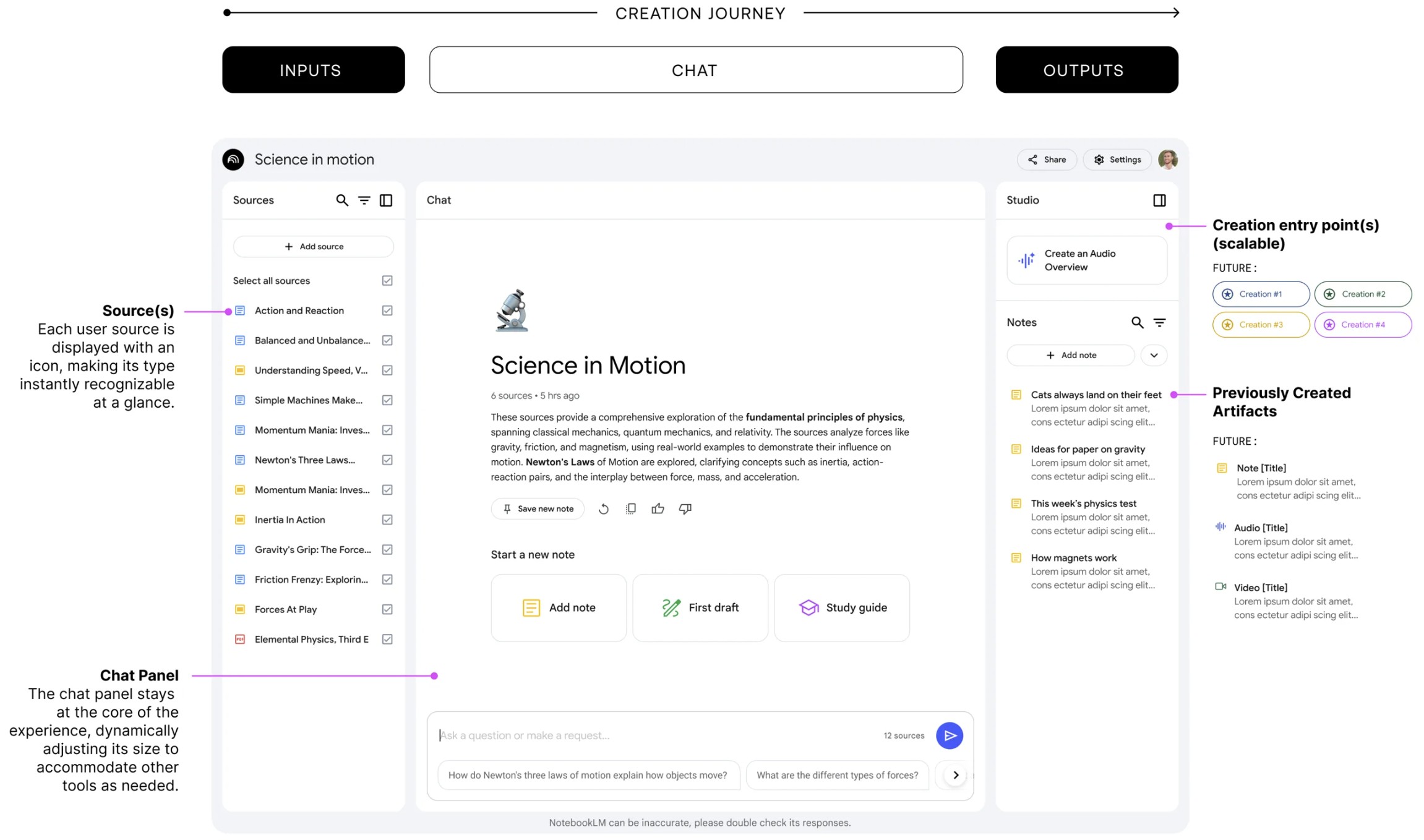
NotebookLM 功能逆天了:我是如何用它来深度学习的
3 6 Ke· 2025-11-23 00:06
Core Insights - The article emphasizes the importance of teaching AI how to effectively educate users, rather than relying solely on AI to provide knowledge [1][72]. Group 1: NotebookLM Features - NotebookLM has evolved to include features that allow users to customize how AI teaches them based on their learning stages [7][71]. - The "Discover" function in NotebookLM helps users filter sources to find the most relevant and reliable information [11][12]. - Users can create customized reports in various formats, such as briefing documents and study guides, tailored to their learning needs [19][20]. Group 2: Learning Strategies - The article outlines several strategies for using NotebookLM, including filtering sources from specific platforms like Reddit and YouTube to gather beginner-friendly content [12][13]. - Different learning styles can be accommodated through various formats, such as audio overviews and video presentations, enhancing the learning experience [28][37]. - The use of flashcards and quizzes in NotebookLM helps users test their understanding and identify knowledge gaps [49][58]. Group 3: Practical Applications - The integration of AI tools like NotebookLM can facilitate the development of personalized learning systems, making complex topics more accessible [71][72]. - Users are encouraged to leverage AI to create a structured learning path that aligns with their current knowledge and future goals [73][74]. - The article highlights the significance of understanding the connections between concepts, rather than just memorizing definitions [60][61].
喝点VC|硅谷风投重磅报告:翻8倍!企业客户对生成式AI应用投入达46亿美元;企业优先考虑价值而非速赢
Z Potentials· 2025-08-02 02:19
Core Insights - Generative AI is transitioning from pilot projects to production phases, with enterprise spending on AI skyrocketing to $13.8 billion in 2024, up from $2.3 billion in 2023, indicating a shift towards embedding AI into core business strategies [3][6][4] - 72% of decision-makers anticipate broader adoption of generative AI tools in the near future, reflecting a strong optimism within organizations [3][6] - Despite the positive outlook, over one-third of respondents are still unclear on how to deploy generative AI across their organizations, highlighting the early stages of this transformation [3][5] Investment Trends - 60% of investments in generative AI come from "innovation budgets," while 40% are from more conventional budgets, with 58% of that being reallocated from existing funds, indicating a growing commitment to AI transformation [5][6] - In 2024, enterprises are expected to invest $4.6 billion in generative AI applications, a significant increase from $600 million in the previous year [11] Application Areas - The leading use cases for generative AI include code collaboration assistants (51% adoption), customer service chatbots (31%), enterprise search (28%), information retrieval (27%), and meeting summaries (24%) [12][16] - Organizations are focusing on use cases that provide measurable ROI, with the top five use cases aimed at enhancing productivity and efficiency [16] Industry-Specific Applications - The healthcare sector is leading in generative AI adoption with $500 million in spending, utilizing tools for clinical documentation and workflow automation [32] - The legal industry is also embracing generative AI, with $350 million in spending, focusing on managing unstructured data and automating complex workflows [33] - Financial services are investing $100 million in generative AI to enhance accounting and compliance processes [34] - The media and entertainment industry is seeing $100 million in spending, with tools that support content creation and production [35] Technology Stack and Trends - The modern AI technology stack is stabilizing, with $6.5 billion in enterprise investment in large language models (LLMs) [37] - A multi-model strategy is becoming prevalent, with organizations deploying three or more foundational models for different use cases [41] - The adoption of retrieval-augmented generation (RAG) design patterns is rising, now at 51%, while fine-tuning remains rare at only 9% [45] Future Predictions - The emergence of AI agents is expected to drive the next wave of transformation, automating complex multi-step tasks [49] - Traditional vendors may face challenges from AI-native challengers, as dissatisfaction with existing solutions grows [23] - A significant talent shortage in the AI field is anticipated, with demand for skilled professionals expected to outstrip supply [51]
一文搞懂:RAG、Agent与多模态的行业实践与未来趋势
AI科技大本营· 2025-04-27 07:12
大模型作为产业变革的核心引擎。通过RAG、Agent与多模态技术正在重塑AI与现实的交互边界。三者协同演进,不仅攻克了数据时效性、专业适配等核 心挑战,更推动行业从效率革新迈向业务重构。本文将解析技术演进脉络、实战经验与未来图景,为读者提供前沿趋势的全局视角与产业升级的实践指 引。 作者 | 蒋进 出品丨腾讯云开发者 大模型技术正加速渗透至产业核心场景,成为驱动数字化转型的智能引擎。全球机器学习大会(ML-Summit)聚焦大模型技术的创新突破与产业实 践,深入探讨其前沿方向与落地路径。作为AI发展的核心驱动力, 检索增强生成(RAG) 通过动态知识融合技术突破大模型的静态知识边界; 智能体 (Agent) 借助自主决策与多任务协同能力重构人机协作范式; 多模态大模型 则依托跨模态语义理解技术解锁复杂场景的落地潜力。三者协同演进, 不仅攻克了数据时效性、隐私安全与专业适配等关键难题,更在医疗诊断、金融风控、智能制造等领域催生从效率革新到业务重构的行业级变革。 ML-Summit会议大模型内容分布 RAG: 大模型的动态知识引擎,解决模型静态知识边界、时效性与可信度问题。 大模型在很多领域表现出色,但依然存在局 ...