RNA干扰技术

Search documents
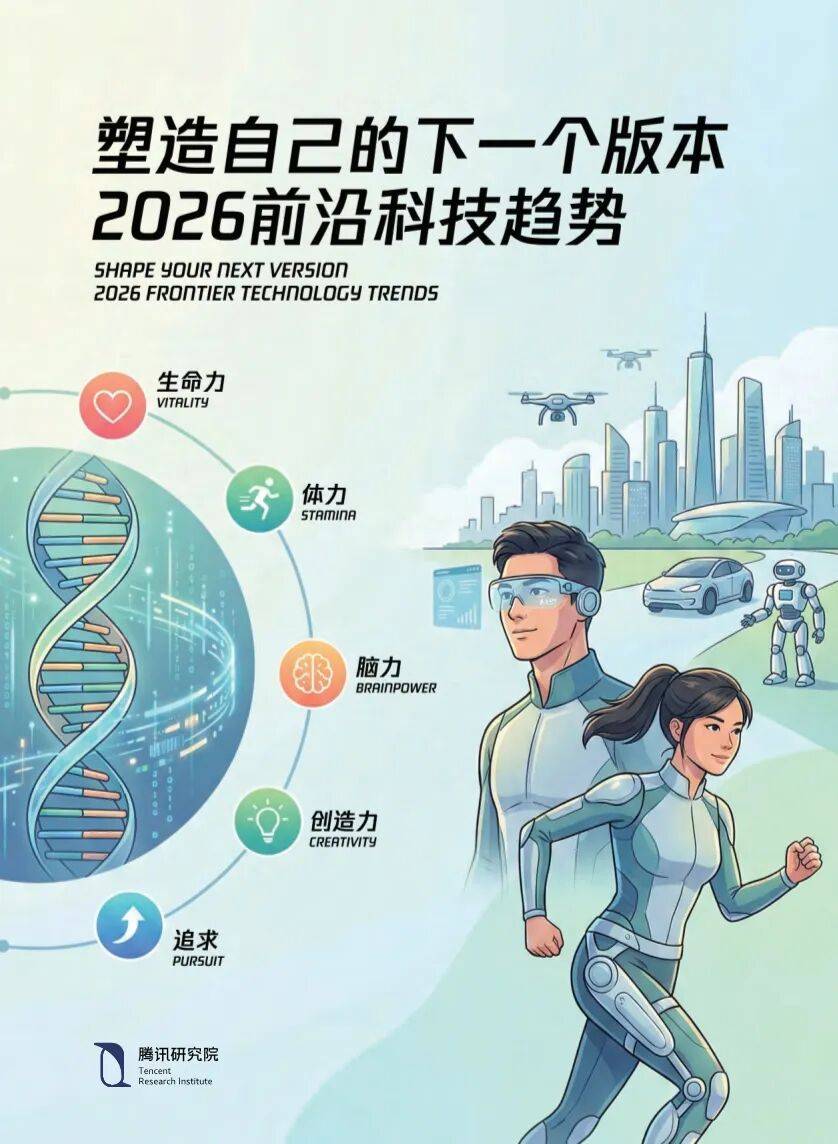
塑造自己的下一个版本2026前沿科技趋势报告解读(40页附下载)
Sou Hu Cai Jing· 2026-02-23 09:39
Group 1: Vitality 2030 - The report highlights a significant shift in human life expectancy, indicating that while life expectancy has doubled over the past century, the growth rate has drastically slowed down, with some regions experiencing stagnation or decline [2][29]. - A new paradigm is emerging, focusing on "healthspan" rather than just lifespan, emphasizing the quality of life without severe chronic diseases, which could generate a global economic value of up to $38 trillion if healthspan is extended by just one year [2][30]. - Key technological advancements include CRISPR technology entering its 2.0 phase, with potential breakthroughs in gene therapy for cardiovascular diseases and personalized treatments for metabolic disorders [2][34][35]. Group 2: Stamina 2030 - Exoskeleton technology is evolving from medical applications to industrial and personal use, significantly enhancing human physical capabilities [3][54]. - In the medical field, exoskeletons are transitioning from mobility aids to intelligent devices that promote neurological rehabilitation, with Medicare's reimbursement policy marking a significant milestone [3][54]. - Industrial applications are showing promising results, with companies like German Bionic reporting a 75% reduction in workplace injuries after implementing exoskeleton technology [3][54]. Group 3: Brainpower 2030 - The report discusses the evolution of artificial intelligence (AI) towards general intelligence (AGI), highlighting advancements in reasoning models that can self-correct and learn from experience [6][7]. - AI is expected to enhance medical practices by significantly reducing drug development timelines from 10-15 years to just a few months, with AI-driven drug candidates already entering clinical trials [6][44]. - Brain-computer interfaces (BCIs) are advancing, with both invasive and non-invasive technologies showing promise in restoring sensory functions and translating brain activity into coherent language [9][10]. Group 4: Creativity 2030 - The integration of AI with personal creativity tools is expected to redefine individual and team productivity, with AI assistants capable of generating complex outputs like presentations and creative content [11][12]. - The emergence of "super individuals" who can independently manage product development and marketing using AI tools is reshaping the concept of team dynamics and company structures [13][14]. - Large organizations are facing challenges in adapting to the AI era, necessitating a complete overhaul of human resource practices to focus on skills and collaborative partnerships rather than traditional employment models [14][15]. Group 5: Pursuit 2030 - The report raises critical questions about individual uniqueness and decision-making in an AI-driven world, emphasizing the importance of maintaining personal judgment and growth opportunities [16][17]. - It suggests that technology amplifies not only capabilities but also choices and values, urging individuals to reflect on their direction in a rapidly evolving landscape [16][17]. - The overarching theme is the need to balance technological advancements with the preservation of human dignity and quality of life, aiming for a future where health and vitality are prioritized over mere longevity [18][51].

Nature:武汉大学宋保亮院士团队发现MASH防治新靶点,并提出治疗方法
生物世界· 2026-02-19 02:20
Core Viewpoint - The research identifies the GPNMB-RYK signaling axis as a novel pathogenic ligand-receptor pathway and a promising therapeutic target for Metabolic Dysfunction-Associated Steatotic Hepatitis (MASH) [5] Group 1: Research Findings - MASH is a critical stage of Metabolic Dysfunction-Associated Fatty Liver Disease (MASLD) with increasing global prevalence and limited treatment options [3] - The study published in Nature reveals that the extracellular domain of GPNMB (G-ECD) drives the progression of MASH by promoting fat accumulation and inflammation in the liver [3][4] - The research team found that knocking out the Gpnmb gene in mice protects them from diet-induced MASH, indicating the gene's significant upregulation in MASH [4] Group 2: Mechanism of Action - The binding of G-ECD to the RYK receptor activates the ERK1/2 signaling pathway, leading to the transcriptional activation of PPARγ-CD36 and SREBP1C pathways, which promote lipid uptake and synthesis in the liver [4] - The study confirmed that various therapeutic strategies targeting the GPNMB-RYK signaling axis, including G-ECD vaccines and AAV-delivered shRNA, effectively prevent and treat MASH in preclinical models [4]