RNA干扰(RNAi)技术

Search documents
2026前沿科技趋势:塑造自己的下一个版本
3 6 Ke· 2026-01-30 09:58
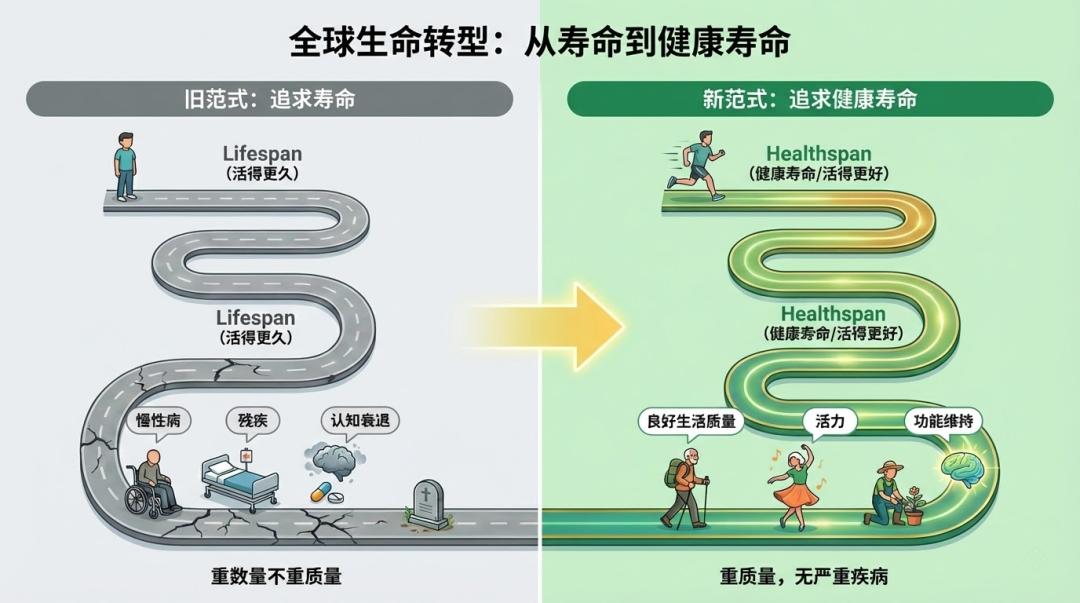
Group 1 - The rapid evolution and application of artificial intelligence and cutting-edge technologies are causing societal adaptation challenges, leading to feelings of uncertainty among people [1][2] - The focus of technological advancement should be human-centered, with an emphasis on shaping a better future through technology by 2030 [2] Group 2 - The "third transformation" of human life aims to extend healthy lifespan rather than just lifespan, with significant implications for global health and economy [3][5] - Human life expectancy has doubled over the past century, but the growth rate has significantly slowed down, with some regions experiencing stagnation or decline [4] - By 2030, the quality of life is projected to be a major focus, with non-communicable diseases potentially costing the global economy up to $47 trillion if not addressed [5] Group 3 - Advances in gene therapy and artificial intelligence are expected to play crucial roles in extending healthy lifespan, with technologies like CRISPR and AI enhancing medical capabilities [9][17] - Clinical breakthroughs in preventive gene therapy and RNA therapies are showing promise in treating chronic diseases effectively [10][12] - Epigenetic reprogramming is emerging as a potential method to reverse aging, with ongoing research aiming for clinical trials by 2026 [15] Group 4 - Artificial intelligence is set to enhance medical efficiency and understanding of human health, with applications in drug development, disease screening, and personal health management expected to yield significant results by 2030 [17][18] - AI is accelerating drug development processes, reducing timelines from years to months, and improving the success rates of new treatments [18][19] Group 5 - The development of exoskeleton technology is enhancing human physical capabilities, with applications in medical rehabilitation, industrial safety, and personal use expected to expand significantly [24][25] - Innovations in exoskeletons are making them more adaptable and user-friendly, with advancements in sensor technology and materials [28][30] Group 6 - The eVTOL market is projected to grow significantly, with advancements in battery technology and noise reduction strategies being critical for its acceptance and integration into urban transportation [31][32] - The evolution of drones into autonomous aerial robots is enhancing their capabilities for both consumer and industrial applications [34] Group 7 - The development of brain-computer interfaces (BCIs) is transforming the treatment of neurological conditions and enhancing human capabilities, with both invasive and non-invasive technologies showing promise [51][54] - BCIs are moving from experimental to standard treatment options for conditions like paralysis, with significant advancements in technology and regulatory approval processes [52][53]

2026前沿科技趋势:塑造自己的下一个版本
腾讯研究院· 2026-01-30 08:18
Core Insights - The article emphasizes the rapid evolution and application of artificial intelligence and cutting-edge technologies across various fields, urging a human-centered approach to technological advancement [3][4][5]. Group 1: Human Life's "Third Transformation" - Extending Healthy Lifespan - Human life expectancy has doubled over the past century, with significant improvements attributed to public health, antibiotics, and vaccines [7]. - Recent research indicates a dramatic slowdown in the growth rate of life expectancy, with the average increase dropping to below 0.25 years per decade in the last 30 years [8]. - A shift is occurring from merely extending lifespan to enhancing healthspan, which is the period of life spent in good health, with potential economic implications of up to $47 trillion in costs from non-communicable diseases by 2030 [9]. Group 2: Programmable Life - Gene Therapy - Gene therapy is moving towards optimizing the "life code," with advancements in CRISPR technology and delivery systems expected to mature by 2030 [11]. - Clinical breakthroughs in preventive gene therapy, such as Verve Therapeutics' treatment for cardiovascular disease, show promising results with significant reductions in LDL-C levels [12]. - The success of personalized CRISPR therapy in curing a fatal metabolic disease in a patient highlights the potential of gene therapy [14]. Group 3: Health Planning - AI Enhancing Medical Efficiency - AI is set to revolutionize drug development, disease screening, and personal health management by 2030, significantly reducing the time and cost associated with traditional drug development [21]. - AI combined with multi-omics technology is facilitating faster and more accurate disease screening, with notable advancements in cancer detection [23]. - Aging clock technology is evolving, enabling precise monitoring of aging processes and identifying underlying causes of aging [25]. Group 4: Enhancing Physical Capability - Exoskeleton Technology - Exoskeleton technology is advancing to enhance human physical capabilities, with applications in medical rehabilitation, industrial safety, and personal use [30]. - In the medical field, exoskeletons are evolving from mere mobility aids to intelligent devices that promote neurological recovery [31]. - Consumer-grade exoskeletons are expected to become popular for outdoor activities, significantly improving mobility for users [32]. Group 5: Flying Technology - eVTOL Development - The eVTOL market is projected to reach $41 billion in China by 2040, with significant advancements in battery technology expected to triple flight ranges [37]. - Noise reduction technologies are being explored to enhance social acceptance of eVTOLs, with strategies like "noise corridors" being implemented [38]. - The evolution of drones into aerial robots is enhancing capabilities in both consumer and industrial applications, with significant advancements in autonomous operations [40]. Group 6: Brain-Machine Interfaces - A New Era of Interaction - Brain-machine interfaces (BCIs) are transitioning from experimental therapies to standard treatment options for conditions like paralysis, with companies like Neuralink leading the way [61]. - Non-invasive BCIs are emerging, allowing for enhanced human-computer interaction, with applications in consumer technology [63]. - The integration of BCIs with AI could redefine human-AI collaboration, raising ethical considerations regarding privacy and data protection [64].

西南大学“万无一虱”团队创新烟粉虱防控路径
Huan Qiu Wang Zi Xun· 2025-07-25 10:39
Core Viewpoint - The "Wanwu Yishi" team from Southwest University has innovatively proposed a "dual-target prevention and control" system to address the challenges posed by the tobacco whitefly, a significant agricultural pest that can cause over 30% annual yield loss in solanaceous crops [1][3]. Group 1: Problem Identification - The tobacco whitefly is identified as a "super pest" that severely threatens agricultural production, particularly in eggplant and chili cultivation [1]. - Traditional chemical pesticide methods are becoming less effective year by year, leading to increased costs and ecological pollution, creating a dilemma for farmers [1]. Group 2: Innovative Solutions - The "Wanwu Yishi" team has developed a green technology for controlling tobacco whiteflies by combining theoretical research with practical application [3]. - The team has identified two core pain points: the strong mobility of the tobacco whitefly and the significant pollution caused by chemical pesticides [3]. - The innovative "internal and external dual-target" comprehensive prevention strategy has been proposed, targeting the pest's movement capabilities and reducing chemical pesticide reliance [3]. Group 3: Technological Advancements - The internal control utilizes advanced RNA interference (RNAi) technology to specifically target and silence key genes that control the movement of tobacco whiteflies, significantly reducing their activity and spread [3][5]. - The external control involves extracting effective natural insecticidal active ingredients from plants, which are environmentally friendly and have low residual risks, certified as "practically non-toxic" [5]. Group 4: Future Developments - The team has applied for 11 patents and published two papers in top-tier SCI journals [5]. - Collaboration with biotechnology companies is underway to promote the industrialization of the developed formulations, with plans to create smart monitoring devices and an AI pest warning platform for precise pesticide application [5].