ReconVLA

Search documents
AAAI 2026杰出论文奖 | ReconVLA:具身智能领域首次获得
具身智能之心· 2026-01-27 03:00
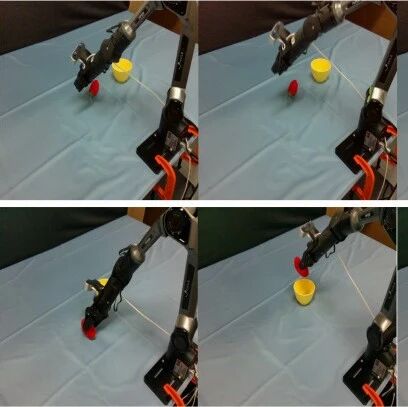
Core Insights - The article emphasizes that embodied intelligence, particularly in the context of Vision-Language-Action (VLA) models, is becoming a central issue in AI research, as evidenced by the recognition of the ReconVLA model at AAAI [3][5]. Group 1: ReconVLA Model Overview - ReconVLA is introduced as a reconstructive Vision-Language-Action model aimed at improving the precision of visual attention in robotic tasks [12][11]. - The model's core idea is to focus on the ability to reconstruct the target area rather than explicitly indicating where to look, thereby enhancing the model's attention to key objects [12][14]. - The model incorporates a dual-branch framework: one for action prediction and another for visual reconstruction, which allows for implicit supervision through reconstruction loss [17][18]. Group 2: Performance and Results - ReconVLA has shown significant improvements in success rates across various tasks, achieving a success rate of 95.6% in the ABC→D task and 98.0% in the ABCD→D long-range task [23][26]. - In challenging long-range tasks like "stack block," ReconVLA achieved a success rate of 79.5%, outperforming baseline models [27]. - The model demonstrated strong generalization capabilities, maintaining over 40% success rates in real robot experiments with unseen objects [27]. Group 3: Training and Data - The training process for ReconVLA involved a large-scale dataset with over 100,000 interaction trajectories and approximately 2 million images, enhancing its visual reconstruction and generalization abilities [25][21]. - The model's pre-training did not rely on action labels, which significantly improved its performance in visual reconstruction and implicit grounding [21][31]. Group 4: Implications for Future Research - The article concludes that the core contribution of ReconVLA is not in introducing complex structures but in addressing the fundamental question of whether robots truly understand the world they are observing [32][34]. - The approach of using reconstructive implicit supervision is expected to advance embodied intelligence from experience-driven system design to a more robust and scalable paradigm for general intelligence research [34].

AAAI 2026杰出论文奖 | ReconVLA:具身智能研究首次获得AI顶级会议最佳论文奖
机器之心· 2026-01-26 03:08
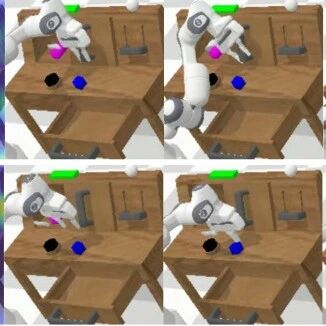
Core Insights - The article emphasizes that embodied intelligence has become a core issue in AI research, particularly highlighted by the recognition of the ReconVLA model at a top AI conference [2][3]. Group 1: ReconVLA Model Overview - The ReconVLA model is a reconstructive Vision-Language-Action model designed to improve the stability and precision of visual attention in robotic tasks [10][11]. - Unlike previous models, ReconVLA does not explicitly output where to look but instead focuses on whether it can reconstruct the target area, thereby ensuring the model learns to pay attention to key objects [10][14]. Group 2: Methodology and Mechanism - The model consists of two collaborative branches: an action prediction branch that generates action tokens and a visual reconstruction branch that encodes the gaze region into high-fidelity latent tokens [17]. - The reconstruction process is facilitated by a lightweight diffusion transformer, which minimizes reconstruction error and forces the model to encode fine semantic and structural information about the target objects [13][18]. Group 3: Training and Data - A large-scale pre-training dataset was constructed, comprising over 100,000 interaction trajectories and approximately 2 million images, significantly enhancing the model's capabilities in visual reconstruction and implicit grounding [21][23]. - The pre-training process does not rely on action labels, which allows for improved generalization across different scenes [21]. Group 4: Experimental Results - In experiments, ReconVLA achieved a success rate of 79.5% on the challenging long-range task "stack block," outperforming baseline models [26][32]. - The model demonstrated superior performance in both short and long-range tasks, with average completion lengths of 3.95 and 4.23 respectively, indicating its effectiveness in complex environments [26][28]. Group 5: Contributions and Future Implications - The core contribution of ReconVLA lies in its approach to understanding whether robots truly comprehend the world they are observing, providing a more natural and efficient visual alignment mechanism [31]. - The article anticipates that this work will advance embodied intelligence from experience-driven system design to a more robust and scalable paradigm for general intelligence research [33].

AAAI杰出论文来了!港科大、同济、浙师大等国内高校获奖
机器之心· 2026-01-22 08:13
Core Insights - The AAAI 2026 conference announced five outstanding papers, with three led by Chinese teams from various universities, highlighting the significant contributions of Chinese researchers in the field of artificial intelligence [1][2]. Summary by Sections Conference Overview - AAAI 2026 will take place in Singapore from January 20 to 27, with a total of 23,680 submissions and an acceptance rate of 17.6%, resulting in 4,167 accepted papers [2]. Awarded Papers - **Paper 1: ReconVLA: Reconstructive Vision-Language-Action Model as Effective Robot Perceiver** - This paper addresses the challenges existing VLA models face in effectively allocating visual attention to target areas. The authors propose ReconVLA, which uses an implicit alignment paradigm to improve grounding of visual attention [4][5][6]. - The model incorporates a diffusion Transformer to reconstruct gaze regions corresponding to target objects, enhancing the model's ability to utilize task-relevant visual information for precise operations. A large-scale pre-training dataset was created, consisting of over 100,000 trajectories and 2 million data samples, improving the model's generalization capabilities [9]. - **Paper 2: LLM2CLIP: Powerful Language Model Unlocks Richer Cross-Modality Representation** - This research builds on the foundational CLIP model, enhancing it by integrating a powerful language model (LLM) to improve performance on complex textual descriptions. The authors developed an efficient fine-tuning framework that embeds LLM into pre-trained CLIP, achieving significant performance improvements without extensive retraining [10][12][16]. - **Paper 3: Model Change for Description Logic Concepts** - Although awarded, this paper has not yet been publicly released [17]. - **Paper 4: Causal Structure Learning for Dynamical Systems with Theoretical Score Analysis** - The authors introduce CADYT, a new method for causal discovery in dynamical systems that addresses challenges related to continuous time evolution and unknown causal structures. The method employs precise Gaussian process inference and a greedy search strategy to identify causal structures from trajectory data [19][20][23][24]. - **Paper 5: High-Pass Matters: Theoretical Insights and Sheaflet-Based Design for Hypergraph Neural Networks** - This paper has not yet been released, but the authors are affiliated with several prestigious institutions [25][27].

AAAI 2026结果公布,刷出88887高分!2.3万投稿录用率仅17.6%
具身智能之心· 2025-11-11 00:02
Core Insights - The AAAI 2026 conference received a record-high submission of 23,680 papers, with an acceptance rate of only 17.6%, indicating a significant increase in competition compared to previous years [3][4][45]. Submission Statistics - AAAI 2026 had 23,680 submissions, a substantial rise from 12,957 in 2025 [3][45]. - A total of 4,167 papers were accepted, which is a decrease from 3,032 accepted papers in 2025, reflecting a lower acceptance rate [4][45]. Research Highlights - Researchers from various institutions showcased their successful submissions, with notable works including: - "CogniTrust," which combines verifiable supervision with a three-tier memory model to enhance AI model reliability [12][14]. - Papers focusing on privacy protection in large models, multi-modal safety, and robust communication in autonomous driving [18][20]. - "ReconVLA," which achieved a high score of 88,887, proposing a new approach to visual representation learning [24][25]. Competitive Landscape - The competition for AAAI 2026 was described as exceptionally fierce, with some reviewers noting that only highly innovative papers were accepted [43][46]. - The overall trend indicates that papers scoring around 5 or higher had a chance of acceptance, but many authors faced rejections despite high scores [51][52]. Reviewer Experiences - Some reviewers reported unusual experiences during the review process, including significant score adjustments and perceived biases in evaluations [48][56][62].

AAAI 2026结果公布,刷出88887高分,2.3万投稿录用率仅17.6%
3 6 Ke· 2025-11-10 09:55
Core Insights - The AAAI 2026 conference has seen a record submission of 23,680 papers, with an acceptance rate of only 17.6%, indicating a highly competitive environment compared to previous years [1][37][40] - The conference will take place from January 20 to January 27, 2026, at the Singapore Expo, marking its 40th annual meeting [3] Submission Statistics - AAAI 2026 received 23,680 submissions, a significant increase from 12,957 in 2025 [1][37] - A total of 4,167 papers were accepted, compared to 3,032 in the previous year, reflecting a decrease in acceptance rate from 23.4% to 17.6% [1][37] Research Highlights - Researchers from various institutions have shared their successful submissions, with notable works including "CogniTrust," which combines verifiable supervision with a three-tier memory model [5][7] - Other accepted papers focus on critical areas such as privacy protection in large models, multi-agent safety communication, and robust methods for autonomous driving [11][12][16] Notable Achievements - A student from Peking University achieved a high score of 88,887 for their paper on "CogniTrust" [5][18] - Teams from Nanyang Technological University and Hong Kong University of Science and Technology also reported multiple accepted papers, showcasing significant contributions to the field [10][18][27] Community Reactions - The competitive nature of AAAI 2026 has sparked discussions online, with some expressing concerns about the fairness of the review process and the influence of personal relationships on paper evaluations [35][40][46] - There are reports of discrepancies in scoring, with some reviewers allegedly adjusting scores post-rebuttal, raising questions about the integrity of the review process [42][48][51]
ReconVLA:基于重建式VLA模型的机器人感知方法
具身智能之心· 2025-08-29 16:03
Core Viewpoint - The article discusses the rapid development of Vision-Language-Action (VLA) models and introduces a new model called ReconVLA, which aims to enhance the precision of robotic actions by improving visual attention and focus on target objects [2][3][27]. Summary by Sections Introduction - Existing VLA models struggle with visual attention in complex scenes, leading to errors in object manipulation. Traditional methods to improve visual localization have not significantly enhanced attention distribution [6]. Model Overview - ReconVLA introduces a reconstructive approach to visual localization, where the model first reconstructs the gaze region before predicting actions. This implicit supervision forces the model to focus on the correct object, improving action precision [8][11][14]. Methodology - The framework consists of two branches: visual reconstruction and action prediction. The model uses a frozen visual tokenizer to encode the gaze region and employs a diffusion transformer for denoising and reconstruction [13][16]. - A large-scale dataset with over 100,000 trajectories and 2 million samples was created to pre-train the model, enhancing its visual generalization and implicit grounding capabilities [19]. Performance Results - In simulations, ReconVLA achieved a near 95% success rate in long-term tasks, outperforming existing methods. The model demonstrated strong transferability to unseen objects, maintaining over 40% success rates even with novel items [9][26]. - The model's performance in real-world tasks, such as stacking bowls and placing fruits, showed significant improvements over previous models, achieving up to 90% success in specific tasks [25]. Contributions - ReconVLA is the first model to utilize a gaze region reconstruction paradigm, significantly enhancing visual attention and action prediction accuracy. The extensive pre-training on diverse datasets has established a solid foundation for its performance in various tasks [14][27]. Conclusion - The study highlights the limitations of current VLA models in visual focus and presents ReconVLA as a solution that effectively directs attention to key objects, paving the way for more reliable multi-modal robotic control [27].