RoboSweeper

Search documents
智能驾驶行业专题:Robo-X的产业趋势、市场空间和产业链拆解
2025-12-22 15:47
Summary of Robo-X Industry Trends and Market Analysis Industry Overview - The L4 autonomous driving market has significant potential, with a projected global market size reaching trillions by 2030. The domestic market for Robot Taxi and Robot Van is estimated at 236 billion yuan and 164.5 billion yuan, respectively. Other segments like unmanned trucks, buses, and sanitation vehicles also show promise [1][2] Core Insights and Arguments - Government policies worldwide are easing restrictions on autonomous driving and establishing regulatory frameworks, which is accelerating the development of smart driving technologies. Cities like Beijing, Shanghai, Guangzhou, and Shenzhen have initiated ROS services, with Wuhan and Chongqing also opening related services [1][6] - Reinforcement learning and world models are foundational technologies for L4 autonomous driving, addressing issues of data scarcity and module dependency in traditional imitation learning, thereby enhancing the system's generalization and decision-making capabilities [1][8] - The operational cost advantage of Robotaxi is notable, with costs as low as 0.81 yuan per kilometer without a safety driver, which is lower than traditional fuel and electric ride-hailing services. Profitability is expected when the fleet size reaches 1,000 vehicles [1][14] Market Segmentation and Key Players - In the RoboTaxi sector, key players include WeRide, Pony.ai, and Loong Air. The RoboVan segment features companies like 90 Smart, New Stone Age, and others, focusing on last-mile delivery efficiency [3][4] - The Robotruck market is projected to reach 90 billion yuan by 2030, with significant collaboration between manufacturers, autonomous driving companies, and logistics firms [3][22] - The RoboBus segment is being developed by companies like WeRide and Qizhou Zhihang, with potential market sizes of 15-35 billion yuan based on current bus sales [23] - The Robot Sweeper market, addressing labor shortages, is also expanding, with a potential market size of 11.3-22.5 billion yuan [24] Investment Opportunities - Recommended companies in vehicle sales and operations include Pony.ai, WeRide, and XPeng Motors. In the components sector, companies like Sutong Juchuang and Hesai Technology are highlighted, along with data processing firms such as Coboda and Horizon Robotics [5][25] Policy Support and Technological Advancements - Global regions, including the Middle East and Southeast Asia, are progressively relaxing regulations on autonomous driving, which is crucial for industry growth. The development of L4 technology is supported by advancements in reinforcement learning and world models, leading to reduced component costs [2][10] Economic Viability and Future Projections - The Robotaxi market is expected to grow significantly, with a projected fleet size of 7,000 vehicles by 2025, capturing a 0.6% market share in shared mobility. The potential for Robotaxi to enhance urban traffic efficiency and provide a safer driving experience is substantial [11][12] - The cost structure of Robotaxi shows that while manufacturing costs are about three times that of traditional ride-hailing vehicles, the operational costs are significantly lower, leading to a favorable economic outlook [13] Conclusion - The autonomous driving industry is on the cusp of commercialization, driven by supportive policies, technological advancements, and cost reductions. The market for various segments, including Robotaxi, RoboVan, Robotruck, and others, presents numerous investment opportunities as companies continue to innovate and expand their services [10][20]
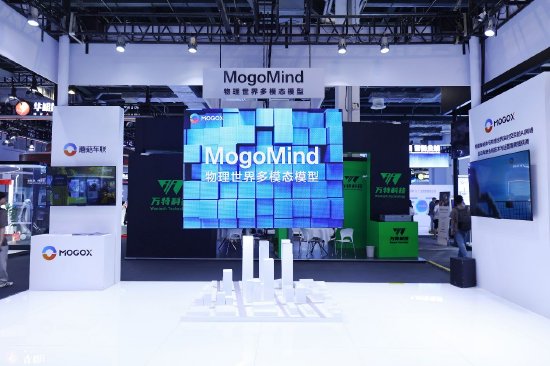
直击WAIC丨蘑菇车联携首个物理世界AI大模型MogoMind亮相WAIC 2025
Xin Lang Ke Ji· 2025-07-27 03:58
Core Insights - The 2025 World Artificial Intelligence Conference (WAIC 2025) was recently held in Shanghai, focusing on advancements in AI technology and governance in the transportation sector [1] Group 1: MogoMind AI Model - MogoMind is the first AI model designed for deep understanding of the physical world, featuring 7 billion parameters, with perception accuracy and cognitive accuracy exceeding 90%, and multi-modal reasoning accuracy over 88% [3] - The model can simulate over 800 traffic scenarios and has been implemented in 8 cities including Beijing, Shanghai, and Zhejiang [3] - MogoMind functions as a real-time search engine for the physical world, integrating real-time dynamic data to enhance global perception, deep cognition, and real-time decision-making capabilities [3][4] Group 2: Key Capabilities - MogoMind utilizes six key capabilities: real-time global perception of traffic data, physical information understanding, real-time traffic capacity reasoning, optimal path planning, digital twin of traffic environments, and real-time risk alerts [4] - The model captures vast amounts of heterogeneous data such as vehicle trajectories, speed changes, traffic flow, and pedestrian dynamics, providing a data foundation for intelligent analysis and precise decision-making [4] Group 3: Applications in Transportation Management - In traffic management, MogoMind enables managers to grasp the overall operation of urban traffic systems and make informed decisions based on real-time data analysis [5] - The model enhances travel safety and efficiency by providing real-time information understanding and planning services, including advanced warnings for blind spots and optimal route planning [5] Group 4: Autonomous Driving Integration - MogoMind supports the training of autonomous driving models through multi-source data fusion and continuous learning from diverse scenarios [5] - The company has launched several L4 level mass-produced autonomous vehicles, including RoboBus, RoboSweeper, and RoboTaxi, which integrate MogoMind's capabilities for various applications in public transport, urban sanitation, and unmanned retail [5] - The MOGOBUS, equipped with the "MogoAutoPilot+MogoMind" system, has successfully operated in 10 provinces, covering over 2 million kilometers and serving more than 200,000 passengers [5]