
Rubin系列产品

Search documents
未知机构:英伟达将于周三公布财报其股价隐含波动率为44所有人的目光都集中在黄仁-20260224
未知机构· 2026-02-24 04:45
Summary of Conference Call Notes Company and Industry Overview - The focus is on NVIDIA, which is set to release its earnings report on Wednesday, with an implied volatility of 4.4% in its stock price. Investors are particularly interested in CEO Jensen Huang's performance during the announcement [1][1]. - Over the past six months, NVIDIA's stock has been trading sideways, underperforming the SOX index, leading to investor frustration. The preference among investors has shifted towards upstream supply chain companies such as storage, semiconductor equipment, TSMC, and optical modules, which are starting to gain pricing power, potentially at the expense of GPU/ASIC profit margins [1][1]. Core Insights and Arguments - Market consensus for NVIDIA's Q4 revenue is approximately $65.7 billion, with company guidance at $65 billion ±2%. However, buyers expect a continuation of the typical overperformance of over $2 billion, raising actual expectations to above $68 billion. For the data center business, the market consensus is around $60 billion, but the real target is about $62 billion [2][2]. - For Q1 FY2027 (April), market expectations are around $71.5-$71.8 billion, while buyers are looking for guidance of $73.5 billion (excluding the Chinese market), with actual expectations pointing to over $74 billion. Buyers anticipate earnings per share for FY2026 to be around $9-$10, exceeding the market consensus of $7.75, and for FY2027, expectations have reached $12-$14, significantly above the market consensus of $9.50 [3][3]. - Recent capital expenditure guidance from major cloud providers like Amazon, Google, Microsoft, and Meta has seen a substantial increase, with a combined upward revision of approximately $140-$145 billion for 2026, projecting total spending to exceed $600 billion, a 60% year-over-year increase [3][3]. Pricing and Profit Margin Concerns - The average selling price for Rubin series products is estimated between $7 million and $8 million, while the GB300 series is priced at $4 million to $5 million. The RubinUltra rack is priced around $10 million, with reports indicating prices between $8.5 million and $11 million. The price increase of 100% for RubinUltra compared to RubinVera is justified by significant performance improvements [5][5]. - Management has provided guidance for Q4 gross margins at 75% ±50 basis points, with expectations for next year at 74.5%. The rationale for a bullish outlook on margins is NVIDIA's pricing power in a constrained supply environment, allowing for higher average selling prices to offset rising input costs [5][5]. - However, there are concerns regarding the sustainability of margins, particularly in 2027, as each new product generation requires more high-bandwidth memory, which could increase the absolute dollar impact of memory price hikes. Additionally, the transition to rack-level solutions introduces complexities and costs that could pressure gross margins [6][6]. Upcoming Events and Market Sentiment - The market is closely watching the upcoming events, including the Morgan Stanley TMT Conference on March 4, where Jensen Huang is expected to present, and the GTC Conference on March 16, where further details on the Rubin roadmap and NVIDIA's full-stack AI platform vision will be discussed [6][7]. - Despite a cautious outlook on stock price movements, there is a maintained long position in the investment portfolio, with suggestions to consider bullish options in mid-March to capture potential market movements around the Morgan Stanley Conference and transition into the GTC phase [7][7].

求囤货照片 美国知名空头质疑英伟达出货数据
Xin Hua She· 2025-12-19 12:43
Group 1 - Michael Burry is seeking evidence of Nvidia GPUs being hoarded by customers, particularly photographs [2] - Burry's inquiry is prompted by an analysis on social media questioning Nvidia CEO Jensen Huang's claims about Blackwell chip shipments and revenue alignment [2] - Huang stated that Nvidia shipped 6 million Blackwell chips over the past four quarters, projecting total sales of $500 billion from Blackwell and the upcoming Rubin series [2] Group 2 - An analysis suggests that Nvidia's reported $111 billion data center revenue does not support the claimed shipment volume, indicating a potential shortfall of hundreds of thousands to millions of GPUs [2] - The energy requirements for running 6 million Blackwell chips could reach 8.5 to 11 gigawatts, comparable to Singapore's total power generation, while the U.S. is only adding about 8.5 gigawatts of capacity for data centers from 2024 to 2025 [3] - Burry has intensified scrutiny on Nvidia, focusing on issues like "circular investments" among U.S. AI companies and revenue recognition methods [3] Group 3 - Burry has issued warnings about the AI bubble in U.S. stocks, highlighting that the current stock market's share of household wealth has surpassed that of real estate, a situation historically linked to prolonged bear markets [4] - Burry gained fame for shorting the U.S. housing market in 2008, a story later adapted into the film "The Big Short" [4]

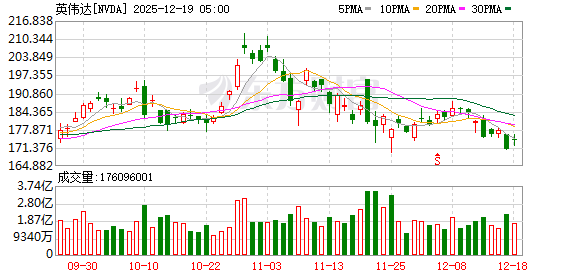
【特稿】求囤货照片 美国知名空头质疑英伟达出货数据
Xin Hua She· 2025-12-19 12:39
Core Viewpoint - Michael Burry, a well-known short-seller, is seeking evidence of Nvidia's GPUs being hoarded by customers, particularly photographs, in light of doubts raised about the company's reported sales figures and data center capacity [1][3]. Group 1: Nvidia's GPU Sales and Demand - Nvidia's CEO Jensen Huang claimed that the demand for Nvidia chips remains strong, stating that the company has shipped 6 million Blackwell chips over the past four quarters, with expectations of generating $500 billion in total sales from the Blackwell and upcoming Rubin series products [1]. - An analysis on social media questions whether the reported $111 billion in data center revenue aligns with the claimed shipment volume of Blackwell chips, suggesting a potential shortfall of hundreds of thousands to millions of GPUs [1][2]. Group 2: Energy Requirements and Capacity Concerns - The operation of 6 million Blackwell chips would require between 8.5 GW to 11 GW of power, approximately equivalent to Singapore's total electricity generation capacity, while the U.S. is only expected to add about 8.5 GW of power capacity for data centers between 2024 and 2025 [2]. - This power supply is barely sufficient to match Nvidia's claimed GPU shipment volume, raising concerns about the feasibility of such high deployment levels [2][3]. Group 3: Burry's Scrutiny and Market Concerns - Burry has intensified his scrutiny of Nvidia, focusing on issues such as "circular investments" among U.S. AI companies, revenue recognition methods, and how tech giants depreciate computing equipment [3]. - He has also raised alarms about the sustainability of Nvidia's AI infrastructure spending and has warned about a potential stock market bubble in AI, referencing historical patterns of market downturns following similar wealth distribution scenarios [3].