SCC55®

Search documents
行业聚焦:全球CVD硅负极材料行业Top 5生产商市场份额及排名调查
QYResearch· 2025-11-05 02:11
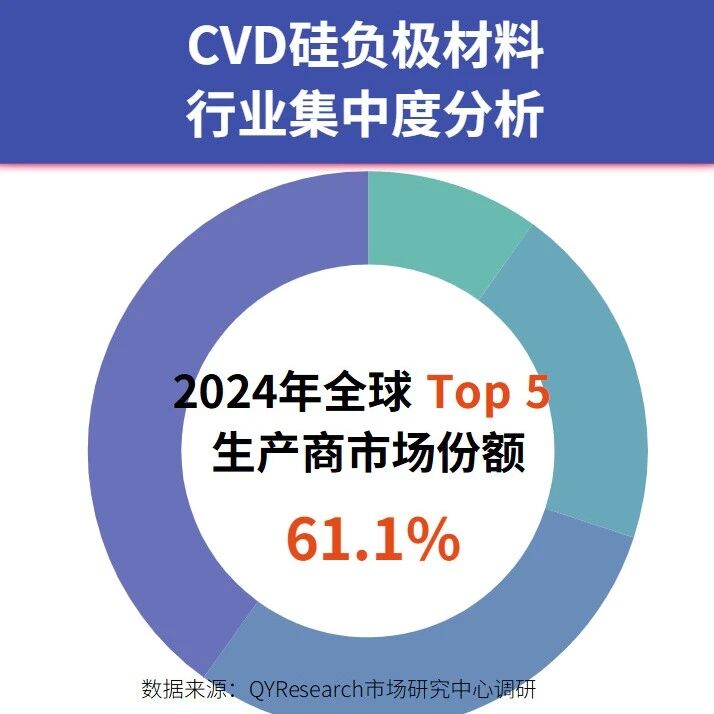
Core Viewpoint - CVD silicon anode materials, utilizing chemical vapor deposition technology, are identified as high-performance lithium battery anode materials, with silicon being the core active substance, offering a theoretical specific capacity of 4200 mAh/g, approximately ten times that of traditional graphite anodes [1][2]. Market Overview - The global CVD silicon anode materials market is projected to reach USD 160 million by 2030, with a compound annual growth rate (CAGR) of 14.7% in the coming years [2]. - The top five manufacturers are expected to hold approximately 61.1% of the market share by 2024 [3]. Product Segmentation - Polymer resin materials currently dominate the product types, accounting for about 42% of the market share [6]. - In terms of application, power batteries are the primary demand source, representing approximately 68.2% of the market [7]. Leading Companies - Group 14, founded in 2015, focuses on developing and producing next-generation lithium-ion battery anode materials, utilizing carbon nanomaterial technology to enhance energy density and charging speed [10]. - The main drivers for the development of CVD silicon anode materials include the urgent demand for high-energy-density power batteries in the electric vehicle market and the continuous pursuit of longer battery life in consumer electronics [10]. Challenges and Opportunities - Key challenges include the significant volume expansion of silicon materials during charge and discharge cycles, leading to rapid degradation of cycle life, high manufacturing costs, and compatibility issues with existing electrolytes [10]. - Opportunities lie in technological innovations such as nanostructuring and composite materials to mitigate volume expansion, the development of low-cost scalable manufacturing processes, and the potential fit with solid-state battery technologies [10].

33亿!微软、ATL战投硅基负极龙头
DT新材料· 2025-08-28 16:04
Group 1 - Group14 Technologies announced the completion of a $463 million (approximately 3.3 billion RMB) Series D financing led by SK Inc., with other investors including Porsche Investments, ATL, OMERS, Decarbonization Partners, Lightrock Climate Impact Fund, and Microsoft Climate Innovation Fund, bringing total funding to over $1 billion [2][3] - The funds will be used to expand the production scale of Group14's silicon anode battery material SCC55® in the U.S. and South Korea to meet the surging global energy storage demand [3] - Group14 has gained full ownership of its joint venture with SK Inc. in South Korea, which focuses on supplying the SCC55® anode material for electric vehicles [3] Group 2 - Group14's first two Battery Active Material (BAM) factories are located in Washington State, and the company is establishing a state-of-the-art silane gas factory in Germany to expand its silicon anode battery production infrastructure in Europe [3] - The third BAM factory, located in Asia, is strategically positioned near the headquarters of several major battery manufacturers and is set to deliver SCC55® to over 100 electric vehicle and consumer electronics battery production customers starting September 2024, with a capacity of 10 GWh [3] - Group14's silicon anode technology has been integrated into millions of ATL batteries, powering AI smartphones, and aims to support broader delivery of its silicon anode materials to drive the next generation of high-performance silicon anode batteries [3] Group 3 - The main technical barriers and industrialization challenges for vapor deposition silicon-carbon technology lie in the selection of porous carbon, deposition equipment, and deposition processes [4] - Group14 employs a novel vapor deposition silicon-carbon technology that utilizes a porous carbon framework to store silicon, allowing for molecular-scale control of the prepared nanomaterials, resulting in a well-structured product with low expansion rates and excellent cycling performance [4] - The carbon framework is cost-effective and possesses good lithium storage capacity, contributing to high energy density due to its low density and lightweight nature [4]
巴斯夫,签约两大巨头!
DT新材料· 2025-08-09 16:05
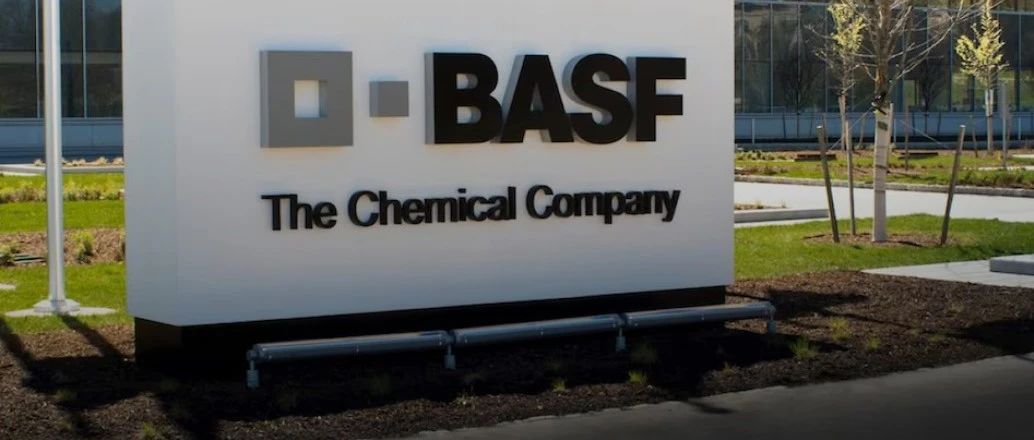
Group 1 - BASF has signed a framework agreement with CATL to support the development of innovative cathode materials for solid-state batteries, enhancing its local production capabilities in China [3][4] - CATL's annual shipments of energy storage batteries reached nearly 110 GWh and nearly 360 GWh for power batteries, making it the global leader in both segments with market shares of 29.5% and 37.9% respectively [3] - The collaboration with BASF is crucial for CATL to meet stringent EU battery regulations, which require comprehensive carbon footprint disclosure and a minimum recycling material ratio [4][5] Group 2 - BASF has also signed a strategic cooperation agreement with Bader, focusing on low-carbon sustainable coatings, supplying butyl acrylate and 2-ethylhexyl acrylate from its Zhanjiang integrated base [8] - Bader is the largest producer of water-based emulsions and functional additives in Asia, with an annual production capacity of 1.5 million tons [8] - BASF's acrylic acid production capacity is the largest globally at 1.5 million tons per year, with the Zhanjiang facility expected to start production in 2025 [8][9]


巴斯夫,携手Group14推出硅基电池方案
DT新材料· 2025-05-14 15:50
Core Insights - BASF and Group14 Technologies have jointly developed a plug-and-play high-performance silicon-based lithium battery solution, significantly enhancing battery performance with faster charging speeds and higher energy density [1][2] - The new solution utilizes BASF's Licity® 2698 X F binder and Group14's flagship silicon material SCC55®, achieving over 1,000 cycles with 80% capacity retention at room temperature and over 500 cycles at 45°C, offering nearly four times the capacity of traditional graphite anodes [1][2] Group 1 - Traditional graphite anode materials are nearing their theoretical energy density limits, while silicon, with a theoretical specific capacity of approximately 4200 mAh/g, is seen as a key material for next-generation lithium batteries [2] - The main challenge for silicon materials has been volume expansion during charge and discharge cycles, which has hindered their commercial application [2] - BASF's Licity 2698XF binder is specifically designed for silicon-rich anodes, stabilizing the electrodes under extreme conditions [2] Group 2 - Group14 Technologies' CEO Rick Luebbe stated that the future of energy storage driven by silicon-based batteries is here, and the collaboration will enable battery manufacturers to deliver high-performance, scalable silicon-based batteries at unprecedented speeds to meet growing energy demands [2] - BASF's global battery binder technology manager, Dirk Wulff, emphasized that silicon is now an attractive technology that has overcome past limitations, and their combined expertise has resulted in battery chemistry that meets and exceeds industry requirements [2]