STM32 MCU

Search documents
STMicroelectronics (NYSE:STM) Update / briefing Transcript
2026-03-09 15:32
Summary of ST Cloud AI Update Conference Call Company Overview - **Company**: STMicroelectronics (ST) - **Focus**: Advanced data centers and AI clusters, specifically in optical interconnect and power technologies Key Industry Insights - **AI Data Center Growth**: Global hyperscalers are projected to invest over **$700 billion** in capital expenditures (CapEx) by **2026** and more than **$1 trillion** by **2030** [4][24] - **Market Opportunity**: The structural growth opportunity in AI servers is described as a "once in a lifetime" chance for companies like ST to increase their revenue significantly in data centers [4] Core Technology and Product Offerings - **Power Technologies**: - Transitioning to **800 volts** for power distribution to meet the increasing demands of AI workloads, which are becoming more complex and power-hungry [6][8] - ST is leveraging **silicon carbide (SiC)** and **gallium nitride (GaN)** technologies to enhance energy efficiency and reduce operational costs [9][10] - The company has developed a **hot swap protection circuit** and advanced power converters to support the new architecture [39][40] - **Connectivity Solutions**: - Emphasis on high-speed optical interconnects to connect thousands of GPUs efficiently, addressing the bottlenecks in data transfer within AI data centers [12][14] - ST's **ScaleX approach** aims to enable scalable AI infrastructure through optical technology [14] Financial Projections - **Revenue Expectations**: - ST anticipates revenues exceeding **$500 million** in **2026** and well above **$1 billion** in **2027** due to the increasing demand for AI data center technologies [25][26] - The addressable market (SAM) per gigawatt of infrastructure is estimated at around **$230 million**, supported by approximately **400 products** tailored for the AI data center business [5][24] Strategic Collaborations - **Partnership with AWS**: ST has expanded its collaboration with AWS through a multi-year, multi-billion dollar agreement, positioning itself as a strategic supplier of advanced semiconductor technology for AI infrastructure [23][24] Market Dynamics and Competitive Position - **Market Share Goals**: ST aims to become a market leader in photonics ICs, targeting a **30% market share** as a benchmark for leadership [52] - **Differentiation in Power Market**: ST's unique offerings in power conversion and optical technologies are expected to help it gain market share in a competitive landscape where it previously had a marginal presence [38][39] Future Outlook - **Growth Beyond 2027**: The company expects to grow faster than the overall market due to its advancements in photonics IC and power technologies, particularly with the ramp-up of the **800 volt architecture** [70] - **Long-term Capacity Expansion**: ST plans to quadruple its output by **2027**, with ongoing capacity reservations from customers supporting this growth [22][90] Additional Insights - **Technological Evolution**: The transition from copper to optical technologies in data centers is seen as inevitable, with significant growth expected in near package optics (NPO) and co-package optics (CPO) by **2030** [101][102] - **Bottlenecks in Optical Networking**: Current bottlenecks are identified in laser technology, while future challenges may arise in photonics as demand for higher data rates increases [105][106] This summary encapsulates the key points discussed during the ST Cloud AI Update conference call, highlighting the company's strategic positioning, technological advancements, and market expectations.

ST挺进硅光代工赛道
半导体芯闻· 2025-03-13 10:55
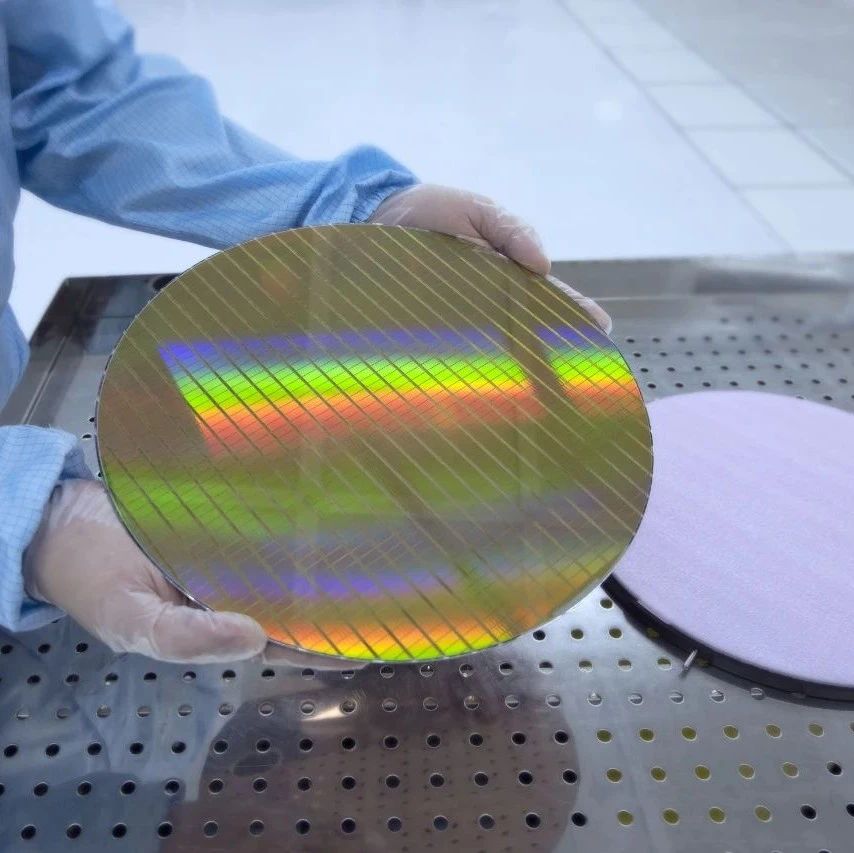
Core Viewpoint - STMicroelectronics (ST) is leveraging its advanced "Silicon Photonics + BiCMOS" foundry services to address the growing demand for high-speed, energy-efficient data transmission in the AI-driven chip market, particularly in cloud interconnects [2][10][12]. Group 1: Market Context and Challenges - The current data center landscape faces significant bottlenecks in connectivity, particularly for AI workloads that require high bandwidth and low latency, with up to 30% of training time spent waiting for network responses [4][6]. - The demand for optical transceivers is increasing as data centers expand, with the optical communication chipset market projected to grow from approximately $3.5 billion in 2024 to over $11 billion by 2030, at a CAGR of 17% [6][12]. Group 2: Technological Innovations - ST's PIC100 platform is the only pure silicon technology platform capable of supporting 200 Gbps single-channel transmission on 300 mm wafers, offering compact structure and superior performance [11][12]. - The transition to Silicon Photonics (SiPho) technology allows for the integration of multiple components into a single transceiver chip, enhancing efficiency and reducing system losses [10][12][15]. Group 3: Product Offerings and Collaborations - ST's BiCMOS technology, particularly the new B55 series, provides low noise performance and high data transmission rates, making it ideal for next-generation optical connections [13][14]. - The company has established a partnership with AWS to develop the PIC100 technology, aimed at improving interconnectivity for various workloads, including AI [16][17]. Group 4: Future Outlook - ST aims to create PICs that support 400 Gbps per channel, essential for modern data centers as AI applications demand faster and more efficient data flow [17][18]. - The integration of compact modulators into the PIC100 platform is a key focus, ensuring compatibility with GPU packaging sizes and enhancing overall system performance [17].