Senna

Search documents
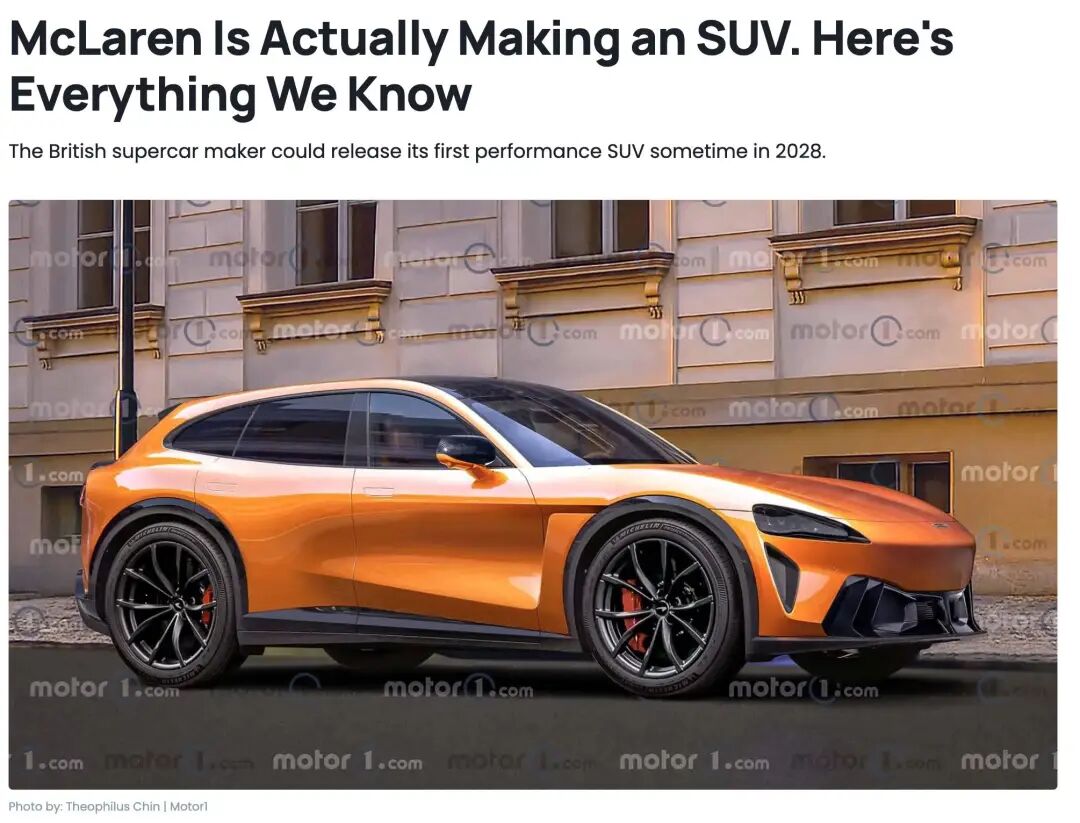
造型撞脸小米 YU7,绝不做 SUV 的迈凯伦,还是妥协了
3 6 Ke· 2025-12-14 02:54
Core Viewpoint - McLaren, historically resistant to SUVs, is reportedly developing a hybrid five-seat SUV model, internally coded as "P47," expected to debut in 2028, indicating a shift in its long-standing position against SUVs [1][10][24]. Group 1: Historical Context - McLaren's previous stance against SUVs was rooted in its racing heritage and engineering principles focused on lightweight and performance [4][10]. - The brand's commitment to high-performance vehicles has been evident since its inception in 1963, with a focus on creating race-winning machines [4][5]. Group 2: Market Dynamics - The SUV market has proven lucrative, with brands like Lamborghini and Ferrari successfully integrating SUVs into their lineups, significantly boosting sales [13][15]. - McLaren's annual sales have stagnated around 5,000 units, far below competitors like Ferrari and Lamborghini, highlighting its struggle to absorb high R&D costs without a parent company for financial support [11][15]. Group 3: Strategic Shift - The impending entry into the SUV market is driven by external pressures, including stringent European emissions regulations and the need for a new revenue stream to support ongoing supercar development [11][15]. - The SUV is seen as an ideal platform for hybrid technology, allowing for larger batteries and higher price points to offset development costs [16][24]. Group 4: Product Development - The new SUV is expected to feature a hybrid system based on a V8 engine, targeting an output of 900-1000 horsepower, positioning it competitively against existing models like the Lamborghini Urus SE [22][24]. - Pricing for the new SUV is anticipated to be around 3 million yuan, aligning it with competitors while allowing McLaren to define its unique offering in the SUV segment [24][26].

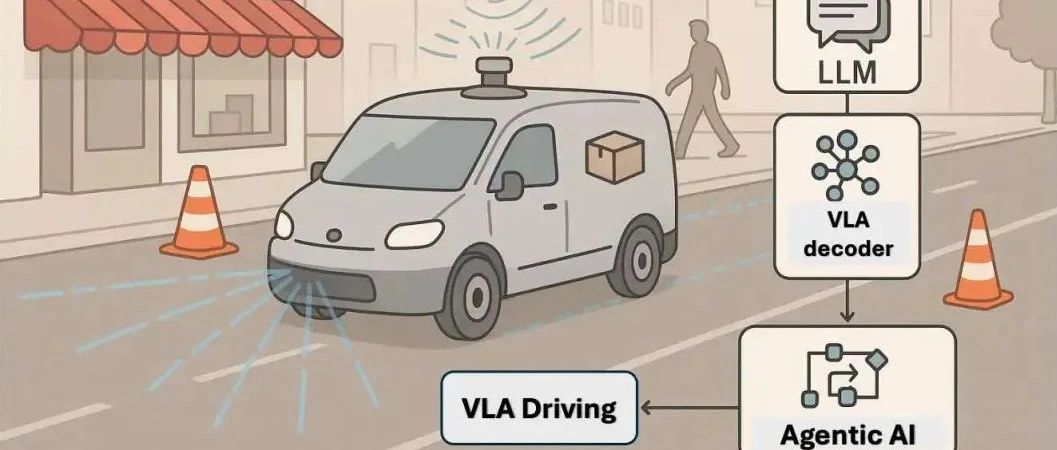
自动驾驶端到端VLA落地,算法如何设计?
自动驾驶之心· 2025-06-22 14:09
Core Insights - The article discusses the rapid advancements in end-to-end autonomous driving, particularly focusing on Vision-Language-Action (VLA) models and their applications in the industry [2][3]. Group 1: VLA Model Developments - The introduction of AutoVLA, a new VLA model that integrates reasoning and action generation for end-to-end autonomous driving, shows promising results in semantic reasoning and trajectory planning [3][4]. - ReCogDrive, another VLA model, addresses performance issues in rare and long-tail scenarios by utilizing a three-stage training framework that combines visual language models with diffusion planners [7][9]. - Impromptu VLA introduces a dataset aimed at improving VLA models' performance in unstructured extreme conditions, demonstrating significant performance improvements in established benchmarks [14][24]. Group 2: Experimental Results - AutoVLA achieved competitive performance metrics in various scenarios, with the best-of-N method reaching a PDMS score of 92.12, indicating its effectiveness in planning and execution [5]. - ReCogDrive set a new state-of-the-art PDMS score of 89.6 on the NAVSIM benchmark, showcasing its robustness and safety in driving trajectories [9][10]. - The OpenDriveVLA model demonstrated superior results in open-loop trajectory planning and driving-related question-answering tasks, outperforming previous methods on the nuScenes dataset [28][32]. Group 3: Industry Trends - The article highlights a trend among major automotive manufacturers, such as Li Auto, Xiaomi, and XPeng, to invest heavily in VLA model research and development, indicating a competitive landscape in autonomous driving technology [2][3]. - The integration of large language models (LLMs) with VLA frameworks is becoming a focal point for enhancing decision-making capabilities in autonomous vehicles, as seen in models like ORION and VLM-RL [33][39].