
Splunk

Search documents
Cisco Bets on New Portfolio to Reignite Security Growth: What's Ahead?
ZACKS· 2026-03-23 19:35
Key Takeaways Cisco security revenues fell 4% y/y to $2.01B in Q2 FY26 amid cloud shift and legacy product declines.CSCO's new products like XDR, Hypershield and Secure Access are driving orders and customer growth.CSCO boosts AI security with NVIDIA tie-up and SASE innovations as competition from FTNT and OKTA increases.Cisco Systems (CSCO) is expanding its portfolio to boost Security revenues, which dropped 4% year over year to $2.01 billion in the second quarter of fiscal 2026. Customers are shifting to ...



财报前瞻 | 华尔街共荐“强烈买入”,思科(CSCO.US)能否延续AI红利?
智通财经网· 2026-02-09 08:10
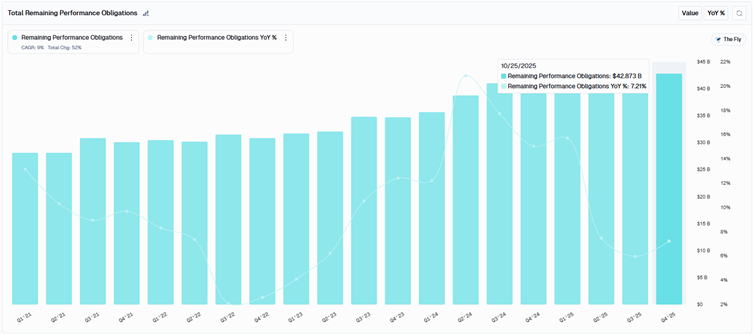
智通财经APP获悉,思科(CSCO.US)将于周三美股盘后公布2026财年第二季度业绩。华尔街分析师预测, 每股收益为1.02美元,同比增长8.5%。营收预计将达到151.2亿美元,较去年同期增长8.1%。 在互联网泡沫破裂后的多年停滞之后,思科的复苏得益于其成功的业务多元化,通过收购Webex、 AppDynamics和Splunk等公司,成功实现了从网络硬件到软件和服务领域的多元化发展。此外,过去一年 来,思科的股价表现优于大盘,持续受益于人工智能投资周期,其中最引人注目的是其获得了13亿美元的 人工智能基础设施订单。 投资者将关注管理层对公司人工智能基础设施业务发展势头及其积压订单的评论。截至10月底,公司剩余 履约义务(RPO)为429亿美元,同比增长7.2%。 上周,瑞银分析师David Vogt重申了对思科的"买入"评级,目标价为90美元。根据行业调查,这位分析师预 计,在核心企业市场改善的推动下,思科的营收将高于他此前预测的150.5亿美元。Vogt预计,产品订单量 将实现接近两位数的增长,而上一季度的增幅为13%。 尽管人工智能订单难以预测,但Vogt指出,思科的主要人工智能合作伙伴之一Met ...
Cisco Systems Earnings Preview: What to Expect
Yahoo Finance· 2026-01-15 11:13
Core Viewpoint - Cisco Systems, Inc. is experiencing significant growth and diversification, with strong earnings expectations and a bullish analyst outlook, driven by its expansion into software and services, particularly in AI infrastructure [1][5][6]. Financial Performance - Cisco is expected to report a fiscal second-quarter earnings per share (EPS) of $0.82, reflecting a 6.5% increase from $0.77 in the same quarter last year [2]. - For the fiscal year ending July 2026, analysts project an EPS of $3.30, up 7.5% from $3.07 in fiscal 2025, with further growth expected to $3.53 in fiscal 2027 [3]. Stock Performance - Cisco shares have increased by 25.4% over the past year, outperforming the S&P 500 Index's 18.6% gains but lagging behind the Technology Select Sector SPDR Fund's 27.1% gains [4]. - The stock recently reached a record closing price of $80.25, marking its first all-time high since the dot-com era peak in 2000 [5]. Analyst Sentiment - The consensus opinion on Cisco stock is moderately bullish, with a "Moderate Buy" rating from analysts. Out of 24 analysts, 13 recommend a "Strong Buy," one suggests a "Moderate Buy," and 10 give a "Hold" rating [6]. - The average analyst price target for Cisco is $85.90, indicating a potential upside of 15.4% from current levels [6].
CSCO's Security Revenues Decline: Can Strong Portfolio Revive Growth?
ZACKS· 2026-01-02 16:26
Core Insights - Cisco Systems' Security revenues decreased by 2% year over year to $1.98 billion in Q1 FY26, impacted by a shift to cloud subscriptions and lower revenues from older products [1][10] - New and refreshed products, which make up about one-third of Cisco's security portfolio, are expected to drive top-line growth, with mid-teens growth in demand for next-gen firewalls [2] - Splunk's annualized recurring revenues and product remaining performance obligations grew in double digits, enhancing Cisco's threat detection capabilities through integration with Cisco Extended Detection and Response (XDR) [3][10] Financial Performance - The Zacks Consensus Estimate for Q2 FY26 service revenues is $2.16 billion, indicating a 2.6% growth compared to the same quarter last year [4] - The Zacks Consensus Estimate for Q2 FY26 earnings is $1.02 per share, suggesting an 8.5% growth from the previous year [15] - The Zacks Consensus Estimate for FY26 earnings is $4.10 per share, indicating a 7.6% growth from FY25 [16] Competitive Landscape - Cisco faces significant competition in the security domain from Fortinet and Okta [5] - Fortinet is rapidly advancing its AI-powered security operations, with over 20 AI-driven solutions and a focus on secure AI usage [6] - Okta's offerings include AI-powered capabilities that are expected to drive a CAGR of 16% in revenues from FY23 to FY26, with projected revenues of $2.906 billion to $2.908 billion for FY26 [7] Stock Performance and Valuation - Cisco shares have appreciated by 30.8% over the past year, outperforming the broader Zacks Computer and Technology sector's return of 24.2% [8] - Cisco's stock is trading at a premium, with a trailing 12-month price/book ratio of 6.49X compared to the industry average of 6.13X [12] - Cisco currently holds a Zacks Rank 3 (Hold) [16]

Cisco Systems (NasdaqGS:CSCO) FY Conference Transcript
2025-12-10 22:22
Summary of Cisco Systems FY Conference Call Company Overview - **Company**: Cisco Systems (NasdaqGS: CSCO) - **Date of Conference**: December 10, 2025 Key Industry Insights - **AI Infrastructure**: Cisco has seen significant growth in AI-related orders and revenues, with a target of $1 billion for FY 2025, which was exceeded with over $2 billion recognized in revenue. Orders from top hyperscalers reached $1.3 billion in Q1 FY 2026, with expectations to double that to over $4 billion for the year and triple revenue to $3 billion [16][18]. - **Hyperscaler Demand**: The company reported strong demand from four different hyperscalers, each growing over 100% year-over-year in Q1 FY 2026. This indicates a broadening customer base and successful design wins across multiple use cases [26][27]. - **Optics Market**: Cisco holds a market share of over 25% in the hyperscale optics space, supplying to nearly 400 service providers globally. The optics segment is experiencing strong growth alongside the systems segment [30]. Financial Performance - **Order Growth**: Total order growth was up 13%, with a 9% increase when excluding the web scale business. The enterprise and public sector segments showed strong performance [50]. - **Revenue Recognition**: The shift towards cloud offerings has resulted in a timing difference in revenue recognition, with cloud revenues being ratable over the contract life, leading to more revenue in later quarters [69][70]. Product Development and Strategy - **Silicon One**: This product is a key differentiator for Cisco, providing advantages in supply chain management and cost efficiency. The company aims to deploy Silicon One across all networking products by FY 2029 [110]. - **Campus Refresh Opportunity**: Cisco is in the early stages of a multi-billion dollar campus refresh opportunity, driven by aging equipment and the need for upgrades related to AI and security [51][52]. Competitive Landscape - **Market Position**: Cisco remains a dominant player in the networking space despite increased competition from HP and Juniper. The merger of these competitors has created confusion in the market, which Cisco is capitalizing on [56][58]. Security and Observability - **Security Business**: Cisco's security business is expected to take longer to reach double-digit growth due to the drag from prior generation products. However, new products are gaining traction, with 3,000 new customers in the last 18 months [67][68]. - **Observability Growth**: The observability segment is experiencing good growth, although it remains a smaller part of the overall business [82]. Federal Government Dynamics - **Public Sector Performance**: Cisco has seen double-digit growth in the public sector outside the U.S., particularly in defense spending. The U.S. federal government segment is stabilizing with mid-single digit growth expected [90][92]. Margin and Profitability Outlook - **Operating Margins**: Cisco reported strong operating margins at 68.1%. The company is focused on maintaining profitability while managing a diverse portfolio of products [98][99]. Conclusion - Cisco Systems is positioned for continued growth in AI infrastructure, optics, and campus refresh opportunities, while navigating a competitive landscape and evolving customer needs. The company is committed to enhancing its product offerings and maintaining strong financial performance.
PANW vs. CSCO: Which Cybersecurity Stock Should You Buy Right Now?
ZACKS· 2025-11-21 16:30
Core Insights - Palo Alto Networks and Cisco Systems are prominent players in the cybersecurity sector, with Palo Alto focusing on next-generation firewalls and cloud security, while Cisco emphasizes Threat Intelligence and Secure Access Service Edge (SASE) offerings [1][2] Industry Overview - The cybersecurity market is expected to grow at a CAGR of 12.45% from 2025 to 2030, driven by increasing complex attacks such as credential theft and social engineering [2] Palo Alto Networks Analysis - Palo Alto Networks is recognized as a leader in cybersecurity, providing comprehensive solutions for network and cloud security [4] - The company is experiencing significant growth in its SASE segment, with Annual Recurring Revenues (ARR) increasing by 34% year over year [6] - Next Generation Security (NGS) ARR grew 29% year over year, reaching $5.85 billion, driven by a platformization strategy [7] - The number of customers with over $5 million in NGS ARR rose to nearly 170, indicating deeper platform usage [8] - Palo Alto Networks has raised its long-term NGS ARR target to $20 billion by fiscal 2030, up from a previous target of $15 billion [9] Cisco Systems Analysis - Cisco Systems is making progress in its security business with new product offerings, but its security revenues dropped 2% year over year due to declining demand for older products [10][14] - The company has seen good customer adoption of its new security solutions, with almost 3,000 customers purchasing these products in the first quarter of fiscal 2026 [11] - Cisco's next-generation firewalls orders grew in the mid-teens range, but the overall security business remains weaker compared to its networking segment [13][15] Comparative Growth Outlook - Palo Alto Networks is projected to have a stronger growth profile, with fiscal 2026 revenues and EPS expected to increase by 13% and 13.2%, respectively [16] - In contrast, Cisco Systems' fiscal 2026 estimates indicate a more modest growth of 7.3% for both revenues and EPS [19] Price Performance and Valuation - Year-to-date, Palo Alto Networks shares have appreciated by 1.7%, while Cisco Systems shares have surged by 27.5% [21] - Cisco is trading at a forward sales multiple of 4.89X, compared to Palo Alto Networks' 12.61X, reflecting higher growth expectations for Palo Alto [23] Conclusion - Palo Alto Networks' leadership in cybersecurity provides strong revenue visibility, justifying its higher valuation compared to Cisco Systems [27] - Cisco Systems faces execution risks and a slower growth trajectory, suggesting a hold or wait strategy for investors [27][28]


Cisco Systems (NasdaqGS:CSCO) FY Conference Transcript
2025-11-18 18:32
Summary of Cisco Systems FY Conference Call Company Overview - **Company**: Cisco Systems (NasdaqGS:CSCO) - **Date of Conference**: November 18, 2025 - **Speaker**: Mark Paterson, CFO Key Industry Insights - **Growth Drivers**: Cisco identifies several key growth drivers for the upcoming 12 to 24 months, including: - AI networking and infrastructure - Cybersecurity enhancements, particularly following the acquisition of Splunk - A significant campus refresh opportunity due to aging equipment and increased security needs [11][15][17] Financial Performance - **Recent Earnings**: Cisco reported strong earnings with broad-based order growth across geographies and customer markets, indicating a robust demand for its products [15][12] - **Order Growth**: The company achieved $1.3 billion in new orders from top hyperscalers in Q1, significantly exceeding its previous target of $1 billion [20][26] - **Revenue Projections**: Cisco anticipates over $3 billion in revenue from AI-related orders this fiscal year, up from $1 billion last year [28][26] AI and Hyperscaler Engagement - **AI Infrastructure**: Cisco's role in AI has evolved, with a focus on providing critical technology for hyperscalers and enterprise AI applications. The company aims to double its previous year's order growth, targeting $4 billion in AI-related orders [25][26] - **Web Scalers**: Cisco has seen over 100% growth in orders from four different web scalers, indicating strong demand for its AI infrastructure solutions [43][42] Campus Upgrade Cycle - **Multi-Year Opportunity**: The campus upgrade cycle is expected to be a multi-year, multi-billion dollar opportunity driven by aging equipment, security risks, and the need for AI application deployment [80][81] - **Product Innovations**: Cisco has introduced a comprehensive refresh of its campus switches and security products, integrating AI capabilities to meet evolving customer needs [81][82] Competitive Landscape - **Market Position**: Cisco reported a 13% global order growth, with a 9% growth excluding web scale, indicating strong competitive positioning despite a competitive market [93][96] - **Customer Adoption**: The transition to new platforms in campus networking technologies is happening faster than previous launches, showcasing strong customer adoption [96][95] Silicon One Strategy - **Strategic Asset**: Silicon One is highlighted as a critical asset for Cisco, providing technological advantages and cost savings, which are appealing to hyperscalers [102][108] - **Future Plans**: Cisco plans to have all high-powered systems based on Silicon One by FY2029, enhancing control over its supply chain and gross margins [109][108] Security Business Dynamics - **Revenue Trends**: Cisco's security business is experiencing a transition to cloud offerings, which may temporarily impact revenue recognition but is expected to lead to stronger long-term growth [125][126] - **Customer Adoption**: The company has seen a growing customer base for its new security technologies, with 3,000 new customers added recently [127][126] Supply Chain and Pricing Strategy - **Component Costs**: Cisco is facing memory price increases and supply chain challenges but has managed to maintain stable gross margins [145][146] - **Pricing Adjustments**: The company implemented a price increase at the beginning of the quarter to address rising component costs, which has helped mitigate some margin pressures [154][153] Government Exposure - **Public Sector Growth**: Cisco's public sector business, particularly in defense and intelligence, is performing well, with mid to upper single-digit growth expected [160][161] Capital Return Strategy - **Share Buybacks**: Cisco plans to continue its share buyback program, with a run rate of $1 billion per quarter, while also supporting its dividend [169][170] Investor Insights - **Networking Importance**: The critical role of networking in AI and hyperscale environments is emphasized, highlighting the ongoing demand for Cisco's networking solutions [174][175] - **Market Opportunities**: Even amidst concerns about an AI bubble, Cisco sees significant opportunities in networking spend associated with AI growth projections [177][178]
Cisco CEO Robbins Says AI Demand Behind Strong Forecast
Youtube· 2025-11-13 17:03
Core Insights - Cisco has achieved a record quarter and is positioned for its best year ever, reflecting strong performance and customer confidence in its technology [1][2][19] Customer Engagement - The company is seeing significant spending from hyperscalers, which are advanced customers that conduct deep analyses before making technology decisions, indicating strong trust in Cisco's innovation [2][3] - New customer acquisitions include major hyperscalers in the U.S. and sovereign deals in the Middle East, with expansion into neo cloud markets in Europe and Southeast Asia [4][5] Financial Performance - Cisco reported $1.3 billion in business from top hyperscalers, with a focus on five key companies known for their strong cash flow [5] - The company has over $2 billion in its pipeline for neo cloud, sovereign cloud, and enterprise solutions, indicating a robust growth trajectory [6] Technology and Innovation - Cisco's technology evolution starts with hyperscalers, moving through telco spaces and into enterprise, showcasing a natural progression in technology adoption [7] - The company has made significant investments in software, particularly in security, and has seen growth in next-generation firewalls and Splunk products [10][12] Market Dynamics - The current market differs from 2000, as today's customers have strong financials and view technology investments as essential rather than optional [15][16] - There is a substantial opportunity for growth in AI and security, with the company open to both organic and inorganic strategies to enhance its offerings [14][18]

How Cisco Is Building a New Growth Story for Investors
MarketBeat· 2025-08-22 13:12
Core Viewpoint - Cisco Systems has reported strong earnings and a confident outlook for fiscal year 2026, driven by three distinct growth engines that are reshaping the company's future [1][2]. Group 1: Financial Performance and Projections - Management anticipates revenue between $59 billion and $60 billion for fiscal year 2026, with non-GAAP earnings per share projected to be between $4.00 and $4.06 [2]. - Cisco's stock price forecast is $74.53, indicating an 11.20% upside based on 24 analyst ratings, with a current price of $67.02 [7]. Group 2: AI Infrastructure Growth - Cisco secured over $2 billion in AI-related orders in fiscal year 2025, doubling its original target of $1 billion, highlighting its success in the AI infrastructure market [3]. - The company's product orders in the Service Provider and Cloud customer segment surged 49% year-over-year in the fourth quarter, reflecting strong demand [4]. Group 3: Business Model Transformation - Cisco's shift towards high-margin software and services is supporting its AI-driven growth, with total subscription revenue now accounting for 54% of its total revenue [8]. - The integration of the acquisition of Splunk has led to a 14% year-over-year increase in new logos, expanding Cisco's market reach in cybersecurity and observability [9]. Group 4: Core Business and Upgrade Cycle - A major multi-year upgrade cycle is underway in enterprise and campus networking, driven by the launch of Cisco's Catalyst 9000 "smart switches" [11]. - The need for network modernization is being fueled by the deployment of AI applications, requiring more power, speed, and security [12]. Group 5: Investment Profile - Cisco offers a reliable 2.45% dividend yield with a payout ratio of 43.2% of cash flow, indicating strong sustainability and room for future increases [21]. - The company's P/E ratio is approximately 25.56, providing a reasonable entry point compared to many high-valuation AI stocks [21].
全球科技业绩快报:Cisco FY 4Q25
Haitong Securities International· 2025-08-14 09:47
Investment Rating - The report assigns an "Outperform" rating for Cisco, indicating an expected total return over the next 12-18 months that exceeds the relevant market benchmark [21]. Core Insights - Cisco's Q4 FY25 results showed revenue of $14.7 billion, a year-over-year increase of 8%, surpassing expectations of $14.62 billion. Non-GAAP net income reached $4.0 billion, up 12% year-over-year, with non-GAAP EPS at $0.99, a 14% increase [1][8]. - The growth was primarily driven by strong demand for AI infrastructure and network upgrades, alongside several AI-oriented product launches. Cisco's competitive position in networking and AI has been further strengthened through strategic partnerships and continuous innovation [1][8]. - For the full fiscal year 2025, Cisco reported total revenue of $56.7 billion, reflecting a 5% year-over-year growth [1][8]. Summary by Sections AI Infrastructure - AI infrastructure has emerged as a significant growth driver, with web-scale customer orders exceeding $800 million in Q4, leading to cumulative orders of over $2 billion for FY25, far surpassing the initial target of $1 billion. Approximately $1 billion of revenue related to these AI orders was recognized in FY25, indicating effective order-to-revenue conversion [2][9]. - Orders from service providers and cloud customers surged by 49% year-over-year, with web-scale customers achieving triple-digit order growth for four consecutive quarters, highlighting persistent demand [2][9]. Networking Segment - The networking segment experienced a 12% year-over-year revenue growth in Q4, with double-digit order growth recorded for four consecutive quarters. Newly launched products, such as the Catalyst 9K smart switches, are positioned to create AI-ready networks [3][10]. - The adoption of Wi-Fi 7 products has accelerated significantly, showing triple-digit year-over-year growth. Additionally, ruggedized Catalyst devices for industrial IoT have maintained double-digit order growth for five consecutive quarters, benefiting from local investments in manufacturing and critical infrastructure [3][10]. Security and Software - The security segment saw a 9% year-over-year revenue increase in Q4, driven by new and upgraded security products. The integration with Splunk has begun to yield synergies, with new customer acquisitions growing by approximately 14% year-over-year [4][11]. - The shift towards software and subscription services continues, with rising RPO and ARR, enhancing revenue visibility for FY26. Services revenue remained stable, with expectations for gradual recovery in FY26 [4][11]. FY26 Outlook - Management projects mid-single-digit revenue growth and a solid non-GAAP EPS range for FY26, supported by three core drivers: the AI strategy encompassing web-scale training back-end, enterprise inference/cloud, and network connectivity [5][12]. - The campus network refresh cycle and integrated security solutions are expected to support a recovery in enterprise IT spending. The ongoing transition to subscription and software models, along with Splunk synergies, will further enhance revenue predictability and profit structure [5][12][13].