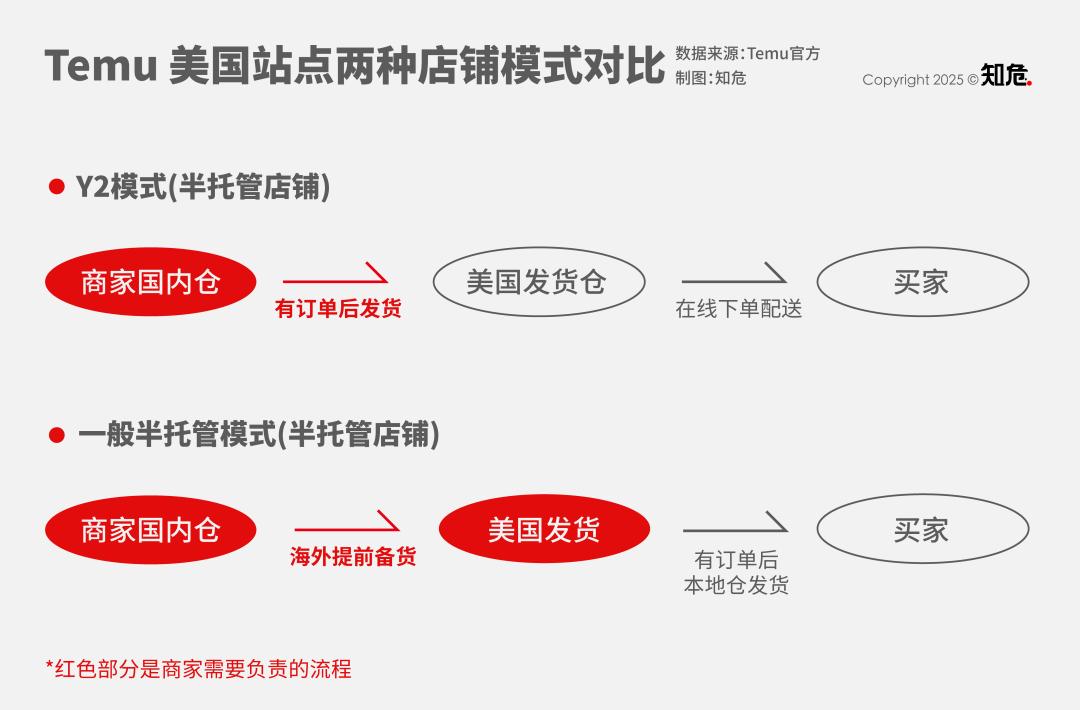
Temu Y2模式

Search documents
Temu Y2模式下,直发比较好还是海外仓模式比较好?
Sou Hu Cai Jing· 2025-08-26 14:20
Core Insights - Temu's strategic adjustment in response to the US-China tariff conflict has created significant industry disruption, particularly through its "semi-managed + Y2 model" which aims to navigate the challenges posed by rising customs costs and enhanced consumer experience [1] Temu Y2 Model: A "Light Asset" Experiment Under Tariff Pressure - The Y2 model is a product of policy-driven necessity, shifting seller focus from inventory management to supply chain optimization through a combination of "pricing authority + traffic support" [3] - A key innovation is the "segmented logistics control," which has reduced air freight costs by 17% through large-scale operations at domestic collection warehouses, while the mandatory use of Call waybill systems creates a closed-loop for end logistics data [3] - Sellers using the Y2 model have reported a decrease in logistics costs by $4.2 per order, but must increase inventory turnover rates to 2.3 times that of traditional models to offset conversion rate losses due to a 14-day delivery time [3] Temu Y2 Model: Three Major Pitfalls - Customs costs and compliance pressures require sellers to have robust customs qualifications or partnerships with third parties, with some product tariffs soaring to 245% and overall tax rates reaching 46.1%, necessitating cash flow reserves for customs guarantees [4] - Extended stocking periods provide sellers with more time but lead to longer consumer wait times, and strict adherence to platform logistics requirements limits sellers' choice of logistics providers, potentially harming consumer satisfaction and increasing after-sales costs [4] - Platform risk management and intensified competition arise from strict logistics management requirements, with false shipments triggering full refunds, and the potential for a surge in new Y2 store openings could exacerbate competition [4] Overseas Warehouse Model: A Survival Barrier Through Policy Cycles - Supported by various policies, the overseas warehouse model allows for bulk customs clearance, reducing tax rates and alleviating financial pressure through tax refunds upon export [5] - Local warehouse shipping significantly shortens logistics times, meeting Temu's requirements for shipping and collection efficiency, while both sellers and overseas warehouse service providers can monitor inventory in real-time to ensure timely replenishment [5] Conclusion: The Future of Cross-Border Trade - The true winners in the tariff and logistics battle will be those companies that can quickly build "elastic supply chains," combining the agility of the Y2 model with the stability of overseas warehouses to protect profit margins [6] - As cross-border trade enters a "micro-profit era," refined operational capabilities will become the critical factor for survival [6]

美国降低小包裹关税,但红利时代彻底结束了
3 6 Ke· 2025-05-14 11:16
Core Viewpoint - The recent adjustments in U.S. tariff policies, particularly the reduction of small package tariffs from 120% to 54%, represent a significant shift for cross-border e-commerce platforms like Temu and Shein, although they still face increased operational costs and complexities due to ongoing changes in trade regulations [1][2]. Group 1: Tariff Changes and Impact - On May 13, 2023, President Trump revised an executive order, lowering the tariff rate on small packages from China from 120% to 54%, while maintaining a $100 de minimis threshold for customs duties [1]. - The U.S. Customs and Border Protection reported that approximately 1.36 billion packages entered the U.S. in FY 2024, primarily from Chinese e-commerce platforms, highlighting the importance of the small package exemption for these businesses [2]. - The adjustment in tariffs is seen as a positive development for platforms like Temu and Shein, but it still results in increased costs compared to the previous 0% tariff rate [2]. Group 2: Operational Adjustments of E-commerce Platforms - Temu has shifted its operational model from fully managed services to semi-managed and Y2 models, responding to the changing tariff landscape [3][4]. - The Y2 model allows sellers to ship directly from China without pre-stocking in overseas warehouses, which can help mitigate some tariff costs, but it also increases operational complexity and costs for sellers [4][6]. - The transition to the Y2 model is seen as a way for larger sellers with strong supply chains to adapt to the new environment, although it poses challenges for smaller sellers who may struggle with increased costs and operational demands [6][7]. Group 3: Market Dynamics and Seller Strategies - The changes in tariff policies and operational models have created a challenging environment for sellers, particularly smaller ones, who may find it difficult to maintain profitability under the new conditions [7][8]. - Despite the challenges, there remains a significant market demand in North America, which e-commerce platforms and sellers are reluctant to abandon [8]. - Sellers are encouraged to focus on building their brands and enhancing competitiveness to navigate the risks associated with the evolving regulatory landscape [8].