
Tomahawk系列产品

Search documents
博通3nm芯片,重磅发布
半导体行业观察· 2025-08-05 01:37
Core Viewpoint - The article discusses Broadcom's new Jericho4 network chip, which addresses the challenges faced by cloud computing companies in managing aging and smaller data centers, particularly in the context of increasing demands for artificial intelligence (AI) workloads [2][5]. Group 1: Product Features and Capabilities - The Jericho4 chip can connect over 1 million processors across multiple data centers, processing information at four times the capacity of its predecessor [2][5]. - It supports distances over 100 kilometers, enabling the interconnection of geographically distributed data centers, which is essential for AI training and inference workloads [5][10]. - Each system can support up to 36,000 ports, with each port providing 3.2 Tbps bandwidth through Broadcom's proprietary HyperPort interface [7][9]. Group 2: Market Demand and Applications - Broadcom is benefiting from the growing demand for devices used in building AI systems, as its network components facilitate traffic between expensive GPUs used for AI model creation [2][3]. - The need for distributed AI computing is increasing, with companies looking to migrate data center capacity closer to customers to speed up AI model responses [3][5]. Group 3: Technical Innovations - HyperPort technology improves bandwidth efficiency and reduces congestion, achieving up to 70% better bandwidth utilization compared to traditional methods [10][11]. - Jericho4 integrates line-rate MACsec encryption on each port, ensuring secure traffic between facilities without impacting performance [13]. - The chip's architecture allows for seamless integration with existing Ethernet networks, simplifying deployment and reducing vendor lock-in for customers [13][14]. Group 4: Strategic Positioning - Jericho4 complements Broadcom's Tomahawk and Trident platforms, focusing on interconnectivity between facilities while maintaining the same management models and routing strategies [14][16]. - Broadcom's "Ethernet-first" strategy positions Jericho4 as a viable solution for meeting the demanding requirements of AI workloads, moving away from traditional architectures like Infiniband [16].


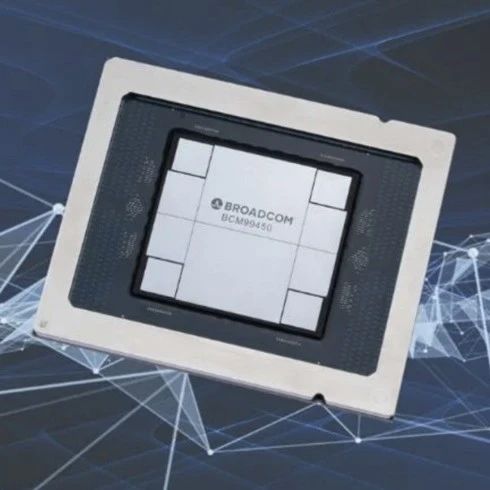
博通(AVGO.US)发布Jericho4芯片,破解AI小型数据中心跨域协同运算难题
Zhi Tong Cai Jing· 2025-08-05 00:01
Core Insights - The article discusses the launch of Broadcom's new Jericho4 network chip, which addresses the challenges faced by cloud computing companies in optimizing the efficiency of existing small data centers amid the ongoing expansion of AI data center scale [1][2] - The Jericho4 chip enhances data transmission speed and capacity, enabling the interconnection of dispersed small data centers to create large distributed systems that support AI model development and operation [1] Group 1 - Broadcom's Jericho4 chip can connect over one million processors, with data processing capacity improved by approximately four times compared to previous models [1] - The chip plays a critical role in the AI hardware ecosystem, facilitating data routing and switching functions within GPU clusters, which is increasingly important as AI computing power demands grow [1] - The power consumption issue of large GPU clusters has become a technical bottleneck, with individual facilities struggling to support power demands exceeding 300 megawatts, while distributed architectures can alleviate this pressure [1] Group 2 - Companies are migrating data centers to urban areas to reduce data interaction latency, making the integration of multiple small data centers more feasible in space-constrained environments [2] - The Jericho4 chip's significant advantage lies in its cross-regional interconnectivity, supporting transmission distances of over 100 kilometers, unlike the Tomahawk series, which typically covers communication within a single data center [2] - Jericho4 chips have begun shipping to early customers, with full product integration and deployment expected to be completed within nine months, reflecting the industry's trend towards a "distributed + near-user" transformation in data centers during the AI era [2]