Volvo EX30

Search documents
Volvo Scraps EX30 U.S. Sales Amid Broader EV Strategy Reset
ZACKS· 2026-03-19 18:32
Core Insights - Volvo is discontinuing the EX30 subcompact electric SUV in the United States after the 2026 model year, while continuing sales in global markets due to tariffs and a slowing U.S. EV market [1][2][3] Group 1: Volvo's EX30 Discontinuation - The EX30 was introduced in the U.S. for the 2025 model year and will have its final model year in 2026, remaining available in markets like Canada and Mexico [2] - Production for the U.S. market shifted from China to Belgium to avoid tariffs, but rising import tariffs and the removal of federal EV tax credits led to increased cost pressures and declining sales [3][4] - In 2025, Volvo sold approximately 5,400 EX30 units, significantly lower than competitors like Hyundai's Ioniq 5 and Tesla's Model 3 [4] Group 2: Industry Trends - The decision to discontinue the EX30 aligns with broader industry trends, as automakers reassess their electric vehicle programs amid changing consumer demand and regulatory environments [5][10] - Other automakers, such as Honda and General Motors, are also scaling back their EV plans due to declining demand and shifting priorities towards gasoline and hybrid models [8][9][10] - Honda announced the cancellation of three planned battery-electric models for the U.S. market, while GM is shifting its Michigan plant from EV production to internal combustion engine models [8][9]


Nvidia Eyes $1 Trillion AI Revenue as Trump Signals Escalation in Iran
Stock Market News· 2026-03-16 20:38
Group 1: Nvidia Developments - Nvidia CEO Jensen Huang projects at least $1 trillion in revenue from Blackwell and Rubin AI chip architectures by 2027, driven by surging global demand for AI computing [2][10] - Nvidia announced partnerships with IBM to offer Blackwell Ultra GPUs on IBM Cloud starting in early Q2, and is expanding into the automotive and robotics sectors with partners like Nissan, BYD, Hyundai, and Geely [3][10] - The company highlighted technical milestones, including Samsung's mass production of Nvidia's Groq 3 chip and the introduction of new Vera Rubin Ultra servers with 144 GPUs [4] Group 2: Market Reactions - Major U.S. stock indices closed higher, with the Nasdaq gaining 270 points (+1.22%) to finish at 22,375, the S&P 500 rising 1.03% to 6,700, and the Dow Jones Industrial Average increasing by 392 points (+0.84%) to close at 46,950 [11] Group 3: Other Corporate News - Rio Tinto announced a historic land exchange with the U.S. Forest Service for the Resolution Copper project, committing $500 million in additional spending over the next two years [12] - Volvo will pull the EX30 model from the U.S. market after 2026, although it will remain available in Canada and Mexico [12] Group 4: Regulatory Changes - The U.S. Securities and Exchange Commission is drafting a proposal to eliminate the requirement for companies to file quarterly earnings reports, potentially shifting to biannual reporting to reduce short-termism in the markets [8][10]


Volvo to discontinue EX30 in US later this year
Reuters· 2026-03-16 19:56
Group 1 - Volvo Cars will discontinue the EX30 and EX30 Cross Country models in the U.S. later this year, while these models will remain available in Canada and Mexico [1][2] - In 2025, Volvo sold nearly 5,400 units of the EX30 in the U.S., accounting for approximately 4.4% of the company's overall U.S. sales [2] - Volvo Cars experienced a 10% decline in sales volumes in the three months through February, attributed to trade tariffs and market challenges, despite a rise in sales of fully electric vehicles [3] Group 2 - The EX30 was launched in 2023 amid increasing competition among automakers to produce more affordable electric vehicles [3] - The then-CEO Jim Rowan described the EX30 as a "small SUV doing Volvo things" during its launch event [4]

Volvo is pulling the plug on its entry-level EV
Business Insider· 2026-03-16 19:34
Core Insights - Volvo will cease US sales of the EX30 and EX30 Cross Country after the 2026 model year, despite the vehicles remaining in production until summer 2024 and available at dealerships until the end of 2026 [1][4] Group 1: Company Strategy - Volvo's commitment to electrification remains unchanged, aiming for 90% to 100% of global sales to come from electric vehicles by 2030 [2][5] - The EX30 was initially positioned as an affordable EV for American consumers with a starting price below $35,000, but tariffs have increased its price to approximately $41,740 [3][4] Group 2: Market Context - The decision to discontinue the EX30 reflects broader challenges in the EV market, including a 53.5% and 45.2% decline in dealership EV sales in early 2026 compared to the same period in 2025 [6][7] - The cancellation of the $7,500 federal tax credit for electric vehicles has contributed to a slump in sales, prompting automakers to remove foreign-built EVs from their US lineups [7][8] Group 3: Future Outlook - Analysts expect a continued decline in US EV sales in 2026, with a potential rebound in 2027 as lower-priced models may help revive the market [9] - Rising gas prices could lead consumers to reconsider electric vehicles, as early indicators show increased interest in EV listings [10]

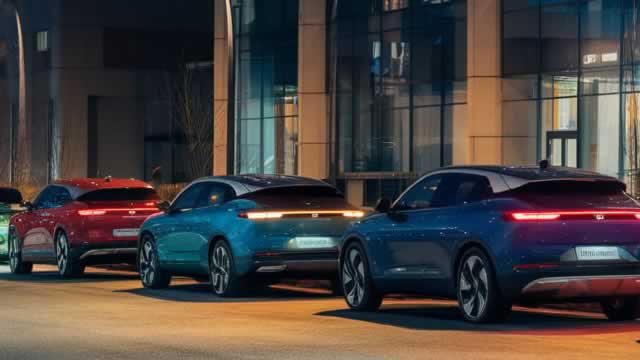
Exclusive: Volvo Cars to recall 40,000 electric SUVs over battery fire risk
Reuters· 2026-02-23 15:34
Core Viewpoint - Volvo Cars is recalling over 40,000 EX30 electric SUVs due to a risk of battery overheating, which may impact its safety reputation and incur significant costs [1][1][1] Group 1: Recall Details - The recall affects 40,323 EX30 Single-Motor Extended Range and Twin-Motor Performance vehicles [1][1] - Volvo will replace the high-voltage battery packs at no cost to the owners and has advised them to limit charging to 70% to mitigate fire risks [1][1][1] Group 2: Financial Implications - The cost of replacing the battery packs alone could reach approximately $195 million, excluding logistics and repair expenses [1][1] - The automaker is currently in discussions with the battery supplier regarding the financial aspects of the recall [1][1] Group 3: Industry Context - Battery safety is a critical concern for electric vehicle manufacturers, as evidenced by past recalls in the industry, such as General Motors recalling 140,000 Chevy Bolts due to similar issues [1][1] - Volvo's reputation for safety is central to its brand identity, making the resolution of this issue particularly important [1][1][1]

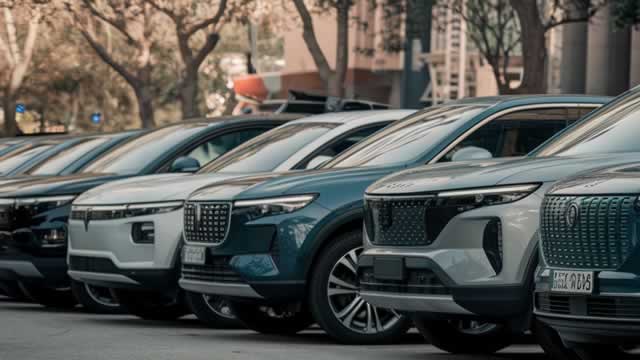
Canada-China EV Trade Deal: What it Means for TSLA, GM, Geely & BYD
ZACKS· 2026-01-20 14:10
Core Insights - Canada is easing tariffs on Chinese-made electric vehicles (EVs), allowing up to 49,000 vehicles annually at a 6.1% tariff, a significant reduction from the previous 100% duty imposed in 2024 [1][2] - The deal includes a price-based clause, reserving half of the annual quota for EVs priced under CAD 35,000, aimed at increasing access to affordable electric vehicles [1][2] Group 1: Impact on Major Players - Tesla is well-positioned to benefit from the new tariff structure, having already established a production base in China and configured its Shanghai Gigafactory for a Canada-specific Model Y, leading to a 460% year-over-year increase in China-built auto imports through Vancouver prior to the 2024 tariff [5][6] - Geely's brands, including Volvo and Polestar, can resume importing Chinese-built models, which had been paused due to tariffs, leveraging their existing brand recognition and dealer networks in Canada [7][9] - General Motors is unlikely to gain from the revised tariff framework as its China EVs are not approved for sale in Canada, and significant redesigns would be required for compliance with Canadian safety standards [10][11][12] Group 2: Opportunities and Challenges - BYD fits within the new deal's scope but faces challenges in the near term due to the need for certification and the establishment of distribution networks in Canada, despite having a local electric bus assembly plant in Ontario [13][14][15] - The policy shift is expected to lower prices for consumers and accelerate EV adoption in Canada, with China accounting for approximately 70% of global EV production [3]


Volvo stock jumps on expanded US production, new hybrid model to counter tariffs
Yahoo Finance· 2025-09-23 16:04
Core Viewpoint - Volvo Cars is expanding production at its US plant in Ridgeville, South Carolina, to localize production, mitigate tariffs, and cater to the US market's specific demands [1][5][6] Group 1: Production Expansion - Volvo will introduce a fourth vehicle model at its Ridgeville plant, which is expected to be a next-generation hybrid designed for the US market [1][2] - The company plans to start producing its bestselling XC60 midsize SUV at the South Carolina facility by late 2026, currently manufactured in Gothenburg, Sweden [2][3] - The Ridgeville plant has an installed production capacity of 150,000 cars per year and currently produces the fully electric Volvo EX90 SUV and Polestar 3 [3] Group 2: Financial Commitment - Volvo's total investment in its US plant amounts to $1.3 billion, reinforcing its long-term commitment to the US market [4] - The XC60 has seen significant sales growth, with over 27,000 units sold in the US in the first eight months of 2025, marking a nearly 20% increase year over year [3] Group 3: Tariff Impact - The expansion of US manufacturing is largely driven by the imposition of tariffs on global imports, with cars imported from Sweden and the EU facing a potential 15% tariff [5][7] - Current tariffs on vehicles imported from China are at 100%, prompting Volvo to relocate production of its EX30 from China to Ghent [7]
ECARX white paper shows 50+% reduction in integration time for Google's world-leading GAS automotive application suite
Globenewswire· 2025-07-03 09:00
Core Insights - ECARX Holdings Inc. has released a white paper detailing the integration of Google Automotive Services (GAS) into its infotainment systems for Volvo EX30 and Polestar 4 vehicles, highlighting a significant reduction in integration time [1][2][7] Group 1: Google Automotive Services Integration - GAS is built on Android Automotive OS and provides essential services like Google Maps, Google Play Store, and Google Assistant, enhancing in-vehicle experiences [2][3] - The integration process typically requires 12-18 months for GAS certification, but ECARX has managed to halve this time through a proactive, test-driven approach [4][5] - The first GAS certification for the Volvo EX30 was completed in 10 months, while the second for the Polestar 4 was achieved in just 8 months [7] Group 2: Technical Innovations - ECARX utilized a dedicated "test farm" to run over 1.6 million automatic test cases, allowing for rapid identification and resolution of issues [6] - The integration of the xTS suite into CI/CD pipelines enabled immediate detection of potential regressions, streamlining the certification process [6] Group 3: Company Overview - ECARX is a global automotive technology provider, offering full-stack solutions for next-generation smart vehicles, including system on a chip (SoC) and central computing platforms [10] - Founded in 2017 and listed on Nasdaq in 2022, ECARX employs over 1,800 people across 12 locations worldwide and has products in over 8.7 million vehicles [11]