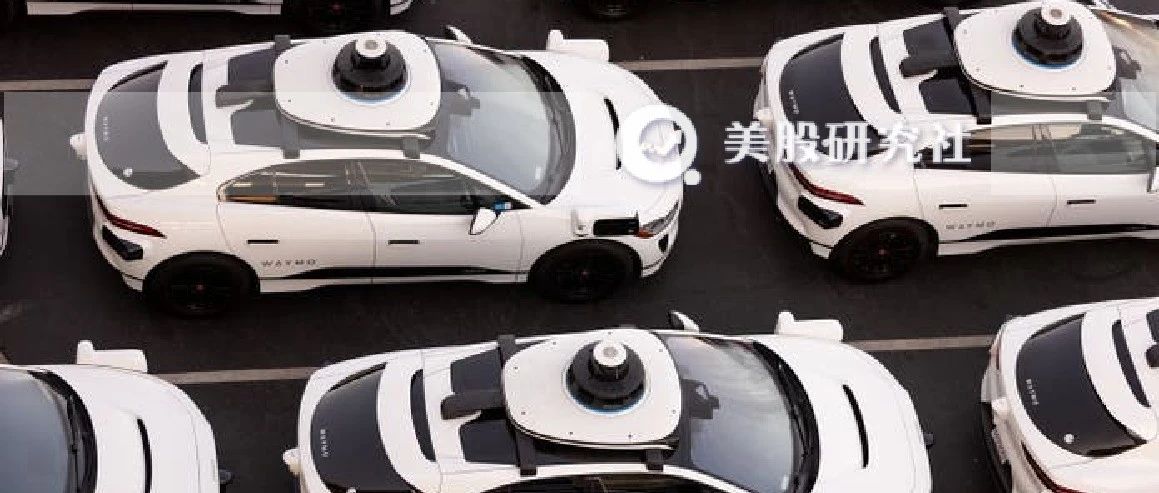
Waymo自动驾驶服务

Search documents
谷歌特斯拉“神仙打架”,自动驾驶红利怎么抓?
Xin Lang Ji Jin· 2025-11-28 00:50
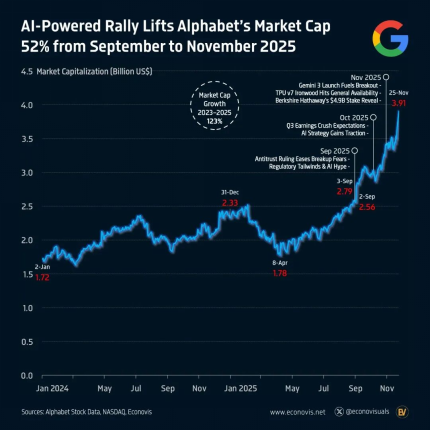
Group 1 - Alphabet has become the fourth company globally to surpass a market capitalization of $3 trillion, joining Apple, Microsoft, and Nvidia [3] - The rapid increase in Alphabet's market value, which rose over $1.34 trillion in just two months, is attributed to multiple disruptive actions reshaping the tech industry [1][4] - Key drivers of Alphabet's stock surge include favorable antitrust rulings, positive regulatory environment, optimistic sentiment towards AI, and strong Q3 earnings exceeding expectations [4] Group 2 - Waymo, Google's autonomous driving division, operates over 2,500 vehicles and has achieved over 100 million miles of fully autonomous driving, with plans to expand its service to over 20 cities [7][9] - Waymo's business model combines ride-hailing services with technology licensing, marking a significant step towards the commercialization of autonomous driving [8] - In contrast, Tesla's approach focuses on a pure vision technology route, with plans to deploy 1,000 Robotaxis by the end of 2025, aiming for a fleet of 1 million Robotaxis across the U.S. [9][10] Group 3 - The competition between Waymo and Tesla represents a significant technological rivalry that will shape the future of the trillion-dollar autonomous driving market, with 2026 being a pivotal year for both companies [10] - Waymo's multi-sensor fusion approach is more costly, while Tesla's pure vision strategy offers long-term cost advantages and scalability [10] - The ongoing expansion of Waymo's services, including plans for international testing in London, highlights its commitment to leading in the autonomous driving sector [9]



谷歌:Waymo 有望在 2040 年实现巨大发展,耐心终将回报
美股研究社· 2025-07-02 11:39
Core Viewpoint - Google's Waymo has significant long-term growth potential, with estimates suggesting a valuation of $500 billion by 2040, despite current losses and market uncertainties [1][6]. Group 1: Waymo's Current Status and Future Projections - Waymo is currently providing approximately 250,000 rides per week, but is not expected to break even until around 2030 [3]. - In a bullish scenario for 2030, Waymo's valuation could reach $200 billion, representing about 5% of Google's projected market cap of nearly $4 trillion [1][5]. - By 2040, Waymo could contribute around 10% or more to Google's total valuation, which may reach $5 trillion [1][8]. Group 2: Competitive Landscape - Waymo's technology combines lidar, radar, cameras, and high-definition maps, but its cost per vehicle is significantly higher than Tesla's, which could impact its competitive edge [2]. - Tesla's autonomous driving system is currently more cost-effective and has a larger dataset for training, which may give it a profitability advantage once scaled [2][7]. - Other competitors like Amazon's Zoox and Baidu's Apollo are also in the race, with Apollo likely to dominate the domestic market in China [2]. Group 3: Financial Outlook and Market Dynamics - Waymo's revenue is projected to reach $5 billion by 2030, with a potential for $50 billion by 2040, driven by ride-hailing and autonomous freight services [5][6]. - The operational profit margin for Waymo could reach around 40%, aligning with other software-driven businesses [3]. - The growth of autonomous vehicles is expected to be supported by government policies aimed at boosting GDP, which may facilitate Waymo's expansion [6]. Group 4: Investment Considerations - Investing in Google should consider Waymo as a high-growth potential asset, despite the competitive challenges it faces [8]. - Google's stock may not currently offer high returns, but its resilience makes it a valuable addition to certain investment portfolios [8]. - The autonomous vehicle market is anticipated to grow exponentially over the next few decades, positioning Waymo as a promising venture within Google's broader business strategy [8].