Windows 3.0

Search documents
Microsoft Stock: How To Find & Own America's Greatest Opportunities
Investors· 2026-03-25 12:00
Group 1 - Microsoft was founded in 1975 by Bill Gates and Paul Allen, who recognized the potential of microcomputers and developed software for IBM's microcomputer [2] - The company went public in 1986 and launched MS-DOS, followed by Microsoft Office in 1989, which included Microsoft Word, Excel, and PowerPoint [3] - Microsoft released Windows 3.0 in 1990 and sold 10 million copies within the first two years, marking a significant milestone in its product evolution [4] Group 2 - Key financial metrics at the September 1989 buy point included an earnings per share (EPS) annual growth rate of 58%, a return on equity of 40.3%, and a pretax profit margin of 31% [7] - The latest quarter's EPS growth was reported at 48%, with sales growth at 29%, and research and development expenses accounting for 11.8% of sales [7] - Microsoft maintained a debt level of 0% during this period, indicating strong financial health [7]

这颗40岁的芯片,改写历史!
半导体芯闻· 2025-10-20 10:40
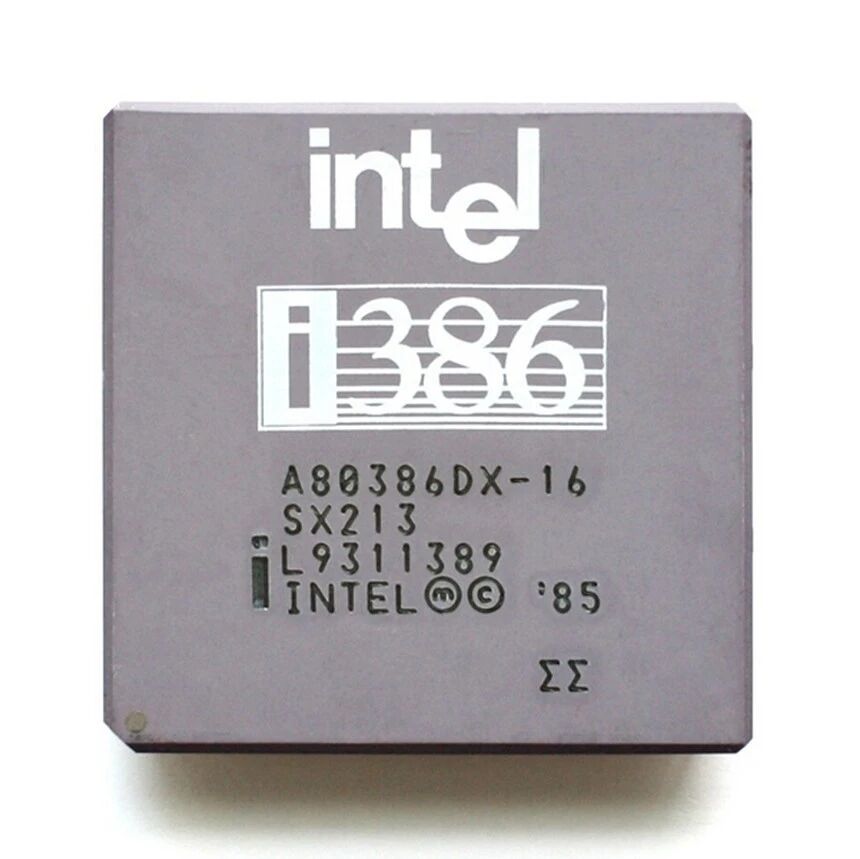
Core Insights - The Intel 80386 processor, launched in October 1985, marked a significant turning point in personal computing as the first 32-bit chip in the Intel PC product line and the origin of the IA-32 instruction set [1][5][14] - The 80386 featured 275,000 transistors and operated at a frequency of up to 16 MHz, supporting a maximum address space of 4GB, which laid the foundation for true multitasking and virtual memory [1][4] - The introduction of the 80386 led to the development of various operating systems, including early versions of Windows and Linux, which utilized its advanced features [4][12] Group 1: Historical Context - The 80386 was developed as a response to the competitive landscape, particularly after IBM rejected Intel's earlier designs, leading Compaq to be the first company to launch a computer with the new CPU [2][11] - The Deskpro i386, released by Compaq in September 1986, was priced at $6,499 and became a pivotal product in the PC industry [2][10] - The architecture of the 80386 was influenced by the need for backward compatibility and the desire to create a more powerful and efficient processing unit compared to its predecessors [6][8] Group 2: Technical Advancements - The 80386 introduced a protected mode and paging capabilities, which allowed for better memory management and the ability to run multiple DOS sessions simultaneously [1][4][8] - It expanded the instruction set significantly, adding 54 new instructions and various addressing modes to effectively utilize the 4GB address space [8][10] - The architecture's design enabled the development of a robust ecosystem around the 80386, leading to its widespread adoption in servers and mobile computers [14] Group 3: Market Impact - The 80386's success was crucial for Intel, as it faced significant competition from other manufacturers who were also producing x86-compatible processors [5][12] - By the late 1980s, the 80386 had established itself as a standard in the PC market, leading to the creation of a diverse range of applications and operating systems that leveraged its capabilities [12][14] - The processor's legacy continues today, as modern x86 processors still retain the core architecture established by the 80386, highlighting its lasting influence on computing [14][15]