insightOS

Search documents
具识工作坊正式发布:破解机器人场景开发难题
机器人大讲堂· 2025-12-15 10:24
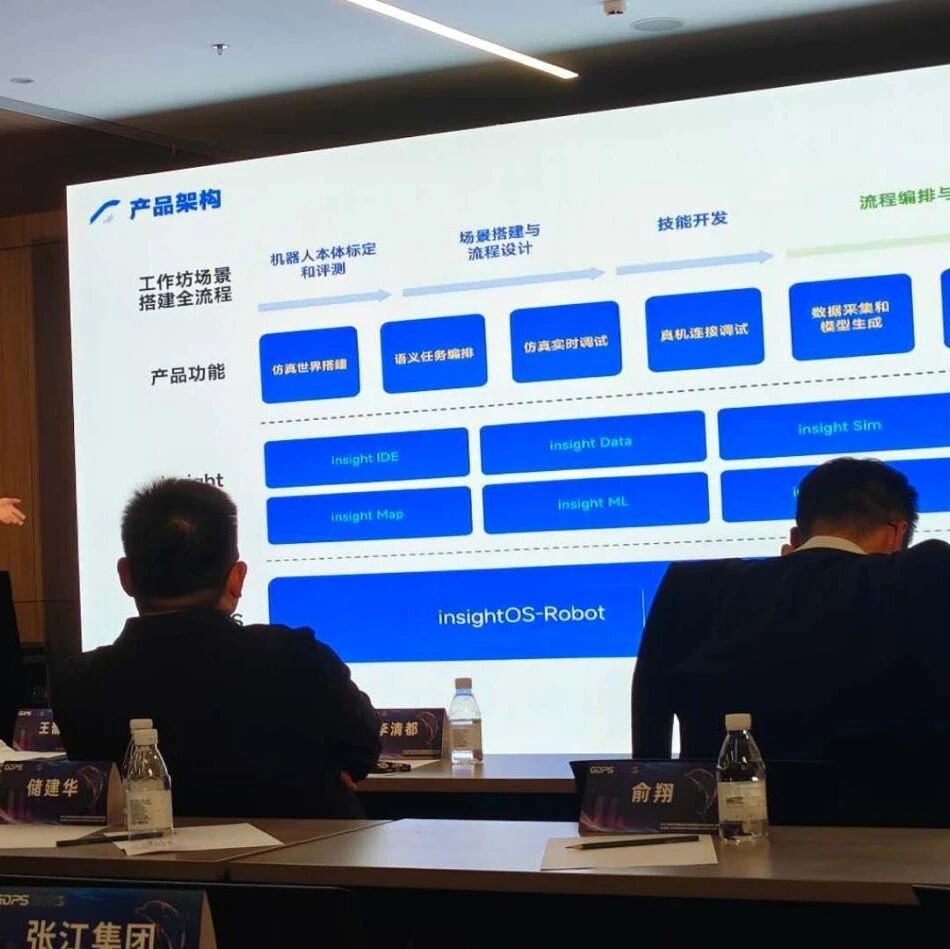
Core Viewpoint - The core issue for the widespread adoption of robots across various industries is the challenge of "scene development difficulty" [1] Group 1: Introduction of the Workshop - The "JuShi Workshop" is a full-stack development platform launched by Shanghai JuShi Intelligent Technology Co., Ltd., designed to accelerate the industrial application of embodied intelligence technology [3] - Unlike traditional robot operating systems, the JuShi Workshop offers a comprehensive solution from scene recognition to deployment and operation, allowing developers to complete task orchestration without complex coding through graphical drag-and-drop and natural language commands [3] Group 2: Product Lines - The JuShi Workshop includes three main product lines: Industrial, Educational, and Maintenance, covering diverse application needs [4][5][6] - **Industrial Version**: Provides a complete solution for embodied intelligence research and production in industrial settings, integrating multiple software service platforms and hardware solutions [4] - **Educational Version**: Designed for the education sector, it includes theoretical and practical courses on embodied intelligence, along with development robots and a complete toolchain [5] - **Maintenance Version**: Offers a unified management platform for heterogeneous robots, supporting both hardware and software management as well as scene operation and adjustment [6] Group 3: Full-Link Solution - The core advantage of the JuShi Workshop lies in its full-link solution from scene recognition to deployment and operation, demonstrated through a series of steps including calibration, scene decomposition, skill development, process orchestration, and operation monitoring [7] - For example, in an industrial scene like "box moving," the process involves: 1. Calibration and Navigation: Ensuring high-precision operations through visual and movement calibration [7] 2. Scene Decomposition: Breaking down real industrial scenes into reusable "atomic skills" or "skill modules" [7] 3. Skill Development: Using VR technology to capture human actions for model training [8] 4. Process Orchestration and Debugging: Quickly assembling and scheduling atomic capabilities through a graphical interface [8] 5. Operation Monitoring: Real-time monitoring of robot clusters and predictive maintenance through the OMC platform [8] Group 4: Core Technological Innovations - **Semantic Programming**: Allows developers to describe tasks using natural language or graphical interfaces, which the system automatically converts into executable processes [9] - Semantic abstraction enables flexible operations rather than traditional programming [9] - The system can understand and parse natural language commands into executable sequences [9] - Graphical task orchestration significantly lowers the development threshold, enhancing efficiency [9] - **Atomic Skills**: Breaks down complex robot operations into standardized basic actions, facilitating skill reuse and combination [11] - The system has achieved 13 basic behaviors, allowing developers to select and combine different atomic skills to construct complex task flows [11] - Standardized interfaces enable skill adaptation and migration across different robots [13] Group 5: Future Outlook - The JuShi Workshop has been applied in various fields, promoting the transition of robots from "laboratory" to "production line" [14][15][16][17] - **Industrial Manufacturing**: Used in quality inspection, assembly, and material handling on factory production lines [14] - **Smart Logistics**: Applied in warehouse management and automated sorting [15] - **Education and Research**: Deployed in training labs for embodied intelligence research and future employment education [16] - **Government and Enterprise Services**: Supports emergency drills and skills training in various service centers [17] - **Other Applications**: Includes exhibition guidance and companionship services [18] - The company aims to create a "self-controllable" intelligent foundation for China's robotics industry, attracting more developers to explore innovative applications across various sectors [18]

机器人迎来安卓时刻:具识智能重磅推出 insightOS,给机器人装上国产操作系统,共建产业生态
机器人大讲堂· 2025-11-10 04:07
Core Viewpoint - The article discusses the transition of the robotics industry from "automation" to "intelligence," highlighting the role of Professor Li Zhijun and his development of the insightOS, a domestically produced intelligent operating system for robots, aimed at enhancing their autonomous decision-making capabilities [1][4][19]. Group 1: InsightOS Development - The insightOS is designed to address the complexity and flexibility challenges in robot applications, integrating intelligence deeply into the system rather than treating it as an external module [4][5]. - The system aims to achieve robot autonomy by embedding AI capabilities such as perception, reasoning, and planning into the operating system's core services [4][5]. - A unified semantic understanding layer allows non-experts to command robots using natural language, significantly lowering deployment barriers and enabling large-scale collaboration among intelligent agents [5][8]. Group 2: Dynamic Adaptation and Flexibility - InsightOS features dynamic adaptability through built-in elastic scheduling and multi-model collaboration, enabling real-time resource allocation based on complex scene requirements [8]. - The system can autonomously identify anomalies and plan recovery strategies, ensuring stability in dynamic environments, thus addressing the critical challenge of making robots not just "usable" but "effective" [8][9]. Group 3: Ecosystem Construction - The company is building a comprehensive ecosystem that connects application scenarios, hardware adaptation, and algorithm integration, aiming to create a universal system tailored to domestic industry needs [9][10]. - InsightOS has achieved hardware decoupling and capability atomization, allowing compatibility with various robot types, including industrial arms and drones, by abstracting hardware differences into a unified "semantic behavior" [9][10]. - The insight Studio development platform supports rapid integration of third-party algorithm models, significantly reducing the barriers and costs for robot manufacturers in deploying and tuning algorithms [10][12]. Group 4: Vision and Mission - InsightOS aims to create a "self-controllable operating system" for Chinese robots, addressing the reliance on foreign platforms and mitigating data security risks [13][15]. - The system is built on decades of research from Harbin Institute of Technology, ensuring a strong foundation in both operating systems and robotics [15][18]. - The company plans to establish a complete product matrix and has already deployed insightOS in several domestic humanoid robots, receiving industry recognition [18][19].