CNBC

Search documents
The Dow just hit 50,000. See the names that have come and gone over the decades
CNBC· 2026-02-06 21:00
Core Insights - The Dow Jones Industrial Average has reached a historic milestone by surpassing the 50,000 mark for the first time, marking a significant achievement in its approximately 130-year history [1][25]. Historical Context - The Dow was established in 1896 with 12 industrial stocks and has evolved to include 30 members, reflecting changes in the economy over time [2][4]. - The index has seen various milestones, including breaking 1,000 in 1972, 5,000 in 1995, 10,000 in 1999, 20,000 in 2017, and 30,000 in 2020, with the latest milestone of 50,000 reached in 2026 [6][9][12][16][19][25]. Sector Representation - The index has adapted to include companies from growing sectors, notably technology, which now comprises seven significant stocks, highlighting its increasing importance in the market [3][23]. - The selection of stocks for the Dow is governed by a committee that evaluates a company's reputation, long-term growth, and relevance to investors, while also considering sector representation [4][5]. Recent Developments - The recent rally in the Dow, which saw an increase of over 1,100 points, was largely driven by investor enthusiasm surrounding artificial intelligence and the performance of major technology stocks, referred to as the "Magnificent Seven" [22][25]. - Notable changes in the index include the replacement of Intel with Nvidia, reflecting Nvidia's leadership in AI, and the addition of Sherwin-Williams, which replaced Dow Inc. [26][27].






Trump has leverage over Iran thanks to low oil prices, Energy Secretary says
CNBC· 2026-02-06 20:19
Geopolitical Leverage - Low oil prices provide President Trump with increased leverage over Iran, reducing concerns about oil price spikes amid geopolitical tensions [1] - The U.S. has deployed the USS Abraham Lincoln aircraft carrier strike group to the Middle East, indicating a potential military response to Iran's nuclear negotiations [3] Oil Market Dynamics - U.S. crude oil prices increased by 26 cents, or 0.4%, closing at $63.55 per barrel, with prices up more than 10% since the beginning of the year after a 20% decline in 2025 [2] - Analysts expect a surplus in the oil market this year due to increased output from OPEC+ and strong U.S. production [2] Iranian Oil Production - Iran, an OPEC member, produces over 3 million barrels of oil per day, and recent diplomatic negotiations regarding its nuclear program were described as a "good start" by Iranian officials [4] Venezuelan Oil Production - U.S. Energy Secretary Chris Wright anticipates that Venezuelan oil production will increase by several hundred thousand barrels per day this year, contributing significantly to global demand growth [5] - The U.S. has taken control of Venezuela's oil sales, with efforts to rebuild its energy sector under President Trump's direction [5]

Healthy Returns: Pfizer execs chart out obesity strategy after encouraging drug data
CNBC· 2026-02-06 19:55
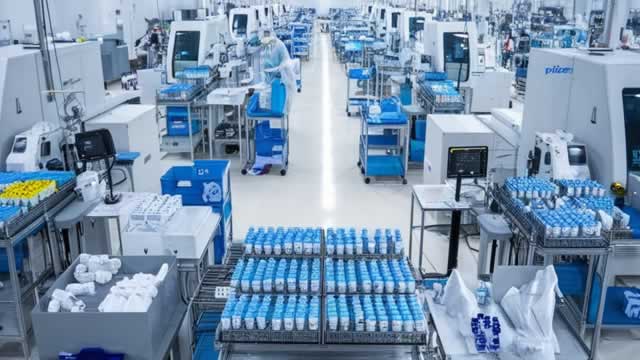
Core Viewpoint - Pfizer is re-entering the obesity treatment market with a focus on its acquisition of Metsera and the development of the injection PF′3944, which shows promising results in weight loss trials [2][3]. Group 1: Drug Development and Trials - Pfizer's PF′3944 injection demonstrated significant weight loss of up to 12.3% compared to placebo at week 28 in a phase two trial, with no plateau observed, indicating potential for continued weight loss [4]. - The company plans to initiate 10 phase three studies for PF′3944, aiming for potential approvals starting in 2028 [5]. - Pfizer's modeling predicts that a higher dose in phase three trials could lead to a weight loss of 16% at week 28 [6]. Group 2: Competitive Positioning - The monthly dosing of PF′3944 offers a competitive advantage over existing weekly injections from competitors like Eli Lilly and Novo Nordisk, potentially appealing to patients seeking more convenient treatment options [3][7]. - Pfizer aims to position PF′3944 as a "best-in-class" product in terms of efficacy and tolerability, with a focus on providing patients with more flexible dosing options [6][9]. Group 3: Combination Therapies - Pfizer is exploring a combination therapy that includes an amylin-targeting drug, which is expected to enhance weight loss beyond what is achieved with GLP-1 alone [10]. - Early data indicates that the combination of PF′3944 and the amylin drug resulted in an additive weight loss of 5% compared to placebo at day 8, with amylin alone showing an 8.4% weight loss at day 36 [11]. Group 4: Future Innovations - Pfizer is also developing a quarterly GLP-1 injection, which would be administered once every three months, aiming for ultra-long-acting properties [13]. - The company believes that the majority of patients will prefer injection options, with quarterly dosing potentially being more favorable than monthly [14].

Nvidia rises 7% as Jensen Huang says $660 billion capex buildout is sustainable
CNBC· 2026-02-06 18:59
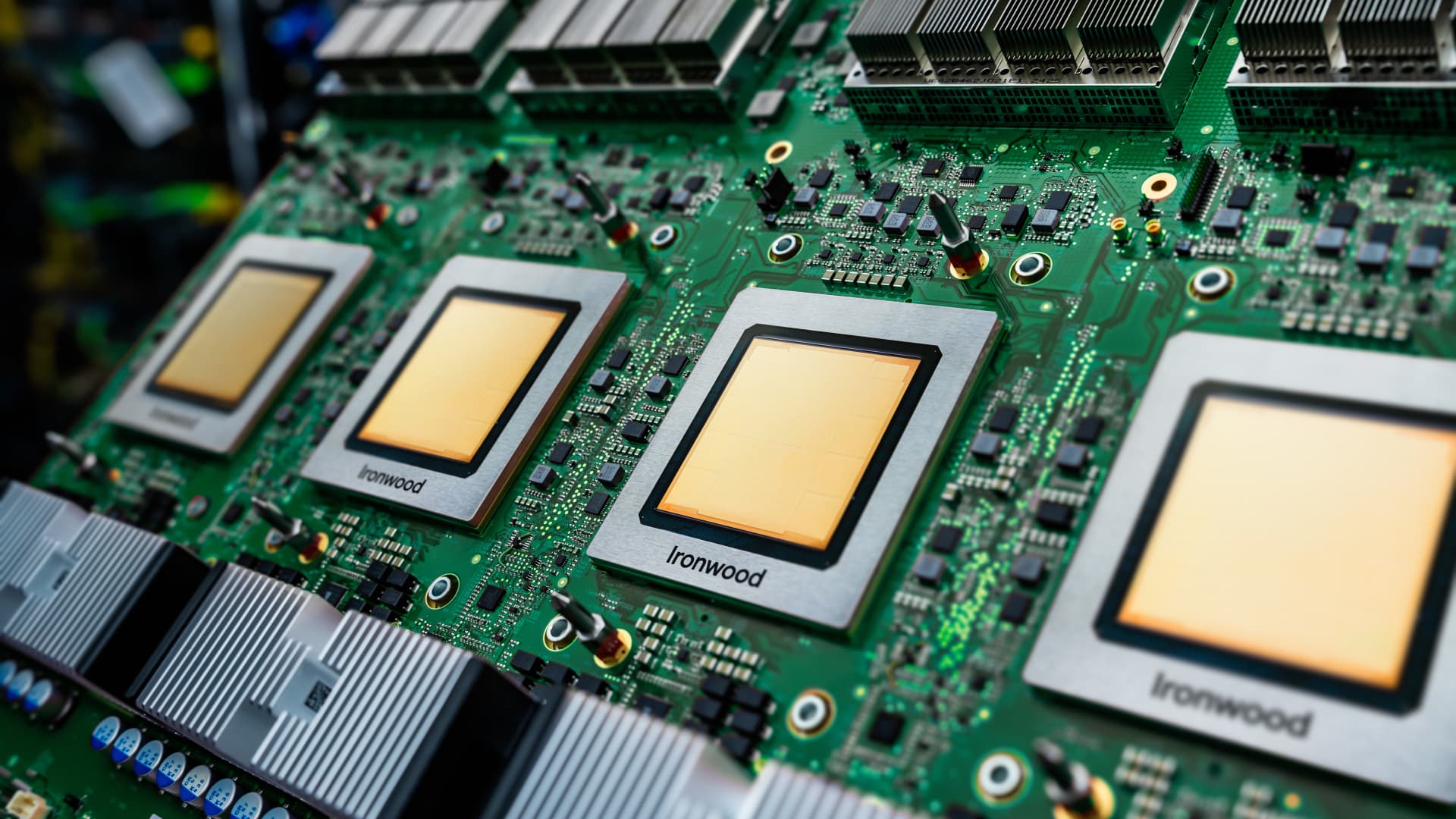
The tech industry's surging capital expenditures for AI infrastructure is justified, appropriate and sustainable, Nvidia CEO Jensen Huang said Friday on CNBC's "Halftime Report.""The reason for that is because all of these companies' cash flows are going to start rising," Huang said. Nvidia shares were up 7% during trading on Friday. Huang's comments come after key Nvidia customers Meta, Amazon, Google and Microsoft reported their latest earnings over the past two weeks. These companies told their investors ...

We're upgrading shares of a big beneficiary of AI spending going through the roof
CNBC· 2026-02-06 18:47
Market Overview - Stocks rebounded on Friday, led by technology, despite a poor week overall for the S&P 500 and Nasdaq [1] - The best performing sector was consumer staples, which rose 13% in 2026, marking their best year in decades [1] Company Earnings and Capital Expenditure - Meta Platforms invested $22.14 billion in Q4 and $72.22 billion for the full year 2025, with anticipated spending of $115 billion to $135 billion in 2026 [1] - Microsoft spent $37.5 billion on capital expenditures, with analysts projecting $148 billion for the fiscal year [1] - Alphabet reported $27.5 billion in Q4 capex and $91.4 billion for the year, expected to increase to $175 billion to $185 billion in 2026 [1] - Amazon's capex was $39.5 billion in Q4 and $128 billion for 2025, planning to invest $200 billion in 2026 [1] Investment Opportunities - Broadcom shares are down about 4% year-to-date and 20% from their all-time high, prompting an upgrade to a buy-equivalent rating due to increased capex plans from major clients like Alphabet and Meta [1] - The anticipated increase in spending on AI infrastructure is expected to benefit various companies in the portfolio, including Nvidia, Eaton, GE Vernova, Dover, Corning, Cisco Systems, and Qnity Electronics [1] Upcoming Economic Data - The pace of earnings season will slow next week, with 15% of S&P 500 companies still scheduled to report, including DuPont and Cisco [1] - Key economic data to be released includes December retail sales, January consumer price index, and the January employment report, which is expected to show nonfarm job gains of about 70,000 and an unchanged unemployment rate of 4.4% [1]


Jennifer Garner's Once Upon a Farm opens at $21 per share in market debut, after pricing IPO at $18
CNBC· 2026-02-06 17:55
Company Overview - Once Upon a Farm, co-founded by Cassandra Curtis and Ari Raz in 2015, specializes in organic cold-processed, refrigerated baby foods and kid snacks [3] - The company went public on February 6, 2026, trading under the ticker "OFRM" on the New York Stock Exchange [1] - The IPO was priced at $18 per share, raising $197.9 million and valuing the company at $724 million [2] Financial Performance - In 2024, Once Upon a Farm recorded net sales of $156.8 million, a 66% increase from the previous year [6] - Despite the sales growth, the company's losses widened from $17.6 million to $23.8 million [6] Market Trends - The company benefits from a growing consumer shift away from ultra-processed foods, particularly for children, as highlighted by movements like "Make America Healthy Again" [5] - Retailers are increasingly allocating prime shelf space to organic foods, reflecting a significant change in market dynamics compared to previous years [7] Strategic Goals - Once Upon a Farm aims to "drive systemic change in childhood nutrition" and chose to go public to further this mission rather than seeking a sale [8] - The IPO proceeds will be used to pay down debt, purchase new equipment, and fund general corporate purposes [9] Industry Context - The current market environment is seeing an increase in IPOs, driven by interest rate cuts and a backlog of companies previously deterred by market volatility [10]
Cramer calls this drug maker the 'greatest growth stock.' He also names a runner-up
CNBC· 2026-02-06 17:07
Market Overview - Stocks rebounded on Friday, with the Dow surging more than 950 points or nearly 2%, indicating a strong market recovery [1] - The S&P 500 and Nasdaq each rallied about 1.5% on Friday, although both indexes remained in the red for the week due to a recent rotation out of tech stocks [1] Company Performance - Eli Lilly shares increased by 3% on Friday after an almost 8% decline in the previous session, attributed to broader market sell-off and competition from Hims & Hers launching a compounded version of Novo Nordisk's Wegovy [1] - The FDA's announcement to take action against illegal copycat drugs contributed to the bounce in Eli Lilly's stock, with the company being highlighted as a significant growth stock [1] - Linde's shares dropped another 1.7% following a 2.9% decline on Thursday, after JPMorgan downgraded the industrial gas giant to a hold-equivalent rating [1] - Despite the downgrade, Linde's price target was raised from $500 to $510, indicating continued confidence in the company's long-term prospects [1] Notable Stocks - Club holdings and Dow components such as Nvidia, Cisco, Boeing, Honeywell, Procter & Gamble, and Nike all experienced gains, while Amazon saw a decline of 7.5% after its earnings report revealed significant spending plans and lighter than expected guidance [1]


Bitcoin gets slashed in half. What's behind the crypto's existential crisis
CNBC· 2026-02-06 17:03
Core Viewpoint - The cryptocurrency market, particularly Bitcoin, is experiencing a significant downturn, with Bitcoin falling to around $60,000, leading to a reassessment of its utility as a digital currency and store of value [1][2][4]. Market Performance - Bitcoin dropped to a low of $60,062, marking a decline of over 52% from its all-time high of $126,000 in early October 2025 [2]. - In a single day, Bitcoin lost more than 15%, with its daily relative strength index falling to 18, indicating extreme oversold conditions [3]. - Other cryptocurrencies, such as Ether and Solana, also saw declines of 24% and 26% respectively for the week, reflecting a broader loss of confidence in the crypto market [3]. Institutional Sentiment - Institutional interest in Bitcoin appears to be waning, as evidenced by significant outflows from spot Bitcoin exchange-traded funds (ETFs), which recorded over $3 billion in outflows in January alone, following $2 billion in December and $7 billion in November [9]. - Investors are increasingly skeptical about the willingness of financial institutions and governments to adopt Bitcoin, which has been a major driver of its value in recent years [7]. Comparative Analysis - Over the past year, Bitcoin has decreased by 28%, while gold has increased by 72%, highlighting gold's effectiveness as a hedge against macroeconomic risks [5]. - Bitcoin has been trading down alongside other risk-on assets, raising doubts about its status as a safe haven during periods of economic uncertainty [6]. Market Dynamics - The current market downturn is characterized as a macro-driven deleveraging rather than a structural failure within the crypto ecosystem [5]. - Efforts to position Bitcoin as "digital gold" or an alternative to traditional safe havens have lost traction, with many initiatives to promote Bitcoin as a payment method failing to gain momentum [10][11]. Future Outlook - Despite the current challenges, some investors remain optimistic about Bitcoin's long-term potential, although there is a growing concern about the security of its underlying network [12][13].


Uber held liable, ordered to pay $8.5 million in driver rape suit
CNBC· 2026-02-06 15:50
Core Viewpoint - Uber has been ordered to pay $8.5 million in a trial related to alleged sexual assault by a driver, marking a significant legal development for the company as it faces thousands of similar lawsuits nationwide [1][2] Group 1: Legal Proceedings - The trial in Arizona is the first of approximately 3,000 consolidated lawsuits against Uber concerning alleged sexual assault and misconduct by drivers [2] - The verdict found Uber liable for the actions of the driver involved in the case, establishing a precedent for future lawsuits [2] Group 2: Financial Implications - Uber is required to pay $8.5 million to the plaintiff, Jaylynn Dean, but was not ordered to pay punitive damages [2]

How America's EV retreat is increasing China's control of global markets
CNBC· 2026-02-06 14:19
Core Viewpoint The U.S. electric vehicle (EV) industry is facing a significant crisis as American automakers retreat from EV production, while Chinese manufacturers rapidly advance in the global market, raising concerns about the future competitiveness of U.S. companies in the automotive sector. Group 1: U.S. Automakers' Challenges - Stellantis announced a $26 billion charge due to a major business overhaul, including a reduction in EV production, leading to a stock drop of over 20% [2] - U.S. automakers like General Motors and Ford have lost billions on EVs and are shifting focus back to larger gas-powered vehicles due to the loss of federal tax credits and weak consumer demand [3] - Tesla has been surpassed by BYD in EV sales, indicating a decline in its market share and appeal, particularly in Europe [4] Group 2: Chinese Automakers' Growth - Chinese automakers have increased their global market share from less than 3% to an estimated 11.1% from 2019 to 2025, while U.S. automakers' share has dropped from 21.4% to 15.7% [12] - The global market share of Chinese brands has surged nearly 70% in five years, with significant growth in EV sales, which increased from approximately 572,300 in 2020 to 4.95 million in 2025 [5][11] - Chinese EV sales outside of China have also seen a remarkable increase of over 1,300%, from less than 33,000 to more than 474,000 [11] Group 3: Market Dynamics and Future Outlook - The U.S. automotive industry, which constitutes about 5% of the country's GDP, is concerned about the long-term implications of Chinese competition, especially as Chinese brands expand into markets traditionally dominated by U.S. automakers [6] - Experts highlight that the combination of government support, vertically integrated supply chains, and rapid execution in China poses an existential threat to traditional U.S. automakers [8] - GlobalData forecasts that Chinese EV sales will continue to grow, reaching approximately 6.5 million units by 2030 and nearly 8.5 million by 2035 [16] Group 4: Strategic Responses from U.S. Automakers - GM is adjusting its EV strategy to align with natural demand rather than regulatory pressures, while Ford is pivoting towards smaller, more affordable electric models to compete with Chinese manufacturers [22][24] - The Alliance for Automotive Innovation is advocating for protective measures against Chinese government-backed auto manufacturers to maintain competitiveness in the U.S. market [19] - The U.S. EV market saw a peak of 10.3% in September, but demand has since plummeted to an estimated 5.2% in the fourth quarter [21]