The Motley Fool

Search documents
Stock Market Today, Jan. 26: USA Rare Earth Jumps After Securing $1.6 Billion Government Funding Commitment
The Motley Fool· 2026-01-26 22:36
Core Viewpoint - USA Rare Earth has secured a $1.6 billion government-backed funding package, reshaping its role in the U.S. rare-earth supply chain and providing significant financial resources for expansion [1][4]. Company Summary - USA Rare Earth (USAR) experienced a stock increase of 7.39%, closing at $26.72 after the announcement of the funding package [2]. - The company has a market capitalization of $3.7 billion, with a trading volume of 121.1 million shares, significantly above its three-month average of 13.5 million shares [2]. - Since its IPO in 2025, USA Rare Earth has seen a growth of 44% [2]. Industry Context - The S&P 500 and Nasdaq Composite saw slight increases, while industry peers like MP Materials and Lithium Americas experienced declines, indicating a market rotation towards newly funded domestic projects [3]. - The U.S. government will take a 10% minority stake in USA Rare Earth as part of the funding deal, which, while potentially dilutive for shareholders, signals strong governmental support [4][5]. - The total funding available to USA Rare Earth will reach $3.1 billion, combining the government funding with an additional $1.5 billion from a Private Investment in Public Equity (PIPE) deal, aimed at expanding mining and magnet manufacturing facilities in Oklahoma and Texas [6].


3 Things Alphabet Needs to Prove in 2026
The Motley Fool· 2026-01-26 22:30
Core Viewpoint - Alphabet had a strong performance in 2025 but faces significant challenges in 2026, requiring proof of sustainable economic benefits from its strategic initiatives, particularly in AI and Cloud [1][2] Group 1: AI Monetization - AI integration has been successful across Alphabet's products, but the focus now shifts to whether AI can enhance monetization rather than just user engagement [3][5] - Changes in user behavior due to generative AI may threaten traditional ad-driven revenue models, necessitating Alphabet to prove that AI can enhance user intent value [4][5] - Investors should prioritize metrics like revenue per user and advertiser ROI over mere AI adoption rates to assess Alphabet's long-term earnings potential [5] Group 2: Google Cloud Profitability - Google Cloud made progress in 2025, but the focus in 2026 will be on achieving profitability at scale amidst intense competition and pricing pressures [7][8] - Cloud services are crucial for Alphabet's diversification strategy, and improvements in unit economics are essential for sustained growth [9][10] - Alphabet must demonstrate that the operating leverage gained in 2025 can be maintained or improved in 2026 [10] Group 3: Capital Spending and Long-term Returns - Alphabet's aggressive investment in AI infrastructure reached $91 billion to $93 billion in 2025, but execution is now critical [11][12] - Heavy capital spending poses risks of margin compression and inflexibility, requiring Alphabet to show that these investments yield durable competitive advantages [12][13] - Investors will seek evidence of long-term value creation from capital deployed, with a focus on customer retention and free cash flow reacceleration [13] Group 4: Interconnected Challenges - The three challenges of AI monetization, Cloud profitability, and capital returns are interconnected, with successful execution reinforcing Alphabet's competitive position [14] - Failure in any of these areas may lead to slower growth, disappointing investors expecting high returns [15] Group 5: Investor Implications - Alphabet enters 2026 with momentum but must demonstrate that its AI, Cloud, and capital strategies can consistently translate into profits for sustained shareholder value [16]


Stock Market Today, Jan. 26: CoreWeave Jumps After Nvidia Invests $2 Billion in AI Infrastructure Partnership
The Motley Fool· 2026-01-26 22:27
Core Company Insights - CoreWeave, an AI-focused cloud GPU provider, saw its stock rise by 5.73% to close at $98.31 following Nvidia's announcement of a $2 billion equity stake and an expanded partnership [2][4] - Since its IPO in 2025, CoreWeave has experienced significant growth, with a 146% increase in stock value [2] Market Performance - The S&P 500 index increased by 0.50% to finish at 6,950, while the Nasdaq Composite rose by 0.43% to close at 23,601, indicating a positive market trend [3] - Trading volume for CoreWeave reached 48.5 million shares, which is approximately 67% higher than its three-month average of 29 million shares [2] Industry Dynamics - Nvidia's increased investment in CoreWeave, now owning over 10% of the company, signals a strong demand for AI infrastructure, suggesting a long-term growth trajectory for the sector [4] - Nvidia's commitment to support the construction of an additional 5 megawatts of AI infrastructure by 2030 further strengthens the investment case for CoreWeave [5]




Sather Loads Up Paycom With 18,000 Shares Bought Last Quarter
The Motley Fool· 2026-01-26 20:09
Company Overview - Paycom Software is a leading provider of cloud-based human capital management (HCM) solutions, employing 7,306 people and serving small to mid-sized enterprises in the U.S. [6] - The company offers a unified SaaS platform that streamlines HR, payroll, and compliance processes, enhancing efficiency and data accuracy for clients [6][8] - As of January 23, 2026, Paycom's market capitalization is approximately $8.57 billion, with a revenue of $2.00 billion and a net income of $453.20 million [4] Recent Developments - Sather Financial Group Inc disclosed an additional purchase of 18,035 shares of Paycom Software valued at approximately $3.20 million during the fourth quarter of 2025 [2] - Despite the additional investment, Sather's total position in Paycom decreased in value by $9.32 million due to share price changes [2] - Paycom's stock is currently trading near a five-year low, down 25.3% over the past year and underperforming the S&P 500 by 38.3 percentage points [7] Financial Metrics - As of January 23, 2026, Paycom shares are priced at $152.29, with a P/E ratio of about 19, making its valuation more attractive compared to previous years when it exceeded 150 [10] - The company's revenue growth has decelerated significantly, with a growth rate of around 10% in the first nine months of 2025, compared to over 25% in prior years [9] - The stock has declined more than 60% over the last five years, reflecting challenges in maintaining growth [9]


This Artificial Intelligence (AI) Stock Is Trading at a Massive Discount Despite Red-Hot Growth
The Motley Fool· 2026-01-26 20:00
Core Viewpoint - Taiwan Semiconductor Manufacturing Company (TSMC) is a crucial player in the AI supply chain, manufacturing chips for companies like Nvidia and AMD, and is currently trading at a discount despite impressive growth [1][2]. Company Overview - TSMC is the world's largest semiconductor foundry, known for its efficiency, scale, precision, and yield, making it the most dependable choice for companies needing chip manufacturing [3]. - The company has shifted from primarily manufacturing smartphone chips to focusing on advanced AI chips for data centers, capturing a market share in the upper 90% range for these products [4]. Financial Performance - TSMC generated $122.4 billion in revenue in 2025, marking a nearly 36% increase from 2024, and achieving its first $100 billion year [6]. - The gross margin increased from 56.1% to 59.9% in 2025, with an operating margin rise from 45.7% to 50.8%, indicating strong operational execution [7]. - In Q4, TSMC reported a gross margin of 62.3% and an operating margin of 54% [7]. Market Position and Valuation - TSMC operates a virtual monopoly on advanced AI chips, allowing it to command premium pricing for its services [8]. - Despite a 69% increase in stock price since the start of 2025, TSMC trades at only 25 times its projected earnings for the next year, which is cheaper compared to competitors like Broadcom, Intel, and Nvidia [9]. - Given TSMC's market dominance, pricing power, and growth opportunities, its current valuation appears attractive for long-term investors [11].


Generali Loads Up 5,000 MELI Shares Worth $10.6 Million
The Motley Fool· 2026-01-26 19:37
Company Overview - MercadoLibre operates a leading e-commerce and fintech platform in Latin America, integrating online marketplaces, digital payments, and logistics solutions [6] - The company has a market capitalization of $108.35 billion, with a revenue of $26.19 billion and a net income of $2.08 billion [4] - As of January 23, 2026, the share price was $2,137.29, reflecting a 16.9% increase over the past year, outperforming the S&P 500 by 3.85 percentage points [7] Recent Developments - On January 26, 2026, Generali Powszechne Towarzystwo Emerytalne disclosed an increase in its stake in MercadoLibre by 5,030 shares, valued at approximately $10.57 million [2] - This transaction raised Generali's total position in MercadoLibre to 5.2% of its reportable 13F assets under management [7] - The fund's MercadoLibre position increased in value by $6.88 million due to additional purchases and share price changes [2] Financial Performance - MercadoLibre's revenue for the first nine months of 2025 was $20 billion, representing a 37% growth compared to the previous year [11] - The company's P/E ratio has fallen to 53, which is considered relatively low compared to Amazon's historical valuations [11] - Despite concerns about increasing competition in e-commerce, MercadoLibre has maintained rapid revenue growth and operational resilience [10][11] Competitive Landscape - MercadoLibre faces competition from major players like Amazon, which has raised concerns among investors regarding its growth rate [7] - The company has successfully navigated political and economic challenges in the region, turning them into business opportunities [10] - Its diversified ecosystem supports sustained growth across multiple high-potential markets [6]


The Intel Business Growing 50% That Nobody's Talking About
The Motley Fool· 2026-01-26 19:10
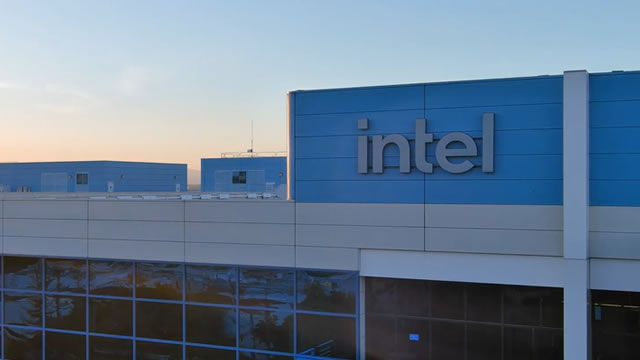
Intel's custom chip business is taking off.In September of 2025, Intel (INTC 5.45%) created a new group to handle custom chip design for external customers. The Central Engineering Group, led by a Cadence Design Systems veteran Srini Iyengar, formalized the company's efforts to break into the custom silicon market.While Intel's fourth-quarter results and guidance fell short of expectations, sending the stock tumbling on Friday morning, there was plenty of good news for investors to chew on. The success of t ...

Why Shares of Booz Allen Hamilton Are Sinking Today
The Motley Fool· 2026-01-26 19:09
Group 1 - The U.S. Treasury Department has cancelled all contracts with Booz Allen Hamilton due to a data leak incident involving an employee, which is part of a broader initiative to eliminate waste, fraud, and abuse [1][2][4] - The cancellation affects 31 contracts with Booz Allen, amounting to annual revenue of $4.8 million and total commitments of $21 million [4] - Following the announcement, Booz Allen's shares dropped nearly 11%, reflecting investor concerns about potential further cancellations of government contracts under the Trump administration [1][5][6] Group 2 - The company has been facing challenges in a difficult environment, with the Trump administration reportedly eliminating many government contracts with consulting firms [6][7] - Booz Allen's stock has seen a significant decline, being roughly cut in half since November 2024, indicating ongoing struggles within the consulting industry [7] - Despite the current situation, Booz Allen has condemned the actions of the employee responsible for the data leak and has expressed support for the U.S. government's investigation [6]


Forget Gold At Over $5,000 Per Ounce: These 2 Precious Metals Plays Are a Much Smarter Move for Investors
The Motley Fool· 2026-01-26 18:54
Core Viewpoint - Gold prices have reached record highs, exceeding $5,000 per ounce, driven by market uncertainty, global tensions, and a weakening dollar, which presents both opportunities and risks for investors in the mining sector [1]. Group 1: Newmont Corporation - Newmont Corporation, the largest gold miner by market cap, is experiencing record profits while reducing long-term debt, with a reported revenue of $5.5 billion, up nearly 20% year over year, and earnings per share (EPS) of $1.67, up 108% [3][7]. - In the third quarter, Newmont produced 1.4 million ounces of gold, a decrease of 28.5% year over year, but maintained a profit of nearly $2,000 per ounce mined due to an average all-in sustaining cost (AISC) of $1,566 per ounce and an average realized gold price of $3,539 per ounce [6]. - Newmont has a diversified portfolio, mining not only gold but also copper, lead, zinc, and silver, which provides stability against fluctuations in gold prices [4]. - The company faces potential challenges in Ghana, where it operates two mines, as the government plans to increase royalties to 12% if gold prices exceed $4,500 per ounce, which could impact profits [8][9]. Group 2: Agnico Eagle Mines - Agnico Eagle Mines, the second-largest gold producer, is on track to produce a record 3.5 million ounces of gold this year, with a net income increase of 86% year over year to $1.06 billion and an EPS of $2.10 [10][12]. - The company has a strong financial position with $2.7 billion in cash and only $196 million in debt, having paid down $950 million in debt this year [14]. - Agnico's all-in AISC for gold production is $1,373 per ounce, while it realized an average price of $3,476 per ounce, indicating a high-margin operation [14]. - Despite a 145% rise in share price over the past year, concerns exist regarding its valuation, as the stock is trading around 32 times earnings, and its return on equity (ROE) is 9.35%, which is below expectations for a leading mining company [13]. Group 3: Investment Outlook - Both Newmont and Agnico Eagle Mines are positioned to benefit from elevated gold prices, serving as a hedge against inflation and providing diversification for investors' portfolios [15]. - The mining companies have the advantage of scale, with established operations that can maintain profitability even if gold prices fluctuate [16].


FSTA vs. IYK: The Clash of Two Consumer Staple ETFs
The Motley Fool· 2026-01-26 18:44
Core Insights - The article compares two U.S. consumer staples sector ETFs: Fidelity MSCI Consumer Staples Index ETF (FSTA) and iShares U.S. Consumer Staples ETF (IYK), highlighting their differences in cost, holdings concentration, and sector focus, which may appeal to different investor types [1] Cost & Size Comparison - IYK has an expense ratio of 0.38% while FSTA has a lower expense ratio of 0.08% - As of January 25, 2026, IYK's one-year return is 8.52% compared to FSTA's 7.13% - IYK offers a dividend yield of 2.61%, slightly higher than FSTA's 2.19% [2] Performance & Risk Comparison - Over the past five years, IYK experienced a maximum drawdown of 15.04%, while FSTA had a drawdown of 16.59% - An investment of $1,000 in IYK would have grown to $1,171, whereas the same investment in FSTA would have grown to $1,315 over five years [3] Holdings Composition - FSTA holds 97 stocks, focusing entirely on consumer staple companies, with top positions in Costco, Walmart, and Procter & Gamble, which together account for over 25% of the ETF's weight [4] - IYK is more concentrated with 58 stocks and allocates 10% of its holdings to healthcare, heavily relying on Procter & Gamble, Coca-Cola, and Philip Morris International, which are the only stocks exceeding 10% weight [5] Investment Implications - Consumer staples are generally considered defensive assets during economic downturns, providing essential goods that maintain demand [6] - Both FSTA and IYK are designed to have lower risk and volatility compared to other ETFs, making them resilient during recession-like events [7] - FSTA emphasizes large retailers, while IYK focuses more on individual product brands, with IYK's healthcare allocation potentially less appealing to those seeking pure consumer staples [8]