The Motley Fool

Search documents
Why Archer Aviation Stock Sank 22.9% Last Year but Is Surging in 2026
The Motley Fool· 2026-01-18 11:30
Core Viewpoint - Archer Aviation's stock faced significant challenges in 2025, declining 22.9% despite a generally bullish market, while the S&P 500 and Nasdaq Composite rose 16.4% and 20.4%, respectively [1][2]. Group 1: Stock Performance and Market Context - Archer Aviation's stock experienced volatility in 2025, with notable price spikes followed by pullbacks, largely due to competition from Joby Aviation, which saw a 62% increase in its stock price [3]. - The company's valuation decreased amid ongoing losses and uncertainty regarding vehicle certification in key markets, compounded by negative short reports from analysts [2][4]. Group 2: Financial Performance - In Q2 2025, Archer reported a net loss of $206 million, an increase from a loss of $106.9 million in the same quarter the previous year [6]. - The Q3 report revealed a net loss of $129.9 million, higher than expected and up from a loss of $115.3 million in the prior year, alongside concerns about share dilution following a $650 million stock sale [7]. Group 3: Future Outlook and Trends - In 2026, Archer Aviation's stock has rebounded, rising 17.8% year-to-date, benefiting from a broader trend in defense-tech stocks [8]. - The company is collaborating with Anduril to develop hybrid-propulsion VTOL aircraft for military use, which may enhance interest in its technology despite uncertainties in achieving FAA certification for commercial use [9].



SCHD vs VYM: What's the Better High-Yield Dividend ETF Buy?
The Motley Fool· 2026-01-18 11:21
Core Viewpoint - The Schwab U.S. Dividend Equity ETF is considered a superior choice compared to the Vanguard High Dividend Yield ETF for investors seeking high-yield dividend equity ETFs due to its more robust selection criteria and focus on dividend quality [2][8]. Group 1: ETF Overview - The Vanguard High Dividend Yield ETF tracks the FTSE High Dividend Yield Index and includes the top half of U.S. stocks ranked by indicated dividend yield, resulting in a portfolio of over 560 stocks [3]. - The Schwab U.S. Dividend Equity ETF follows the Dow Jones U.S. Dividend 100 Index and employs a selection process that considers dividend payment history, yield, and fundamental metrics like cash flows and return on equity [5][6]. Group 2: Selection Criteria - The Schwab ETF's selection criteria are more comprehensive, focusing on dividend growth, quality, and high yield, which enhances its ability to select top-performing dividend stocks [6]. - In contrast, the Vanguard ETF's method, while producing an above-average yield, lacks consideration for dividend sustainability, making it susceptible to including stocks that may cut dividends [7]. Group 3: Performance and Strategy - Despite the Schwab ETF's poor performance in recent years, this is attributed to its investment style being out of favor rather than flaws in its strategy, which has a long track record of success [9]. - The Schwab ETF's multi-faceted strategy serves as a cross-check to exclude underperforming stocks, reinforcing its position as a better investment option for high-yield equity [8].

The World's Most Important Chipmaker Just Confirmed the AI Megatrend Is Real
The Motley Fool· 2026-01-18 11:10
Core Viewpoint - TSMC is increasing capital spending in response to strong demand for AI accelerators, indicating confidence in the AI market despite concerns about a potential bubble [1][3][10] Financial Performance - TSMC reported a 20.5% year-over-year revenue increase and a 35% jump in net income for Q4 2025, with expectations of nearly 30% revenue growth in 2026 and a 25% compound annual growth rate through 2029 [2][8] AI Demand and Capital Expenditure - The demand for AI accelerators is projected to grow by at least 50% annually through 2029, prompting TSMC to ramp up capital expenditures to between $52 billion and $56 billion in 2026, compared to around $40 billion in 2025 [3][8] - TSMC is also accelerating the start of production at its second fab in Arizona, with high-volume manufacturing expected to begin in the second half of 2027 [9] Market Confidence and Customer Insights - TSMC's CEO has engaged with customers to assess the sustainability of AI demand, concluding that "AI is real" and identifying it as an "AI megatrend" [6] - The financial health of hyperscale cloud providers, who are significant customers, has contributed to TSMC's confidence in future demand [6] Operational Efficiency - TSMC is utilizing AI to enhance productivity in its fabs, achieving gains of 1% to 2% at minimal cost [7] Industry Risks and Considerations - Despite the optimistic outlook, TSMC remains cautious about overexpansion, as the sustainability of AI demand and the financial viability of AI companies are uncertain [4][10][12] - The potential for unsustainable spending by AI companies raises questions about the long-term demand for AI computing capacity and TSMC's manufacturing capabilities [12][13]


Google Continues Its Massive Power Grab
The Motley Fool· 2026-01-18 11:03
Core Insights - Google is securing significant future power supplies to support its data centers, which are essential for Google Cloud and AI initiatives like Google Gemini [1][11] - The company has signed multiple power purchase agreements (PPAs) to ensure a stable supply of carbon-free energy [2][3] Power Supply Agreements - Google has signed PPAs with Clearway Energy Group for nearly 1.2 gigawatts (GW) of carbon-free energy, which will help power its data centers [2][3] - Clearway Energy plans to start construction on projects totaling over 1 GW this year, with commercial service expected to begin in 2027 and 2028 [4] Energy Consumption Context - Traditional data centers consume 10 to 50 times more energy per floor space than typical office buildings, and AI chatbot queries consume nearly 10 times as much electricity as standard Google searches [1] Strategic Partnerships - Google has also signed a Hydro Framework Agreement with Brookfield Renewable for up to 3 GW of hydropower, marking the world's largest hydro power deal [7] - A collaboration with NextEra Energy includes a 25-year PPA to support the restart of the Duane Arnold Energy Center, adding 615 MW of capacity [8][10] Future Growth and Financial Implications - The strategic moves to secure power supplies are seen as essential for Google's growth in AI, allowing the company to focus on developing powerful AI tools while ensuring stable energy costs [11] - The PPAs will provide power suppliers with growing cash flow, potentially increasing dividends and generating strong total returns for shareholders [11]



These 2 AI Stocks Could Join the $2 Trillion Club in 2026, According to Wall Street
The Motley Fool· 2026-01-18 10:50
Core Insights - The $2 trillion club currently has five members: Nvidia, Alphabet, Apple, Microsoft, and Amazon, with potential new members expected in 2026 [1][2] Company Analysis Broadcom (AVGO) - Broadcom has a market cap of approximately $1.7 trillion and is projected to rebound, with a 12-month price target suggesting a potential upside of 29%, which could elevate its market cap to around $2.2 trillion [3][5] - The company's AI semiconductor revenue increased by 74% year-over-year, with expectations to double to $8.2 billion in the upcoming quarter [5][10] - Despite a forward price-to-earnings ratio of 35.3, Broadcom's growth prospects make it attractive to analysts, with a majority rating it as a "buy" or "strong buy" [5] Meta Platforms (META) - Meta's market cap is nearing $1.6 trillion, with analysts projecting a 32% increase in its stock price, which would push its market cap above $2 trillion [6][8] - The company is focusing on AI smart glasses and AI superintelligence, which have garnered significant analyst interest [8] - Meta's advertising revenue is bolstered by its social media platforms, which had a combined 3.54 billion daily average users, leading to a 26% year-over-year revenue increase to $51.2 billion in Q3 2025 [9][11]



2 Growth Stocks to Buy in January and Hold for the Next 10 Years
The Motley Fool· 2026-01-18 10:40
Group 1: Palantir Technologies - Palantir Technologies' share price has increased by 169% over the past year, indicating strong growth potential [2] - The company's AI platform is helping large businesses reduce costs and improve workflows, contributing to accelerating revenue growth [2][4] - In Q3, Palantir reported a revenue growth rate of 63% year-over-year, with an adjusted operating margin of 51%, surpassing Microsoft's margin [4] - The company closed a record $1.3 billion in total contract value with U.S. commercial customers in Q3, representing a 342% year-over-year increase [7] - Analysts project Palantir's earnings per share to grow at an annualized rate of 45% over the next several years, suggesting significant future value [8] Group 2: Rocket Lab - Rocket Lab's stock has surged by 271% over the past year, positioning it as a leader in the high-growth space industry [10] - The company provides launch services for payloads and satellite components, with demand expected to grow as AI integration increases [11] - Rocket Lab's revenue grew by 48% year-over-year, reaching $155 million in Q3, with expectations for improved profitability in the future [12] - The upcoming launch of the Neutron rocket, which can carry heavier payloads, is anticipated to drive revenue growth and accelerate the path to profitability [14] - Wall Street forecasts project Rocket Lab's revenue to grow from an estimated $600 million in 2025 to $1.9 billion by 2029, with the first full year of profit expected in 2027 [15][16]



Nvidia CEO Jensen Huang Says, "The Race Is On for AI." Here's What It Means for Nvidia Stock.
The Motley Fool· 2026-01-18 10:30
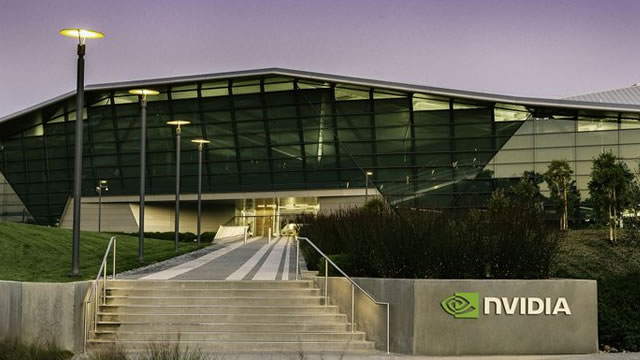
Core Insights - Nvidia has reached a pivotal moment in AI development, positioning itself for future growth as the demand for AI chips increases [1][5][14] Group 1: Nvidia's Market Position - Nvidia's stock has surged by 1,000% over the past three years, making it the largest company globally by market capitalization [3] - The company has a market cap of $4.5 trillion, with a current stock price of $186.51 [11] - Nvidia's revenue for Q3 fiscal 2026 was $57 billion, reflecting a 62% year-over-year increase, with data center revenue at $51.2 billion, up 66% [9] Group 2: AI Development and Demand - AI development is accelerating and becoming more affordable, which is expected to increase demand for Nvidia's chips [5][14] - The introduction of advanced AI models, such as OpenAI's o1, signifies a shift towards more complex reasoning capabilities, necessitating more powerful chips [6] - Nvidia has secured $500 billion in AI chip bookings through 2026, with $150 billion already fulfilled, indicating strong market demand [10][12] Group 3: Future Projections - Analyst estimates predict Nvidia will generate $213 billion in revenue for the 2026 fiscal year and $321 billion for 2027, representing approximately a 50% growth [13] - Earnings per share are forecasted to be $4.69 for the current year and $7.60 in 2027, showcasing robust financial performance [13] - The company is well-positioned to benefit from the growing sophistication of AI programs, while also capitalizing on the demand for older chip models as their prices decline [8][14]

Why One Fund Bought 1 Million Shares of This Healthcare Provider Stock Up 185% This Past Year
The Motley Fool· 2026-01-18 10:00
Company Overview - PACS Group is a leading provider in the post-acute healthcare sector, offering a diversified portfolio of senior care and assisted living facilities, employing tens of thousands of professionals to deliver integrated care solutions [6] - The company generates revenue primarily from healthcare and related ancillary services, targeting seniors and individuals requiring post-acute care [9] - As of January 15, PACS shares were priced at $39.37, reflecting a significant increase of 184.9% over the past year, outperforming the S&P 500 by 168.16 percentage points [3] Financial Performance - PACS Group reported a total revenue of $5.14 billion and a net income of $169.04 million for the trailing twelve months (TTM) [4] - The company posted third-quarter revenue of $1.34 billion, representing a year-over-year increase of 31%, with adjusted EBITDA of $131.5 million and operating cash flow exceeding $400 million for the first nine months of the year [11] - Occupancy rates at mature facilities remain near 95%, significantly above the industry average of approximately 80% [11] Recent Developments - Crewe Advisors disclosed the acquisition of 1,035,747 shares of PACS Group, with an estimated transaction value of $22.72 million, increasing its holdings to a total value of $82.45 million, a net increase of $67.19 million from the prior quarter [2] - Following the acquisition, PACS Group now represents 7.3% of Crewe Advisors' 13F assets, indicating a strong commitment to the stock [3][8] - The recent capital inflow into PACS shares, despite their substantial price increase, suggests investor confidence in the company's fundamentals rather than a mere momentum chase [11]


SCHG vs. VOOG: Which Popular Large-Cap Growth ETF Is the Better Buy Right Now?
The Motley Fool· 2026-01-18 10:00
Core Insights - The Vanguard S&P 500 Growth ETF (VOOG) and the Schwab U.S. Large-Cap Growth ETF (SCHG) provide access to large-cap U.S. growth companies but differ in index tracking, cost, diversification, and performance [1][2] Cost & Size Comparison - VOOG has an expense ratio of 0.07% while SCHG has a lower expense ratio of 0.04% [3] - As of January 17, 2026, VOOG's one-year return is 20.88% compared to SCHG's 15.90% [3] - VOOG offers a dividend yield of 0.49%, slightly higher than SCHG's 0.36% [3] - VOOG has assets under management (AUM) of $22 billion, while SCHG has a larger AUM of $53 billion [3] Performance & Risk Comparison - Over five years, VOOG's maximum drawdown is -32.74%, while SCHG's is -34.59% [4] - A $1,000 investment in VOOG would grow to $1,965 over five years, compared to $2,046 for SCHG [4] Portfolio Composition - SCHG tracks a broad index of large-cap U.S. growth stocks, with technology comprising 45% of its portfolio, followed by communication services at 16% and consumer cyclicals at 13% [5] - SCHG holds 198 stocks, with top positions in Nvidia, Apple, and Microsoft [5] - VOOG holds 140 stocks, with a higher concentration in technology at approximately 49% [6][7] - The top three holdings in VOOG account for around 32% of its portfolio, while in SCHG, they account for 29% [7] Investment Implications - VOOG focuses solely on S&P 500 growth stocks, potentially limiting its risk due to the strength of these companies [8] - The fee structures and dividend yields differ slightly, with VOOG having a higher expense ratio but also a higher dividend yield [9] - In summary, VOOG is more concentrated in tech and offers a higher yield, while SCHG is broader and has a lower fee structure [10]
A New $7 Million Bet Signals Confidence in This Auto Services Stock Up 17% From Its November IPO Price
The Motley Fool· 2026-01-18 09:51
Company Overview - Boyd Group Services is a leading provider of collision repair and auto glass services across North America, operating under multiple well-known trade names [5] - The company generates revenue primarily from insurance-paid vehicle repairs and auto glass services, leveraging a network of branded service centers and third-party administrator offerings [7] - Revenue for the trailing twelve months (TTM) is reported at $3.10 billion, with a net income of $16.07 million and a dividend yield of 0.3% [4] Recent Investment Activity - On January 16, Louisbourg Investments disclosed a new position in Boyd Group Services, acquiring 46,456 shares valued at approximately $7.27 million during the fourth quarter [2][3] - This new position represents 1.45% of Louisbourg's 13F assets under management at quarter-end [3] Market Performance - As of January 15, shares of Boyd Group Services were priced at $162.66, which is about 17% above their November IPO price of $141 [3][9] - Recent financial results indicate steady revenue growth supported by same-store sales gains and continued expansion of repair locations across North America, despite margin pressures from labor and parts costs [9] Business Model and Market Dynamics - Boyd Group operates a scaled, insurance-driven collision repair platform, where demand is tied to miles driven and accident frequency rather than discretionary spending cycles, providing a defensive backbone even during auto sales slowdowns [6][8] - The company serves both insurance companies and individual vehicle owners, focusing on insurance-driven repair volume [5][7]