The Motley Fool

Search documents
Intuitive Machine's CEO Sold Nearly 13,000 Shares. Is the Stock a Buy or Sell?
The Motley Fool· 2026-01-18 04:24
Company Overview - Intuitive Machines is a Houston-based aerospace company focused on providing advanced lunar and orbital solutions for the space industry, supporting robotic and human exploration of the Moon and beyond [8] - The company offers services related to lunar access, orbital services, and lunar data through its various business units, positioning itself as a key enabler of sustained lunar exploration [7][8] - As of January 8, 2026, the company has a market capitalization of $3.07 billion, with a revenue of $218.49 million and a net income of -$193.22 million [4] Recent Insider Transaction - On January 8, 2026, CEO Stephen J. Altemus executed an option exercise and immediate sale of 12,669 shares for a total transaction value of approximately $253,400 [1][2] - The shares sold represented just 0.09% of Altemus's direct ownership, leaving his stake essentially unchanged at over 13.8 million shares [6] - The transaction was part of a Rule 10b5-1 trading plan adopted by Altemus in December 2024, indicating it was not based on insider information [9][10] Market Performance - The sale occurred when Intuitive Machines' stock was on an upswing, reaching a 52-week high of $24.95 on January 24, 2026, due to new customer contracts and the acquisition of Lanteris Space Systems [11] - The company's price-to-sales ratio rose to nearly 11, suggesting that while the stock price has increased, it may be a good time to sell rather than buy [11]



I Predicted That Nvidia Would Beat the S&P 500 for the 3rd Consecutive Year in 2025. Here's Why the Streak Can Continue in 2026.
The Motley Fool· 2026-01-18 04:00
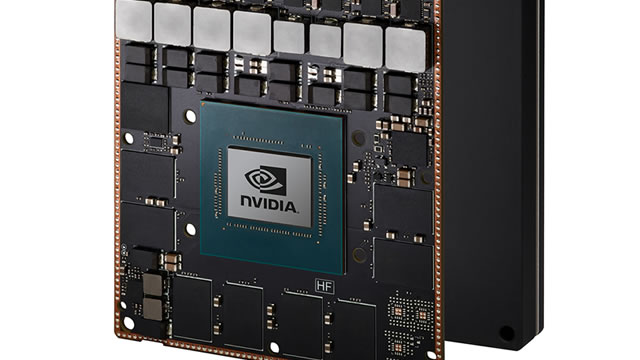
Core Viewpoint - Nvidia is positioned as a fundamentals-led growth story, outperforming the S&P 500 with a 38.9% increase compared to the index's 16.4% gain, and is expected to continue this trend into 2026 [1]. Group 1: Financial Performance and Projections - Nvidia forecasts reaching $500 billion in Blackwell and Rubin booked orders, with expectations to exceed this guidance as orders increase [2]. - Analysts have raised earnings estimates for Nvidia, projecting fiscal 2026 earnings per share at $4.69 and $7.60 for fiscal 2027, up from previous estimates of $4.29 and $5.76 respectively [4]. - Nvidia's fiscal 2027 ends in late January 2027, indicating that the financial benefits from Rubin will likely start in the second half of fiscal 2027 [4]. Group 2: Product Development and Efficiency - Nvidia announced six new Rubin chips, including a GPU and CPU, with full production of Rubin expected and deliveries in the second half of calendar year 2026 [3]. - Rubin has achieved significant efficiency improvements, including a 90% reduction in inference token costs and a 75% reduction in the number of GPUs needed for AI model training [6]. - The company justifies high pricing for Rubin products due to their expected performance improvements, which will lower operating costs for data centers [7]. Group 3: Market Position and Demand - Nvidia's innovation is expected to sustain high margins and maintain competitiveness against rising competition [9]. - Key customers of Nvidia are highly profitable companies, indicating strong demand for AI solutions, which supports a forward price-to-earnings ratio of 39 [10]. - Current demand for Rubin suggests that AI spending remains robust, providing confidence in Nvidia's ability to reward long-term investors [10].

Vanguard VBK vs. iShares IJT: How These Small-Cap Growth ETFs Compare on Fees, Risk, and Returns
The Motley Fool· 2026-01-18 03:17
Core Insights - The article compares two small-cap growth ETFs, the Vanguard Small-Cap Growth ETF (VBK) and the iShares S&P Small-Cap 600 Growth ETF (IJT), focusing on their cost, performance, risk, and portfolio construction to assist investors in making informed decisions [1][2] Cost & Size Comparison - IJT has an expense ratio of 0.18%, while VBK has a lower expense ratio of 0.07% [3] - As of January 17, 2026, IJT's one-year return is 8.63%, compared to VBK's 12.47% [3] - IJT offers a dividend yield of 0.91%, higher than VBK's 0.54% [3] - Assets under management (AUM) for IJT is $6 billion, while VBK has significantly higher AUM at $39 billion [3] Performance & Risk Comparison - Over the past five years, IJT experienced a maximum drawdown of -29.23%, while VBK had a deeper drawdown of -38.39% [4] - An investment of $1,000 in IJT would have grown to $1,227 over five years, while the same investment in VBK would have grown to $1,155 [4] Portfolio Composition - VBK holds 552 positions, with 27% allocated to technology, 21% to industrials, and 18% to healthcare, featuring top holdings like Insmed and SoFi Technologies [5] - IJT contains 348 stocks, with a more balanced sector allocation: 20% in technology, 19% in industrials, and 17% in healthcare, including leading positions like Arrowhead Pharmaceuticals [6] Investment Implications - Both ETFs focus on small-cap stocks with growth potential, which may lead to higher total returns over time [7] - VBK is considered slightly higher risk due to its heavier tilt towards technology, indicated by a higher beta of 1.43 compared to IJT's 1.18 [8] - IJT's higher dividend yield may appeal to income-focused investors, despite its higher expense ratio compared to VBK [9] - Investors must weigh their goals, as VBK has shown larger price swings but has outperformed IJT over the last 12 months [10]
Want a Higher Retirement Withdrawal Rate Than 4%? Here's What You Need to Do
The Motley Fool· 2026-01-18 03:02
You may be able to get more income out of your savings each year.A lot of people work hard to build a retirement nest egg. But then, once their careers actually end, they wind up disappointed when they realize they're able to withdraw only a limited amount of money from their IRA or 401(k) each year.Financial experts tend to promote the 4% rule for managing a retirement nest egg. The rule states that if you withdraw 4% of your IRA or 401(k) account balance your first year of retirement and adjust future wit ...

Can Costco Stock Reach $1,000 in 2026?
The Motley Fool· 2026-01-18 02:37
Core Viewpoint - Costco's stock has shown strong long-term performance, with a total return of 52% over the 12 months leading to February 2025, but currently trades 11% below its all-time high, prompting investor interest in potential gains [1] Stock Performance and Projections - For Costco's stock to reach $1,000 by the end of 2026, it would need to increase by just 5% from its current price of $954, which is achievable given its historical compound annual growth rate of 20% over the past decade [2] - Sell-side analysts have set a consensus price target of $1,033 for Costco, indicating an 8% upside potential based on its long-term performance [3] Financial Performance - Costco reported a 7% increase in same-store sales (SSS) for December 2025, following a 5.9% increase in fiscal 2025 and a 5.3% increase in fiscal 2024, highlighting strong fundamental gains [3] - Wall Street analysts forecast revenue and earnings per share to grow by 8% and 11%, respectively, between fiscal 2025 and fiscal 2026, reflecting a stable outlook for the company [8] Membership and Customer Retention - Costco has 81.4 million membership accounts, a 5.2% increase from the previous year, indicating strong customer retention and attraction [4] Market Position and Valuation - Costco's stock trades at a high price-to-earnings (P/E) ratio of 51, reflecting the market's premium valuation of the company due to its strong brand recognition and cost advantages in the retail sector [9] - Despite facing competition and the rise of online shopping, Costco continues to perform well, supported by its expanding store base [9] Economic Considerations - While external factors such as a potential recession could impact consumer spending and foot traffic, the current economic environment, including the Federal Reserve's rate-cutting cycle and quantitative easing, is seen as a stimulus for growth [6][7]


A Once-in-a-Generation Investment Opportunity: Here's My Top AI Stock for 2026
The Motley Fool· 2026-01-18 02:30
Core Viewpoint - Artificial intelligence (AI) represents a significant investment opportunity that investors should not overlook, with the potential for massive gains through improved worker efficiency and profitability [2][3]. Company Overview: Nvidia - Nvidia is positioned as a leader in the AI sector, providing cutting-edge computing hardware essential for training and running AI models [3][9]. - The company's stock has experienced a substantial increase of nearly 1,200% since 2023, indicating strong market performance [4]. - Nvidia's current market capitalization stands at $4.5 trillion, with a gross margin of 70.05% and a dividend yield of 0.02% [7]. Market Potential - Global data center capital expenditures are projected to rise from approximately $600 billion in 2025 to between $3 trillion and $4 trillion by 2030, highlighting the growing demand for AI infrastructure [8]. - Nvidia has sold out its capacity for cloud GPUs as of Q3, leading AI hyperscalers to order GPUs years in advance, which provides Nvidia with valuable insights into future market trends [9]. Revenue Projections - For FY 2026, Wall Street estimates Nvidia will generate around $213 billion, capturing over a third of total data center spending based on the $600 billion estimate [10]. - If the market reaches the $3 trillion level by 2030, Nvidia could potentially generate $750 billion in revenue, assuming it maintains a 25% market share, which would represent more than a tripling of its current revenue [11][12].
What Tesla Needs to Prove in 2026
The Motley Fool· 2026-01-18 02:00
Core Insights - Tesla's stock gained 11% in 2025, underperforming the overall market, but has seen a remarkable increase of 3,130% over the past decade, contributing to a market cap of $1.4 trillion [1] - The company's price-to-earnings ratio stands at 292, indicating high market expectations for future performance [2] Group 1: Autonomous Driving and Robotaxis - Progress in robotaxi development is crucial for Tesla, with expectations that the company will achieve full self-driving technology and expand its robotaxi service [3] - In 2025, Tesla launched its robotaxi service in Austin, Texas, but needs to expand to new cities and increase Cybercab production in 2026 [4] - Competition from Nvidia's AI tools for autonomous driving could impact Tesla's growth potential, emphasizing the need for Tesla to focus on its own software development [5] Group 2: Core Business and Market Conditions - Tesla's valuation is heavily influenced by its autonomous-driving ambitions, but it remains primarily an EV manufacturer, with automotive deliveries declining by 9% year-over-year in 2025 [7] - Higher interest rates and the expiration of the EV tax credit are making new cars more expensive, while increased competition presents challenges for Tesla [8] - Shareholders are looking for improvements in top-line growth and margins from Tesla's core business in 2026 [8]


4 Stock Market Predictions for 2026
The Motley Fool· 2026-01-18 01:19
Group 1: AI Market Dynamics - Gemini, developed by Alphabet, is rapidly increasing its market share in the AI space, jumping from 5% to 18% in 2025, while ChatGPT's share decreased from 87% to 68% [2][3] - Recent data indicates that Gemini's market share may now exceed 21%, attributed to the successful launch of Gemini 3 and its selection by Apple to power Siri [5][6] - The shift from ChatGPT to Gemini could disrupt the AI market, potentially affecting OpenAI's valuation and funding prospects, as it is estimated to need over $200 billion for growth [6][7] Group 2: Market Correction Predictions - A stock market correction, defined as a drop of at least 10%, is anticipated in 2026, following historical trends where corrections occur every one to two years [8][9] - The last correction occurred in early 2025, suggesting that another may happen in the second half of 2026 [11] Group 3: Power Bottleneck Opportunities - The increasing electricity demand from AI infrastructure is outpacing supply, leading to higher electricity prices, which is being addressed by the Trump administration [12][13] - Companies like Itron, which deploy smart meters to optimize power grid usage, and Tesla, which offers battery solutions to smooth out demand, are positioned to benefit from the electricity bottleneck [15][17][18] Group 4: Market Outlook - Despite predictions of a correction, the overall market is expected to end higher by December 31, 2026, supported by strong infrastructure spending and improving economic conditions [19][20] - Historical performance shows that the S&P 500 tends to recover quickly from downturns, indicating a positive long-term outlook for investors [21]


IonQ Stock Prediction: Here's Where the Quantum Computing Play Will Be in 1 Year
The Motley Fool· 2026-01-18 01:05
Core Insights - Quantum computing companies, including IonQ, are gaining significant attention in the market due to their potential to revolutionize computing technology [1][2] - IonQ has made notable advancements in 2025, generating over $68 million in revenue and projecting up to $110 million for the year, indicating strong growth in a nascent industry [3][7] Company Progress - IonQ achieved a world record with a 99.99% 2-qubit gate fidelity rate, enhancing the accuracy and speed of its quantum systems [4] - The company plans to roll out a 256-qubit system in 2026 and aims to develop systems with 10,000 to 2 million qubits by 2030, indicating a focus on scaling its technology [4] Market Position - IonQ's current market capitalization stands at approximately $18 billion, with a stock price of $50.77, reflecting investor confidence despite the company's speculative nature [6] - Analysts predict IonQ's revenue could reach $189 million by 2026, suggesting a positive outlook for the company's financial growth [7]


DIA vs. VUG: Is Dow Stability or Big Tech Growth the Better Choice for Investors?
The Motley Fool· 2026-01-18 00:24
Core Insights - The Vanguard Growth ETF (VUG) and SPDR Dow Jones Industrial Average ETF Trust (DIA) differ significantly in sector exposures, number of holdings, and cost, with VUG providing broader diversification and lower fees, while DIA focuses on blue-chip stability and higher income [1][8]. Cost & Size Comparison - VUG has an expense ratio of 0.04% and assets under management (AUM) of $204.8 billion, while DIA has a higher expense ratio of 0.16% and AUM of $45.5 billion [3][4]. - The one-year return for VUG is 21.1%, compared to DIA's 19.9%, and the dividend yield for VUG is 0.4%, while DIA offers a yield of 1.4% [3][4]. Performance & Risk Metrics - Over five years, VUG has a maximum drawdown of -35.61%, while DIA's maximum drawdown is -20.76% [5]. - An investment of $1,000 would grow to $1,937 in VUG and $1,596 in DIA over the same five-year period [5]. Portfolio Composition - DIA tracks the Dow Jones Industrial Average, consisting of 30 blue-chip stocks, with significant allocations in Financial Services (28%), Technology (20%), and Industrials (15%) [6]. - VUG holds over 166 companies, with a strong emphasis on Technology (64%), followed by Consumer Cyclical and Healthcare, featuring major positions in Apple Inc, NVIDIA Corp, and Microsoft Corp [7]. Investor Considerations - VUG is more suitable for slightly aggressive investors seeking higher returns and willing to accept higher volatility, while DIA may appeal to conservative investors looking for higher dividend yields and greater price stability [11].