
SPD BANK(600000)

Search documents
近3亿存款悬案反转:2.3亿到账,存款公司反遭浦发银行起诉
Bei Ke Cai Jing· 2025-07-28 07:53
Core Points - The case of the missing 295 million yuan deposit has seen new developments, with Nanjing Koyuan Smart Technology Group Co., Ltd. receiving 231 million yuan from Shanghai Pudong Development Bank Nantong Branch [1][2][9] - The case, which has been ongoing for about four years, involves a significant amount of funds being pledged as collateral for a third-party company, Nantong Ruihao International Trade Co., Ltd., which failed to repay its debts [5][10] Summary by Sections Case Background - Between July 2020 and July 2021, Koyuan Smart's wholly-owned subsidiary, Nanjing Koyuan Smart Energy Investment Co., Ltd., deposited 345 million yuan in fixed-term deposits at the bank, with 295 million yuan being pledged as collateral for Nantong Ruihao's bank acceptance bills [1][5][6] - The issue came to light when Koyuan Smart was unable to redeem the 40 million yuan deposit that matured in November 2021, leading to inquiries that revealed the larger issue of the 295 million yuan being pledged without their knowledge [6][7] Legal Proceedings - The judicial authorities recognized the case as a criminal matter involving forgery and fraud, with the bank's risk management practices being called into question [8][12] - In July 2024, the court ruled in favor of Koyuan Smart, ordering the bank to pay the principal and overdue interest, but both parties appealed the decision [8][9] Recent Developments - On July 16, 2024, the bank filed a new lawsuit against Koyuan Smart, claiming damages due to alleged negligence in the handling of the deposit [10][11] - The bank's actions have sparked discussions about whether this constitutes a counterclaim or a new lawsuit, with legal experts clarifying that it is a separate legal action [14][16] Financial Implications - The bank's claim includes accusations of Koyuan Smart receiving kickbacks amounting to 40.67 million yuan, which could complicate the legal landscape and financial responsibilities [10][12] - The ongoing litigation raises questions about the bank's liability and the potential for shared responsibility due to the circumstances surrounding the deposit's pledge [12][13]


浦发银行济南分行成功举办卓信成长季行庆系列活动
Qi Lu Wan Bao· 2025-07-28 07:48
Group 1 - The core event was a unique performance titled "Zhuo Xin Growth Season - July Adventure Circus Event" organized by SPDB Jinan Branch, showcasing a blend of traditional art and financial services [1][2] - Over 260 clients attended the event, which featured high-difficulty performances by the Shandong Acrobatic Troupe, including contortionists, plate spinners, and aerial acts, highlighting the charm of acrobatic art and the vitality of traditional culture [1][2] - The event also included financial literacy promotion, where bank staff distributed brochures and provided one-on-one explanations on topics such as preventing telecom fraud and protecting personal information, enhancing clients' financial security awareness [1] Group 2 - This event is part of a series of celebrations by SPDB Jinan Branch, aiming to provide clients with a close-up experience of traditional acrobatic art while integrating financial knowledge dissemination [2] - The bank plans to continue its customer-centric approach by launching more innovative and content-rich activities to enhance service quality and client experience in the future [2]


固收专题报告:信用赎回可控,把握波段机会
CAITONG SECURITIES· 2025-07-28 03:23
1. Report Industry Investment Rating - No information provided in the content 2. Core Views of the Report - Anti - involution policies affect commodity prices, shock the market's inflation expectations, and cause a significant adjustment in the bond market. Credit bond yields rise with interest rates, and most credit spreads widen, with secondary and perpetual (二永) bonds showing large fluctuations and high spread increases. Fund companies with the most unstable liability ends sell significantly, while insurance companies increase their buying efforts, and bank wealth management remains relatively stable. The trading enthusiasm for medium - and long - term bonds such as urban investment bonds, industrial bonds, and 二永 bonds remains high [2]. - It is too early to worry about negative feedback, with a very low probability. Market learning has improved the ability to respond, and there has been no change in macro - expectations. Moreover, bank wealth management's increasing consideration of liquidity in its configuration can prevent negative feedback [3]. - The asset shortage pattern remains unchanged and may even intensify. Interest rates may have short - term adjustments but do not support continuous and significant adjustments. Once interest rates stabilize, credit is likely to stabilize. After the market adjustment, it will be more difficult to further compress credit spreads compared to previous lows, and credit spreads are more likely to fluctuate. Investors need to seize phased trading opportunities [4]. - Investors should focus on coupon - bearing assets, and consider both coupon and trading operations for long - term bonds. For trading strategies, medium - and long - term 二永 bonds are recommended; for allocation strategies, sinking investment in urban investment bonds is still recommended. Wait for trading opportunities for ultra - long - term bonds [5]. 3. Summary by Relevant Catalogs 3.1 Market Review: Significant Correction, Noticeable Widening of 二永 Bond Spreads 3.1.1 Market Performance - This week, the credit bond market significantly corrected, and credit spreads widened. The stock market strengthened, and the bond market significantly corrected. Credit bond yields generally rose, especially for medium - and long - term 二永 bonds, which increased by over 10bp, with the 10Y 二永 bond correcting by up to 14.5bp. Most credit spreads widened, with 二永 bonds seeing more significant increases, while spreads of some medium - and long - term notes, enterprise bonds, and urban investment bonds of certain grades slightly narrowed [10]. - From a daily perspective, urban investment bond yields generally rose, with the adjustment amplitude first increasing and then decreasing, reaching a daily correction high on Thursday. From Monday to Tuesday, long - term 二永 bonds led the yield increase, but the overall amplitude was relatively small. From Wednesday to Thursday, the yield increase continued to expand, with long - term 二永 bonds correcting by over 5bp on Thursday and short - term bonds increasing by about 4bp. The long - and short - term yields of urban investment bonds and medium - term notes also increased by 3.5bp - 5bp. On Friday, the market continued to decline, but the amplitude narrowed. Credit spreads showed a divergent trend. Affected by the different adjustment speeds of credit bonds and interest - rate bonds, the spreads of 二永 bonds, known as "interest - rate amplifiers," generally widened, while the spreads of less - liquid urban investment bonds and medium - term notes were still slightly compressed in the early stage and widened on Friday [16]. 3.1.2 Insurance Continues to Allocate, Funds Sell on a Large Scale - Insurance companies' credit bond allocation remains strong. This week, insurance companies continued to be net buyers, with a net buying scale of 12.563 billion yuan, a 38.7% increase from the previous week. The net buying volume of ultra - long - term credit bonds over 5 years was 6.75 billion yuan, with the increase intensity remaining basically the same as last week [18]. - Funds sold credit bonds significantly this week, with a selling scale of 22.578 billion yuan. The net selling volume within 5Y was 12.738 billion yuan, and the net selling volume over 5Y was 7.474 billion yuan [18]. - Bank wealth management scale slightly increased. As of July 20, the bank wealth management scale was 31.02 trillion yuan, an increase of 0.06 trillion yuan from the previous weekend. This week, the net buying scales of wealth management and other product categories for credit bonds were 15.301 billion yuan and 13.078 billion yuan respectively, with month - on - month changes of 15.80% and 39.13% [21][22]. 3.1.3 Transaction Proportion: Decrease in Low - Rating Transaction Proportion - The transaction proportion of urban investment bonds, industrial bonds, and 二永 bonds with a remaining term of over 3 years was 30%, 29%, and 72% respectively, indicating that the transaction proportion of medium - and long - term bonds remained high. For urban investment bonds, the proportion of transactions under 3 years remained basically the same as last week, with the 3 - 5Y transaction proportion decreasing by 2 percentage points and the over - 5Y proportion increasing by 2 percentage points. For industrial bonds, the proportion of transactions within 1 year decreased by 1 percentage point, the 1 - 3Y proportion decreased by 2 percentage points, and the 3 - 5Y proportion increased by 3 percentage points. For 二永 bonds, the proportion of transactions within 1 year decreased by 1 percentage point, the 1 - 3Y proportion increased by 2 percentage points, and the 3 - 5Y proportion decreased by 3 percentage points [28]. - The proportion of low - rating transactions of non - financial credit bonds decreased this week. The proportion of transactions of urban investment bonds with a rating of AA(2) and below decreased by 1 percentage point from last week, the proportion of industrial bonds with a rating of AA and below decreased by 1 percentage point month - on - month, and the proportion of 二永 bonds with a rating of AA and below decreased by 3 percentage points from last week [29]. 3.2 Market Outlook: Redemption is Controllable, Seize Trading Opportunities 3.2.1 Redemption is Controllable, Seize Trading Opportunities - Reasons for market adjustment: With the continuous implementation of anti - involution policies, commodity futures prices have risen significantly, affecting the market's inflation expectations. The Nanhua Industrial Products Index, which reflects commodity price trends, has also risen significantly. Historically, this index has a certain forward - looking predictive effect on PPI. By observing the term structure of interest - rate swaps, indicators such as IRS FR007 5 - year - 1 - year and 1 - year - FR007 have quickly turned positive, indicating a change in the market's inflation expectations [31][33]. - Regarding the concern of negative feedback: It is too early to worry about negative feedback, with a very low probability. Market adjustments in September 2024 and March 2025 were more significant than the current one, but no obvious negative feedback occurred. The key lies in the increasing consideration of liquidity in bank wealth management's configuration. Since April this year, the absolute amount and proportion of inter - bank certificate of deposit (NCD) allocation have been at historically high levels, enabling wealth management to handle market fluctuations. As long as bank wealth management remains stable, the key link of market negative feedback can be stopped [38][40]. - Analysis of tight funds: The funding situation tightened on Thursday this week, leading to a higher market adjustment amplitude. The tightening on Thursday may be due to banks' liability - side issues. From the perspective of large banks' deposit - loan spreads, the deposit - loan spreads of large banks generally decline seasonally in July. After the significant reduction of deposit interest rates in May, large banks face the pressure of term - deposit maturity transfer, resulting in relatively large liability pressure. A low deposit - loan spread means reduced stability of funding rates, which are more dependent on the central bank's liquidity injection. Any daily misalignment in the central bank's liquidity injection can significantly impact funding rates [41][42]. - Future trends: The asset shortage pattern remains unchanged and may even intensify. Interest rates may have short - term adjustments, but the current macro - environment does not support continuous and significant interest - rate adjustments. The impact of anti - involution policies on inflation expectations has been fully priced in the short term through the significant rise in commodity prices. For credit bonds, it will be more difficult to further compress credit spreads below previous lows this year. Credit spreads are more likely to fluctuate, and investors need to seize phased small - band opportunities [50][56]. 3.2.2 Science and Technology Innovation Bonds Continue to Contribute Net Financing to the Market - In July, non - financial credit bond financing performed well, with the net financing exceeding the levels of the same month in the previous two years, reaching 347.9 billion yuan. The supply of long - term credit bonds has increased. Recently, the sentiment for extending the duration of credit bonds has been positive. Although the issuance duration in July has decreased month - on - month, there is still room for extending the duration [57][59]. 3.3 What to Buy in Credit? 3.3.1 Focus on High - Grade 二永 Bonds for Trading, Weak - Quality Urban Investment Bonds for Coupon - The price - comparison of short - term 二永 bonds is positive, while that of medium - and long - term 二永 bonds is negative. Considering different investor needs, high - grade trading strategies are recommended to focus on 二永 bonds, and low - grade coupon strategies are recommended to focus on urban investment bonds. This week, the price - comparison advantage of short - term AAA second - tier capital bonds over medium - term notes remained positive, and the price - comparison of long - term AAA second - tier capital bonds with medium - term notes fluctuated around 0. The price - comparison of short - term urban investment bonds with medium - term notes is positive, and the price - comparison of long - term low - grade urban investment bonds has quickly recovered to the historical central level. Urban investment bonds still have a price - comparison advantage over medium - term notes, but the difference is not significant. Considering the bond - selection scope, urban investment bonds are still preferred [62][64]. 3.3.2 General Credit Coupon is More Advantageous - Currently, the proportion of urban investment bonds with a valuation above 2.3% is 19.8%, that of non - financial industrial bonds is 10.8%, and that of 二永 bonds is 6.8%. From the perspective of coupon - based bond selection, general credit offers a wider bond - selection space. For urban investment bonds, investors can consider both coupon and trading operations for the long - term, and can continue to participate in short - term high - coupon varieties. For industrial bonds, investors can focus on important local state - owned real - estate enterprises among real - estate developers, such as Shoukai and Jianfa Real Estate; among non - real - estate entities, focus on China Minsheng Bank, Jizhong Energy, and Bohai Bank [68][72]. 3.3.3 Statistics of Primary Issuance - Relevant data shows the weekly net financing and cumulative net financing of various credit bonds, including urban investment bonds, industrial bonds, 二永 bonds, and other financial bonds from December 30, 2024, to July 27, 2025 [77]. 3.3.4 Details of Secondary Valuation Changes - No detailed information provided in the content






2Q25主动型公募基金持仓更分散,银行股持仓占比环比上升
Huachuang Securities· 2025-07-27 11:15
Investment Rating - The report maintains a "Buy" rating for the banking sector [1] Core Insights - The proportion of bank stocks held by active equity funds increased to 4.88% in Q2 2025, marking a 1.13 percentage point increase from the previous quarter, driven by both volume and price increases [2][3] - The banking sector's performance outpaced the broader market, with A-share banks rising by 11.23% in Q2 2025, outperforming the CSI 300 and Wind All A indices by 10.7 and 8.25 percentage points respectively [2] - The report highlights a significant increase in holdings of joint-stock banks and quality regional banks, with notable increases in positions for institutions like China Merchants Bank, Minsheng Bank, and others [2][3] Summary by Sections Fund Holdings - In Q2 2025, the number of bank stocks held by active funds reached 4.88%, the second highest since Q1 2021 [2] - The total number of bank shares held by active funds increased by 6.64 billion shares, reaching 48.17 billion shares [2] - The market capitalization of index funds holding bank stocks rose by 27.7% to 133.385 billion yuan, with an increase of 16.3 billion shares [3] Sector Performance - The active fund's allocation to bank stocks saw a quarter-on-quarter increase, although the sector still has the largest allocation gap among 31 sectors, with a shortfall of 7.8% [3] - The report notes that while state-owned banks saw a slight decrease in allocation, joint-stock and regional banks experienced significant increases due to improved fundamentals and lower valuations [2][3] Investment Recommendations - The report suggests a diversified investment strategy focusing on state-owned banks and stable joint-stock banks, recommending specific banks such as China Merchants Bank and CITIC Bank for their long-term investment value [8] - It emphasizes the importance of banks with high dividend yields and strong asset quality, indicating that these banks still offer absolute returns [8] - The report also highlights the potential for banks with low valuations to improve their return on equity, suggesting a focus on banks like Pudong Development Bank [8] Key Company Forecasts - The report provides earnings per share (EPS) and price-to-earnings (PE) ratios for several banks, with recommendations for Ningbo Bank, Jiangsu Bank, and others based on their projected performance [9]


本周聚焦:银行理财2025H1半年报:存续规模达30.67万亿,母行代销占比降至65%左右
GOLDEN SUN SECURITIES· 2025-07-27 06:56
Investment Rating - The report does not explicitly provide an investment rating for the banking sector Core Insights - The banking wealth management market showed stable growth in the first half of 2025, with a total scale of 30.67 trillion yuan, a year-on-year increase of 7.53% [1] - Cash management products continued to decline, with a scale of 6.4 trillion yuan, down 14.55% year-on-year, attributed to lower deposit rates and regulatory policies [1] - The market share of wealth management companies increased, with 32 companies holding 89.61% of the market by the end of Q2 2025, up 1.8 percentage points from the end of the previous year [2] - The asset allocation in wealth management products shifted, with a decrease in credit bond allocation and a notable increase in public fund allocation, which rose to 4.2% [3] - The average annualized yield of wealth management products was 2.12%, a decrease of 53 basis points compared to 2024, indicating a low-interest-rate environment [4] - The proportion of sales through parent banks has decreased to around 65%, as companies expand their distribution channels [5][8] Summary by Sections 1. Wealth Management Market Overview - As of the end of Q2 2025, the total scale of wealth management products reached 30.67 trillion yuan, with a year-on-year growth of 7.53% [1] - Cash management products saw a significant decline, with a scale of 6.4 trillion yuan, down 14.55% year-on-year [1] 2. Market Structure - The market share of wealth management companies increased to 89.61%, reflecting a concentration of market power among leading firms [2] 3. Asset Allocation - The allocation to credit bonds decreased, while public funds saw a significant increase, indicating a shift in investment strategy [3] 4. Yield Trends - The average annualized yield of wealth management products fell to 2.12%, continuing a downward trend since 2023 [4] 5. Distribution Channels - The share of sales through parent banks has decreased to approximately 65%, as firms diversify their distribution strategies [5][8] 6. Sector Outlook - The banking sector is expected to benefit from policy catalysts, with specific banks like Ningbo Bank, Postal Savings Bank, and others highlighted as potential investment opportunities [9]

4张表看信用债涨跌(7/21-7/25)
SINOLINK SECURITIES· 2025-07-26 12:02
1. Report Industry Investment Rating - Not provided in the given content. 2. Core View of the Report - Among AA-rated urban investment bonds (subject rating) with a high discount rate, "20 Huainan JF MTN003" had the largest deviation in valuation price; among the top 50 bonds with the largest net price decline, "23 Huangshi CF MTN005" had the largest deviation in valuation price; among the top 50 bonds with the highest net price increase, "19 Kunzu 02" had the largest deviation in valuation price; among the top 50 secondary perpetual bonds with the highest net price increase, "24 SPDB Tier 2 Capital Bond 01B" had the largest deviation in valuation price [2]. 3. Summary by Relevant Catalogs 3.1 AA-rated Urban Investment Bonds with High Discount Rates - "20 Huainan JF MTN003" had a remaining term of 0.28 years, a valuation price deviation of -0.59%, a valuation net price of 100.64 yuan, a valuation yield deviation of 8.18 bp, a daily valuation yield of 1.73%, a coupon rate of 5.03%, an implied rating of AA(2), and a subject rating of AA, with a transaction date of July 23, 2025 [4]. - Other bonds such as "25 Jinghe 01", "25 Lancuang 03" also had relevant data presented in the table [4]. 3.2 Top 50 Bonds with the Largest Net Price Decline - "23 Huangshi CF MTN005" had a remaining term of 0.99 years, a valuation price deviation of -0.88%, a valuation net price of 99.12 yuan, a valuation yield deviation of 1.33 bp, a daily valuation yield of 1.90%, a coupon rate of 5.78%, an implied rating of AA(2), and a subject rating of AA+, with a transaction date of July 21, 2025 [5]. - Other bonds like "24 CRCC K2", "25 COSCO SHIPPING MTN001" also had corresponding information in the table [5]. 3.3 Top 50 Bonds with the Highest Net Price Increase - "19 Kunzu 02" had a remaining term of 0.03 years, a valuation price deviation of 0.60%, a valuation net price of 101.43 yuan, a valuation yield deviation of -12.82 bp, a daily valuation yield of 2.10%, a coupon rate of 6.45%, an implied rating of AA-, and a subject rating of AA+, with a transaction date of July 25, 2025 [7]. - Other bonds such as "25 Taihua 03", "24 Chanrong 06" also had detailed data in the table [7]. 3.4 Top 50 Secondary Perpetual Bonds with the Highest Net Price Increase - "24 SPDB Tier 2 Capital Bond 01B" had a remaining term of 9.07 years, a valuation price deviation of 0.03%, a valuation net price of 100.92 yuan, a valuation yield deviation of -0.33 bp, a daily valuation yield of 2.19%, a coupon rate of 2.30%, an implied rating of AA+, and a subject rating of AAA, with a transaction date of July 25, 2025 [9]. - Other bonds like "24 CGB Tier 2 Capital Bond 01B", "25 GZB Perpetual Bond 01" also had relevant information presented in the table [9].

信用卡“断舍离”:从“跑马圈地”到生态重构
Zhong Guo Jing Ying Bao· 2025-07-25 09:55
Core Viewpoint - The credit card market is undergoing a significant transformation from "scale competition" to "value deepening," with banks actively shedding inefficient products and focusing on enhancing core competitiveness through digital upgrades and self-controlled ecosystems [1][3][4]. Industry Adjustments - Several banks, including Bank of China and Citic Bank, have announced the discontinuation of certain credit card products, particularly co-branded cards, effective from August 31, 2025 [2][3]. - The adjustments are driven by the need to optimize product structures and improve service quality in response to changing market conditions and consumer demands [2][3]. Market Dynamics - Over 80% of credit card features are highly similar, leading to minimal differentiation among products [3]. - The penetration rate of consumer credit through platforms like Alipay and JD.com reached 38% in 2024, indicating a shift in consumer behavior and a diminishing role for banks as mere funding channels [3]. - The credit card delinquency rate rose to 2.1% in 2024, with some banks exceeding 5%, highlighting the imbalance between revenue and risk [3]. Regulatory Influence - New regulations, such as the notice issued in January 2024, require banks to eliminate products with a "sleeping card" rate exceeding 20%, prompting many banks to stop issuing underperforming credit cards [4]. Strategic Focus - Banks are shifting their focus from traditional credit card offerings to creating a comprehensive ecosystem that integrates various consumer needs, such as shopping, travel, and entertainment [6][7]. - The emphasis is on building self-controlled ecosystems and enhancing user engagement through innovative product offerings tailored to younger consumers [6][8]. Future Trends - The industry is expected to evolve towards a multi-dimensional development approach, including ecosystem building, technological empowerment, and segmented customer operations [9]. - The trend indicates a move away from physical cards towards digital financial services, with credit cards becoming integrated into broader financial solutions [10].


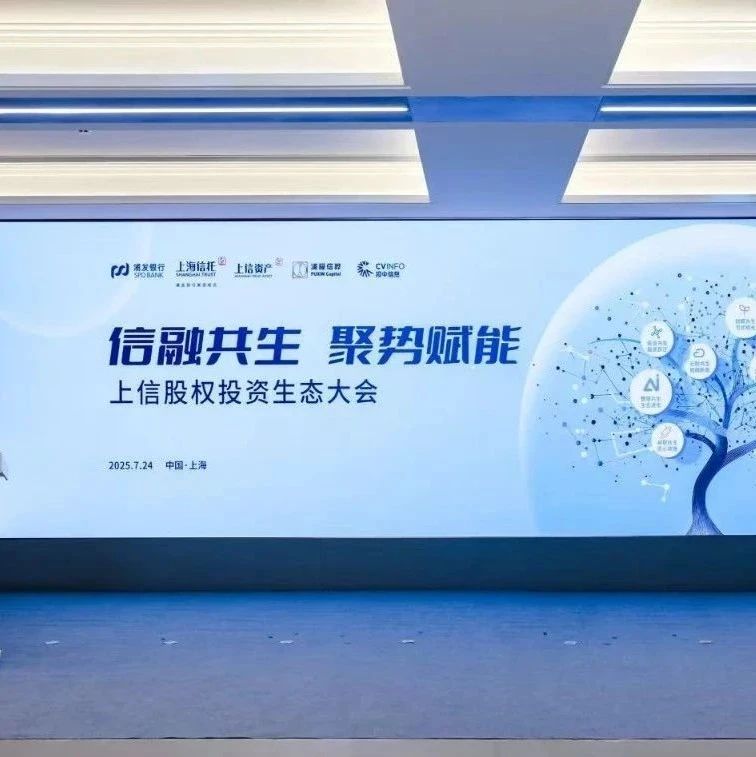
上海信托携手子公司上信资产、浦耀信晔成功举办“信融共生·聚势赋能”上信股权投资生态大会
投中网· 2025-07-25 08:33
Core Viewpoint - The conference aims to explore new paths for financial services in technology innovation, emphasizing the need for an open and collaborative industrial financial ecosystem to empower high-quality development in technology finance [2][4][36]. Strategic Planning - The conference highlighted the importance of technology innovation in reshaping global competition, with Shanghai positioned as a key player in building a globally influential technology innovation center [4]. - The strategy involves a dual approach of "institutional openness" and "scenario-based supply" to enhance Shanghai's international financial center competitiveness [4]. - State-owned capital is emphasized as a crucial element in supporting high-level technological self-reliance and innovation resource integration [6]. Ecosystem Construction - The event showcased a sand painting performance symbolizing the strategic vision of building a collaborative investment ecosystem, highlighting the historical achievements of Shanghai Trust in equity investment [15]. - The establishment of four ecological alliances aims to create a win-win framework by gathering long-term capital partners, expanding value opportunities, and driving industrial upgrades [17]. Brand Launch - Two strategic empowerment brands, "YI Family Wealth Research Institute" and "Puyao Academy," were launched to enhance the service capabilities of Shanghai Trust's ecosystem [21]. - These brands focus on providing comprehensive wealth management solutions and knowledge-sharing platforms for innovation-driven enterprises [21]. Market Insights - The conference included discussions on investment philosophies during asset downturns, emphasizing the importance of long-term capital allocation strategies [26]. - Key topics included the valuation logic of hard technology investments and the challenges of commercializing early-stage projects [28]. Entrepreneurial Perspectives - Founders from leading tech companies shared insights on advancements in AI, GPU technology, and intelligent sensing, highlighting practical applications and innovations in their respective fields [30][32][34]. - The discussions underscored the importance of bridging technology with market needs to drive successful commercialization [30][34]. Conclusion - The conference served as a significant milestone for Shanghai Trust in deepening its technology finance strategy and promoting ecosystem collaboration, aiming to enhance financial support for strategic emerging industries [36].
AMC重仓银行股:“坏账银行”转身“白衣骑士”
2 1 Shi Ji Jing Ji Bao Dao· 2025-07-25 08:25
Core Viewpoint - Asset Management Companies (AMCs) are increasingly active in the Chinese banking equity market, taking on the role of "white knights" to support listed banks through strategic investments and governance participation [1][2][3] Group 1: AMC Activities in Banking - Recent activities include CITIC Financial Asset increasing its stake in Everbright Bank from 7.08% to 8.00% and in Bank of China from 17.32% to 18.02% [2][3] - China Cinda Asset converted 11.785 billion yuan of SPDB convertible bonds into 912 million A-shares, becoming one of the top ten shareholders of SPDB [4] - China Great Wall Asset has nominated executives to serve as non-executive directors at Minsheng Bank, enhancing its governance role [1][4] Group 2: Evolution of AMC's Role - AMCs have transitioned from "bad debt banks" in the 1990s to strategic investors in the banking sector, reflecting a shift from policy-driven missions to market-oriented investments [1][5] - The current strategy of AMCs emphasizes both financial returns and the optimization of financial resource allocation [1][5] Group 3: Market Dynamics and Regulatory Environment - The tightening of shareholder qualification requirements and regulations on related party transactions has created a favorable policy environment for AMCs to enter the banking sector [8] - The average price-to-book ratio of A-share banks has remained low at 0.6, making bank stocks attractive for AMCs seeking stable dividend income [8][9] Group 4: Financial Performance and Strategic Needs - Traditional bad debt disposal business for AMCs is declining, prompting a shift towards bank equity investments for stable income and improved financial reporting [10] - CITIC Financial Asset reported a net profit of 9.618 billion yuan in 2024, a 440% increase from the previous year, highlighting the financial benefits of its investment strategy [10] Group 5: Collaborative Synergies - AMCs are deepening their cooperation with banks by participating in governance and risk management, which enhances the overall stability of the financial system [11] - The involvement of AMCs in bank governance helps to break internal control issues and reduce related party transaction risks [11] Group 6: Challenges and Future Considerations - Long-term success of AMC investments in banks must align with their functional positioning rather than purely commercial interests [12] - Regulatory frameworks need to ensure that AMC participation in banking governance is both effective and transparent [12]
浦发银行:人工智能已从场景化规划进入规模化应用
Xin Hua Cai Jing· 2025-07-25 07:44
Core Insights - SPDB is accelerating the application of large model technology in its digital transformation strategy, having established an artificial intelligence center to enhance AI technology iteration and application [1][2] - The bank is building a data center in Hohhot, which will support its large-scale, low-cost computing needs and facilitate the deployment of intelligent computing capabilities [1][2] Group 1: AI Application and Infrastructure - SPDB is constructing a "four-in-one" intelligent foundation that integrates computing power, algorithms, platforms, and knowledge to transition AI from pilot projects to large-scale applications [1] - The bank has developed a heterogeneous computing cluster based on Huawei Ascend servers, overcoming the "computing power bottleneck" and enabling extensive deployment of large model scenarios [1][2] Group 2: Data Center and Technical Support - The Hohhot data center will provide a unified management platform for intelligent computing clusters, ensuring comprehensive coverage of various scenarios to support SPDB's intelligent transformation [2] - The design of the data center focuses on safety, energy efficiency, intelligence, and flexible management to meet the needs of intelligent computing deployment [1][2] Group 3: Model Evaluation and Algorithm Development - SPDB has integrated over 30,000 scenario data points to create a multi-modal evaluation system that assesses large model algorithms across four dimensions: general capabilities, financial knowledge, security capabilities, and technical levels [2] - The bank has introduced various large models, such as DeepSeek and Qwen, to build a matrix of multi-modal, multi-capability algorithms for tasks like financial report analysis and document generation, significantly enhancing operational efficiency and service quality [2]