
SIFANG(601126)

Search documents
快讯:指数午后回升跌幅收窄 银行板块持续走强 厦门银行涨停创4年半新高
Xin Lang Cai Jing· 2026-02-05 06:24
Market Overview - The indices experienced fluctuations in the afternoon, with declines narrowing. The Shanghai Composite Index reported at 4078.82 points, down 0.57%, while the Shenzhen Component Index was at 13969.10 points, down 1.32%, and the ChiNext Index at 3266.71 points, down 1.35% [1] Sector Performance - The banking sector saw significant gains, with Xiamen Bank hitting the daily limit and reaching a new high since June 2021 [1] - The innovative drug sector was notably active, with Guangsheng Tang rising over 10% [1] - The securities sector also experienced a surge, with Hualin Securities hitting the daily limit and other companies like Huaxin Securities, Huatai Securities, and Dongfang Caifu following suit [1] - The tourism and hotel sector showed strength, with Sanxia Tourism reaching the daily limit [1] - Conversely, the precious metals sector faced ongoing adjustments, with Hunan Gold and Hunan Silver hitting the daily limit down [1] - The afternoon saw weakness in the electric grid equipment stocks, with Sifang Co. hitting the daily limit down [1] Stock Movement - Overall, the market saw more stocks declining than rising, with over 3500 stocks down [1] - The beauty care, film and television, and banking sectors led in gains, while BC batteries, photovoltaic equipment, and precious metals sectors led in losses [1]




四方股份2026年2月5日跌停分析
Xin Lang Cai Jing· 2026-02-05 03:53
Core Viewpoint - Sifang Co., Ltd. experienced a significant stock decline, hitting the limit down price of 36.42 yuan, with a drop of 9.98%, resulting in a total market value of 30.353 billion yuan and a circulating market value of 30.058 billion yuan, with a total transaction amount of 1.219 billion yuan as of the report date [1]. Group 1: Reasons for Stock Decline - Internal challenges include talent retention issues, with multiple departures among incentive targets, raising concerns about the company's innovation capacity and business stability, which negatively impacts stock prices [2]. - The competitive environment is intensifying, particularly in the new power system and SST sectors, which may attract more competitors. Despite Sifang's technological advantages, increased competition could squeeze market share and profit margins, leading to investor concerns [2]. - The overall performance of the solar (photovoltaic) sector may have been poor on the day of the stock decline, or there may have been a market correction in the power-related sector, affecting Sifang's stock price. Additionally, following a historical high on February 3, profit-taking may have triggered a short-term stock adjustment [2]. - After reaching a new high on February 3, some funds may have opted to take profits, resulting in capital outflow. From a technical perspective, the stock may have shown signs of being overbought, necessitating a correction, with indicators like MACD potentially signaling unfavorable trends [2].

变压器订单爆发,电网设备ETF(159326)大涨3%,杭电股份涨停
Mei Ri Jing Ji Xin Wen· 2026-02-03 06:58
Group 1 - The A-share market saw a collective rebound on February 3, with the only electric grid equipment ETF (159326) rising by 3.38% and achieving a trading volume of 1.514 billion yuan, driven by news catalysts [1] - The global AI computing power construction is entering an explosive phase, with high-power and stable power supply becoming essential for computing clusters, leading to an upgrade of power transformers as core infrastructure [1] - In regions like Guangdong and Jiangsu, many transformer factories are operating at full capacity, with some orders for data center-related businesses scheduled as far out as 2027 [1] Group 2 - The electric grid equipment ETF (159326) tracks the CSI Electric Grid Equipment Theme Index, with a strong representation in sectors such as transmission and transformation equipment, grid automation equipment, and distribution equipment [2] - The smart grid sector holds a significant weight of 88% in the index, while ultra-high voltage equipment accounts for 65%, both being the highest in the market [2] - Leading companies in the export market include TBEA, China XD Electric, and others, indicating a strong presence in the international market [2]




四方股份创历史新高
Ge Long Hui· 2026-02-03 06:46
格隆汇2月3日丨四方股份(601126.SH)涨7.66%,报40.620元,股价创历史新高,总市值338.44亿元。 ...
四方股份股价涨5.12%,易方达基金旗下1只基金位居十大流通股东,持有651.96万股浮盈赚取1258.29万元
Xin Lang Cai Jing· 2026-02-03 06:04
Group 1 - The core viewpoint of the news is that Sifang Co., Ltd. experienced a stock price increase of 5.12%, reaching 39.66 CNY per share, with a trading volume of 895 million CNY and a turnover rate of 2.80%, resulting in a total market capitalization of 33.044 billion CNY [1] - Sifang Co., Ltd. is based in Haidian District, Beijing, and was established on April 8, 1994. It was listed on December 31, 2010. The company's main business includes research, production, sales, and technical services for relay protection, grid automation, and power plant automation products [1] - The revenue composition of Sifang Co., Ltd. is as follows: 49.82% from power and industrial automation, 42.94% from grid automation, 7.09% from other sources, and 0.15% from rental, technical services, and material sales [1] Group 2 - Among the top ten circulating shareholders of Sifang Co., Ltd., E Fund's Environmental Theme Mixed A Fund (001856) increased its holdings by 1.7922 million shares in the third quarter, bringing its total to 6.5196 million shares, which accounts for 0.8% of the circulating shares. The estimated floating profit today is approximately 12.5829 million CNY [2] - E Fund's Environmental Theme Mixed A Fund (001856) was established on June 2, 2017, with a current scale of 3.269 billion CNY. Year-to-date returns are 7.57%, ranking 1171 out of 8874 in its category; the one-year return is 63.64%, ranking 809 out of 8124; and since inception, the return is 442.8% [2]
四方股份:公司在电力电子领域深耕多年
Zheng Quan Ri Bao Zhi Sheng· 2026-01-30 15:13
Core Insights - The company has deep expertise in the power electronics field, having won 1 National Science and Technology Progress Award and over 20 provincial and ministerial first prizes, with multiple products included in national key project plans [1] - Key achievements include high-efficiency, high-density, large-capacity DC transformer components, critical technologies, and core equipment, as well as research and engineering applications for multi-terminal flexible DC distribution networks [1] Company Overview - The company has developed a comprehensive product matrix in power electronics and DC fields, including medium-voltage converters, power electronic transformers, DC control protection systems, coordinated controllers, shore power, and ice-melting systems, covering critical areas such as flexible DC transmission and distribution, grid-forming equipment, power quality management, and special power supplies [1] - The company has established a full industry chain layout from technology research and development to product manufacturing and engineering applications [1] Key Technology Focus - The company focuses on several key technology areas, including flexible DC transmission technology, where it has participated in multiple national key projects, accumulating rich core technologies [1] - The medium-voltage solid-state transformer (SST) series devices, energy management systems, and DC control protection systems have been applied in demonstration projects [1] - In grid-forming technology, the company leverages its deep understanding of grid interactions to propose solutions for various application scenarios, including grid-forming energy storage and grid-forming SVG [1] Recent Achievements - The company has made significant breakthroughs in power quality management, providing a 250 Mvar SVG power quality comprehensive management device for the first million-ton near-zero carbon steel production line at Baosteel's Zhanjiang Steel, marking a revolutionary shift from carbon metallurgy to hydrogen metallurgy in China's steel industry [1] - This project not only showcases the company's leading technological strength in power quality management but also supports steel enterprises in balancing environmental compliance with production efficiency [1] - The integration with hydrogen metallurgy processes creates a replicable and scalable system solution and engineering practice model for the green transformation of large-capacity electric arc furnaces [1]
韩国半导体出口同比大幅增长,DRAM价格持续上涨
Zhong Guo Neng Yuan Wang· 2026-01-28 01:17
Core Viewpoint - The data center sector is driving significant growth in the power equipment industry, with capital expenditures showing high growth trends, particularly in overseas markets, while domestic giants like Alibaba and Tencent are experiencing a slowdown in capital spending [1][3]. Demand Side - Overseas capital expenditures from major companies reached $99.617 billion in Q3 2025, reflecting an 80.39% year-on-year increase and a 9.54% quarter-on-quarter rise [3]. - Domestic capital expenditures for Alibaba amounted to 31.5 billion yuan in Q3 2025, a year-on-year increase of 80.10% but a quarter-on-quarter decrease of 18.55%. Alibaba reaffirmed its three-year investment framework of 380 billion yuan, indicating potential for further investment [3]. - Tencent's capital expenditures were 13 billion yuan in Q3 2025, showing a year-on-year decline of 24.05% and a quarter-on-quarter decline of 32.05%, with a downward revision of its annual guidance [3]. Supply Chain - NVIDIA reported total revenue of $57.006 billion in Q3 2025, with data center product revenue reaching $51.215 billion, marking a historical peak with a quarter-on-quarter growth of 24.62% and a year-on-year growth of 66.44%, accounting for over 89% of total revenue [4]. - TSMC's revenue for December 2025 was 335 billion new Taiwan dollars, a year-on-year increase of 20.4% but a quarter-on-quarter decline of 2.5%, achieving a record high for the same period [4]. - The CPU price index rose to 99.04 in November 2025, up from 98.20 in October, while DRAM spot prices surged from $27.14 on November 17, 2025, to $71.25 by January 23, 2026, reflecting a significant increase of over 178% within two months [4]. - South Korea's semiconductor exports reached $10.73 billion from January 1 to January 20, 2026, representing a substantial year-on-year growth of 70.2% and accounting for 29.5% of total exports, an increase of 9.6 percentage points compared to the previous year [4]. Application Side - The number of models in use is steadily increasing, with token usage from January 13 to January 19, 2026, reaching 7.50 trillion, a slight decrease of 1.96% [5]. - The release of new models such as Grok4Fast, GPT-5nano, and gpt-oss-20B in Q3 2025 led to a decline of over 50% in the price of tokens for models scoring above 40 on the Artificial Analysis intelligence index [5]. Investment Recommendations - The construction of data centers is expected to drive demand for HVDC and SST technologies, with an anticipated global increase of approximately 14 GW in data center installations in 2024. Major cloud providers are expected to maintain high capital expenditures, with TSMC's capital expenditures projected to reach $52-56 billion in 2026, a year-on-year increase of about 30% [6]. - The increasing power density of data center cabinets is likely to enhance the penetration of HVDC and SST technologies, with smart busbars expected to see widespread adoption [6]. - Recommended stocks include Zhongheng Electric (002364), Oulu Tong (300870), Weiteng Electric (688226), and Sunshine Power (300274), with additional attention suggested for Kehua Data (002335), Keda (002518), Kelu Electronics (002121), Magmi Tech (002851), Jinpan Technology (688676), and Sifang Co. (601126) [6].



高铁车厢二氧化碳超标?专家澄清
第一财经· 2026-01-25 09:16
Core Viewpoint - The article addresses concerns regarding the carbon dioxide (CO2) concentration levels in high-speed train carriages, clarifying that the reported levels exceed standard limits due to a misunderstanding of applicable regulations [3]. Group 1: Standards and Regulations - The CO2 concentration control standard for passenger trains in China is governed by TB/T 3493-2017, which sets the limit at 2500 ppm under normal operating conditions [3]. - In comparison, European standards (EN13129-2016) allow for a CO2 concentration limit of up to 5000 ppm for passenger trains [3]. - The reported passenger measurements referenced the GB 50736-2012 standard for civil buildings, which is not applicable to passenger trains [3]. Group 2: Train Design and Air Quality Management - High-speed trains are designed with fully sealed car bodies, and air exchange is managed entirely by the air conditioning ventilation system, providing a fresh air volume of over 15 m³/h per person [4]. - The trains achieve an air exchange rate of 6 to 12 times per hour, and are equipped with a pressure protection system [4]. - During normal operation outside of tunnels, CO2 levels typically do not exceed 1500 ppm; however, in tunnels, the system temporarily closes external air passages to prevent pressure fluctuations, which may cause a short-term increase in CO2 levels without impacting passenger health [4].

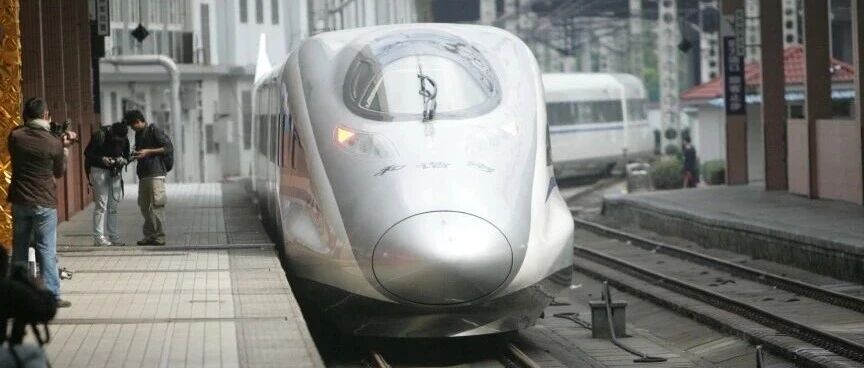
高铁一坐就困?最新回应
Xin Lang Cai Jing· 2026-01-24 14:28
Core Viewpoint - The reported CO2 concentration levels in high-speed train carriages exceed the standard limit of 1000ppm, but the standards applicable to passenger trains differ from those for buildings, with higher acceptable limits in place for rail vehicles [1][2]. Group 1: Standards and Regulations - The CO2 concentration control standard for passenger trains in China is defined by TB/T 3493-2017, which allows a maximum of 2500ppm under normal operating conditions [1]. - European standards EN13129-2016 set the limit for CO2 concentration in passenger trains at 5000ppm [1]. - The reported values were compared against GB 50736-2012, which is not applicable to passenger trains, as it pertains to indoor air quality in buildings [1]. Group 2: Air Quality Management in Trains - The train carriages are designed with a fully sealed body, and air exchange is managed entirely by the air conditioning ventilation system, providing over 15m³/h of fresh air per person [2]. - The air exchange rate in the train is between 6 to 12 times per hour, and a pressure protection system is in place [2]. - During operation in non-tunnel areas, CO2 concentration typically does not exceed 1500ppm; however, in tunnels, the system temporarily closes external air access to prevent ear discomfort, which may lead to a short-term increase in CO2 levels without health risks to passengers [2].
铁路专家:我国旅客列车二氧化碳浓度标准限值为不超过2500ppm
Xin Hua She· 2026-01-24 13:32
Core Viewpoint - The discussion regarding the carbon dioxide concentration in high-speed train carriages exceeding 1000ppm is addressed, clarifying that the standards for passenger trains differ from those for civil buildings [1] Group 1: Standards and Regulations - The carbon dioxide concentration control standard for passenger trains in China is based on TB/T 3493-2017, which sets the limit at 2500ppm under normal operating conditions, while European standards allow up to 5000ppm [1] - The reported passenger measurements reference GB 50736-2012, which is not applicable to passenger trains, as each country's standards are based on the unique characteristics of mobile transport equipment [1] Group 2: Air Quality Management in Trains - China's passenger trains, including high-speed trains, are designed to meet ventilation needs, ensuring continuous supply of fresh air and removal of waste gases, with parameters like air cleanliness and temperature uniformity meeting national railway standards [2] - High-speed trains utilize a ventilation system that includes pressure protection, with an average fresh air supply of over 15m³/h per person and air exchange rates of 6 to 12 times per hour [2] - During operation in non-tunnel sections, carbon dioxide levels typically do not exceed 1500ppm; however, in tunnels, pressure protection measures may temporarily increase CO2 levels due to the closure of external air passages [2]