
TCL TECH.(000100)

Search documents
深市电子行业企业上半年业绩亮眼 相关公司积极行动拓展增长新空间
Zheng Quan Ri Bao Wang· 2025-07-23 09:14
Core Insights - The electronic industry in China is expected to maintain a steady growth trend in the second half of 2025, supported by continuous policy incentives and advancements in technology and market expansion [2][6] - A total of 66 companies in the Shenzhen Stock Exchange's electronic sector forecast a combined net profit of between 14.686 billion and 16.930 billion yuan for the first half of 2025, with 54.55% of these companies expecting positive performance [1][4] Company Performance - Among the 66 companies, 13 are projected to see net profit growth exceeding 100%, with Shenzhen Shuo Bei De Wireless Technology Co., Ltd. leading at an estimated increase of 1028.49% [3] - TCL Technology Group Co., Ltd. anticipates a net profit of over 4.6 billion yuan from its semiconductor display business, reflecting a year-on-year growth of over 70% [3][4] - Luxshare Precision Industry Co., Ltd. is expected to achieve a net profit of approximately 6.745 billion yuan, while other companies like TCL Technology and Hu Shi Electronics are projected to earn 2 billion and 1.75 billion yuan respectively [4] Market Dynamics - The demand for electronic products is diversifying, with growth in industrial electronics, automotive electronics, and new energy applications, alongside the ongoing upgrade in consumer electronics [2][6] - The semiconductor and AI sectors are receiving targeted support from government policies, which are expected to translate into actual growth momentum for the industry [2][6] Technological Advancements - Companies like TCL Huaxing are investing in new display technologies, while Luxshare is enhancing its competitiveness in AI edge products, contributing to overall industry innovation [6][7] - The establishment of supplier alliances by companies like Lingyi Technology is optimizing supply chains and enhancing the stability and resilience of the electronic industry [6] Investment Sentiment - The performance of these companies is attracting more capital to the electronic sector, providing financial support for ongoing innovation and expansion [6] - The Shenwan Electronics Index has risen by 34.27% this year, indicating positive market sentiment towards the electronic industry's growth prospects [6]



黄仁勋访华释放积极信号,看好算力与应用端共振的AI投资机遇 | 投研报告
Zhong Guo Neng Yuan Wang· 2025-07-23 08:31
Group 1 - Nvidia CEO Jensen Huang praised China's open-source AI as a catalyst for global progress, highlighting the advancement of hundreds of projects based on the NVIDIA Omniverse platform for digital twin modeling and virtual training in factories and warehouses [1][3] - The H20 chip's return to the Chinese market signals positive expectations, potentially alleviating local AI companies' concerns regarding computing power and promoting the large-scale deployment of agents and inference models [3][4] - The AI sector is experiencing a resonance between hardware upgrades on the computing side and model iterations on the application side, presenting investment opportunities in AI [2][4] Group 2 - TSMC reported a 60.7% year-on-year increase in net profit for Q2 2025, driven by strong demand for AI chip foundry services, with overall revenue growth in the wafer foundry industry expected to reach 17%-18% [2][5] - The GB300 chip is set to launch in September, with multiple manufacturers, including Dell, expected to begin shipping systems designed for inference tasks, significantly enhancing AI model training capabilities [5][6] - The PCB market is expected to see growth driven by the launch of GB300 and increased demand for high-end PCBs due to the expansion of ASIC server applications [6] Group 3 - The demand for display panels has slowed, with price adjustments observed in July, but leading companies like BOE and TCL Technology have shown resilience, with BOE becoming the top supplier in the foldable OLED screen market [7] - TCL Technology's semiconductor display business reported a net profit exceeding 4.6 billion yuan, reflecting a 70% year-on-year increase, while its solar business faced losses due to supply-demand imbalances [7] - The report suggests monitoring various companies in the consumer electronics sector, including those involved in components, materials, and automation equipment, indicating a broad interest in the industry [8]



招商证券:韩系彩电双雄业绩滑坡 国产品牌借MiniLED冲击高端市场
智通财经网· 2025-07-23 02:12
Group 1 - Samsung Electronics' operating profit guidance for Q2 2025 is expected to drop by 56% year-on-year, while LG Electronics' guidance is projected to decline by 47%, indicating a shift in pricing power towards Chinese panel manufacturers and a loss of influence in the global high-end market [1] - Samsung's video display division is estimated to see a 46% year-on-year decline in Q2 operating profit, recording only 113 billion KRW (approximately 600 million RMB), while LG Electronics anticipates a loss between 23.5 billion to 99 billion KRW (approximately 120 million to 520 million RMB), potentially marking one of its worst performances in recent years [1] Group 2 - The concentration of the industry is accelerating due to national subsidies, with the market share of the top four companies increasing from 82% before subsidies to 87% after [2] - The penetration rate of MiniLED TVs surged from 16% during the same period last year to over 40% during the 618 shopping festival, indicating a significant market shift [2] - The upstream panel industry is undergoing a consolidation, with TCL Huaxing completing the acquisition of LGD's Guangzhou panel factory and BOE acquiring a 30% stake in Rainbow Optoelectronics, leading to the top four manufacturers controlling nearly 70% of the market [2] Group 3 - Global high-end TV shipments increased by 44% year-on-year in Q1 2025, with sales revenue growing by 35%; Hisense's market share in high-end TV shipments rose from 14% to 20%, and TCL's share increased from 13% to 19%, surpassing LG [3] - Samsung's share in the high-end TV market fell from 39% to 28%, while LG's share dropped from 23% to 16%, resulting in a decline to fourth place [3] - The penetration of MiniLED TVs is expected to double to 16 million units in 2025, while OLED TV shipments are projected to remain stagnant at around 6 million units due to cost constraints [3]


AI“重启”TCL?
Bei Jing Shang Bao· 2025-07-22 12:54
Core Viewpoint - TCL experienced a challenging fiscal year 2024 with a significant decline in revenue and profit, prompting a strategic pivot towards AI as a potential growth driver [2][3] Financial Performance - TCL's total revenue for 2024 was 164.823 billion yuan, a year-on-year decrease of 5.47% - The net profit attributable to shareholders was 1.564 billion yuan, down 29.38% year-on-year - The non-recurring net profit was 298 million yuan, a substantial decline of 70.78% year-on-year [2] Business Segments - The solar photovoltaic business, affected by an industry downturn, saw over a 50% year-on-year decline, negatively impacting overall revenue - The display business, which surpassed 100 billion yuan in revenue for the first time, achieved a 25% year-on-year growth but could not offset losses from the photovoltaic sector [2] Strategic Shift - TCL's leadership is betting on AI as a new growth engine, with the president of TCL's China division stating that home appliances will become a sunrise industry in the AI era [2] - The company aims to leverage AI for service subscriptions and data value, which could unlock new growth opportunities amid traditional market challenges [2][6] Competitive Landscape - In the AI television segment, TCL is currently positioned favorably but faces significant competition from players like Hisense and Xiaomi, who are also investing heavily in AI technology [4][5] - Hisense ranked second globally in television shipments in 2024, with a market share of 22.5% in China, while Xiaomi followed closely with a market share of 19.9% [4][5] AI Development and Market Potential - TCL has been proactive in AI development, launching its first AI voice television in 2013 and expanding AI applications across various product categories [8] - The global smart home market is projected to grow from $52.8 billion in 2018 to $154.3 billion in 2024, with a compound annual growth rate of 19.57% [9] Consumer Acceptance and Market Dynamics - Consumer willingness to pay for AI appliances varies significantly, with practical functionality being a key factor in acceptance [10][11] - The market is shifting from blind adoption of new technology to a more rational approach, where consumers prioritize tangible benefits over mere technological novelty [12]

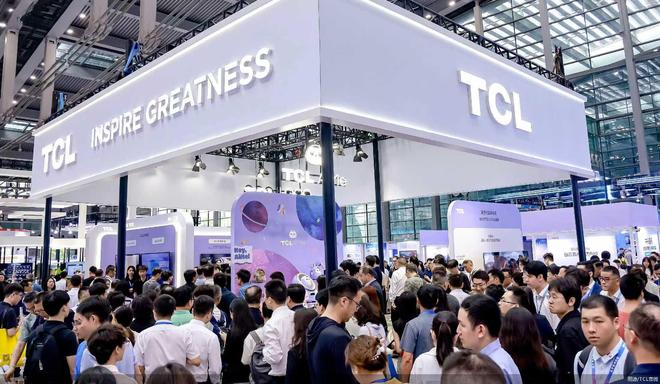
TCL科技:以绿色产业链筑牢化学品安全防线,加码绿色制造与合规运营
Huan Qiu Wang· 2025-07-21 05:59
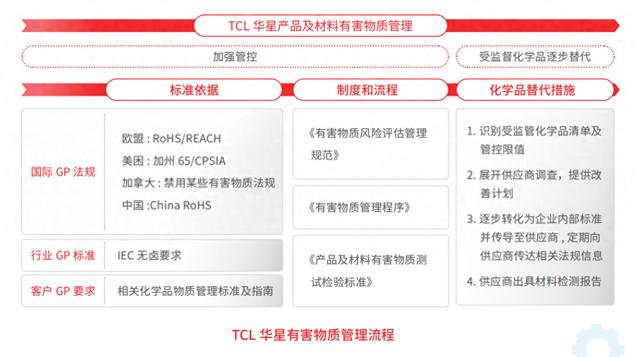
Group 1 - The core viewpoint emphasizes the importance of chemical safety in industrial production for human health, ecological environment, and sustainable development [1] - TCL Technology has established a dedicated department within its manufacturing subsidiary to manage the entire chemical risk identification and control process, ensuring compliance with harmful substance management requirements [1] - TCL Huaxing has created a comprehensive list of hazardous chemicals and is implementing a Failure Mode and Effects Analysis (FMEA) mechanism for specialty gases, covering 40 types of specialty gases and 46 types of miscellaneous chemicals, identifying 4,160 risks and rectifying 240 hazards [1] Group 2 - In supply chain collaboration, TCL Huaxing aims to build a net-zero, circular, and trustworthy green industry chain by exploring low-power, non-toxic, and renewable material applications with upstream suppliers [4] - The company adheres to regulations such as RoHS, REACH, and TSCA, and has established harmful substance management standards, requiring material suppliers to sign declarations to ensure compliance with green product requirements [4] Group 3 - The GPMS (Green Product Management System) allows for proactive screening and planning for the replacement of harmful substances, while also communicating regulatory updates and company requirements to suppliers [5] - As of the reporting period, the company has received feedback from 400 suppliers regarding the REACH SVHC investigation, which helps identify supply chain risks and improve management systems [5] Group 4 - TCL Huaxing has developed a harmful substance management standard to promote the replacement and elimination of hazardous chemicals, particularly in response to stringent global regulations on PFAS [7] - The company plans to ensure that all product lines have PFAS-free materials available for mass production by the end of 2026 [7] Group 5 - The company is continuously optimizing the functionality of the GPMS to systematically manage harmful substances in the supply chain and support green procurement [8] - The system includes a database of basic chemical substances and environmental control requirements, facilitating the submission of eco-friendly materials by suppliers and enabling tracking of material compositions [8]
机构看好反内卷下行业盈利修复,光伏ETF基金(516180)开盘涨超0.6%
Xin Lang Cai Jing· 2025-07-21 01:57
Group 1 - The central government has emphasized the need to address "involution" competition and to regulate low-price disorderly competition in enterprises, aiming to promote the orderly exit of backward production capacity [1] - The photovoltaic and lithium battery industries are currently at a profit bottom, with photovoltaic losses being particularly significant, and the "anti-involution" approach is expected to be a key driver for the medium to long-term profit recovery in the new energy sector [1] - As of July 21, 2025, the CSI Photovoltaic Industry Index (931151) has risen by 0.91%, with notable increases in constituent stocks such as Tebian Electric (600089) up 4.72% and Shuangliang Energy (600481) up 2.30% [1] Group 2 - As of June 30, 2025, the top ten weighted stocks in the CSI Photovoltaic Industry Index (931151) include Yangguang Electric (300274), Longi Green Energy (601012), and TCL Technology (000100), with these stocks collectively accounting for 55.39% of the index [2]




俄罗斯市场留给中国卖家们的时间不多了丨鲸犀百人谈Vol.40
雷峰网· 2025-07-18 10:38
Core Viewpoint - The article discusses the competitive landscape of the robotic vacuum cleaner market in Russia, highlighting the rapid rise of Chinese brands following the exit of Western brands due to the Russia-Ukraine conflict, and the challenges these brands face as the market matures and competition intensifies [2][8]. Group 1: Market Dynamics - The exit of Western brands has created a significant market vacuum in Russia, which Chinese sellers have quickly filled, with local stores now featuring 90% Chinese-made products [2][8]. - The profit margins in the robotic vacuum market have drastically decreased from 60% to around 20% due to increased competition and the end of the "pure dividend era" [2][9]. - Major players like Xiaomi, Roborock, and Midea have emerged, with Xiaomi leading the market with over 30% share, while other brands like Dreame and Ecovacs struggle to maintain their positions [22]. Group 2: Entry Strategies - Companies entering the Russian market must act quickly, as delays can exponentially increase competition and difficulty [4][10]. - A successful entry strategy involves understanding local market dynamics, leveraging existing supply chains, and adapting products to meet local consumer preferences [10][11]. - The current market is still in a phase where competitive products can succeed without significant upfront investment in marketing or promotions [11]. Group 3: Product Localization - Russian consumers have shown a preference for high-quality, aesthetically pleasing products, indicating a need for localized design and marketing strategies [19]. - There is a significant opportunity for small household appliances in the Russian market, as evidenced by successful local brands that have gained traction [23]. - Products that do not consider local consumer habits, such as size and functionality differences, may struggle to succeed [17]. Group 4: Regulatory and Operational Challenges - The Russian market is characterized by complex regulations and a rapidly changing policy environment, which requires companies to stay informed and adaptable [39]. - Companies must navigate various tax regimes and compliance requirements, with a focus on establishing local entities to optimize tax benefits [31][34]. - The choice of service providers is critical, as companies must evaluate the reliability and reputation of logistics and financial service providers to avoid costly pitfalls [35][37].





TCL科技:已完成2025年度首次股票回购,回购金额2.5亿元
Ge Long Hui· 2025-07-18 10:26
Core Viewpoint - TCL Technology has initiated a share buyback program, demonstrating confidence in its future development and commitment to enhancing shareholder value [1][2] Group 1: Share Buyback - On July 18, TCL Technology announced the completion of its first share buyback for 2025, with a total transaction amount of approximately 250 million yuan [1] - The company plans to repurchase shares totaling no less than 700 million yuan and no more than 800 million yuan [1] - The buyback involved the repurchase of 55,498,400 shares, accounting for about 0.28% of the company's total share capital [1] Group 2: Financial Performance Forecast - TCL Technology expects to achieve operating revenue between 82.6 billion yuan and 90.6 billion yuan for the first half of 2025, representing a year-on-year growth of 3% to 13% [1] - The forecasted net profit attributable to shareholders is between 1.8 billion yuan and 2 billion yuan, indicating a significant year-on-year increase of 81% to 101% [1] - The company anticipates a non-recurring net profit of 1.5 billion yuan to 1.65 billion yuan, reflecting a growth of 168% to 195% compared to the previous year [1] - The semiconductor display business is expected to perform particularly well, with a projected net profit exceeding 4.6 billion yuan, a year-on-year increase of over 70% [1] Group 3: Strategic Acquisitions - In the first half of the year, TCL Technology completed the acquisition of 100% equity in LG Display (China) and LG Display (Guangzhou), as well as a 21.5311% stake in Shenzhen Huaxing Semiconductor [2] - These acquisitions are expected to enhance TCL Technology's competitiveness in the panel business and significantly contribute to the growth of net profit attributable to shareholders [2]
国产电视品牌占据超九成市场份额 达历史最高点
Zheng Quan Ri Bao· 2025-07-18 09:32
Core Insights - The Chinese television market is experiencing a significant concentration of market share among domestic brands, with the top seven brands accounting for 92.6% of total shipments in Q1 2023, marking a historical high [1][2] Group 1: Market Performance - In Q1 2023, the total shipment volume of televisions in China reached 8.52 million units, a slight decrease of 0.6% year-on-year and an 8.9% decline compared to 2021 [1] - The top seven domestic brands, including Xiaomi, Hisense, TCL, Skyworth, Changhong, Haier, and Konka, shipped a total of 7.89 million units, representing a year-on-year growth of 2.5% [2] - Hisense and its sub-brand Vidda achieved nearly 2 million units in shipments, with a year-on-year growth of 13% [2] - TCL, including its sub-brands, saw a remarkable 37% increase in shipments, the highest growth rate in the industry [2] Group 2: Competitive Landscape - The competition among leading brands is intensifying, with the first-tier brands like Hisense and TCL maintaining strong growth, while the second-tier brands are facing pressure [3] - Huawei's shipments dropped over 50% due to internal adjustments, highlighting the need for improved sales performance post-adjustment [3] - Foreign brands like Sharp, Sony, Samsung, and Philips have seen their combined market share fall below 10%, indicating a significant decline [2][3] Group 3: Strategic Directions - Domestic brands are focusing on high-end market segments and expanding into commercial and automotive sectors, indicating a shift towards diversification [3][4] - Companies are investing in OLED and miniLED technologies and are entering vertical integration phases by expanding into display, operating systems, and chip industries [4] - As the domestic market becomes saturated, companies like Hisense and TCL are increasingly targeting international markets, with strategies aimed at significant overseas expansion [5][6]


TCL科技(000100) - 关于2025年回购社会公众股份首次回购实施情况的公告
2025-07-18 09:31
证券代码:000100 证券简称:TCL 科技 公告编号:2025-068 TCL 科技集团股份有限公司 TCL 科技集团股份有限公司(以下简称"公司")聚焦半导体显示、新能源 光伏和半导体材料业务的核心主业发展,以全球领先为目标,坚持战略引领、创 新驱动、先进制造、全球经营,持续巩固行业地位,以实现高质量可持续发展。 基于对公司未来发展的信心,为维护公司全体股东利益,增强投资者信心,稳定 及提升公司价值,公司于 2025 年 4 月 15 日召开第八届董事会第九次会议审议通 过了《关于 2025 年回购部分社会公众股份的议案》,公司计划通过深圳证券交 易所交易系统以集中竞价交易方式回购部分公司已发行股份,回购股份的总金额 不低于人民币 7 亿元(含)且不超过人民币 8 亿元(含)。具体详见公司在指定 信息披露媒体上发布的相关公告。 一、首次回购公司股份实施的具体情况 根据《上市公司股份回购规则》《深圳证券交易所上市公司自律监管指引第 9 号——回购股份》等相关规定,公司应当在首次回购股份事实发生的次一交易 日披露回购进展情况。现将公司首次回购股份情况公告如下: 公司于 2025 年 7 月 18 日首次通过 ...