
TYN(000591)

Search documents
太阳能发电用不完,澳大利亚将为居民免费供电3小时
Yang Zi Wan Bao Wang· 2025-11-05 06:56
Core Viewpoint - The Australian government announced a solar sharing program set to be implemented by July 2026, providing millions of households with at least 3 hours of free solar power daily, benefiting even those without solar panels [1] Group 1: Program Details - The solar sharing program will initially be rolled out in New South Wales, South Australia, and Southeast Queensland, with plans to expand nationwide by 2027 [1] - The program aims to share the benefits of solar energy, reduce household energy bills, and optimize grid load to alleviate peak demand pressure [1] Group 2: Market Context - Australia has the highest number of rooftop solar installations globally, with over 4 million solar panels, leading to instances where wholesale electricity prices drop below zero during peak generation [1] - The average residential electricity price in Australia is approximately AUD 0.39 per kWh, translating to an average annual electricity expenditure of about AUD 1,840 per household [1]

将阳光"一分为二" 硅太阳能电池中实现稳定"单线态裂分"效应
Ke Ji Ri Bao· 2025-11-05 05:27
Core Insights - A research team from the University of New South Wales in Australia has achieved a significant breakthrough in solar technology by discovering a stable organic material that enables the "singlet fission" effect in silicon solar cells, potentially enhancing photovoltaic conversion efficiency [1][3] Group 1: Technology Breakthrough - The "singlet fission" process allows a single photon to split into two energy packets, effectively converting wasted thermal energy from sunlight into additional electricity [3] - By overlaying a thin layer of organic molecules on the surface of silicon cells, high-energy photons can undergo fission, generating two lower-energy excited states and injecting more charge into the silicon layer, significantly increasing current output [3] Group 2: Efficiency Potential - Current commercial silicon solar cells have a maximum conversion efficiency of approximately 27%, with a theoretical limit of 29.4%. The introduction of the "singlet fission" mechanism could potentially raise this theoretical efficiency to 45% [3] - The research team utilized dibenzothiophene-dione (DPND), a stable industrial pigment, which demonstrates excellent durability and compatibility with silicon cells, allowing for long-term outdoor application [3] Group 3: Practical Application - This is the first instance of achieving singlet fission on silicon materials using a stable organic molecule based on industrial pigments, which are already widely used in automotive coatings, indicating sufficient chemical stability for outdoor use [3] - The technology can be integrated by simply applying a new layer of material onto existing silicon cells, facilitating easier adoption in the market [3]

太阳能涨2.12%,成交额2.40亿元,主力资金净流入53.80万元
Xin Lang Zheng Quan· 2025-11-05 05:10
Core Viewpoint - The solar energy company's stock has shown a positive trend with a 2.12% increase on November 5, reaching a price of 4.81 CNY per share, with a total market capitalization of 18.861 billion CNY [1] Group 1: Stock Performance - The stock price has increased by 3.51% year-to-date, with a 3.00% rise over the last five trading days, 5.95% over the last 20 days, and 6.18% over the last 60 days [1] - The trading volume on November 5 was 240 million CNY, with a turnover rate of 1.29% [1] Group 2: Financial Performance - For the period from January to September 2025, the company reported a revenue of 4.101 billion CNY, a year-on-year decrease of 14.08%, and a net profit attributable to shareholders of 1.125 billion CNY, down 12.82% year-on-year [2] - Cumulative cash dividends since the company's A-share listing amount to 3.317 billion CNY, with 1.514 billion CNY distributed over the last three years [3] Group 3: Shareholder Structure - As of September 30, 2025, the number of shareholders decreased by 5.53% to 152,700, while the average circulating shares per person increased by 15.18% to 25,672 shares [2] - The top ten circulating shareholders include Hong Kong Central Clearing Limited, which increased its holdings by 10.2228 million shares to 48.8947 million shares [3]
“每天免费用电至少3小时” 澳大利亚鼓励民众多用太阳能
Xin Hua She· 2025-11-05 03:41
Core Viewpoint - Australia will provide households with "at least 3 hours of free solar energy per day" starting July next year to encourage electricity usage during peak solar generation times, thereby reducing operational costs during high-load periods and promoting clean energy development [1] Group 1: Program Details - The initiative, named "Solar Shareholders," will initially be implemented in New South Wales, South Australia, and southeastern Queensland, with plans for gradual expansion to other states [1] - Households equipped with smart meters can benefit from the program regardless of whether they have solar panels installed [1] Group 2: Impact on Energy Costs - The program aims to concentrate electricity usage during peak solar generation hours, which can lead to lower overall electricity costs for all users [1] - Approximately 4.2 million Australian households have installed solar panels, and during peak solar generation times, electricity prices can drop to zero [1]
中国太阳能设备_2025 年第三季度业绩后更新预估-China Solar Equipment_ Updating estimates post 3Q25 results
2025-11-05 02:30
Summary of Conference Call Notes Industry and Companies Involved - **Industry**: Solar Equipment - **Companies**: Shenzhen SC (300724.SZ) and Suzhou Maxwell (300751.SZ) Key Points and Arguments Shenzhen SC (SZSC) - **3Q25 Performance**: Reported better-than-expected results due to a faster booking pace and increased contributions from non-solar and overseas businesses, which have higher margins [1][2] - **Order Backlog**: There is a concerning trend of declining order backlog due to limited new order additions, with inventory down by 29% and contract liabilities down by 33% quarter-over-quarter [1] - **Financial Estimates**: Revenue estimates for 2025E-2026E revised by +27%/-16%, while EBITDA estimates raised by 43%/3% for the same period [2] - **Target Price (TP)**: Slight increase in TP to Rmb51.8 from Rmb51.5, maintaining a Sell rating [2] Suzhou Maxwell - **3Q25 Performance**: Also reported improved results, with a significant revision of EBITDA estimates up by 51% for 2025E due to higher margins in non-solar business [3] - **Financial Estimates**: Estimates for 2026E-2030E remain largely unchanged, reflecting a stable long-term solar capex outlook [3] - **Target Price (TP)**: Increased TP to Rmb63 from Rmb62, retaining a Sell rating [3] Financial Comparisons - **Shenzhen SC Financials**: - Revenue: Rmb4,273 million in 3Q25, down 17% year-over-year - Gross Profit Margin: 32% in 2025, up 5 percentage points year-over-year - Net Profit Margin: 26% in 2025, up 4 percentage points year-over-year [4] - **Maxwell Financials**: - Revenue: Rmb1,991 million in 3Q25, down 31% year-over-year - Gross Profit Margin: 40% in 2025, up 10 percentage points year-over-year - Net Profit Margin: 14% in 2025, up 3 percentage points year-over-year [7] Investment Thesis - **Shenzhen SC**: The company is the largest TOPCon equipment manufacturer with over 50% global market share. However, the outlook is cautious due to an overly optimistic market regarding near-term orders and ongoing anti-involution campaigns in China [11] - **Suzhou Maxwell**: The largest screen printing equipment maker globally with over 80% market share. Despite positive long-term prospects for HJT technology, the company is expected to face challenges from a solar capex downcycle [9] Risks - **Common Risks for Both Companies**: - Faster-than-expected developments in overseas, semiconductor, and battery industries could impact performance [10][13] - Potential rapid migration to new solar technologies could disrupt existing business models [10][13] Other Important Information - **Market Sentiment**: Both companies are rated as Sell, indicating a cautious outlook despite some positive short-term performance metrics [2][3][11]
硅太阳能电池中实现稳定“单线态裂分”效应
Ke Ji Ri Bao· 2025-11-05 02:01
Core Insights - A research team from the University of New South Wales in Australia has achieved a significant breakthrough in solar technology by discovering a stable organic material that enables "singlet fission" in silicon solar cells, potentially enhancing photovoltaic conversion efficiency [1][2] Group 1: Technology and Mechanism - "Singlet fission" is a unique physical process that allows one photon to split into two energy packets, effectively converting wasted thermal energy from sunlight into additional electricity [1] - By overlaying a thin layer of organic molecules on the surface of silicon cells, high-energy photons can undergo fission within this layer, generating two lower-energy excited states and injecting more charge into the underlying silicon layer, significantly increasing current output [1] Group 2: Efficiency and Potential - Current commercial silicon solar cells have a maximum conversion efficiency of about 27%, with a theoretical limit of 29.4%. The introduction of the "singlet fission" mechanism could potentially raise this theoretical efficiency to 45% [1] - The research team utilized dibenzothiophene (DPND), an industrial pigment with excellent durability, which can operate stably in air and humid environments, proving compatible with silicon cells for energy multiplication [1][2] Group 3: Practical Application - This is the first instance of achieving singlet fission on silicon materials using stable organic molecules based on industrial pigments, which are already widely used in automotive coatings, indicating their chemical stability for long-term outdoor applications [2] - The technology can be integrated by simply applying a new layer of material onto existing silicon cells [2]
将阳光“一分为二” 硅太阳能电池中实现稳定“单线态裂分”效应
Ke Ji Ri Bao· 2025-11-04 23:56
Core Insights - A research team from the University of New South Wales in Australia has achieved a significant breakthrough in solar technology by discovering a stable organic material that enables "singlet fission" in silicon solar cells, potentially enhancing photovoltaic conversion efficiency [1][2]. Group 1: Technology Breakthrough - The "singlet fission" effect allows a single photon to split into two energy packets, effectively converting wasted thermal energy from sunlight into additional electricity [1]. - By layering a thin organic molecular layer on the surface of silicon cells, high-energy photons can undergo fission, generating two lower-energy excited states and injecting more charge into the silicon layer, significantly increasing current output [1]. Group 2: Efficiency Potential - Current commercial silicon solar cells have a maximum conversion efficiency of about 27%, with a theoretical limit of 29.4%. The introduction of the "singlet fission" mechanism could potentially raise this theoretical efficiency to 45% [1]. - The research team utilized dibenzothiophene (DPND), an industrial pigment with excellent durability, which can operate stably in air and humid environments, proving compatible with silicon cells for energy multiplication [1]. Group 3: Practical Application - This is the first instance of achieving singlet fission on silicon materials using stable organic molecules based on industrial pigments, which are already widely used in automotive coatings, indicating sufficient chemical stability for long-term outdoor applications [2]. - The technology can be integrated by simply applying a new layer of material onto existing silicon cells [2].
亚玛顿:公司为特斯拉提供的太阳能瓦片玻璃都是出口至美国
Mei Ri Jing Ji Xin Wen· 2025-11-04 04:33
Core Insights - Tesla's Shanghai Gigafactory has installed solar panels on its roof, and the Shanghai energy storage facility is also adding solar panels, indicating a shift towards renewable energy solutions [2] - Amatton (002623.SZ) confirmed that the solar tile glass provided to Tesla is exported to the United States, and the business cooperation with Tesla is functioning normally [2] Company Summary - Amatton is supplying solar tile glass to Tesla, which is being exported to the U.S. market [2] - The collaboration between Amatton and Tesla is reported to be stable and operational [2]

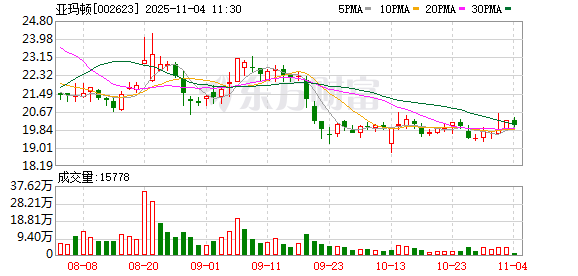
亚玛顿:为特斯拉提供的太阳能瓦片玻璃都是出口至美国,与特斯拉业务合作一切正常
Jin Rong Jie· 2025-11-04 03:57
Core Viewpoint - The company confirmed that it is supplying solar tile glass to Tesla, specifically for export to the United States, and stated that the business cooperation with Tesla is proceeding normally [1]. Group 1 - Investors inquired about the use of the company's solar tile glass in Tesla's Shanghai Gigafactory, which has reportedly installed solar panels on its roof [1]. - The company responded positively, indicating that all business dealings with Tesla are functioning as expected [1].

天基太阳能开启清洁能源新赛道
Ke Ji Ri Bao· 2025-11-03 23:55
Core Viewpoint - The increasing electrification of human life and advancements in big data and AI are driving unprecedented global energy demand, positioning space-based solar power (SBSP) as a potential pathway to a clean and abundant energy future [1][2]. Group 1: Advantages of Space-Based Solar Power - SBSP can provide stable and reliable baseload power, which has traditionally relied on fossil fuels or nuclear energy [3]. - The intensity of sunlight in space is 5-10 times greater than on Earth, allowing for higher energy generation efficiency and significant land resource savings [2][3]. - A NASA study predicts that a model of SBSP could generate power 99% of the time in a year [3]. Group 2: Global Developments and Investments - A global "space race" for sustainable energy is underway, with countries and private enterprises increasing investments in SBSP [4]. - In August 2023, the California Institute of Technology successfully demonstrated a prototype for space-based solar energy transmission [4]. - China aims to achieve breakthroughs in SBSP by 2028, with ongoing projects in Chongqing and Xi'an [4]. - The European Space Agency has initiated the SOLARIS pre-research program with a budget of €60 million to develop core technologies for SBSP [4]. Group 3: Technological Challenges - Key challenges include high launch costs, as building a large SBSP system will require numerous launches despite decreasing satellite launch costs [7]. - Efficiently transmitting gigawatt-level power back to Earth remains a significant technical hurdle [7]. - The need for autonomous robots to assemble and maintain large space structures in orbit is another critical challenge [7].