ASML Holding(ASML)

Search documents
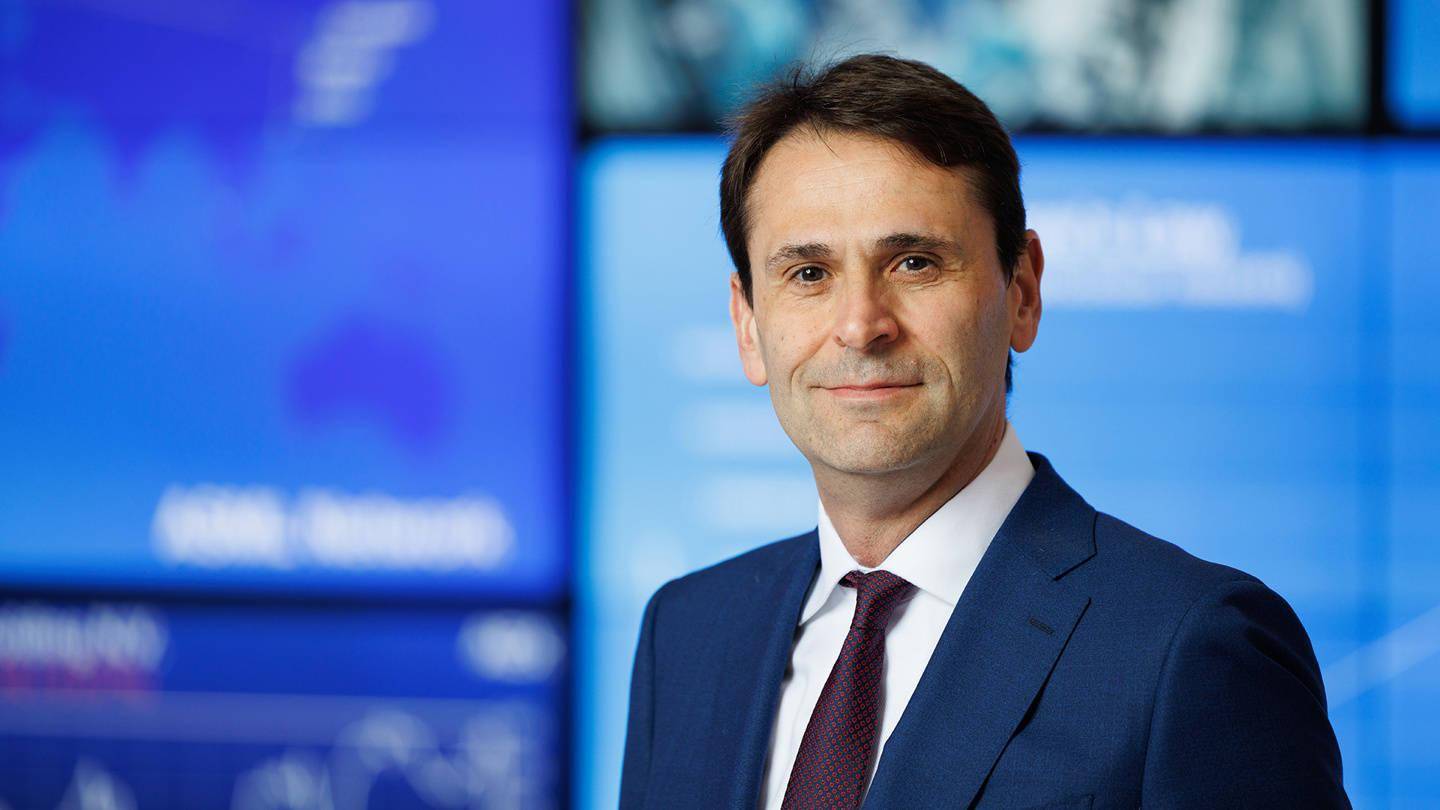
ASML CEO:预计High NA EUV光刻机2027~2028年用于大规模量产
Sou Hu Cai Jing· 2025-12-15 02:26
Group 1 - The CEO of ASML, Christophe Fouquet, expects the High NA EUV lithography machines to be officially put into large-scale production for advanced processes between 2027 and 2028 [1] - Intel is currently the most proactive in adopting the new generation of patterning technology, with its High NA EUV-supported Intel 14A node set to launch in 2027 [3] - ASML is collaborating with customers to minimize downtime of the new equipment, which is currently being tested by clients like Intel, showing good imaging and resolution performance [3] Group 2 - ASML has a general concept of its technology roadmap for the next 10 to 15 years and has initiated research on the next generation of Hyper NA EUV, laying the groundwork for deployment in the 2030s [4]


How ASML's Lithography Machines Shape the AI Chip Industry
Youtube· 2025-12-14 06:00
Core Insights - ASML is a pivotal company in the semiconductor industry, specializing in lithography machines essential for advanced chip manufacturing [1][2] - The company has developed the extreme ultraviolet (EUV) lithography machine, which is crucial for producing smaller and more powerful chips [3][4] - ASML's technology enables chipmakers to fit billions of transistors onto compact silicon wafers, supporting the ongoing demand for increased computing power [4][5] Company Overview - ASML was founded in 1984 as a joint venture between Philips and ASM International, starting in modest facilities in the Netherlands [1][2] - It is currently the only company capable of producing the advanced lithography machines necessary for the most sophisticated semiconductor manufacturing [2] Technology and Innovation - The EUV lithography machine, ASML's flagship product, costs over $300 million and is comparable in size to a double-decker bus while weighing as much as a Boeing 747 [3] - This machine utilizes ultraviolet light to create microscopic patterns on silicon wafers, enabling the production of chips with unprecedented transistor density [4] Industry Context - ASML plays a central role in the global chip supply chain, with major semiconductor firms like NVIDIA, AMD, and Micron relying on its technology for chip design and manufacturing [4][5] - The company’s machines are essential for foundries such as TSMC and Samsung, which produce advanced semiconductors primarily in Asia [5] Market Dynamics - The semiconductor industry faces the challenge of adhering to Moore's Law, which predicts that computing power will double approximately every two years, necessitating continuous advancements in lithography technology [6] - ASML's innovations are critical to maintaining this trajectory of growth and technological advancement in the industry [6]
How ASML's Lithography Machines Shape the AI Chip Industry
Bloomberg Technology· 2025-12-14 06:00
Company Overview - ASML started as a 50/50 joint venture between Philips and ASM International in 1984 [1] - ASML is the sole company capable of manufacturing machines for printing the tiniest circuits on advanced chips [2] - ASML's extreme ultraviolet (EUV) lithography machine costs over $300 million, weighs as much as a Boeing 747, and contains over 100,000 parts [3] Technological Advancement - EUV lithography uses ultraviolet light to etch microscopic patterns onto silicon wafers [4] - EUV machines from ASML are essential for manufacturing the most advanced semiconductors [5] - The industry aims to pack more computing power into less space, aligning with Moore's Law [5][6] Industry Position - ASML's early growth was accelerated by companies like Intel, Texas Instruments, and AMD [2] - ASML is at the center of the global chip supply chain, with firms like NVIDIA, AMD, and Micron designing chips [4] - Foundries like TSMC and Samsung rely on ASML's EUV machines for manufacturing advanced semiconductors [5]
ASML CEO: China Won't Accept Being Cut Off From AI Chips
Bloomberg Television· 2025-12-13 07:00
AI Development & Competition - The US is currently far ahead of China in AI, exemplified by Nvidia's dominance, with approximately 80% of the most advanced chips being purchased in the US [1] - Major US companies like Google, META, and Microsoft are driving AI development significantly [2] - Europe is currently a consumer of AI technology, lagging behind the US and China in AI ecosystem development [2] - The debate is whether the US or China will win the AI race, but Europe is clearly losing, also evident in the semiconductor sector [3] - Europe's semiconductor consumption is low because companies developing AI chips are not based there [4] - Europe needs to create conditions to attract the AI ecosystem back to the region to catch up [4] - If Europe loses the AI race, it will primarily become a consumer of the technology, with limited knowledge creation within the region [6] Semiconductor Industry & Supply Chain - Shipments of systems to Europe account for only 1-2% of total business, a trend that has persisted for the last ten years, indicating a lack of semiconductor manufacturing build-up in Europe [3] - The interdependencies between China and the US are constantly highlighted, emphasizing the need to ensure open markets [9] - China will not accept being cut off from technology and will strive to advance, given its large population of 14 billion [11] - The West could choose to provide China with older generation technology, such as the fourth or fifth generation, while currently shipping products that are eight generations behind [12] - Products shipped to China are over ten years behind those shipped to Western customers in 2013-2014, slowing down China's technological progress [12] - Frustrating China too much could lead them to develop their own technology and potentially compete in the market [14]
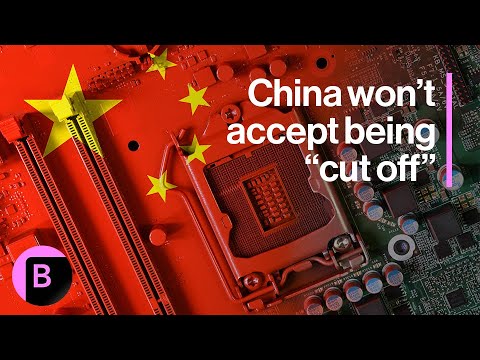
ASML CEO: China Won't Accept Being Cut Off From AI Chips
Youtube· 2025-12-13 07:00
AI Ecosystem Comparison - The US is currently leading in AI development, with companies like Nvidia at the forefront, while China is aggressively trying to catch up [1][5] - Europe is lagging significantly behind both the US and China in the AI race, primarily acting as a consumer rather than a producer [2][3] Semiconductor Industry Insights - The semiconductor shipment to Europe constitutes only 1-2% of total business, indicating a lack of advanced semiconductor manufacturing in Europe [3][4] - The absence of advanced chip development in Europe is attributed to low consumption of semiconductors within the region [4][6] Implications for Europe - If Europe continues to fall behind, it risks becoming solely a consumer of technology, lacking the necessary knowledge and infrastructure to develop its own AI capabilities [6][5] - The need for Europe to create conditions that attract the entire AI ecosystem back to the region is emphasized [4][5] Supply Chain Dependencies - Europe is heavily dependent on China for rare earths and semiconductor components, raising concerns about supply chain vulnerabilities [7][8] - The interdependencies between Europe, the US, and China are highlighted, stressing the importance of maintaining open markets [9] Technology Transfer and Competition - The West faces a choice regarding technology transfer to China, with the potential risk of China developing its own competitive products if cut off from advanced technology [10][12] - Current shipments to China are significantly behind, with products being over ten years old compared to those supplied to Western customers [12][14]
ASML CEO Sees AI Spending 'Arms Race'
Youtube· 2025-12-13 06:01
Core Insights - The lithography technology will continue to evolve, focusing on better resolution, accuracy, and productivity for the next 10 to 15 years, driven by customer demands for cost efficiency and increased transistor density [2][5][6] - Advanced packaging and 3D packaging are becoming increasingly important as customers seek to enhance transistor density beyond traditional Moore's Law, with AI customers like Nvidia pushing for a 16-fold increase in transistor count every two years [5][6] - The company has made significant investments in AI, including a $1.5 billion stake in Mistral, to leverage AI for improving product efficiency and development cycles [7][8][10] Lithography and Innovation - The introduction of higher numerical aperture tools, such as Hyper NA, is anticipated around the middle of the next decade, indicating ongoing long-term planning for lithography advancements [3][4] - Continuous innovation in lithography is essential to meet the increasing demands for transistor density and cost efficiency from customers [2][5] AI and Industry Impact - The company views AI as a major opportunity, investing €4.5 billion annually in R&D to enhance both hardware and software capabilities [8][10] - The industrial impact of AI is expected to be significant and positive over the coming years, with no signs of a bubble in the industry despite high valuations for some companies [11][12] Market Dynamics and Demand - The hyperscaler market is projected to see substantial investment, with estimates of $300 billion this year potentially rising to $400 billion next year, translating into increased demand for chips and related equipment [14][15] - The competitive landscape is expected to evolve with more players entering the market, leading to potential consolidation in the future as companies navigate investment cycles and technological advancements [20]
How #ASML's chipmaking machines shape the #AI supply chain
Bloomberg Television· 2025-12-13 06:00
Company Overview - ASML is central to the production of advanced chips used in phones, laptops, and AI, though largely unknown to the public [1] - ASML is the sole manufacturer of lithography machines capable of printing the tiniest circuits on advanced chips [1] - ASML's modern lithography machines are very large, about the size of a double-decker bus [1] Product & Cost - ASML's extreme ultraviolet (EUV) lithography machine, a key product, costs over $300 million [2] - Each EUV machine contains over 100,000 parts [2] Supply Chain - ASML relies on approximately 1,000 suppliers for its machine production [2] - These suppliers provide hundreds of thousands of individual parts [2] Industry Position - Top semiconductor firms like Nvidia, AMD, and Micron design chips [3] - Foundries such as TSMC and Samsung manufacture these chips, primarily in Asia [3] - The most advanced semiconductors rely almost entirely on ASML's EUV machines [4] - The semiconductor industry faces the ongoing challenge of increasing computing power in smaller spaces [4]
黑天鹅突袭!“AI交易”,全线重挫!
天天基金网· 2025-12-13 03:38
Core Viewpoint - The article discusses the significant decline in the US stock market, particularly in technology stocks, driven by concerns over the "AI bubble" and hawkish signals from Federal Reserve officials [2][9]. Market Performance - On December 12, US technology stocks experienced a sharp decline, with the Dow Jones falling by 0.51%, the Nasdaq dropping by 1.69%, and the S&P 500 decreasing by 1.07% [3]. - Major tech companies saw substantial losses, with Broadcom plummeting over 11%, Oracle and TSMC ADR down over 4%, and Nvidia down over 3% [3]. - The Philadelphia Semiconductor Index fell by over 5%, with Micron Technology down over 6% and AMD, Intel, and Applied Materials all declining by over 4% [3]. Oracle's Situation - Reports indicated that Oracle postponed the completion of data centers for OpenAI from 2027 to 2028 due to labor and material shortages, which heightened concerns about the "AI bubble" [6][8]. - Following these reports, Oracle's stock saw a significant drop, with a decline of over 6% at one point [7]. - Oracle later denied the reports, asserting that all milestones for the project remain on track and that they are in close coordination with OpenAI [7][8]. Federal Reserve's Influence - Several Federal Reserve officials released hawkish statements, leading to increased bond yields and prompting investors to withdraw from technology stocks [9][10]. - Kansas City Fed President Esther George noted that inflation remains high and the economy shows growth, advocating for a moderately restrictive monetary policy [9]. - The market is anticipating upcoming employment and inflation data, which could influence the Fed's decisions in January [10]. Interest Rate Expectations - According to CME FedWatch, the probability of a 25 basis point rate cut in January is 24.4%, while maintaining the current rate is at 75.6% [10]. - Morgan Stanley and UBS expect only one rate cut in 2024, likely in the first quarter [10][11]. - Analysts from Goldman Sachs, Wells Fargo, and Barclays predict two rate cuts in 2024, potentially in March and June [11].



ASML Is the Silent Monopoly Behind the Entire Tech Industry, but Is It a Buy Right Now?
The Motley Fool· 2025-12-12 19:45
Core Viewpoint - ASML holds a near-monopoly in the lithography machine market essential for producing advanced semiconductor chips, making it a critical player in the tech supply chain [2][5][12] Company Overview - ASML is based in the Netherlands and specializes in producing extreme ultraviolet (EUV) and deep ultraviolet (DUV) lithography machines, which are crucial for etching patterns on semiconductor wafers [3][6] - The company has a market capitalization of $435 billion and its lithography machines can cost up to $400 million each [3][6] Market Position - ASML commands a 90% market share in the lithography industry and has a total monopoly on EUV systems, as its competitors Nikon and Canon only offer older lithography technologies [5][6] - The company is essential for all semiconductor manufacturers, including major clients like Intel, Samsung, and Taiwan Semiconductor Manufacturing [9][10] Financial Performance - For Q3 2025, ASML reported net sales of €7.516 billion, a slight increase of 0.6% from €7.467 billion in Q3 2024 [8] - Gross margin improved to 51.6% from 50.8% year-over-year, while net income rose by 2.3% to €2.125 billion [8] - The company has a substantial backlog of orders, with net bookings reaching €5.399 billion, a 105% increase from the previous year [8] Industry Growth - The semiconductor industry is projected to grow significantly, with estimates suggesting it will reach a value of $1 trillion by 2030 [14] - There are currently 17 new semiconductor factories planned or under construction in the United States, all of which will require ASML's lithography machines [14] Investment Consideration - ASML is characterized as both overvalued and undervalued due to its unique market position, trading at a P/E ratio of 40 compared to Canon's 24 [9][12] - The company's role as a foundational supplier in the tech ecosystem suggests a strong growth trajectory moving forward [11][13]
Buffett's Big Insurance Bet Rakes In $830 Million Since September
Benzinga· 2025-12-12 19:44
Group 1 - Warren Buffett's Berkshire Hathaway has increased its position in Chubb Ltd. by 16%, adding 4,299,111 shares to reach a total of 31,332,895 shares by the end of September [3] - Chubb shares have gained 9.1% since the increase, contributing to significant gains for Berkshire Hathaway [3] - The value of Berkshire's position in Chubb has risen from approximately $1.21 billion to about $1.33 billion, resulting in a gain of approximately $830.95 million since September [4] Group 2 - Berkshire Hathaway's stock has increased by 9.9% in 2025, while the S&P 500 ETF Trust has risen by 13.3%, indicating potential underperformance against the index [6] - Despite recent gains from new positions, including Alphabet Inc., Berkshire Hathaway is still likely to underperform the S&P 500 for the year [2][5] - Chubb is one of the top gainers in Berkshire's portfolio, ranking as the eighth largest holding at the end of the third quarter [5]