
ASML Holding(ASML)

Search documents
边加谷歌边减英伟达!百年巨头柏基披露去年四季度大动作
Ge Long Hui· 2026-02-10 03:42
根据最新披露的美股13F报告显示,百年巨头柏基投资(Baillie Gifford)在2025年第四季度的持仓总市值为1203.4亿美元,较三季度的1350亿美元缩水约 10.8%。 这一降幅除了受部分成长股高位回调影响外,更多源于其整体"净卖出"的操作态势。 重仓座次方面,英伟达虽然连续第二个季度被削减股数(本季减持约5.76%),但仍以6.80%的占比蝉联第一大重仓股。 本文来自:聪明投资者 紧随其后的是拉美电商龙头美客多(MELI),柏基在四季度对其进行了4.95%的反向增持,使其占比升至5.83%,进一步巩固了其作为组合压舱石的地 位。 前五大重仓的其余席位由亚马逊、Shopify和Sea Ltd占据,前十大重仓股合计占比高达43.4%。 除了英伟达,柏基还大幅减持了亚马逊、Shopify、Meta、Cloudflare等。 四季度引人注目的操作是大幅加仓谷歌,增持幅度高达166%。这一动作与伯克希尔去年三季度建仓谷歌的逻辑形成了有趣的互补,如果说巴菲特看重的 是谷歌的垄断护城河,那么柏基则更看好其在AI定制芯片及大规模算力上的成本优势。 当然,考虑到原本对于谷歌持股不高,这次加仓后柏基对谷歌持股市值 ...




AI落地加速,中国半导体为何更需理性协作?
Guan Cha Zhe Wang· 2026-02-10 03:21
文 观察者网 吕栋 全球科技产业的钟摆正剧烈摇晃在两个极端之间。一端是人工智能(AI)的史诗级爆发。大模型参数向万亿级迈进,算力需求呈指数级跃升,物理世界 的数字化重塑正在以前所未有的速度展开。另一端则是在"脱钩断链"、"小院高墙"的叙事体系下,半导体产业正被粗暴地拉入"站队逻辑"。 舆论场上,非黑即白的零和博弈论调甚嚣尘上,似乎对于中国半导体产业而言,封闭与对抗已是唯一的发展逻辑。在这种情绪化的对立中,焦虑被不断放 大,理性的声音往往被淹没。然而,当我们抽离出喧嚣的舆论场,将目光投向产业运行的深层逻辑,会发现现实给出的答案截然不同。 2025年以来,全球人工智能进入密集落地期,芯片产业重新回到供不应求的结构性周期。荷兰光刻机巨头ASML被视为半导体行业的风向标,其业务情况 能够为观察芯片行业发展动向提供重要参考。ASML近期发布的2025年第四季度和全年财报显示,公司全年销售额达327亿欧元,刷新历史纪录,而其中 一个极具现实意义的细节是,2024年-2025年,中国大陆连续成为ASML设备出货量(即净系统销售额)最多的地区。不仅如此,美国半导体设备巨头泛 林、应用材料的第一大供货地也依然是中国。 试想一辆 ...

透过ASML 2025全年财报,看增长背后的结构变化
3 6 Ke· 2026-02-10 03:09
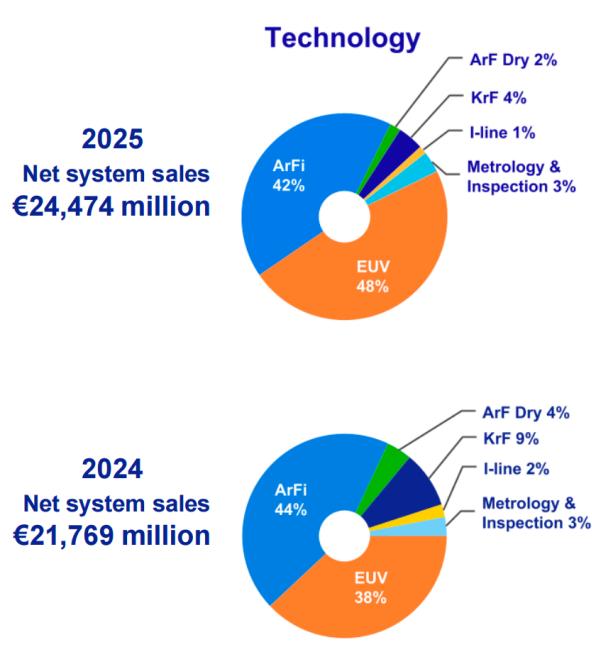
站在2026年初的节点回看,半导体行业不再是一条单线叙事,由手机、PC 等单一终端主导的传统周期,正转入以"AI 算力基建"为代表的多元驱动演进。 2025年,随着生成式 AI 迈入应用爆发期,全球数据中心对逻辑芯片与 HBM(高带宽存储)的算力需求近乎狂热。以AI训练和数据中心建设为核心的新 一轮算力需求,正在拉动先进制程相关投资回暖,与此同时由AI驱动的应用也带动了对成熟制程的需求。在这一背景下,芯片制造设备,尤其是光刻 机,可以看作衡量本轮产业复苏质量与可持续性的关键窗口之一。 最近光刻机巨头ASML发布了2025年全年的财报。在经历了2024年的"调整年"之后,ASML 在 2025 年交出了一份极具分量的成绩单:营收、利润、在手 订单全部刷新纪录。 AI 不再只是英伟达和SK海力士等芯片公司的狂欢,而是沿着台积电、英特尔、三星的产线,逐级向上游设备传导,也体现在了ASML的订单簿上。 EUV收入增长,而DUV仍是主力 2025年,ASML实现全年净销售额约327亿欧元,全年毛利率约52.8%,净利润约96亿欧元。尽管2023–2024年半导体行业经历资本开支波动,但最近几年 ASML的营收保持稳健增 ...
透过ASML 2025全年财报,看增长背后的结构变化
半导体行业观察· 2026-02-10 01:14
站在2026年初的节点回看,半导体行业不再是一条单线叙事,由手机、PC 等单一终端主 导的传统周期,正转入以 "AI 算力基建" 为代表的多元驱动演进。 2025年,随着生成式 AI 迈入应用爆发期,全球数据中心对逻辑芯片与 HBM(高带宽存 储)的算力需求近乎狂热。以AI训练和数据中心建设为核心的新一轮算力需求,正在拉动 先进制程相关投资回暖,与此同时由AI驱动的应用也带动了对成熟制程的需求。在这一背 景下,芯片制造设备,尤其是 光刻机,可以看作衡量本轮产业复苏质量与可持续性的关键 窗口之一。 最近光刻机巨头ASML发布了2025年全年的财报。在经历了2024年的"调整年"之后,ASML 在 2025 年交出了一份极具分量的成绩单:营收、利润、在手订单全部刷新纪录。 AI 不再只是英伟达和SK海力士等芯片公司的狂欢,而是沿着台积电、英特尔、三星的产线,逐级 向上游设备传导,也体现在了ASML的订单簿上。 EUV收入增长,而DUV仍是主力 2025年,ASML实现全年净销售额约327亿欧元,全年毛利率约52.8%,净利润约96亿欧元。尽管 2023–2024年半导体行业经历资本开支波动,但最近几年ASML的营 ...
Stocks Recover Early Losses as Tech Stocks Rebound
Yahoo Finance· 2026-02-09 16:14
Q4 earnings season is in full swing, as more than half of the S&P 500 companies have reported earnings results. Earnings have been a positive factor for stocks, with 79% of the 293 S&P 500 companies that have reported beating expectations. According to Bloomberg Intelligence, S&P earnings growth is expected to climb by +8.4% in Q4, marking the tenth consecutive quarter of year-over-year growth. Excluding the Magnificent Seven megacap technology stocks, Q4 earnings are expected to increase by +4.6%.The marke ...





韩国加快EUV光刻机进口
半导体芯闻· 2026-02-09 10:10
如果您希望可以时常见面,欢迎标星收藏哦~ 据9日报道,政府决定简化引进极紫外(EUV)光刻设备所需的安全许可程序。该设备是半导体生 产的关键工具,利用极紫外光绘制半导体电路,对于生产7纳米及以下的高级半导体至关重要。 目前,将这套设备运入该国需要15天时间。这是因为该设备使用了少量高压气体,必须根据《高 压气体安全管理法》接受各种技术检验。据说,其他半导体设备进口国家和地区,例如美国和台 湾,并没有这项程序。 对此,总部位于荷兰的全球最大半导体设备公司、也是全球唯一一家半导体设备出口商ASML韩国 分公司负责人,在由韩国总统李在明主持的会议上,要求改进监管规定。据悉,韩国产业通商资源 部已开始采取后续措施。如果系统得到改进,目前约15天的审批流程有望缩短至两天。 据朝鲜商业新闻报道,ASML韩国总裁崔汉钟在去年12月10日由总统主持的"人工智能时代、韩国 半导体愿景和发展战略简报会"上提议"简化EUV光刻设备的安全许可规定"。 崔先生表示:"在美国、台湾和欧盟,(安全)检查均按照国际标准在企业内部进行,之后(EUV 光刻设备)即可安装运行。但在韩国,企业若要安装此类设备,不仅新设备需要进行文件检查、中 期检查 ...
从DeepSeek恐慌到Cowork恐慌
虎嗅APP· 2026-02-09 09:43
Core Viewpoint - The article discusses the recent sell-off in global software stocks, termed "SaaSpocalypse," triggered by the launch of Anthropic's Claude Cowork, which poses a significant challenge to traditional SaaS business models by offering high-level results at lower costs [5][10]. Group 1: Market Reaction - On February 4, major software companies experienced significant stock declines, with Thomson Reuters dropping 15.8%, LegalZoom nearly 20%, and Salesforce and Workday also seeing notable decreases [5]. - The S&P 500 Software and Services Index fell nearly 13% over five trading days, marking a 26% drop from its October peak [5]. - The sell-off is compared to a previous market panic caused by DeepSeek, highlighting the similarities in market reactions to disruptive AI technologies [7][10]. Group 2: Comparison of Two Market Panics - The panic caused by Cowork is expected to be more prolonged than that of DeepSeek, as Cowork represents a novel AI application, while DeepSeek was a cheaper alternative to existing models [10]. - The market's response to both events shows a pattern of overreaction, with analysts suggesting that the fears may be exaggerated [9][10]. - Cowork's impact has spread beyond the U.S. to global markets, affecting stocks in London, Tokyo, and India, indicating a broader concern within the tech industry [11]. Group 3: SaaS Pricing Models and Challenges - Traditional SaaS pricing models are under pressure, with many companies shifting from fixed pricing to usage-based models due to increased efficiency and cost-cutting measures [14][15]. - The average SaaS company in the PricingSaaS 500 index has experienced 3.6 pricing changes per year, with a significant increase in companies adopting usage-based pricing [15]. - Companies like Salesforce have struggled with pricing strategies, leading to a transition from fixed pricing to more flexible models to accommodate rising operational costs [15][17]. Group 4: Emergence of AI-Native Startups - AI-native startups are gaining traction, with their revenue growth rates significantly outpacing traditional SaaS companies, highlighting a shift in enterprise spending towards these new players [18]. - For instance, companies like Harvey and Glean have achieved valuations of $5 billion and $7.25 billion, respectively, indicating strong investor interest in AI-driven solutions [18]. - The article notes that AI-native companies are expected to capture over half of enterprise AI spending, reflecting a fundamental change in the software landscape [18]. Group 5: Vibe Coding and Its Implications - The rise of Vibe Coding could lead enterprises to create their own tools rather than relying on third-party SaaS products, potentially disrupting traditional software markets [20][21]. - If Vibe Coding matures, it may enable employees to develop solutions quickly, reducing reliance on complex software development processes [21]. - The article suggests that traditional software companies may face a "three-step path to extinction" if they fail to adapt to these emerging trends [22].







【大涨解读】算力:政策驱动算力基建加速,AI应用突破+全球巨头资本开支加码,算力需求进入扩张期
Xuan Gu Bao· 2026-02-09 02:35
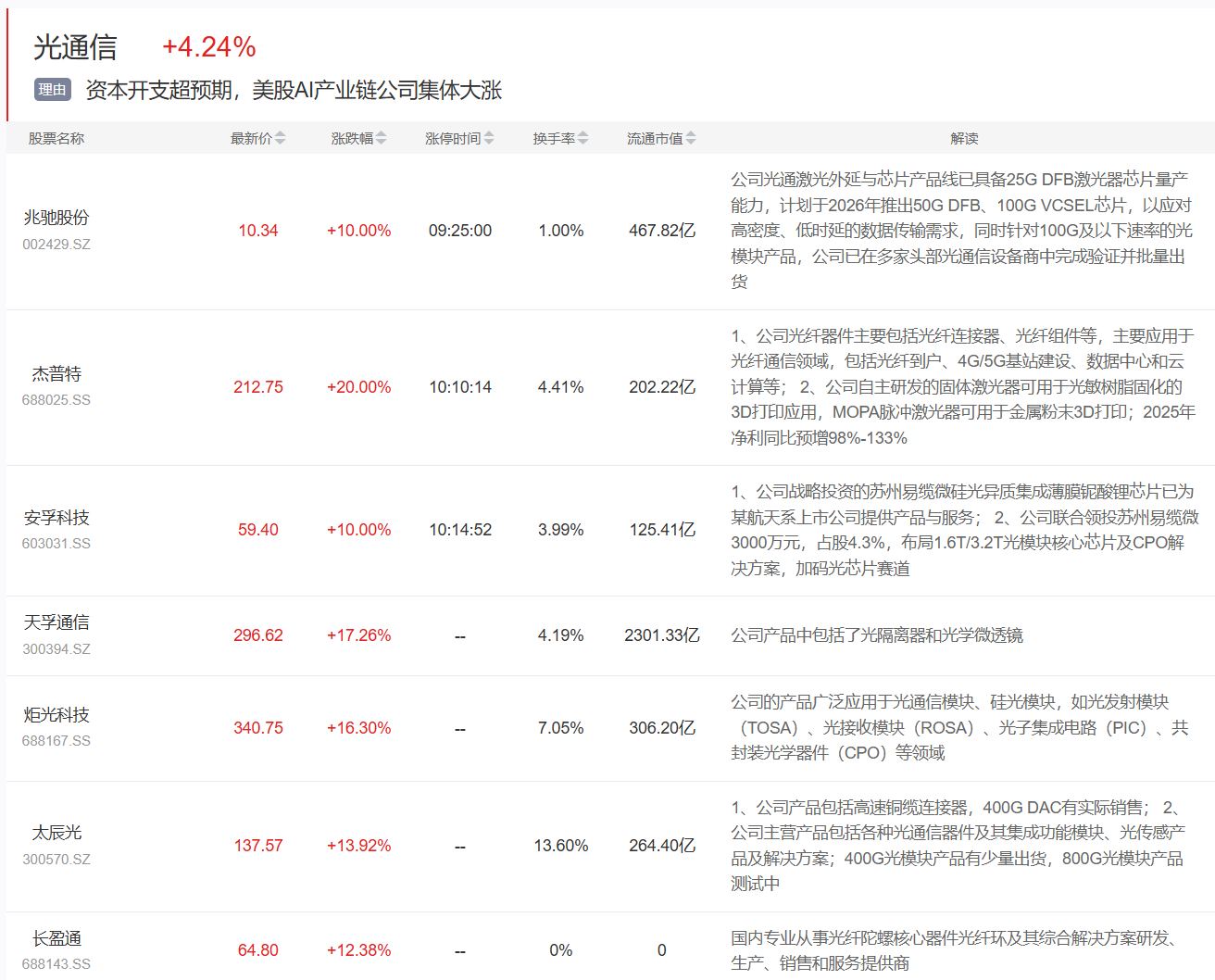
2)2月7日,字节跳动在即梦平台上线Seedance2.0视频生成模型,该模型支持文字、图片、视频、音频等各类素材输入并生成对应视频,在自运镜和分镜、 全方位多模态参考、音画同步生成、多镜头叙事能力等关键能力上实现突破性进展。 3)2月6日上午,阿里千问App"春节30亿免单"活动正式上线,请全国人民用AI一句话免费点奶茶。有不少用户反映点单时出现服务器卡顿问题,部分用户 分享活动页面,出现"活动太火爆,请稍后再试"字样。对此,千问官微发文:免单送奶茶活动太火爆,正在紧急加资源。 4)当地时间2月5日,美股科技公司集体大涨,英伟达涨7.87%,半导体台积电、阿斯麦涨近5%,光通信lumentum涨9.4%,存储公司西部数据涨8%。此前亚 马逊预计2026年资本开支将达2000亿美元,远超市场一致预期(1461.1亿),较2025年增长50%。 一、行情 2月9日,算力产业链集体大涨。大位科技涨停,天孚通信、炬光科技、易华录、腾景科技、罗博特科、安诺其、锦鸡股份、东方国信、恒润股份、平直信息 等集体大涨。 二、事件 1)2026年2月6日,工信部印发通知推进"1+M+N"国家算力互联互通节点体系建设,加速全国算 ...

2月9日早餐 | 美股科技股大涨;千问免单活动火热
Xuan Gu Bao· 2026-02-09 00:08
大家早上壕! 先看海外要闻: 美国消费者信心创六个月新高,逢低买入推动美股周五反弹,道指涨2.47%,纳指涨2.18%,标普500指数涨1.97%。 黄仁勋称AI需求极度高涨,英伟达大涨7%,芯片股指飙升5.7%。软件ETF反弹3.5%。亚马逊绩后跌5.6%、但较周四盘后跌幅收窄。半导体台积 电、阿斯麦涨近5%,光通信lumentum涨9.4%,存储公司西部数据涨8%,博通涨超7%,特斯拉涨超3%,谷歌跌超2%。 纳斯达克金龙中国指数收涨3.71%,世纪互联涨超10%,万国数据涨8.88%,蔚来涨7.23%,理想涨6.63%,小马智行涨超9%,阿里涨3%。 美债收益率全线走高,10年期上行近3基点,2年期收益率涨5.54基点。美元日内跌0.3%,但全周收涨0.56%、两周连涨。 国内重大事件汇总: 1、央行等八部门联合发布《关于进一步防范和处置虚拟货币等相关风险的通知》。通知指出,虚拟货币不具有与法定货币等同的法律地位,境 内外任何单位和个人不得在境外发行挂钩人民币的稳定币。在境内开展现实世界资产代币化活动,应予以禁止。 2、中国央行黄金储备十五连增,1月环比增持4万盎司,增持节奏略有加快。 3、证监会发布《 ...


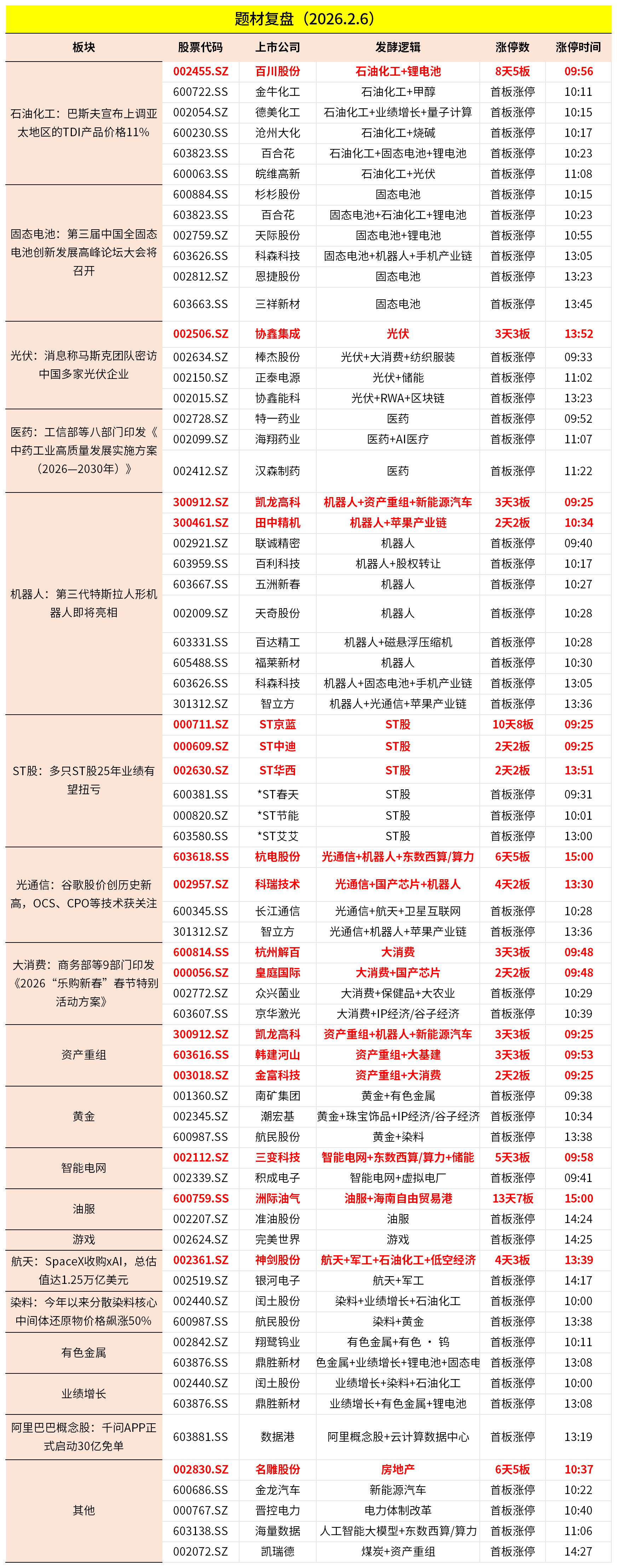
科技巨头天量资本开支迎来正反馈,千问送奶茶爆量也凸显算力紧张
Xuan Gu Bao· 2026-02-08 23:26
Group 1 - The AI and computing industry continues to receive significant catalysts, with major tech stocks in the US experiencing a collective surge, including Nvidia up 7.87% and TSMC and ASML up nearly 5% [1] - Amazon's projected capital expenditure for 2026 is expected to reach $200 billion, significantly exceeding market expectations of $146.11 billion, representing a 50% increase from 2025 [1] - The overall financial reports from tech stocks indicate a high level of confidence in AI, with major companies significantly raising their capital expenditure guidance for 2026 [1] Group 2 - The Ministry of Industry and Information Technology in China has issued a notice to develop a national computing power interconnection node construction plan, aimed at creating a standardized and efficient resource utilization system [2] - This initiative is significant for the domestic computing power industry, emphasizing resource integration and utilization during a period of rapid expansion [2] Group 3 - Key companies in the optical module sector include LianTe Technology and HuiLv Ecology [3] - Companies involved in optical interconnection include ZhiShang Technology and JuGuang Technology [3] Group 4 - Domestic computing power companies include ZhongKe Shuguang, Dongyangguang, and XieChuang Data [4] Group 5 - AI application companies include iFlytek, Decai Co., and Kunlun Wanwei [5]