BlackRock(BLK)

Search documents
ECAT: The Tech-Heavy ESG Fund That May Outperform Through Asset Rotation
Seeking Alpha· 2026-02-05 18:47
The BlackRock ESG Capital Allocation Term Trust ( ECAT ) is a closed-end fund designed to provide investors with diversified equity and fixed-income exposure in companies that meet the fund’s environmental, social, and governance [ESG] standard. The strategy is broadly diversified across 659 individual holdings andMonte Independent Investment Research: Michael Del Monte is a buy-side equity analyst with expertise in the technology, energy, industrials, and materials sectors. Prior to working in the investme ...



Why BlackRock Just Took an 8.1% Stake in Archer Aviation Stock
Yahoo Finance· 2026-02-05 12:50
Core Viewpoint - Archer Aviation's stock has decreased by 26% since its debut on the New York Stock Exchange in September 2021, indicating a shift in investor sentiment from retail enthusiasm to a more cautious outlook [1] Group 1: BlackRock's Investment - BlackRock has increased its ownership stake in Archer to 8.1%, signaling a significant investment in the eVTOL company [2] - The 13G filing indicates that BlackRock's acquisition of shares is a passive investment, not intended to influence Archer's operations [3][4] Group 2: Investment Appeal of Archer Aviation - Archer is viewed as an asymmetric investment, with potential high rewards if it successfully disrupts the aviation and mobility markets, despite risks related to regulatory approvals and capital management [5] - The company has attracted attention from notable partners such as Palantir Technologies, Nvidia, United Airlines, Stellantis, and the U.S. government, indicating strong strategic interest [5] - Archer reported $1.6 billion in liquidity at the end of the third quarter, supported by investments from its partners, which reduces execution risk as the company prepares for commercial deployment [6]

American engineers say US, EU lag behind China in electricity production; ask them to buck up. Elon Musk agrees
MINT· 2026-02-05 12:30
Core Insights - China is generating 40% more electricity than the US and the EU combined, raising concerns about energy production and its implications for global competitiveness in technology and AI [1] - The US electricity demand from data centers is projected to grow significantly, accounting for nearly 38% of the increase in electricity demand from 2024 to 2030, while China's growth in this sector is much lower [3] - China has added more power capacity across all energy technologies since 2021 than the US has historically, with plans to add over 3.4 terawatts of electricity generation capacity in the next five years [4][5] Electricity Generation and AI - Electricity is identified as a critical bottleneck for AI, factories, and data centers, with industry leaders like Elon Musk emphasizing the importance of electrical power for AI deployment [2] - The US AI industry is at risk of falling behind China unless it can secure at least 50 gigawatts of power capacity by 2028, as highlighted by AI firm Anthropic [7] China's Energy Strategy - China continues to expand its power capacity through significant investments in renewable energy sources such as solar and wind, alongside traditional energy sources like coal, nuclear, and gas [6] - In 2025, China's electricity consumption is expected to exceed 10 trillion kWh for the first time, indicating robust economic activity and energy demand [5]

多家外资机构发布2026年市场展望 投资中国意愿持续提升
Zheng Quan Ri Bao Wang· 2026-02-05 12:25
Core Viewpoint - Foreign institutions are optimistic about China's market outlook for 2026, citing strong manufacturing, exports, and improving corporate profits as key factors for economic resilience [1][2]. Economic Outlook - The International Monetary Fund (IMF) has raised its 2026 global economic growth forecast to 3.3%, with China's growth forecast increased by 0.3 percentage points [2]. - China's economy is expected to maintain a "dual-track growth" pattern, with weak domestic demand recovery and strong exports continuing [2]. - Exports are projected to grow at around 5% in 2026, driven by China's manufacturing competitiveness and undervalued currency [2]. Consumer Trends - Foreign investors have strong expectations regarding China's consumption policies, with government consumption expected to accelerate, potentially offsetting weak personal consumption [3]. - Fiscal policy is anticipated to remain "proactive and stable," with a fiscal deficit around 4% and a slight increase in local government special bond quotas to support key infrastructure investments [3]. Corporate Profitability - Corporate profits are expected to continue recovering, with significant improvements noted in traditional sectors such as materials, finance, and industry [3]. - The Producer Price Index (PPI) is expected to rebound, positively impacting corporate profitability in a manufacturing-driven economy [3]. Investment Focus - Foreign capital is increasingly focused on sectors such as AI, aerospace, and healthcare, with a structural emphasis on specific sectors like aviation and semiconductor industries [5]. - The Chinese government’s support for domestic AI models and chip manufacturing is expected to bolster technology stocks [5]. AI and Power Sector - The power sector is identified as the most certain investment direction within AI, driven by the need for sufficient energy supply for technological growth [6]. - The anticipated power shortages in the U.S. may lead to increased demand for Chinese-manufactured power equipment, enhancing investment opportunities in this area [6].

贝莱德增持威高股份559.16万股 每股作价约5.26港元
Zhi Tong Cai Jing· 2026-02-05 11:54
Core Viewpoint - BlackRock has increased its stake in Weigao Group (01066) by acquiring 5.5916 million shares at a price of HKD 5.2566 per share, totaling approximately HKD 29.3928 million, resulting in a new holding of about 230 million shares, representing a 5.09% ownership stake [1] Group 1 - BlackRock's acquisition of shares indicates a strategic investment in Weigao Group, reflecting confidence in the company's future performance [1] - The total amount spent on the share acquisition is approximately HKD 29.3928 million, highlighting the scale of the investment [1] - Following the purchase, BlackRock's total shareholding in Weigao Group has reached approximately 230 million shares [1]
贝莱德CEO“喊话”印度:别买黄金,买股票!
Xin Lang Cai Jing· 2026-02-05 11:53
Core Viewpoint - BlackRock CEO Larry Fink and Indian billionaire Mukesh Ambani advocate for investing in the Indian stock market over traditional gold, emphasizing that hesitation in capital markets could lead to missed wealth opportunities in the next 20 years [1][2]. Group 1: Investment Strategy - Ambani and Fink encourage Indian citizens to redirect their savings from gold and real estate, which currently account for nearly 59% of household assets, into the stock market to harness compounding effects [4][5]. - The Indian mutual fund industry, driven by retail investors, is projected to grow from ₹45 trillion in FY2025 to ₹300 trillion (approximately $3.3 trillion) by 2035, according to Bain & Company [2][5]. Group 2: Economic Outlook - Fink predicts that the next 20 to 25 years will be the "Indian era," with India expected to maintain its status as the fastest-growing major economy, with a projected growth rate of 6.4% in 2026, significantly higher than the global average of 3.3% [2][5]. - Despite recent volatility in gold and a nearly 2% decline in the Nifty 50 index this year, both leaders remain confident in the stock market's potential for growth [2][6]. Group 3: Market Participation - Domestic investor participation has increased, helping the market maintain positive returns despite foreign investors being net sellers over the past year [6]. - Investments through Systematic Investment Plans (SIPs) have doubled since 2021, reaching ₹2.89 trillion (approximately $319 billion) in FY2025 [6].
贝莱德:在中国银行的持股比例升至6.04%
Ge Long Hui· 2026-02-05 09:10
格隆汇2月5日|香港交易所信息显示,贝莱德在中国银行H股的持股比例于01月30日从5.99%升至 6.04%。 ...

Why Asia's richest man and BlackRock CEO want Indians to pick equities over gold
CNBC· 2026-02-05 06:28
Core Viewpoint - BlackRock CEO Larry Fink and Reliance Industries Chairman Mukesh Ambani are encouraging Indian investors to shift their focus from gold to equity markets, highlighting the volatility of gold and the underperformance of Indian stocks [1][2]. Group 1: Investment Advice - Ambani emphasized that a significant portion of domestic savings in gold and silver is "unproductive," advocating for investment in the stock market where money can compound [2]. - The partnership between Reliance Industries and BlackRock aims to promote mutual funds in India, reflecting a strategic shift towards financialization of savings [2]. Group 2: Market Performance - The Nifty 50 index has seen a decline of nearly 2% so far this year, indicating underperformance in the Indian stock market [1]. - As of December, Jio BlackRock Asset Management reported assets under management of 31.98 billion rupees (approximately $353 million) across its equity funds, marking a growing interest in mutual funds [3]. Group 3: Consumer Behavior - Indians are among the top global buyers of gold, but there is a noticeable trend towards increasing financialization of savings, with mutual funds gaining popularity [3].
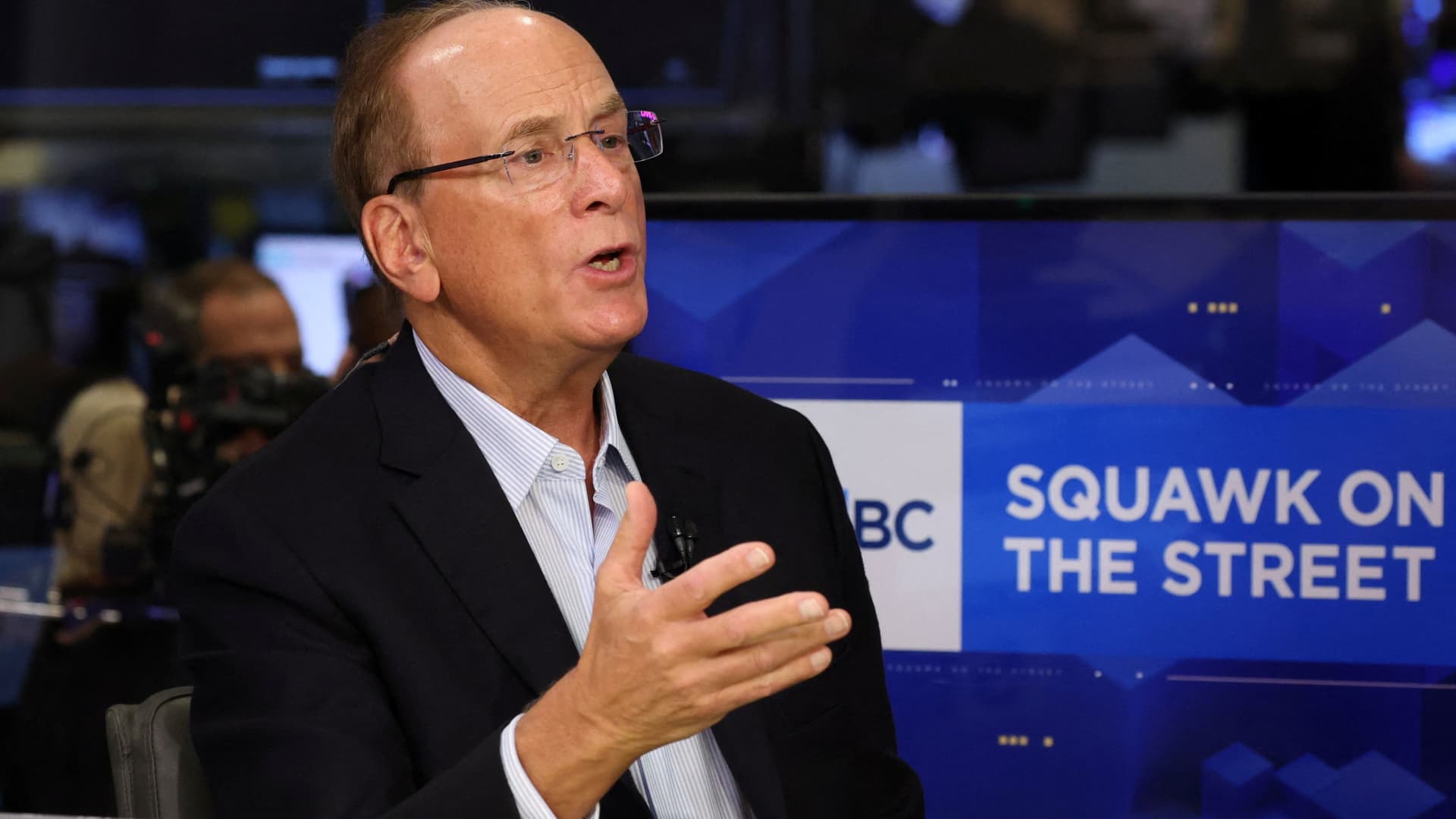
贝莱德首席执行官拉里·芬克表示,印度必须提振资本市场。(印度经济时报)
Xin Lang Cai Jing· 2026-02-05 01:04
Core Viewpoint - BlackRock's CEO Larry Fink emphasizes the necessity for India to enhance its capital markets [1] Group 1 - The statement highlights the importance of capital market development for India's economic growth [1]
Investor Notice: Shareholder Rights Law Firm Robbins LLP Informs Investors of the BlackRock TCP Capital Corp. Securities Class Action Lawsuit
Businesswire· 2026-02-05 00:33
Core Viewpoint - Robbins LLP has initiated a class action lawsuit on behalf of investors who acquired BlackRock TCP Capital Corp. (NASDAQ: TCPC) securities between November 6, 2024, and January 23, 2026, alleging that the company misled investors regarding its business prospects [1][2]. Group 1: Allegations Against BlackRock TCP - The complaint alleges that during the class period, BlackRock TCP failed to disclose that its investments were not being timely or appropriately valued [2]. - It is claimed that the company's portfolio restructuring efforts were ineffective in resolving challenged credits or improving portfolio quality [2]. - The lawsuit asserts that the company's unrealized losses were understated, leading to an overstatement of the company's net asset value (NAV) [2]. - As a result of these issues, the positive statements made by the defendants about the company's business and prospects were materially misleading [2]. Group 2: Financial Disclosure and Impact - On January 23, 2026, BlackRock TCP disclosed that its NAV per share as of December 31, 2025, was between $7.05 and $7.09, which is 19% lower than the previous quarter and 23.4% lower than the previous year [3]. - Following this disclosure, BlackRock TCP's stock price dropped by $0.76, or 12.97%, closing at $5.10 per share on January 26, 2026 [3]. Group 3: Class Action Participation - Shareholders interested in serving as lead plaintiffs in the class action must file their papers with the court by April 6, 2026 [4]. - Participation in the case is not required to be eligible for recovery, allowing shareholders to remain absent class members if they choose [4].