Chevron(CVX)

Search documents
What's Warren Buffett's Secret to Surviving a Nasdaq Bear Market? Collecting Nearly $3.3 Billion in Dividend Income From 4 Remarkable Businesses.
The Motley Fool· 2025-04-21 07:06
Core Viewpoint - Warren Buffett's investment strategy, particularly his focus on dividend stocks, has significantly contributed to Berkshire Hathaway's strong performance, both historically and in the current market environment [1][2][3]. Group 1: Berkshire Hathaway's Performance - Berkshire Hathaway has achieved a cumulative return of 6,325,426% for its Class A shares since Warren Buffett became CEO [1]. - Year-to-date, Berkshire's stock has increased by 15%, contrasting with a 10.2% decline in the S&P 500 and a 15.7% drop in the Nasdaq Composite [2]. Group 2: Dividend Stocks and Returns - Research indicates that dividend-paying stocks have outperformed non-payers, with annualized returns of 9.2% for dividend stocks compared to 4.31% for non-payers over 51 years [4]. - Berkshire Hathaway is projected to receive nearly $3.3 billion in dividend income over the next 12 months from four key companies [5]. Group 3: Key Dividend Contributors - **Occidental Petroleum**: Expected to generate $933,463,774 in dividend income, with over $254 million from common shares and an 8% yield of approximately $679.1 million from preferred stock [6][7]. - **Coca-Cola**: Anticipated to provide $816 million in dividend income, known for its stability and ability to generate predictable cash flow [9][10][11]. - **Chevron**: Projected to deliver $811,296,053 in dividend income, with a strong balance sheet and a history of increasing dividends for 38 consecutive years [14][16]. - **Bank of America**: Expected to contribute $707,442,930 in dividend income, benefiting from its sensitivity to interest rates and a favorable economic cycle [18][20].


Better Energy Stock: Chevron vs. Occidental Petroleum
The Motley Fool· 2025-04-20 13:25
Core Viewpoint - The energy sector is facing challenges due to economic scrutiny and uncertainties in U.S. trade policy, leading to fluctuating oil and gas prices, prompting investors to evaluate energy stocks for resilience and potential returns [1]. Chevron - Chevron is highlighted as a strong investment option, offering a high dividend yield of 4.9% and demonstrating resilience with only a 5% decline in stock price year-to-date [2][3]. - The company's global diversification and robust fundamentals make it appealing for long-term investment, with significant operations in upstream, downstream, and chemicals manufacturing [3]. - Major expansion projects, such as the Tengizchevroil oilfield in Kazakhstan and operations in the Gulf of Mexico, are expected to enhance production [4]. - Chevron targets an annual production growth rate of 6% to 8% for 2025 and 3% to 6% for 2026, with an anticipated increase in free cash flow to over $9 billion compared to $15 billion in 2024, based on a Brent crude oil price of $60 per barrel [5][6]. - The company plans to maintain its quarterly dividend of $1.71 per share and continue a large stock buyback program, supporting shareholder returns [6]. Occidental Petroleum - Occidental Petroleum, with a market capitalization of $36 billion, is smaller than Chevron but has a strong position in onshore oil and gas production, particularly in the Permian Basin [9][10]. - The company is diversified across chemicals, midstream infrastructure, and international assets, and is advancing its direct air carbon recapture facility [10]. - Despite a 22% decline in stock price year-to-date due to an intense investing spending plan, the stock is trading at attractive valuation metrics, under 12 times forecast 2025 EPS and 8 times free cash flow [11][12]. - Occidental may offer more upside potential if oil and gas prices rebound, making it a consideration for investors bullish on the energy sector [13]. Investment Decision - In the current macroeconomic environment, Chevron is considered the better energy stock due to its diversified asset base and higher-quality fundamentals, providing a more reliable option for investors while delivering solid dividend income [15].

Our Top 10 High Growth Dividend Stocks - April 2025


Seeking Alpha· 2025-04-19 12:01
Group 1 - The primary goal of the "High Income DIY Portfolios" Marketplace service is to provide high income with low risk and capital preservation for DIY investors [1] - The service offers seven portfolios designed for income investors, including retirees or near-retirees, featuring 3 buy-and-hold portfolios, 3 rotational portfolios, and a 3-bucket NPP model portfolio [1] - The portfolios include two high-income portfolios, two dividend growth investment (DGI) portfolios, and a conservative NPP strategy portfolio aimed at low drawdowns and high growth [1]

2 No-Brainer High-Yield Energy Stocks to Buy With $2,000 Right Now
The Motley Fool· 2025-04-18 07:34
Core Viewpoint - Devon Energy is an upstream oil and gas company that is highly sensitive to commodity price fluctuations, making it less suitable for conservative dividend investors compared to integrated energy giants like ExxonMobil and Chevron [2][4][10] Group 1: Devon Energy Overview - Devon Energy primarily operates in the upstream segment of the oil industry, focusing on drilling for oil and natural gas in the U.S. market [2] - The company achieved record production volumes in 2024 and completed a growth-oriented acquisition, indicating strong operational management [3] - Devon Energy offers a dividend yield of 3.4%, which is above the broader market yield of approximately 1.3% [3] Group 2: Comparison with Integrated Energy Giants - ExxonMobil and Chevron operate as integrated energy companies, covering upstream, midstream, and downstream sectors, which provides more stable cash flows [6] - Both companies have globally diverse portfolios, allowing them to optimize drilling and sales based on market conditions, although this can introduce complexities [7] - ExxonMobil and Chevron maintain strong financial positions with debt-to-equity ratios around 0.15, compared to Devon Energy's higher ratio of 0.6, providing them with greater financial flexibility [8] Group 3: Dividend Performance - ExxonMobil has increased its dividend for 42 consecutive years, while Chevron has done so for 38 years, showcasing their commitment to returning capital to shareholders [9] - Current dividend yields for ExxonMobil and Chevron are 3.8% and 5%, respectively, which are higher than Devon Energy's yield [9][10]


Why Oil and Gas Stocks Rallied on Thursday
The Motley Fool· 2025-04-17 18:18
Core Viewpoint - The recent rally in oil and gas major stocks is attributed to rising oil prices, influenced by new sanctions on Iran and OPEC+ output management, despite ongoing demand concerns from major consumers like the U.S. and China [1][2][5][6]. Group 1: Stock Performance - Shares of ExxonMobil, Chevron, and ConocoPhillips saw significant gains of 3.8%, 3.4%, and 4.2% respectively, driven by a 3.4% increase in oil prices to $64.60 per barrel [1]. - The rally in these stocks occurred despite a lack of company-specific news, indicating broader market influences [7]. Group 2: Sanctions and Supply Dynamics - The U.S. imposed new sanctions on Iran, targeting its oil exports, which could restrict global supply and potentially raise prices [2][3]. - The sanctions included measures against a Chinese refinery and vessels transporting Iranian oil, reflecting a strong intent to limit Iran's export capabilities [4]. Group 3: OPEC+ and Currency Influence - OPEC+ is collaborating with Iraq and Kazakhstan to manage oil output, as these countries have exceeded their production quotas [6]. - A weaker U.S. dollar since April 2 may also contribute to rising oil prices, as oil is priced in dollars [6]. Group 4: Demand Concerns - Despite the recent price increase, the outlook for oil prices remains uncertain due to potential recession risks in the U.S. and muted demand from China [8][9]. - A simultaneous drop in demand from the U.S. and China could negatively impact oil and gas prices [9]. Group 5: Investment Outlook - While oil and gas stocks may offer diversification and dividends, significant price increases in the sector are not anticipated in the near term [10]. - The primary bullish case for oil and gas stocks hinges on geopolitical conflicts affecting major oil producers, similar to the situation seen during the Russia-Ukraine war [10][11]. - Current negotiations and sanctions aim to prevent such conflicts, making substantial upside for these stocks seem unlikely in the near term [12].

Wall Street Rebounds, Eli Lilly Rallies, UnitedHealth Group Plummets: What's Driving Markets Thursday?
Benzinga· 2025-04-17 18:05
Market Overview - Wall Street experienced a rebound in risk appetite ahead of the Easter weekend, driven by positive signals from President Trump regarding trade negotiations with the EU and China [1] - The S&P 500 rose by 0.9%, while the Nasdaq 100 increased by 0.5%, recovering from a previous 3% decline [2] - The Dow Jones fell by 0.9%, primarily due to a significant 23% drop in UnitedHealth Group Inc. after the company reduced its full-year earnings forecast [2] Sector Performance - Energy stocks led the gains for the day, supported by rising oil prices, with Exxon Mobil Corp. increasing by 4.1% and Chevron Corp. advancing by 3.5% [2] - The SPDR S&P 500 ETF Trust rose by 0.8% to $530.09, while the SPDR Dow Jones Industrial Average fell by 0.7% to $394.05 [7] - The Energy Select Sector SPDR Fund outperformed with a 3.5% increase, while the Health Care Select Sector SPDR Fund lagged, down 0.1% [7] Notable Stock Movements - Eli Lilly Inc. surged by 16% after announcing successful Phase 3 trials for its oral GLP-1 receptor agonist, Orforglipron [7] - Fidelity National Information Services jumped by 9% following a $13.5 billion acquisition of Global Payments Inc.'s Issuer Solutions business, expected to generate over $125 million in annual revenue synergies [7] - Companies reacting to earnings reports included American Express Co. up 0.5%, Blackstone Inc. up 1.9%, and Charles Schwab Corp. up 2.7% [7] - Netflix Inc. rose by 2% ahead of its earnings report scheduled for release after market close [7]



Chevron or ExxonMobil: Which Big Oil Leads the Permian Charge?
ZACKS· 2025-04-16 14:10
Core Viewpoint - Chevron and ExxonMobil are focusing on the Permian Basin as a key source of cash flow, but they are diverging in their strategies and execution [1] Group 1: Importance of Permian Basin - U.S. crude oil production is projected to reach 13.5 million barrels per day (bpd) in 2025 and 13.6 million bpd in 2026, largely driven by the Permian Basin [2] - The Permian Basin is expected to grow by 290,000 bpd in 2025 and an additional 170,000 bpd in 2026, accounting for nearly half of the nation's oil supply [2] Group 2: Company Developments - Chevron holds 1.78 million net acres in the Delaware and Midland sub-basins, with an average daily output of 405,000 barrels of oil, 251,000 barrels of NGLs, and 1.6 billion cubic feet of natural gas in 2024 [3] - Chevron aims to reach 1 million barrels of oil-equivalent per day (BOE/d) by 2025, producing 992,000 BOE/d in Q4 2024 [4] - ExxonMobil's Permian production averaged 1.185 million BOE/d in 2024, up 570,000 from the previous year, and plans to double that to 2.3 million BOE/d by 2030 [5] Group 3: Strategy and Differentiation - Chevron employs a disciplined capital allocation model, focusing on cost control and asset returns, while also utilizing joint ventures and royalty interests [6] - ExxonMobil is focusing on scale and integration through acquisitions, with the $63 billion buyout of Pioneer Natural Resources significantly boosting its output [6] Group 4: Stock Performance and Valuation - Chevron has outperformed ExxonMobil over the past six months, despite both facing trade-related uncertainties [7] - Chevron's valuation is attractive, trading at an EV/EBITDA multiple of 5.55, compared to ExxonMobil, indicating better value for cash flow-focused investors [10] Group 5: Earnings Forecasts - Chevron's earnings are projected to decline by 2.9% in 2025 but rebound by 23.1% in 2026, while ExxonMobil is expected to see a 10.5% decline this year, with a 21.1% recovery anticipated in 2026 [9][11] - The near-term outlook for ExxonMobil remains uncertain due to integration costs and inflationary pressures [11] Group 6: Comparative Analysis - Chevron is currently better positioned than ExxonMobil, combining consistent execution with financial discipline and a clear path toward production goals [13]
Chevron: Confirmed Leader In A Less-Bad Sector Nets Hold Rating
Seeking Alpha· 2025-04-15 20:08
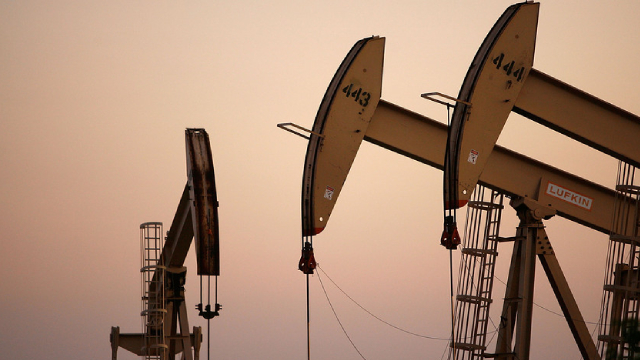
Core Viewpoint - Chevron Corporation's stock has decreased from $168 at the beginning of April to around $135, which is a notable decline but still better than many other stocks in the market [1]. Group 1 - The current trading price of Chevron Corporation is $135, indicating a significant drop from its earlier price of $168 [1]. - The stock's performance is considered better than many others, yet it does not present a compelling investment opportunity at this time [1]. - The article emphasizes a cautious approach to investing in the current market environment, suggesting that investors should be discerning [1].

OPEC Revises Oil Demand Outlook Amid Shifting Market Trends
ZACKS· 2025-04-15 14:05
The latest monthly report from OPEC shows that the cartel has revised its global oil demand growth forecast for 2025 downward for the first time since December, now projecting an increase of 1.3 million barrels per day (bpd) — 150,000 bpd less than previous estimates. The revision stems largely from slower-than-expected consumption and new U.S. tariffs that have rattled trade dynamics and economic sentiment globally. As President Trump ramps up tariff measures, including a 125% levy on Chinese imports, inve ...



The Zacks Analyst Blog Bank of America, Chevron, Stryker, Value Line and Sypris
ZACKS· 2025-04-15 11:50
Group 1: Bank of America Corporation (BAC) - Bank of America shares have gained +2.5% over the past year, underperforming the Zacks Financial - Investment Bank industry's gain of +20.4% [3] - Non-interest income is projected to rise only 3.4% in 2025, while total non-interest expenses are expected to increase by 3% [4] - Net interest income (NII) is anticipated to grow at a CAGR of 5.3% over the next three years, with total revenues projected to increase by 4.8% in 2025 [5] Group 2: Chevron Corporation (CVX) - Chevron shares have declined -6.2% over the past six months, compared to the Zacks Oil and Gas - Integrated - International industry's decline of -11.9% [6] - The planned acquisition of Hess Corporation is expected to enhance Chevron's presence in oil-rich Guyana, although the company faces challenges from oil price fluctuations and high valuation [7] Group 3: Stryker Corporation (SYK) - Stryker shares have gained +4.3% over the past year, slightly underperforming the Zacks Medical - Products industry's gain of +5.5% [8] - Growth drivers include rising demand for robotic-assisted procedures, hospital capital expenditures, and international expansion, supported by the Mako SmartRobotics platform [9] - However, foreign exchange volatility and supply chain disruptions may impact earnings, alongside increasing competition in the MedTech sector [10] Group 4: Value Line, Inc. (VALU) - Value Line shares have outperformed the Zacks Financial - Investment Management industry over the past year, with a gain of +10% compared to +6.4% [11] - The company has robust cash generation, with cash balances increasing to $27.1 million from $6.1 million year-over-year, supporting dividends and growth investments [11] - However, core publishing revenue declined to $26.7 million, and customer concentration poses a risk [13] Group 5: Sypris Solutions, Inc. (SYPR) - Sypris Solutions shares have gained +3.6% over the past year, underperforming the Zacks Electronics - Miscellaneous Services industry's gain of +36.3% [14] - The company benefits from a long-term supply agreement with a global OEM, providing stable revenues as a sole-source supplier [14] - However, liquidity challenges and rising costs may constrain financial flexibility, while competitive pressures in aerospace heighten vulnerability [16]