
Chevron(CVX)

Search documents
道达尔与雪佛龙争夺纳米比亚超级油田 或蕴藏100亿桶资源
Ge Long Hui A P P· 2025-11-19 16:57
Core Insights - TotalEnergies and Chevron are leading bidders for a 40% operating stake in the Mopane oil field in Namibia, as revealed by four sources [1] - Namibia is attracting oil companies due to significant discoveries suggesting it could become one of the world's top 15 oil producers within the next decade, despite currently not producing oil and gas [1] - The estimated resource volume of the Mopane oil field is at least 10 billion barrels, with Galp aiming to announce the winning bidder by the end of the year [1]


Chevron & Exxon Eye Lukoil's Global Assets in High-Stakes Pivot
ZACKS· 2025-11-19 16:21
Core Insights - Chevron Corporation and Exxon Mobil Corporation are exploring the acquisition of Lukoil assets due to forced divestitures exceeding $20 billion amid sweeping sanctions [1][8] - The U.S. Treasury's clearance for potential buyers has intensified competition among global energy firms [1] - The geopolitical context surrounding these acquisitions is significant, as U.S. sanctions aim to pressure Moscow amid the Ukraine conflict [5] Chevron's Strategic Interests - Chevron is focusing on assets with operational and geographic overlaps, particularly in Kazakhstan's Karachaganak and Tengiz fields, where it already partners with Lukoil [2] - The acquisition of additional stakes in these fields could enhance Chevron's presence in Central Asia and strengthen its upstream projects [2] Exxon's Targeted Acquisition - Exxon Mobil is particularly interested in Iraq's West Qurna 2, a major undeveloped oil field, aiming to reestablish its foothold in Iraq's energy sector [3] - A successful acquisition would represent one of Exxon's most significant upstream moves in the region in over a decade [3] Lukoil's Global Portfolio - Lukoil's international assets include refineries, retail stations, and oilfield stakes across Europe, Africa, and the Americas, attracting both strategic buyers and investment firms [4] - The breadth of Lukoil's portfolio presents selective opportunities for companies like Chevron and Exxon, as well as investment firms like Carlyle [4] Geopolitical Implications - The divestiture of Lukoil's assets is not only a commercial matter but also a geopolitical one, as it shifts strategic energy resources amid ongoing sanctions [5] - Countries like Iraq are seeking temporary waivers to manage the transition of these energy resources [5]



X @Bloomberg
Bloomberg· 2025-11-19 16:08
Chevron, the only major US oil company left in Venezuela, wants to remain in the sanctioned country for the long-term and sees a role in rebuilding its economy when the time is right. https://t.co/piw85butac ...
CVX or CNQ: Which Energy Giant Looks Stronger Right Now?
ZACKS· 2025-11-19 15:21
Core Insights - Canadian Natural Resources Limited (CNQ) and Chevron Corporation (CVX) are significant players in the global oil market, facing different operational and market conditions [1][2] - CNQ is experiencing strong production momentum and record volumes, while Chevron is dealing with a softer macro environment and operational pressures [2][4] CNQ Overview - CNQ reported a 19% year-over-year increase in production to 1.62 million barrels of oil-equivalent per day (BOE/d) in Q3, achieving record output [8] - The company benefits from low-decline oil sands resources, with a reserve life index of 47 years, allowing for predictable cash flows [10] - CNQ's financial strength is highlighted by a BBB+ credit rating, a debt/EBITDA ratio of 0.9X, and a dividend yield of 5% [11] CVX Overview - Chevron's production grew by 21.5% in Q3, but upstream earnings fell by 28% year-over-year due to declining liquid realizations [4][7] - The company faces challenges from weakening commodity prices, with Brent projected to average $55 per barrel through 2026 [4] - Chevron's operational hurdles include rising costs from tariffs and inflation, as well as regulatory pressures in California [6] Comparative Analysis - CNQ's valuation is more favorable at a forward P/E of 15.1X compared to Chevron's 19.2X, which is significantly above its five-year average [15] - Earnings estimates for Chevron have been revised downward for 2025 and 2026, while CNQ's estimates have moved higher, indicating a divergence in earnings momentum [17][18] - CNQ is ranked 1 (Strong Buy) due to its resilient assets and favorable risk-reward profile, while Chevron holds a 4 (Sell) rank due to margin pressures and valuation risks [19]

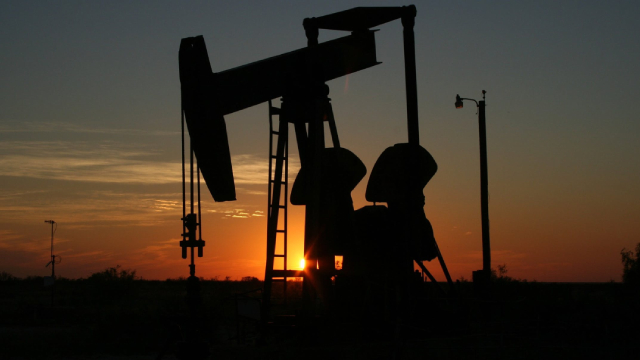
Exclusive: TotalEnergies, Chevron lead race to buy stake in Galp's Mopane in Namibia, sources say
Reuters· 2025-11-19 11:14
Group 1 - TotalEnergies and Chevron are leading bidders for a 40% operating stake in Galp's Mopane field in Namibia [1]

1 Magnificent High-Yield Dividend Stock Down 16% to Buy and Hold Forever
The Motley Fool· 2025-11-19 01:23
Core Viewpoint - Chevron is positioned to increase its cash flow significantly over the next five years, making it an attractive investment opportunity despite current market challenges [1][2]. Company Overview - Chevron operates in both upstream and downstream segments of the oil and gas industry, allowing it to balance performance across different market conditions [4]. - The company has a strong financial foundation with $8 billion in cash, an AA- credit rating, and debt levels consistent with its decade averages [6]. Financial Performance - Chevron has a dividend yield of 4.3% and has increased its dividend for 37 consecutive years, indicating resilience and a commitment to returning value to shareholders [2][5]. - The company anticipates growing its free cash flow and earnings per share by over 10% annually through 2030, assuming Brent Crude Oil prices remain around $70 per barrel [8]. Recent Developments - In late 2023, Chevron completed a $53 billion all-stock acquisition of Hess, enhancing its production capabilities through access to the Stabroek Block in Guyana [7][8]. - The acquisition is expected to contribute to Chevron's upstream production growth and overall financial performance [9][13]. Future Outlook - Chevron aims to increase oil and gas production by 2% to 3% annually through 2030 while lowering its break-even price per barrel, which should support dividend growth and overall returns for investors [14]. - The company is well-equipped to manage market volatility and maintain cash flow to fund capital expenditures and dividends even if oil prices decline [13][14].

Gold Reserve request for stay in Citgo parent auction is denied
Reuters· 2025-11-18 18:39
Core Viewpoint - A U.S. court of appeals denied Gold Reserve's motion to stay the court-ordered auction of Citgo Petroleum's parent company, indicating ongoing legal challenges for the miner [1] Group 1: Company Actions - Gold Reserve, a Toronto-listed miner, sought to halt proceedings related to the auction of Citgo Petroleum's parent company [1] - The court's decision reflects the complexities and legal hurdles faced by Gold Reserve in its efforts to influence the auction process [1] Group 2: Industry Implications - The ruling may have broader implications for the mining industry, particularly in how legal disputes can affect asset auctions and corporate control [1] - The outcome of the auction could impact the competitive landscape within the petroleum sector, especially for companies like Citgo [1]
Exxon joins Chevron in pursuing parts of Lukoil global empire, sources say
Reuters· 2025-11-18 18:39
Core Insights - U.S. oil major Exxon Mobil is considering options to acquire parts of sanctioned Russian oil major Lukoil's international assets, joining rival Chevron Corp in this evaluation [1] Company Actions - Exxon Mobil is exploring potential acquisitions of Lukoil's international assets, indicating a strategic move in response to market opportunities created by sanctions [1] - Chevron Corp is also involved in similar considerations, highlighting a competitive landscape among major oil companies regarding Russian assets [1] Industry Context - The interest from Exxon Mobil and Chevron in Lukoil's assets reflects ongoing shifts in the oil industry, particularly in relation to geopolitical factors and sanctions affecting Russian oil companies [1]
End of the Year: Let’s Look at Taxes, Metals and Energy
Daily Reckoning· 2025-11-18 16:10
Market Overview - The year 2025 has seen significant gains in precious metals, with gold, silver, and platinum increasing by 53%, 61%, and 62% respectively [7] - Many mining companies have also experienced substantial growth, such as Newmont Mining (NEM) up about 135% and Hecla Mining (HL) up nearly 190% [10] Tax Loss Selling - The year-end "tax loss" selling season occurs in November and December, where investors sell underperforming shares to offset gains and minimize taxes [5] - Notable examples of companies facing sell-offs include Cracker Barrel Old Country Store, Inc. (CBRL) down about 48% and United Parcel Service, Inc. (UPS) down over 26% [6] Energy Sector Insights - The energy sector, particularly uranium, is viewed as undervalued despite its essential role in the global economy [17] - The U.S. produces only about 2% of its uranium, relying heavily on imports, with a significant portion expected to shift to China in the coming years [19][20] - Major uranium companies like Cameco (CCJ), Uranium Energy Corp. (UEC), and Energy Fuels (UUUU) are considered solid investments for the medium to long term [21] Oil and Gas Market Dynamics - The global oil industry is facing a significant underinvestment of at least $1 billion per day, leading to concerns about future supply [23] - Companies like ExxonMobil (XOM) and Chevron (CVX) are positioned well due to their scale, cash flow, and technical expertise [24] - The VanEck Oil Services ETF (OIH) is recommended for exposure to the oil services sector, alongside individual stocks like Schlumberger (SLB) and Halliburton (HAL) [25][26] Natural Gas Outlook - The United States Natural Gas Fund, LP (UNG) is currently trading near a five-year low, with expectations for price increases as winter approaches and demand rises [30] - Long-term trends indicate a tightening natural gas market due to rising domestic and export demand, compounded by historical underinvestment [31]

石油巨头押注长期原油需求
Zhong Guo Hua Gong Bao· 2025-11-18 02:57
Core Viewpoint - Despite short-term challenges of oversupply in the oil and gas market, major oil companies are betting on long-term demand growth and are increasing upstream investments to meet this anticipated demand [2][3]. Group 1: Long-term Demand Outlook - Oil giants believe that global oil demand will not peak before 2030, contrary to the International Energy Agency's prediction [2]. - BP has revised its forecast, now expecting oil demand to continue growing until at least 2030 due to lower-than-expected energy efficiency improvements [2]. - Most oil and gas companies have postponed their peak demand predictions to 2040, emphasizing that oil and gas will remain core energy sources for global economic growth through 2050 [2][3]. Group 2: Investment Strategies - ExxonMobil asserts that oil and gas are irreplaceable for meeting global energy needs, predicting that they will account for over half of global energy supply by 2050 [3]. - Shell's scenarios indicate that approximately $600 billion in annual upstream investment will be necessary to counteract natural declines in oil fields [3]. - Oil companies are investing in new oil and gas supplies to offset production declines from existing fields, with exploration activities becoming a priority [4]. Group 3: Market Dynamics and Performance - The total return of S&P 500 companies has significantly outperformed that of major U.S. oil and gas firms, highlighting the short-term challenges faced by the sector [4]. - Analysts suggest that current production increases are mitigating the impact of weak prices, positioning these companies for profit recovery when supply-demand balance is restored [5]. - Barclays analysts predict that the oil market will eventually recover, regardless of whether the balance occurs in late 2026 or 2027 [5].

