First Bank(FRBA)

Search documents
India’s economic strength, capital pools and digital infrastructure power its geoeconomic clout: V Vaidyanathan
The Economic Times· 2025-12-17 10:50
Economic Growth and Geoeconomics - India's economic strength is increasingly recognized, with its economy growing from $1.5 trillion to nearly $4 trillion in recent years, showcasing a strong growth narrative [2][12] - Geoeconomics is fundamentally linked to economic power, with trade negotiations and supply chains influenced by a country's production capabilities and competitiveness, exemplified by China's manufacturing and the US's $30 trillion consumption-led economy [1][12] Infrastructure Development - Significant investments in infrastructure over the past decade, including the construction of approximately 50,000 km of national highways, have structurally reduced logistics costs and improved productivity [3][12] - The integration of physical infrastructure with a digital backbone, including cloud, data, and 5G technologies, is enhancing India's growth potential, contributing to its status as the fastest-growing major economy [4][12] Financial Sector Dynamics - The banking system's net worth has increased to ₹29–30 lakh crore, with system-wide loans expanding to about ₹180 lakh crore, reflecting a 2.8 times growth over the last decade despite various economic disruptions [6][12] - Deposits have reached around ₹240 lakh crore, growing at approximately 10% annually, while mutual fund assets have surged from ₹11 lakh crore to ₹66 lakh crore over the past decade [7][12] - Alternative investment funds (AIFs) and portfolio management services (PMS) assets have increased tenfold to ₹23 lakh crore, indicating robust capital formation driven by nominal GDP growth and systemic liquidity [7][12] Capital Formation and Market Infrastructure - India is experiencing a unique combination of low inflation and high growth, creating an optimal environment for capital formation, with significant equity capital raised by IDFC First Bank in recent years [8][12] - The importance of India's market infrastructure, including faster settlement cycles and improved credit systems, is critical for sustained growth and attracting global investor confidence [9][12] Digital Financial Ecosystem - The digital financial ecosystem in India, which includes digital identity, fraud monitoring, and algorithm-driven credit evaluation, is transforming financial inclusion, particularly in small business lending and rural credit [10][12] - The bank is now disbursing over one million loans monthly, showcasing the effectiveness of the digital financial infrastructure in reaching underserved markets [10][12] Summary of Economic Position - India's macroeconomic stability, depth of capital, and advancements in infrastructure and digital systems have significantly altered its growth trajectory, positioning the country favorably in geoeconomics and geopolitics [12]



The deobank revolution: Pioneering a financial model for full user control
Gulf Business· 2025-12-16 12:34
Credit for images: Supplied photosWeFi’s co-founder and group CEO Maksym Sakharov has positioned himself at the centre of a financial shift that is starting to reshape how money moves, how value is stored, and who gets real control over their wealth. Leading the world’s first deobank, he sits at the intersection of traditional finance, blockchain, and global regulation, arguing that the next big leap in banking won’t come from sleeker apps or faster KYC, but from rebuilding the system on-chain. In this con ...

Bihar’s credit-deposit ratio: A reality check
BusinessLine· 2025-12-16 11:21
The very existence of banks is justified by their ability to mobilise funds, specifically from the general public (depositors), and utilise those funds for their intended purpose: lending to firms and individuals within the economy. Collectively, the lending as a percentage of deposits is referred to as the credit-deposit ratio (CDR). The CDR in the range of 70-80 per cent is generally considered comfortable, though there is no specific number or range mandated by the Reserve Bank of India (RBI).In January ...
Why is Indian rupee continuously falling? Know 6 major factors and impact on Indian households
DNA India· 2025-12-16 11:18
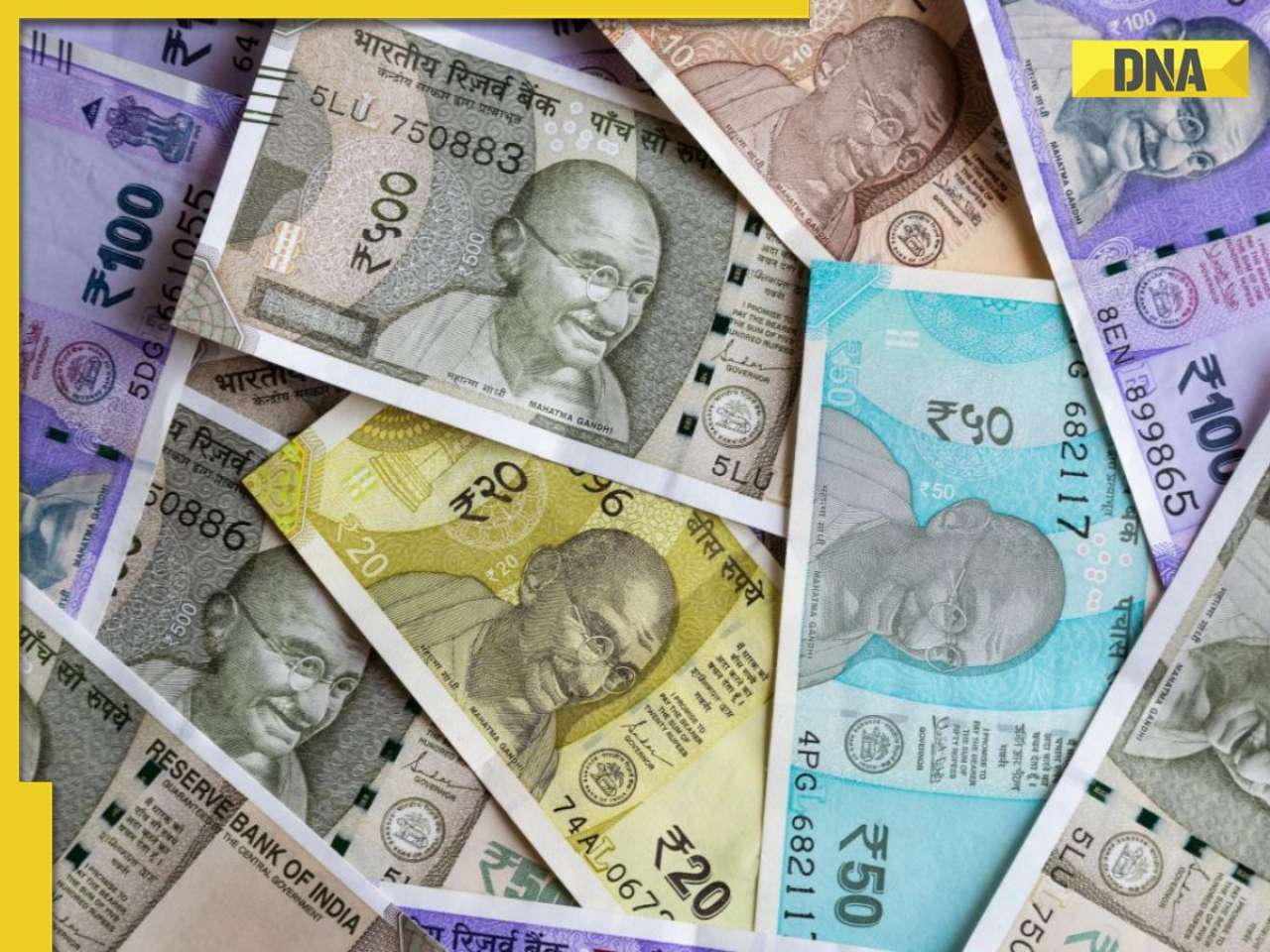
Core Viewpoint - The Indian rupee has fallen to an all-time low of 91 per dollar, influenced by multiple factors including tariff pressures from the US and high demand for dollars [1][2]. Group 1: Reasons for the Rupee's Decline - The US tariffs on Indian exports have negatively impacted investor confidence and trade negotiations, contributing to the rupee's decline [4]. - Foreign investors have withdrawn USD 17 billion from Indian equities in 2025, exerting additional pressure on the rupee despite steady inflation and GDP growth [4]. - The International Monetary Fund (IMF) has downgraded India's exchange rate regime from "stabilized" to "crawl-like," indicating a weakening currency [5]. - A significant decrease in capital inflows and reduced intervention by the Reserve Bank of India (RBI) have also contributed to the rupee's depreciation [5]. Group 2: Impact on the Economy - Record-high prices of metals and bullion have worsened India's import bill, further straining the economy [6]. - The decline in the rupee has a direct impact on average Indian households, increasing costs for essential expenses such as EMIs, fuel, and electronic appliances, especially since India imports 90% of its oil [6].
Nifty Bank Prediction Today – December 15, 2025: Nifty Bank futures: Go long on a dip
BusinessLine· 2025-12-15 05:07
Market Overview - Nifty Bank index opened lower at 59,054, down 0.3% from Friday's close of 59,390, currently at 59,220 [1] - The advance/decline ratio is 3/9, indicating a bearish market sentiment [1] - Nifty Private Bank and Nifty PSU Bank indices are both down approximately 0.3%, reflecting similar selling pressure across public and private banks [2] Individual Bank Performance - Federal Bank increased by 0.8%, IDFC First Bank by 0.7%, and Canara Bank by 0.1%, marking them as gainers [1] - IndusInd Bank and Kotak Mahindra Bank are the top losers, down 0.9% and 0.7% respectively [1] Futures Market - December expiry Nifty Bank futures opened lower at 59,600, down nearly 0.4% from last week's close of 59,658, currently trading at 59,440 [3] - Important support levels are identified at 59,150 and 59,000, which may prevent further declines [3] - A potential rebound could push Nifty Bank futures to targets of 60,500 and 61,000 [3] Support and Resistance Levels - If the futures contract falls below the support level of 59,000, the short-term outlook may turn bearish, with notable support at 58,250 [4] - Current trade strategy suggests staying out for now, with a long position on Nifty Bank futures recommended if it slips to 59,150, targeting 60,500 with a stop-loss at 58,900 [5] - Supports are at 59,150 and 59,000, while resistances are at 60,200 and 60,500 [5] Companies to Monitor - IndusInd Bank Ltd is highlighted as a company to follow in the current market context [5]

Forex card vs credit card: Here’s how you can smartly save money on international travel with Zero Forex Markup cards?
The Economic Times· 2025-12-13 04:43
Core Insights - The recent depreciation of the rupee to 90 against the US Dollar highlights the importance of selecting the right travel card to manage foreign spending effectively [1][19] - A forex card allows users to preload foreign currency, securing the exchange rate in advance, while a credit card converts INR at the current rate, exposing users to exchange rate fluctuations [2][19] Exchange Rate Impact - If planning to spend $1,000, the budget can be significantly affected by the rupee's exchange rate fluctuations, with potential costs ranging from Rs 86,000 to Rs 94,000 depending on appreciation or depreciation [3][19] - The table illustrates that a depreciation of the rupee results in an additional cost of Rs 4,000, while appreciation leads to savings of Rs 4,000 [3] Forex Card vs Credit Card - Forex cards are ideal for travelers who want to stick to a fixed budget, as they allow preloading of funds, while credit cards may lead to overspending due to higher credit limits [16][20] - Credit cards may be more suitable when foreign exchange markups are low or when they offer strong rewards [17][20] Zero Forex Markup Cards - Many cards claim "zero forex markup," but the distinction between interbank rates and platform rates (like Visa) can significantly impact costs [4][5][19] - Cards that claim zero markup may still use network forex rates, which can be up to 1% higher than actual interbank rates, leading to higher final costs [7][19] Product Comparisons - IDFC FIRST Bank's FIRST WOW! Black credit card offers zero forex markup on network exchange rates, which may carry high currency risk due to INR fluctuations [10][20] - DCB Niyo secured credit card also offers zero forex markup on Visa's exchange rate and includes tiered rewards, making it attractive for new-to-credit customers [12][13][20] - BookMyForex's multi-currency forex card uses live interbank rates and allows users to load multiple currencies, providing zero currency fluctuation risk during travel [14][15][20]

What Makes First Bank (FRBA) a Good Fit for 'Trend Investing'
ZACKS· 2025-12-12 14:55
Core Viewpoint - The article emphasizes the importance of identifying sustainable trends in stock prices for short-term investing, highlighting that while trends can be profitable, ensuring their longevity is challenging [1][2]. Group 1: Stock Performance - First Bank (FRBA) has shown a solid price increase of 0.2% over the past 12 weeks, indicating investor confidence in its potential upside [4]. - Over the last four weeks, FRBA's price has increased by 7.9%, suggesting that the upward trend is still intact [5]. - FRBA is currently trading at 91.2% of its 52-week high-low range, indicating a potential breakout [5]. Group 2: Fundamental Strength - FRBA holds a Zacks Rank 2 (Buy), placing it in the top 20% of over 4,000 ranked stocks based on earnings estimate revisions and EPS surprises [6]. - The stock has an Average Broker Recommendation of 1 (Strong Buy), reflecting high optimism from the brokerage community regarding its near-term price performance [7]. Group 3: Investment Strategy - The "Recent Price Strength" screen is a useful tool for investors to identify stocks like FRBA that are on an uptrend supported by strong fundamentals [3]. - The article suggests that there are other stocks passing through the "Recent Price Strength" screen that may also be worth considering for investment [8].

Charting the horizon towards sustainability
Worldfinance· 2025-12-11 14:28
Core Perspective - Banco Popular Dominicano is positioning itself as a leader in sustainable banking by integrating sustainability into its business model and institutional structure, addressing complex social, environmental, and economic challenges [2][3]. Sustainability Strategy - The bank's sustainability strategy is built on eight fundamental elements, including addressing societal expectations, ethical management principles, alignment with Sustainable Development Goals (SDGs), and adherence to the Principles for Responsible Banking [4][5]. - The strategy emphasizes the importance of sustainability in enhancing competitiveness and creating shared value, alongside diverse initiatives in energy efficiency, financial inclusion, and community development [5][6]. Corporate Communication - Effective corporate communication is crucial for building Banco Popular's credibility and reputation, fostering a culture aligned with sustainable values, and promoting strategic partnerships [8]. - Transparent communication helps stakeholders understand the rationale behind sustainable decisions and strengthens institutional reputation [8]. Key Projects and Achievements - Banco Popular has approved over $525 million in renewable energy projects, resulting in 780 MW of installed capacity, and has disbursed more than RD$3,000 million (approximately $47 million) in green products, benefiting over 800 individuals [11]. - The bank's initiatives, such as 'Emprende Mujer' and 'Finanzas con Propósito,' have positively impacted over 1,200 women and awarded 650 scholarships, while supporting more than 75,000 small and medium-sized enterprises [12]. Community Engagement - Fundación Popular has led various health, education, and environmental projects, benefiting over 500 professionals through postgraduate programs in CSR and sustainability [13]. - The bank's volunteerism, with over 3,000 employees participating in community initiatives, reflects a corporate culture aligned with its sustainability goals [14]. Future Outlook - The future of sustainability in banking requires ethical and committed communicators who can drive transformation, with Banco Popular demonstrating that sustainability can be a central pillar of corporate strategy without sacrificing profitability [15][16].

Asia’s Newest Crypto Hub: Gelephu Mindfulness City Partners with Matrixdock for Pioneering Gold Tokenization Initiative
BusinessLine· 2025-12-11 07:59
Core Insights - Gelephu Mindfulness City (GMC) is establishing itself as a leading crypto-friendly jurisdiction in Asia with a progressive regulatory framework for digital assets [1][2] - The GMC Authority (GMCA) has appointed Matrixdock as the tokenization technology partner for GMC's gold-backed token, TER, following the granting of a Financial Services Licence to Matrixport [2][3] Company Developments - Matrixdock will develop the tokenization infrastructure for TER, leveraging its expertise in gold tokenization and institutional-grade infrastructure [3] - The partnership aims to create a secure, transparent, and digital-first financial ecosystem that enhances macroeconomic resilience and expands access to prosperity [3][4] Strategic Vision - GMC aims to be an innovative and blockchain-centered hub for digital assets, with regulatory clarity as a competitive edge [4] - The collaboration between GMC, Matrixport, and Matrixdock is positioned to build a new paradigm of monetary resilience and inclusive access [4][5] Financial Services Landscape - DK Bank, GMC's first digital bank, aims to connect traditional and digital financial services, enhancing transaction efficiency for stakeholders [4][7] - Matrixport, a global leader in digital asset financial services, has a valuation exceeding US$1 billion and manages over US$7 billion in assets [8] Technological Infrastructure - Matrixdock's flagship product, XAUm, is a tokenized gold asset backed by 99.99% purity LBMA-accredited gold, leading the industry in secondary-market trading liquidity [9][10] - The partnership is expected to set new standards for trust and governance in the digital asset space [10]

Microsoft’s India power play; Insurers’ Fastag ambitions
The Economic Times· 2025-12-10 01:32
Want this newsletter delivered to your inbox?Thank you for subscribing to Morning DispatchWe'll soon meet in your inbox. ...