First Bank(FRBA)

Search documents
Dalal Street’s middle-order hits record high before Nifty, smallcaps. What’s driving the midcap boom?
The Economic Times· 2025-11-13 06:53
Core Viewpoint - The rally in midcap stocks is driven by strong earnings performance, improved valuations, and positive investor sentiment, with midcaps outperforming select largecaps and smallcaps [11]. Valuations - Midcaps are currently trading at a premium to largecaps, justified by stronger earnings growth and operational resilience [5][11]. - Recent rallies have led to midcap valuations increasing and narrowing the gap with long-term averages, raising concerns about potential downgrades in certain segments [6][11]. - Experts caution that while midcap valuations are elevated, they may leave limited cushion if earnings momentum slows [5][11]. Sectoral Dynamics - The rally is broad-based, with industrials, capital goods, and auto ancillary companies leading due to steady demand and margin recovery [6][11]. - Financials and select public sector undertakings (PSUs) have contributed to the momentum with improving profitability and asset quality, while consumer durables and chemicals show mixed trends [6][11]. Outlook - Experts expect midcaps to remain resilient but with potential moderation due to increased valuations and global volatility [8][11]. - The sustainability of midcap performance relies on consistent earnings growth and stable macroeconomic conditions [8][11]. - Strong domestic inflows from mutual funds and retail investors are supporting the midcap space, despite foreign investors favoring largecaps [9][11].



Missouri bank launches IPO in search of acquisition
American Banker· 2025-11-12 23:16
Core Viewpoint - Central Bancompany has launched an initial public offering (IPO) aiming to raise approximately $400 million to facilitate potential acquisitions in Texas, Oklahoma, or Colorado [1][2]. Company Overview - Central Bancompany, based in Jefferson City, Missouri, has around $19 billion in assets and operates in Missouri, Oklahoma, Kansas, Colorado, and Florida [2]. - The company is targeting banks with over $2 billion in assets, a strong deposit base, and high credit quality for potential acquisitions [2]. IPO Details - The bank plans to offer 17.8 million shares of Class A common stock, priced between $21 and $24, with an option for underwriters to purchase an additional 2.7 million shares [3]. - As of the latest market close, Central's stock was trading at $21 [3]. Market Context - Central is the third and largest bank to go public this year, amidst a backdrop of economic uncertainty and a cautious approach from the banking industry towards IPOs [4]. - Investor interest in bank stocks remains relatively low, but IPOs may stimulate demand [4][5]. Acquisition Strategy - Central has identified about 30 potential target banks for acquisition, indicating a strategic focus on growth through mergers [9]. - The bank's last acquisitions occurred in 2019, and it has a 24% average deposit market share, attributed to its successful acquisition strategy [7]. Future Plans - The company intends to invest in technology, enhance treasury and wealth management offerings, and improve core and data management systems while preparing for acquisitions [10]. - The IPO may not necessarily indicate a trend of more banks going public, as investor demand is still muted [9].

India Opens Doors To Foreign Banks, But...
Rediff· 2025-11-12 09:25
Core Insights - The landscape for foreign banks in India is evolving, with increased foreign investment and regulatory changes shaping the sector [2][18] Foreign Banking Industry Overview - As of March 2025, there are 44 foreign banks and 34 representative offices in India, with a decline in the number of branches from 874 in March 2021 to 780 in March 2024 [2][3] - Foreign banks hold approximately 4.92% of total deposits and 3.85% of advances in the Indian banking sector [4] Recent Foreign Investments - Blackstone is set to invest ₹6,197 crore in Federal Bank, acquiring a 9.99% stake and the right to nominate a director [4] - Warburg Pincus and Abu Dhabi Investment Authority (ADIA) invested ₹7,500 crore in IDFC First Bank, with Warburg Pincus holding a 9.99% stake [5][6] - Emirates NBD Bank plans to acquire a controlling stake in RBL Bank for ₹26,850 crore, marking the largest foreign direct investment in the Indian financial services sector [7][8] Regulatory Changes and Implications - The acquisition by Emirates NBD will require regulatory approvals and a mandatory open offer to public shareholders [8][9] - The Reserve Bank of India (RBI) has granted in-principle approval for Emirates NBD to establish a wholly owned subsidiary in India, which would be a significant development in the foreign banking landscape [9][10] - The RBI mandates that the managing director and CEO of such subsidiaries must be a resident Indian, with specific board composition requirements [11] Comparison of Investment Types - The RBL Bank deal involves new capital infusion, while the Yes Bank deal, where SMBC acquired a 24.22% stake, was an 'offer for sale' without new capital for the bank [14][15] - SMBC's investment in Yes Bank enhances its capital-raising capabilities but does not provide fresh capital [15] Future Outlook - The government is in the process of divesting its stake in IDBI Bank, with a combined stake of 94.72% held by the government and LIC, aiming to complete the sale by 2025 [16][17] - The regulatory environment may be shifting towards allowing higher foreign ownership in certain banks, although the 74% cap on foreign direct investment remains in place [18]

Asset Purchase Facility Quarterly Report - 2025 Q3
Bankofengland.Co.Uk· 2025-11-11 12:00
Core Insights - The report discusses the Bank of England's Asset Purchase Facility (APF) operations for Q3 2025, including cash flow dynamics with HM Treasury and estimated savings from government debt issuance due to quantitative easing [1][7][20] Gilt Purchases and Sales - The average daily value of gilts lent by the APF to the Debt Management Office (DMO) was £8.0 billion during Q3 2025 [2] - The Monetary Policy Committee (MPC) decided to reduce the stock of gilts held in the APF by £70 billion from October 2025 to September 2026, with a specific sales strategy for different maturity sectors [4][14] - As of September 24, 2025, the stock of gilts held for monetary policy purposes was £558 billion, following a reduction of £3.6 billion from sales and £28.3 billion from maturities during Q3 2025 [5] Cash Flow Dynamics - The APF generated positive net cash flows to HM Treasury, peaking at £123.9 billion by the end of September 2022 [7] - Regular transfers from HM Treasury to the APF began in October 2022, with ongoing quarterly payments [8] - Future cash flows are uncertain and sensitive to changes in the Bank Rate, which affects interest payments and gilt sale prices [10][11] Projections and Scenarios - Illustrative projections indicate that cumulative cash flows could fall between -£60 billion and -£120 billion, with fiscal savings from lower government debt issuance costs estimated at £50 billion to £125 billion [13][20] - The stock of gilts is expected to reduce by £70 billion annually, potentially leading to full unwinding by the end of 2031 [23] - Different scenarios for the pace of unwind show varying impacts on net present value (NPV), with cumulative cash flows projected to decline significantly under various assumptions [17][18]

Why zero forex cards are better than prepaid cards for frequent overseas travellers?
The Economic Times· 2025-11-10 01:00
Core Insights - The article discusses the rising costs associated with overseas spending for Indian travelers due to foreign currency markup fees on international transactions, highlighting the need for more cost-effective financial products [1][2][26] - Financial services are responding to this challenge by introducing zero-forex credit and debit cards, which aim to reduce the costs of overseas transactions and encourage spending abroad [2][24] Financial Products Overview - Zero-forex cards allow users to pay only the actual exchange rate plus a small commission, avoiding the typical 3.5% markup associated with foreign transactions [4][10] - Private lenders and fintech companies are launching zero-forex products, with notable examples including Scapia's partnership with Federal Bank and Niyo's offerings with DCB Bank and SBM Bank [6][24] - These products have gained popularity among travelers, as they provide benefits such as unlimited domestic airport lounge access and reward points for transactions [9][10] User Experiences - Users like Manas Batra have reported positive experiences with zero-forex cards, citing lower costs and better rewards compared to traditional travel cards [8][10] - Cautious spenders, such as Nishant Kapoor, prefer debit cards for their top-up mechanism, allowing for better tracking of expenses and control over spending [11][12] Market Trends - The Reserve Bank of India's data indicates a decline in overseas expenditure under the Liberalised Remittance Scheme, suggesting that high costs are impacting travel spending [26] - Experts believe that as awareness of zero-forex cards increases, the demand for traditional prepaid forex cards may decrease, shifting the market dynamics [24][25] Cost Considerations - While zero-forex cards offer advantages, they may not always maximize savings compared to traditional credit cards that provide cashback and rewards despite their forex markup [18][19] - Most travel cards, including zero-forex options, still charge fees for overseas ATM withdrawals, which can add to the overall cost of using these financial products [22][23]

Wedding season boom set to drive Q3FY26 growth after festive spending spree
The Economic Times· 2025-11-07 00:00
Economic Growth and Consumer Demand - The economy is expected to grow at about 7% in the second quarter, supported by a spending surge following the implementation of lower GST rates on September 22 [2][10] - The third quarter is anticipated to be driven by consumer demand, particularly due to the festive and wedding season, with wedding-related expenditures estimated at ₹4.5-5 lakh crore [10][12] - Urban consumption has shown signs of recovery due to tax cuts, although it has been weak since last year [10][12] GST Impact and Economic Indicators - GST collections rose 4.6% year-on-year in October, reaching a five-month high of ₹1.96 lakh crore, indicating robust domestic demand [6][12] - The HSBC Manufacturing Purchasing Managers' Index (PMI) increased to 59.2 in October, reflecting strong domestic demand post-GST cuts [6][12] - Bank credit rose 11.5% year-on-year in mid-October, suggesting strong traction at the start of the festive season [12] Automotive and Consumer Durables Market - Approximately 470,000 cars, sedans, and SUVs were sold in October, marking a 17% increase from the previous year [7][12] - The waiting period for consumer durables has increased due to heightened demand, with estimates suggesting it may take 45 days for supply to normalize [7][12] Rural vs Urban Demand - Rural demand continues to support India's growth, with economists optimistic about its sustainability [9][12] - Urban demand remains a concern due to slower wage growth, which could impact overall consumption momentum [9][10] Global Economic Factors - US tariffs and a global growth slowdown may negatively affect services exports and hiring [11] - However, uncertainties related to tariffs and rising costs abroad could potentially benefit India's services sector through increased offshoring [11]
Banking Pot: Is something hot brewing?
The Economic Times· 2025-11-03 03:30
Core Insights - There is a renewed global interest in India's private banking sector, driven by significant foreign direct investment (FDI) inflows, which have exceeded $6 billion recently [1][13] - The current environment presents both short-term tactical opportunities and a compelling long-term structural growth outlook for the banking sector [1][5] Short-Term Perspective - The private banking sector had been underperforming due to concerns over slippages and rising credit costs, particularly in unsecured and micro-lending segments, leading to a sharp de-rating [2][13] - Recent results from private banks indicate declining slippages, moderating credit costs, and accelerating loan growth, making current valuations attractive [2][13] Long-Term Perspective - Structural factors such as expected consumption revival from GST rationalization, income-tax relief, and anticipated RBI rate cuts suggest a stronger long-term growth trajectory for the banking sector [5][11] - Early signs of revival in private capital expenditure (capex) further enhance the long-term growth potential for banks [5][8] Market Dynamics - The Nifty Bank index is trading at record levels, indicating increased confidence in the banking sector, while the broader Nifty index struggles to reach its previous peak [6][7] - The divergence between the Bank Nifty and the benchmark Nifty suggests a strong recovery and potential leadership role for banking stocks in the next market rally [6][13] Factors Supporting Growth - Positive trends include the overall trajectory for Net Interest Margins (NIMs) due to deposit repricing, declining slippages, and expected acceleration in credit growth as rate-cut transmission nears completion [7][8] - The revival in private capex is seen as a critical factor for credit growth, although investor confidence remains cautious due to past experiences with private investment cycles [9][10] Macro Environment - The macroeconomic backdrop appears supportive, with recent GST cuts and a revival in rural demand expected to boost private investments [11][13] - The value of new private project announcements nearly doubled in the second quarter of FY26, indicating a potential turnaround in private investments [10][11]
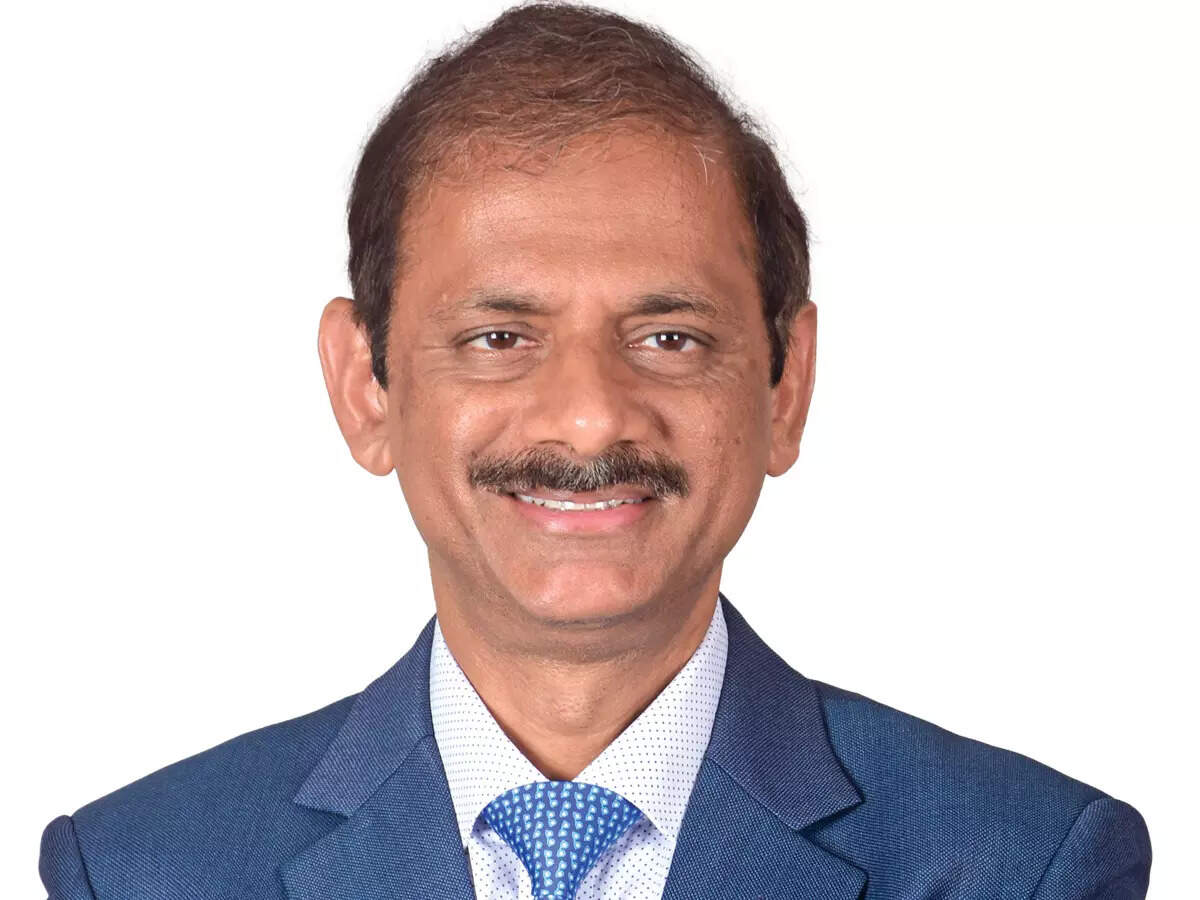
ET Startup Awards 2025: There is a need to expand startups’ capital pool: IDFC First Bank CEO
The Economic Times· 2025-11-03 00:31
Core Insights - The low funding rate for new ventures in India is a significant concern, with only 40-50 out of approximately 1,000 startups receiving financing from venture capitalists, indicating a disturbing conversion rate and the likelihood of many viable ideas going unfunded [1][4]. Group 1: Funding Challenges - The current funding landscape is inadequate for the thriving startup ecosystem in India, necessitating an expansion of the capital base to support innovation and growth [2][4]. - There is a notable potential for disruption from startups emerging from campuses and tier-2 and -3 cities, highlighting the need for increased financial support [2][4]. Group 2: Recommendations for Capital Expansion - It is suggested that entities such as colleges, which are currently restricted from investing in venture capital funds due to their Section 8 (not-for-profit) status, should be allowed to invest to broaden the capital pool available for startups [3][4]. - The government has made progress in enhancing India's global image over the past decade, which could further support the startup ecosystem [3][4]. Group 3: Institutional Initiatives - IDFC First Bank is actively working on developing a technology stack aimed at catering to the needs of India's startups, indicating institutional efforts to bolster the startup ecosystem [4].
ET Startup Awards 2025: Maturing startups celebrate being the stock of the town
The Economic Times· 2025-11-03 00:30
Core Insights - Listing in India is now considered more profitable and exciting than in any other global market, driven by the demand from a population of 1.4 billion people [1][9] - The transition from private funding to public scrutiny is a significant milestone for startups, with IPOs being viewed as a pit stop in a longer journey [3][9] - The Indian startup ecosystem is characterized by constant disruption, with new entrants challenging established players [4][9] Industry Trends - The fashion market in India is valued at $120 billion, with a significant influence from 400 million Gen Z consumers [5][9] - Startups are increasingly focusing on large market opportunities rather than viewing competitors as duopolies [5][9] - The recognition of startups through awards like the ET Startup Awards is crucial for validation and support in a challenging entrepreneurial landscape [7][10] Company Highlights - Urban Company was awarded Startup of the Year, reflecting its significant customer satisfaction and innovative business model [6][9] - Lenskart's founder is actively involved in the IPO process, showcasing the growing trend of public listings among Indian startups [9] - Qure.ai and Minfy Technologies received awards for their innovative approaches in healthcare and revenue growth without external funding, respectively [10]

Microfinance is taking baby steps to recovery but there is a long walk ahead
MINT· 2025-11-03 00:20
Core Insights - The microfinance sector is slowly recovering from two years of stress, with improvements in bad loans and collections, but profitability remains challenging and growth is slow due to uneven recovery across states and lenders [15] Company-Specific Insights - Bandhan Bank is experiencing steady improvement in its microfinance portfolio, with a 30-day-plus delinquency ratio of 3.8%, below the industry average of 5.1%, and 90-day-plus delinquencies improved to 2.04% compared to 3% for the sector [2] - Bandhan Bank is cautious in expanding its microfinance portfolio, focusing on reducing concentration risk and increasing secured loans, with its emerging entrepreneurs business portfolio contracting 13% annually to ₹51,730 crore [2][3] - The secured loan book at Bandhan Bank currently makes up about 55% of total advances, expected to rise to 57-58% over the next 18 months [3] - IDFC First Bank anticipates stabilization of stress in its microfinance portfolio within the next six months, with gross slippages in the MFI book falling 9% sequentially in the September quarter [4] - IDFC First Bank's MFI business declined 42% annually to ₹7,306 crore, impacting income, but is expected to stabilize in the second half of the year [5] Industry Trends - The microfinance sector has seen most large players shrink their books by 25-50% over the past two years, primarily through write-offs, which has been termed cautious deleveraging [7] - CreditAccess Grameen reported accelerated write-offs of ₹554 crore related to overdue loans, indicating a need to clean up legacy stress [6] - Policy reforms have capped the number of lenders per borrower and restricted total indebtedness, which has reduced over-leverage but also slowed fresh lending [8][9] - Analysts expect collection efficiency to improve as disbursements rise, but near-term pressure is expected to persist due to erratic monsoon patterns affecting rural borrowers [10] - The upcoming state elections in Bihar raise concerns over potential political interference and debt waivers, although Bandhan Bank does not foresee a repeat of past disruptions [12][13] - Overall, analysts predict that larger banks and MFIs will recover first, with a slow and gradual journey towards normalcy expected for the sector [14]