
First Bank(FRBA)

Search documents
Private banks can now provide Capital Gains account
BusinessLine· 2025-11-20 07:12
Core Points - The Finance Ministry has authorized 19 private sector banks to accept deposits under the Capital Gains Account Scheme, expanding options beyond public sector banks and IDBI Bank [1][2] - The new regulations include provisions for capital gains from the transfer of assets when shifting industrial undertakings to Special Economic Zones (SEZs) [3] - The Capital Gains Account Scheme allows for tax exemptions on long-term capital gains when reinvesting in specified assets within certain timeframes [4] Summary by Sections Authorized Banks - The following banks are now permitted to accept deposits under the Capital Gains Account Scheme: HDFC Bank, ICICI Bank, Axis Bank, City Union Bank, DCB Bank, Federal Bank, IDFC FIRST Bank, IndusInd Bank, Jammu and Kashmir Bank, Karnataka Bank, Karur Vysya Bank, Kotak Mahindra Bank, RBL Bank, South Indian Bank, Yes Bank, Dhanlaxmi Bank, Bandhan Bank, CSB Bank, and Tamilnad Mercantile Bank [2] Deposit Account Types - There are two types of deposit accounts: - **Account-A**: Savings deposit with flexible withdrawals and interest rates applicable to savings accounts [5] - **Account-B**: Term deposit with options for cumulative or non-cumulative deposits, with withdrawals allowed only after the deposit period [6] Capital Gain Term Deposit Account - The Capital Gain Term Deposit account requires a minimum deposit of ₹1,000, with no maximum limit, and a maximum tenor of 2 to 3 years from the date of asset transfer [7] - The minimum tenor for maturity is 7 days, and for income options, it is 6 months, after which the fixed deposit will be auto-closed [7] Penalties and Restrictions - A penalty of 1% interest will be charged for premature withdrawals, and no loan facilities can be availed against this deposit [8]


First Bank (FRBA) Upgraded to Strong Buy: Here's What You Should Know
ZACKS· 2025-11-18 18:01
First Bank (FRBA) could be a solid choice for investors given its recent upgrade to a Zacks Rank #1 (Strong Buy). This rating change essentially reflects an upward trend in earnings estimates -- one of the most powerful forces impacting stock prices.The sole determinant of the Zacks rating is a company's changing earnings picture. The Zacks Consensus Estimate -- the consensus of EPS estimates from the sell-side analysts covering the stock -- for the current and following years is tracked by the system.Indiv ...

Data-centre boom exciting but risky; focus on green energy and select banks, says Sameer Dalal
The Economic Times· 2025-11-18 06:42
Group 1: Data Centres and AI Boom - Data centres are considered the back office of the AI boom, but the sector involves heavy upfront capital expenditure (capex) and uncertain initial utilization, which can negatively impact profitability [1] - Replacing storage hardware is costly and frequent, leading to significant depreciation as a cash cost, distinguishing it from other infrastructure investments [1] Group 2: Market Valuation and Stock Picking - Indian markets have become complacent regarding high valuations, making selective stock picking crucial [2] - There is no sector-wide valuation comfort, but individual stocks within sectors may still present attractive opportunities [2] - The market is expected to remain range-bound with a mild negative bias due to foreign institutional investor (FII) selling, fresh equity supply, and modest earnings growth [2] Group 3: Investment Themes - A blend of growth and value investment strategies is recommended, indicating that this is not a market for index buying [5][7] - Strong opportunities are identified in green energy, particularly in local solar cell manufacturing, which is seen as a significant structural shift [6][9] - In the banking sector, select banks like Axis Bank, IndusInd Bank, and IDFC First Bank are highlighted for their growth visibility and reasonable valuations, with improved liquidity and managed deposit repricing [6][9]

Digital Commerce Bank Becomes First Bank in Canada to Launch Interac e-Transfer® Cards
Businesswire· 2025-11-17 17:37
CALGARY, Alberta--(BUSINESS WIRE)-- #etransfer--DCBank becomes first bank in Canada to launch Interac e-Transfer® cards, allowing Canadians to bring personality and meaning to sending money. ...

RBI's export relief measures may dent near-term dollar flows, pressure Indian rupee, bankers say
The Economic Times· 2025-11-17 07:29
The RBI on Friday announced a package of relief measures to help exporters cope with the pressure from U.S. tariffs, including extending the The step comes at a time when India's trade outlook is clouded by stalled negotiations on a U.S.-India agreement that could roll back the 50% duties imposed on several Indian products. Those levies, in place since late August, pushed merchandise exports to the United States, India's largest market, down nearly 12% year-on-year in September. The longer payment realiz ...
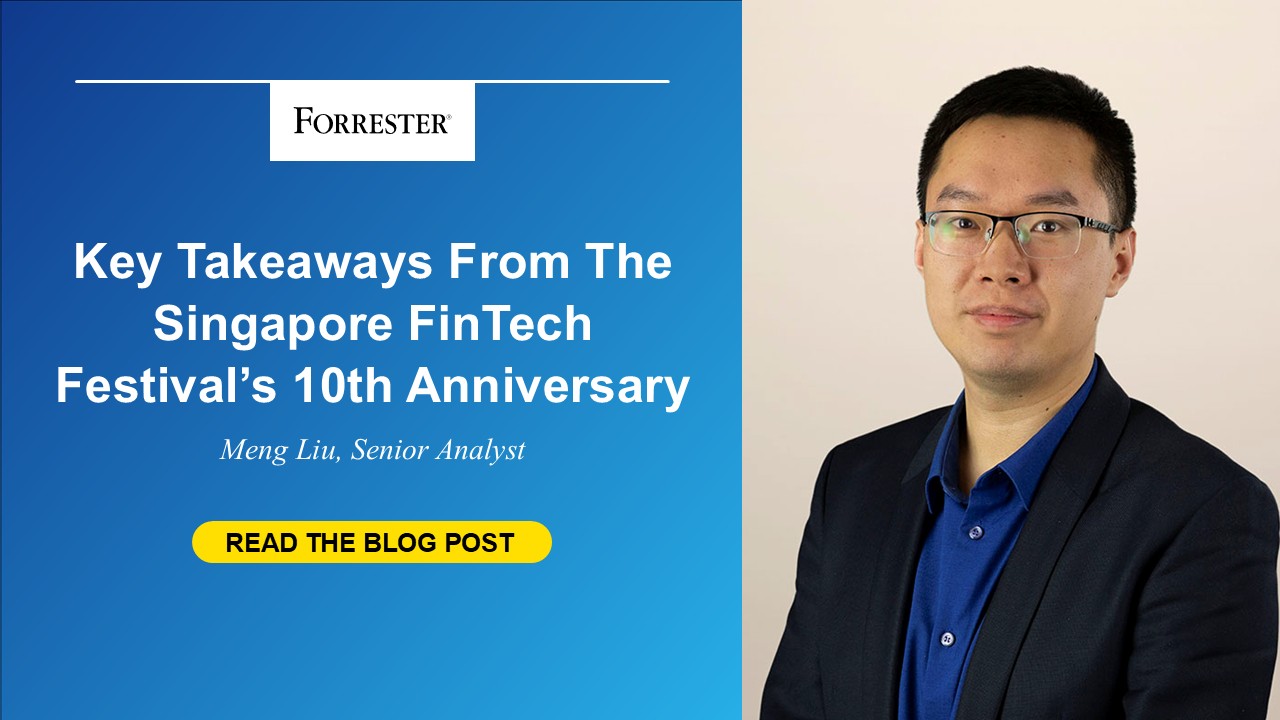
Key Takeaways From The Singapore FinTech Festival’s 10th Anniversary
Forrester· 2025-11-17 03:40
Core Insights - The payments industry is undergoing transformation driven by five key forces: agentic payments becoming competitive tools, emergence of payments-specific foundational models, necessity of robust fraud management, transaction banking leveraging AI, and fragmentation of stablecoins as they scale [1] Group 1: Agentic Payments - Agentic payments are transitioning from experimental phases to becoming essential competitive assets, with a focus on protocol standardization and multi-rail enablement to reduce friction in transactions [2] - Companies must enhance risk models to recognize agents as active participants, incorporating new signals such as agent reputation and intent authorization [2] Group 2: Payments-Specific Models - A shift is anticipated from general-purpose large language models (LLMs) to industry-specific models tailored for payments, prompting firms to decide between building or partnering for access to these specialized models [3] Group 3: Fraud Management - Fraud management has become a baseline requirement for banks and merchants, necessitating a unified risk stack that includes device, identity, transaction, and agentic signals to cover the entire customer journey [4] - Companies are advised to integrate deepfake detection and real-time scoring to combat emerging fraud tactics [4] Group 4: Transaction Banking and AI - Transaction banking is emerging as a key area for AI application, with firms encouraged to develop an AI adoption heatmap to identify and expand use cases [5][8] Group 5: Stablecoins - The stablecoin ecosystem is expanding with various use cases, but it is also becoming increasingly fragmented, necessitating exploration of alternative solutions like tokenized deposits and central bank digital currencies (CBDCs) [8][12] - Multiple regulated stablecoin issuers are competing, with Ripple's RLUSD surpassing $1 billion in circulation and Circle working on reducing fragmentation in USDC [12] Group 6: Alternative Payment Rails - Alternative payment methods are gaining traction alongside traditional card payments, with both infrastructures coexisting and advancing digital payment solutions [9] Group 7: Future of Payments - The future of payments is expected to be characterized by agent-led, model-driven, and multi-rail systems, with standards like ACP and domain-specific foundational models shaping the landscape [10] Group 8: Innovations and Developments - Companies like Ant International and Stripe are launching innovative solutions such as the Agentic Commerce Protocol and AI-driven payment models to enhance transaction efficiency and security [6][13] - Visa is scaling its generative Large Transaction Model, which has significantly improved fraud detection rates [7]


The Problem With Smart Devices That Can’t Spend Money
Medium· 2025-11-14 09:28
Core Insights - The article discusses the limitations of current smart devices that, despite having access to optimal information and strategies, lack the ability to execute financial transactions autonomously [2][4][19] - It emphasizes the need for a new economic infrastructure that allows devices to engage in real-time transactions, handle micropayments, and operate independently without human intervention [14][16][18][34] Group 1: Current Limitations of Smart Devices - Most intelligent systems today can only monitor and inform users about energy usage and savings opportunities but cannot act on this information [5][6] - Autonomous delivery robots and other smart devices require human involvement for financial transactions, limiting their autonomy [7][8] - The projected growth of connected devices to over 50 billion in the next five years highlights the scale of the problem, as these devices will need to interact economically multiple times a day [9][10] Group 2: Requirements for Device Transactions - Devices need real-time transaction capabilities, meaning instant settlement is essential for effective operation [14][15] - The payment infrastructure must support micropayments economically, as traditional systems impose fees that make small transactions unfeasible [16] - Autonomous control is necessary, allowing devices to make independent economic decisions without constant human authorization [17] - Security measures must be built into the transaction framework to prevent fraud without relying on human judgment [18] Group 3: SEALCOIN's Proposed Solution - SEALCOIN aims to provide a dedicated infrastructure for autonomous economic agents, enabling devices to hold value, make purchases, and participate in markets without human involvement [19][34] - The system is designed to allow devices to operate within defined boundaries, ensuring owners maintain oversight while enabling genuine independence [26][28] - Transaction transparency is emphasized, with all device payments recorded in immutable logs for auditing and anomaly detection [30] Group 4: Future Implications - The ability for devices to transact autonomously could lead to new economic relationships and markets, such as neighborhood energy trading and local computation services [21][23][24] - The article argues that without economic agency, the vision for smart cities and autonomous systems cannot be realized [31][32] - The transition from devices that only analyze to those that can transact represents a significant leap in technology, fundamentally changing their role in the economy [36][39]

Fintech Trends on the Rise: Navigating 2025 and Beyond
Medium· 2025-11-14 06:06
Core Insights - The fintech industry is undergoing a transformative era, focusing on reimagining the entire financial ecosystem beyond just digital payments [1][2] Group 1: AI and Automation - AI-driven finance is reaching full maturity, with advancements in generative AI, machine learning, and predictive analytics enhancing decision-making, automation, security, and personalization [5][7] - Hyper-automation in finance is modernizing operations through AI, machine learning, and robotic process automation, significantly reducing operational inefficiencies [26][28] Group 2: Embedded Finance and Web3 - Embedded finance is becoming mainstream, allowing non-financial companies to integrate financial services directly into their platforms, with a projected global opportunity exceeding $500 billion by 2026 [8][9] - The rise of Web3 and decentralized finance (DeFi) is shifting focus from crypto trading to real-world asset tokenization and smart contracts [10][14] Group 3: Sustainability and Green Fintech - Green fintech is gaining traction as environmental sustainability becomes a priority, with financial institutions developing eco-friendly digital products in response to consumer demand, particularly from Gen Z [16][18] Group 4: Central Bank Digital Currencies (CBDCs) - Over 100 countries are experimenting with or launching CBDCs, which are expected to reshape the global monetary ecosystem and create new opportunities for collaboration between central banks and fintech companies [19][20] Group 5: Security and User Experience - Biometric security and zero-trust frameworks are becoming standard in fintech to combat increasing cybersecurity threats, requiring continuous verification of users and devices [21][25] - Human-centric user experience is crucial for fintech success, with a focus on intuitive design, real-time insights, and trust-building features [38][41] Group 6: Financial Inclusion - Fintech is enhancing financial inclusion through mobile banking, digital wallets, and micro-lending apps, making banking services more accessible to underserved populations [31][36]
Discovery partners with Luno to offer first bank app crypto trading in South Africa
Reuters· 2025-11-13 14:43
Core Insights - Discovery Bank will be the first lender in South Africa to integrate cryptocurrency into its mobile platform, enabling customers to trade cryptocurrencies directly within its banking app starting in December [1] Company Summary - Discovery Bank is pioneering the integration of cryptocurrency trading in South Africa's banking sector, marking a significant step towards modernizing banking services [1]

Dalal Street’s middle-order hits record high before Nifty, smallcaps. What’s driving the midcap boom?
The Economic Times· 2025-11-13 06:53
Core Viewpoint - The rally in midcap stocks is driven by strong earnings performance, improved valuations, and positive investor sentiment, with midcaps outperforming select largecaps and smallcaps [11]. Valuations - Midcaps are currently trading at a premium to largecaps, justified by stronger earnings growth and operational resilience [5][11]. - Recent rallies have led to midcap valuations increasing and narrowing the gap with long-term averages, raising concerns about potential downgrades in certain segments [6][11]. - Experts caution that while midcap valuations are elevated, they may leave limited cushion if earnings momentum slows [5][11]. Sectoral Dynamics - The rally is broad-based, with industrials, capital goods, and auto ancillary companies leading due to steady demand and margin recovery [6][11]. - Financials and select public sector undertakings (PSUs) have contributed to the momentum with improving profitability and asset quality, while consumer durables and chemicals show mixed trends [6][11]. Outlook - Experts expect midcaps to remain resilient but with potential moderation due to increased valuations and global volatility [8][11]. - The sustainability of midcap performance relies on consistent earnings growth and stable macroeconomic conditions [8][11]. - Strong domestic inflows from mutual funds and retail investors are supporting the midcap space, despite foreign investors favoring largecaps [9][11].