General Mills(GIS)

Search documents
Protein snacks are getting more popular thanks to weight-loss drugs, says General Mills
MarketWatch· 2025-09-17 20:35
Group 1 - The core observation is that individuals on GLP-1 drugs are reducing their overall calorie intake while simultaneously developing a heightened demand for protein due to muscle mass loss [1] Group 2 - The packaged-foods producer is responding to the changing dietary needs of consumers who are using GLP-1 medications [1]


Navigating a Mixed Market: Fed Rate Cut and Tech Sector Jitters Dominate Wednesday’s Trading
Stock Market News· 2025-09-17 20:07
Market Overview - On September 17, 2025, U.S. stock markets exhibited mixed performance, influenced by the Federal Reserve's interest rate decision and significant corporate news [1][11] - The Dow Jones Industrial Average rose by 304.25 points, closing at 46,062.15, a gain of approximately 0.66%, while the S&P 500 fell by 4.86 points to 6,601.90, a decrease of 0.07%, and the Nasdaq Composite dropped by 95.59 points to 22,238.37, down 0.43% [2] Federal Reserve Decision - The Federal Reserve cut interest rates by 25 basis points, marking the first rate cut of the year, amid signs of a weakening labor market [3] - Investors are awaiting the FOMC meeting minutes and updated "dot plot" projections for insights into future rate paths and economic outlook [3] Corporate News - Nvidia (NVDA) shares declined by approximately 1.6% due to reports that China's internet regulator instructed major tech firms to cease purchasing Nvidia's AI chips [5] - Oracle Corporation (ORCL) shares increased by 1.5% as it is part of a consortium to keep TikTok operational in the U.S. [6] - Chipotle Mexican Grill, Inc. (CMG) shares rose by 1.9% after announcing an additional $500 million for share buybacks, raising total authorization to approximately $750 million [6] - ADTRAN Holdings, Inc. (ADTN) stock plummeted by 15.1% following a $150 million convertible senior notes offering [7] - Dave & Buster's Entertainment, Inc. (PLAY) shares fell by 16.7% after reporting second-quarter earnings significantly below estimates [7] - Workday (WDAY) shares surged by 6.9% after Elliott Investment Management disclosed a stake of over $2 billion in the company [8] - StubHub (STUB) debuted on the NYSE at $23.50 per share following its IPO [9] - General Mills, Inc. (GIS) reported a 7% decrease in net sales for Q1 fiscal 2026, but a 108% increase in operating profit due to a yogurt divestiture [10] - Manchester United plc (MANU) reported an increase in commercial revenue for the 2025 fiscal fourth quarter and full year [10]





General Mills: An Underwhelming Q1 FY2026, But I Am Still Confident (NYSE:GIS)
Seeking Alpha· 2025-09-17 18:38
Group 1 - General Mills, Inc. (NYSE: GIS) is considered an interesting investment opportunity due to its currently depressed stock price, despite not being a high-growth company [1] - The company has a long history of performance, indicating stability over decades [1] Group 2 - The analysis emphasizes a fundamental approach to evaluating companies, focusing on actual results rather than stock price movements [1] - The investment strategy is characterized by a long-term view, often taking a contrarian stance [1]
General Mills: An Underwhelming Q1 FY2026, But I Am Still Confident
Seeking Alpha· 2025-09-17 18:38
Group 1 - General Mills, Inc. (NYSE: GIS) is considered an interesting company with a depressed stock price, indicating potential investment opportunities despite not being a high-growth company [1] - The company has a long history of performance, suggesting stability and reliability over decades [1] Group 2 - The analysis emphasizes a fundamental approach to evaluating companies, focusing on actual results rather than stock price movements [1] - The investment strategy is characterized by a long-term view, often taking a contrarian stance in the market [1]

GIS Q1 Earnings Beat Estimates, Organic Sales Down 3% Y/Y
ZACKS· 2025-09-17 18:06
Core Insights - General Mills, Inc. (GIS) reported first-quarter fiscal 2026 results with both earnings and net sales surpassing the Zacks Consensus Estimate, although both metrics declined year over year [1][11]. Financial Performance - Adjusted earnings were 86 cents per share, exceeding the Zacks Consensus Estimate of 81 cents, but reflecting a 20% decline year over year on a constant-currency basis due to reduced adjusted operating profit and an increased adjusted effective tax rate [2][11]. - Net sales decreased by 7% to $4,517.5 million, with a four-point headwind from divestitures and acquisitions, yet still surpassing the Zacks Consensus Estimate of $4,499 million. Organic net sales also fell by 3% due to negative price realization and unfavorable trade expenses timing in North America Retail [3][11]. Margin Analysis - The adjusted gross margin declined by 120 basis points to 34.2% of net sales, primarily due to input cost inflation, partially offset by favorable net price realization and product mix benefits from yogurt divestitures [4][11]. - Adjusted operating profit dropped 18% in constant currency, with the adjusted operating profit margin decreasing by 210 basis points to 15.7% [5][11]. Segment Performance - North America Retail segment revenues were $2,625.5 million, down 13% year over year, impacted by reduced pound volumes and yogurt divestitures. Organic net sales dipped 5% [6]. - International segment revenues increased by 6% to $760.2 million, with organic net sales up 4%, driven by growth in India, North Asia, and Europe [7]. - North America Pet segment revenues rose 6% to $610 million, aided by the acquisition of North American Whitebridge Pet Brands, although organic net sales dipped 5% [8]. - North America Foodservice revenues decreased by 4% to $516.7 million, with organic net sales up 1% [9]. Financial Health - General Mills ended the quarter with cash and cash equivalents of $952.9 million, long-term debt of $12,218.4 million, and total stockholders' equity of $9,506.6 million. The company generated $397 million in cash from operating activities [12]. Future Outlook - The company aims to revive volume-driven organic sales growth in fiscal 2026, anticipating category growth below long-term expectations and reduced benefits from price/mix [13]. - Increased investments in value, innovation, and brand building are planned, including the launch of Blue Buffalo in the U.S. fresh pet food segment [14]. - The fiscal 2026 outlook includes projected organic net sales ranging from a 1% decline to a 1% increase, with adjusted operating profit and adjusted EPS expected to decline by 10-15% in constant currency [15].

General Mills: Consumer Barometer, Investor Headache (NYSE:GIS)
Seeking Alpha· 2025-09-17 17:12
Company Overview - General Mills, Inc. is a well-established company with over 150 years in the packaged foods industry, known for its popular brands such as Pillsbury, Cheerios, Blue Buffalo, and Betty Crocker [1] Investment Philosophy - The focus is on long-term investment in U.S. and European equities, emphasizing undervalued growth stocks and high-quality dividend growers [1] - Sustained profitability, characterized by strong margins, stable and expanding free cash flow, and high returns on invested capital, is considered a more reliable driver of returns than valuation alone [1] Personal Investment Approach - The investment strategy aims to ensure sufficient assets for freedom in work and lifestyle, rather than complete financial independence from work [1]
General Mills: Consumer Barometer, Investor Headache
Seeking Alpha· 2025-09-17 17:12
Company Overview - General Mills, Inc. is a well-established company with over 150 years in the packaged foods industry, known for its popular brands such as Pillsbury, Cheerios, Blue Buffalo, and Betty Crocker [1] Investment Philosophy - The focus is on long-term investment in U.S. and European equities, emphasizing undervalued growth stocks and high-quality dividend growers [1] - Sustained profitability, characterized by strong margins, stable and expanding free cash flow, and high returns on invested capital, is considered a more reliable driver of returns than valuation alone [1] Personal Investment Approach - The investment strategy aims to ensure sufficient assets for freedom in work and lifestyle, rather than complete financial independence from work [1]

General Mills, Inc. (NYSE: GIS) Exceeds Earnings Expectations
Financial Modeling Prep· 2025-09-17 17:00
Core Insights - General Mills reported an earnings per share (EPS) of $0.86, exceeding the estimated $0.81, with revenue of approximately $4.52 billion, slightly above estimates [1][2] Financial Performance - The company exceeded quarterly sales estimates due to increased demand following strategic price cuts on select products, maintaining annual forecasts [2] - General Mills has a price-to-earnings (P/E) ratio of approximately 11.89, a price-to-sales ratio of about 1.38, an enterprise value to sales ratio of around 2.15, and an enterprise value to operating cash flow ratio of approximately 14.33 [3] Financial Metrics - The earnings yield stands at 8.41%, indicating earnings relative to share price [4] - The debt-to-equity ratio is about 1.66, suggesting a higher level of debt compared to equity, while the current ratio is approximately 0.67, indicating the ability to cover short-term liabilities with short-term assets [4]
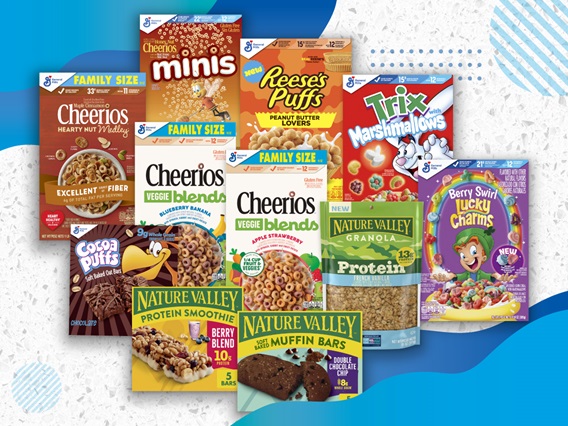
General Mills signals increased confidence in strategy as innovation drives 25% growth in new product volumes (NYSE:GIS)
Seeking Alpha· 2025-09-17 16:54
Core Insights - The article discusses the earnings call insights generated from transcripts and content available on the Seeking Alpha website, emphasizing the limitations of AI tools in ensuring accuracy and completeness [1][1]. Group 1 - The earnings call insights are compilations of earnings call transcripts and other content available on the Seeking Alpha website [1]. - The insights are generated by an AI tool and have not been curated or reviewed by editors [1]. - There are inherent limitations in using AI-based tools, which affect the accuracy, completeness, or timeliness of the earnings call insights [1].

Nasdaq Falls Over 100 Points; General Mills Earnings Top Views
Benzinga· 2025-09-17 16:11
U.S. Stock Market - U.S. stocks showed mixed performance, with the Dow up 0.68% to 46,068.31, while the Nasdaq fell 0.52% to 22,218.27 and the S&P 500 dropped 0.12% to 6,598.62 [1] - Consumer staples shares increased by 1.1%, while information technology stocks decreased by 0.7% [1] Company Earnings - General Mills, Inc. reported fiscal 2026 first-quarter results with adjusted earnings per share of 86 cents, exceeding analyst estimates of 81 cents, and revenue of $4.52 billion, slightly above projections of $4.51 billion [2] Commodity Market - Oil prices fell by 0.3% to $64.34, gold decreased by 0.3% to $3,714.60, silver dropped 1.4% to $42.335, and copper fell 1.4% to $4.6285 [5] European Market - European shares were mostly higher, with the eurozone's STOXX 600 rising 0.26%, Spain's IBEX 35 up 0.11%, London's FTSE 100 increasing by 0.48%, Germany's DAX 40 gaining 0.39%, and France's CAC 40 falling by 0.11% [6] Asian Market - Asian markets closed mostly higher, with Japan's Nikkei down 0.25%, Hong Kong's Hang Seng up 1.78%, China's Shanghai Composite rising 0.37%, and India's BSE Sensex gaining 0.38% [7] Notable Stock Movements - SciSparc Ltd. shares surged 197% to $5.42 following a merger motion, while Visionary Holdings Inc. shares increased 92% to $3.20 after a strategic partnership announcement [9] - New Fortress Energy Inc. shares rose 33% to $2.6650 after a long-term gas supply agreement with the Puerto Rican government [9] - Manchester United plc shares dropped 6% to $15.48 after mixed fourth-quarter financial results [9] - Paramount Group, Inc. shares fell 12% to $6.53 after an acquisition agreement at $6.60 per share [9] - QuantaSing Group Limited shares decreased 11% to $9.05 following weak quarterly earnings [9] U.S. Housing Market - U.S. housing starts decreased by 8.5% month-over-month to an annual rate of 1.307 million units in August, below market estimates of 1.37 million [11] - Building permits declined by 3.7% to an annualized rate of 1.312 million in August [11] - U.S. crude oil inventories fell by 9.285 million barrels, significantly exceeding market estimates for a 1.5-million-barrel decline [11]