Coca-Cola(KO)

Search documents
轮到中国卡脖子了!山东这几家工厂一停工,欧美的可乐就得断供?
Sou Hu Cai Jing· 2026-01-23 16:11
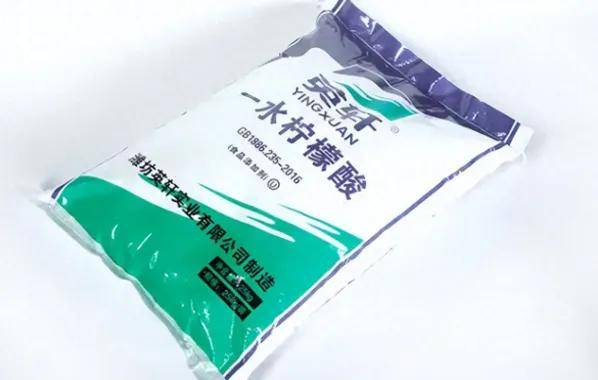
Core Insights - The article highlights the strategic importance of Weifang, Shandong, in the global supply chain, particularly in the production of citric acid, referred to as "industrial MSG," which is essential for the food, pharmaceutical, and detergent industries [1][6] - Weifang's dominance in citric acid production is attributed to its advanced processing techniques and cost-effective production methods, making it difficult for Western companies to compete [3][5] - The article emphasizes that the control of basic industrial materials like citric acid can serve as a form of geopolitical leverage, similar to high-tech industries [6][8] Industry Analysis - Weifang has transformed its citric acid production by optimizing every step of corn deep processing, achieving significant cost reductions through an integrated thermal power generation system [3] - The region's ability to utilize waste products effectively has turned potential environmental burdens into revenue streams, further enhancing its competitive edge [3][5] - Despite attempts by global beverage giants to diversify their supply chains to countries like Vietnam and India, these efforts have proven ineffective due to infrastructure and energy reliability issues, reinforcing Weifang's unique position [5] Market Dynamics - Over 60% of the world's citric acid production capacity is concentrated in Weifang and its surrounding areas, creating a dependency that is difficult to break [5] - The remaining companies in Weifang have shifted focus towards producing high-purity pharmaceutical-grade citric acid, indicating a move towards higher value-added products [6] - The geopolitical implications of Weifang's control over citric acid production suggest that fluctuations in production could significantly impact global supply chains, particularly for major brands like Coca-Cola and Procter & Gamble [8]


Best Dividend Stocks to Buy in 2026
247Wallst· 2026-01-23 15:47
Core Insights - The article emphasizes the importance of investing in dividend-paying stocks with strong fundamentals and reliable cash flow, particularly in a volatile market environment [1][2]. Company Summaries Coca-Cola - Coca-Cola has a dividend yield of 2.84% and has increased dividends for 63 consecutive years, making it a favorite among income investors [3][4]. - The company has a payout ratio of 67.85% and pays an annual dividend of $2.04 per share, supported by strong cash flow and minimal operating expenses [4][6]. - In the third quarter, Coca-Cola reported a 6% rise in organic sales and a 5% increase in revenue, with EPS soaring 30% to $0.86 and free cash flow of $2.4 billion [6]. Chevron - Chevron Corporation has a dividend yield of 4.10% and has raised dividends for 38 consecutive years, with a payout ratio of 86.01% and an annual dividend of $6.84 per share [7][9]. - The company is well-positioned in the oil and gas sector, with strong fundamentals and growth potential despite market volatility [8][9]. - Chevron's stock has gained 6.8% in the past year, trading at $166.66, and is considered a solid buy for long-term investors [9]. Procter & Gamble - Procter & Gamble has a dividend yield of 2.82% and has increased dividends for 69 years, paying an annual dividend of $4.23 per share with a payout ratio of 60.62% [12]. - The company reported second-quarter revenue of $22.2 billion and an EPS of $1.88, with net sales growing 1% year-over-year [13]. - Despite a 9.76% decline in stock price over the past year, analysts remain optimistic, with price targets set at $165 [14].


Coca-Cola vs. PepsiCo: What's the Better Long-Term Play?
The Motley Fool· 2026-01-23 04:05
Core Viewpoint - Coca-Cola is favored for long-term investment due to its asset-light business model, which results in higher profit margins and greater cash flexibility compared to PepsiCo [2][5]. Group 1: Business Model and Revenue - Coca-Cola's primary revenue source is from selling concentrates and syrups to independent bottling companies, rather than directly to consumers [2]. - This model allows Coca-Cola to avoid the costs associated with factories, delivery trucks, and logistics, enabling a focus on marketing and brand building [3]. - In contrast, PepsiCo manages most of its distribution chain, leading to higher revenue figures but lower net income compared to Coca-Cola [3]. Group 2: Financial Metrics - Coca-Cola's current market capitalization stands at $310 billion [5]. - The company's gross margin is reported at 61.55%, and it offers a dividend yield of 2.83% [5]. - The stock price of Coca-Cola is currently $71.87, with a day's range between $71.44 and $72.04, and a 52-week range from $61.37 to $74.38 [4][5]. Group 3: Market Position and Economic Resilience - Coca-Cola's strong market position provides it with pricing power, which is advantageous during economic downturns [5]. - The company is viewed as more reliable for long-term investment compared to PepsiCo, despite both companies having demonstrated longevity in the market [5].


Coca-Cola vs. Monster Beverage: Which Stock Stays Ahead of the Curve?
ZACKS· 2026-01-22 18:05
Core Insights - The competition between The Coca-Cola Company (KO) and Monster Beverage Corporation (MNST) highlights contrasting business models in the beverage industry, with KO focusing on scale and diversification while MNST emphasizes category dominance and brand loyalty [1][3]. Group 1: Coca-Cola (KO) - Coca-Cola is the leader in global non-alcoholic beverages, gaining value share for the 18th consecutive quarter and expanding its market share across all geographic segments [4][6]. - The company boasts 30 billion-dollar brands, representing about 25% of all billion-dollar brands in the industry, which is double that of its nearest competitor [4]. - Coca-Cola's franchise model enhances capital efficiency and brand focus, with ongoing refranchising efforts in markets like India and Africa [5]. - The company reported 6% organic revenue growth and 6% comparable EPS growth in Q3 2025, driven by productivity initiatives, although it faces currency pressures and uneven consumer demand [6][11]. - The Zacks Consensus Estimate for Coca-Cola's 2025 sales and EPS implies year-over-year growth of 2.7% and 3.5%, respectively [11]. Group 2: Monster Beverage (MNST) - Monster Beverage holds a strong position in the energy drink market, one of the fastest-growing beverage categories, and continues to gain market share internationally [7][10]. - The company's business model is brand-driven, focusing on younger consumers through digital marketing and sponsorships in lifestyle events [9]. - Monster Beverage's 2025 sales and EPS estimates suggest year-over-year growth of 9.7% and 22.8%, respectively, with a recent upward revision in EPS estimates [14]. - The stock has performed well, with a 69.6% increase over the past year compared to Coca-Cola's 17% growth [17]. - Monster Beverage trades at a higher valuation of 35.58X P/E compared to Coca-Cola's 22.25X, reflecting its growth prospects [15][17]. Group 3: Comparative Analysis - The face-off between KO and MNST illustrates a trade-off between stability and growth, with Coca-Cola representing defensive stability and consistent cash generation, while Monster Beverage is positioned for higher growth potential [21][24]. - Despite Coca-Cola's lower valuation, Monster Beverage's strong stock performance and growth trajectory make it a more attractive option for investors seeking performance-driven returns [23][24].

2 High-Yielding Dividend Stocks That Retirees Can Rely on for Recurring Income
Yahoo Finance· 2026-01-22 16:05
Core Viewpoint - Current market conditions raise concerns for retirees about the safety of stock investments, with high valuations and questionable economic conditions making it difficult to find quality investments [1] Group 1: AbbVie - AbbVie, a drugmaker that spun off from Abbott Laboratories in 2013, has consistently paid and grown its dividend, qualifying as a Dividend King with over 50 consecutive years of annual payout increases [4] - The company increased its quarterly dividend from $1.30 in early 2021 to $1.73 today, representing a 33% increase over five years, resulting in a current yield of 3.2% [5] - Despite a high payout ratio exceeding 100% due to earnings volatility from acquisitions, AbbVie has generated nearly $20 billion in free cash flow over the past 12 months, significantly surpassing the $11.5 billion paid in dividends [6] - AbbVie has a diverse product mix and has expanded its pipeline through acquisitions, positioning itself for future growth, with a low beta value of 0.35 indicating stability [7] - AbbVie is considered a solid income investment for both short-term and long-term holding [8] Group 2: Coca-Cola - Coca-Cola, alongside AbbVie, is recognized as a blue-chip stock with strong financials, demonstrating resilience by increasing in value during the market downturn in 2022 [9] - Both companies are classified as Dividend Kings, showcasing excellent track records for raising their dividends [9]

Playing It Safe at 70 With $2.5 Million Is Likely To Backfire
Yahoo Finance· 2026-01-22 15:08
Core Insights - A 70-year-old investor with a $2.5 million portfolio primarily in blue-chip dividend stocks is questioning the safety of a conservative investment strategy [2][4] - The portfolio consists of five established companies: Johnson & Johnson, Microsoft, Procter & Gamble, Coca-Cola, and Verizon, which are known for their strong margins and consistent dividend payments [2][3] - The current weighted average yield of the portfolio is approximately 3.1%, generating an estimated annual income of around $77,500, which falls short of the $100,000 target based on a 4% withdrawal rate [4][5] Portfolio Analysis - The portfolio's holdings yield: Johnson & Johnson at 2.31%, Microsoft at 0.74%, Procter & Gamble at 2.85%, Coca-Cola at 2.86%, and Verizon at 6.92% [3][4] - Over the past decade, Microsoft has significantly outperformed with a return of 893%, while Verizon, despite its high yield, only gained 47% [5][6] - A portfolio equally weighted across these five stocks would have grown approximately 285% over 10 years, surpassing the S&P 500's gain of 253% [6][7] Risk and Growth Considerations - The investor's portfolio is 100% equities, which may seem aggressive; however, four of the five holdings have betas below 0.40, indicating lower volatility compared to the market [8] - Only Microsoft, with a beta of 1.07, provides significant growth exposure, while the other stocks are more defensive [8]



2 Dividend Stocks to Hold for the Next 20 Years
Yahoo Finance· 2026-01-21 16:47
Group 1 - The article emphasizes that not all dividend stocks are equal, highlighting the importance of a company's ability to consistently reward shareholders [1] - It introduces two companies, Coca-Cola and Walmart, as strong businesses with a proven track record of at least 50 consecutive years of annual dividend increases, categorizing them as Dividend Kings [2] Group 2 - Coca-Cola is recognized for its global presence and resilience during economic fluctuations, being labeled a "recession-proof" stock due to its diverse product portfolio [4][5] - The current quarterly dividend for Coca-Cola is $0.51, with an average yield of approximately 2.9% over the past year, and it has completed a $2.04 annual dividend for 2025, anticipating a 64th consecutive annual increase [6][7] - Walmart's quarterly dividend is $0.235, with an average yield around 0.9% in the past year, and it has also completed its 2025 dividend, expecting a 53rd consecutive yearly increase soon [8][9]

2 dividend stock to buy right now
Finbold· 2026-01-21 12:37
分组1 - The stock market experienced a downturn on January 20, 2026, influenced by geopolitical tensions between the U.S. and the E.U. regarding President Trump's Greenland annexation proposal [3] - The 'Fear and Greed Index' indicates a shift in investor sentiment from greed to fear, suggesting a cautious outlook for the market [1][3] 分组2 - UnitedHealth (NYSE: UNH) has an annual dividend yield of 2.61%, significantly higher than the industry average of 1.58%, providing investors with $2.21 per quarter or $8.84 annually based on the current stock price of $337.02 [4][5] - Despite a 35.81% decline over the past 12 months, UNH shares have increased by 19.91% in the last 6 months, showing signs of recovery [5] - Wall Street rates UnitedHealth as a 'Strong Buy' with a 12-month price target of $399.61, indicating positive future expectations [8] 分组3 - Coca-Cola (NYSE: KO) has outperformed its sector, with a 14.75% increase in the last 12 months, and its stock rose by 1.86% to $71.63 on January 20, despite broader market declines [10] - The stock is also rated as a 'Strong Buy' by Wall Street, with a forecasted price increase of 11.25% to $79.82 [12] - Coca-Cola offers a 2.84% annual dividend yield, providing investors with $0.51 every three months or $2.04 annually for each share owned [13]


Coca-Cola's CEO said the company is eyeing a big healthy food trend — and it's not protein
Business Insider· 2026-01-21 05:02
Core Insights - Coca-Cola's CEO, James Quincey, indicated that fiber may become a significant trend for the company in 2023, suggesting that it could be incorporated into various beverages due to its solubility [1] - The Diet Coke Fiber+ drink, which contains five grams of dietary fiber per bottle and is sugar- and calorie-free, has been available in Japan since 2017 [2][5] - Quincey acknowledged that while fiber is gaining attention, the Diet Coke Fiber+ remains a niche product as consumers typically do not purchase drinks for fiber content [6] Industry Trends - Other food and beverage executives, including McDonald's CEO Chris Kempczinski, have also predicted a rise in fiber consumption this year, with Kempczinski listing fiber as a top food trend for 2026 [6] - PepsiCo's CEO Ramon Laguarta forecasted that fiber will become as prominent as protein in the market [7] - The term "fibermaxxing" gained popularity on social media in 2025, with health experts highlighting its benefits for gut health, cholesterol reduction, and colon cancer risk [7]
I Predicted Coca-Cola Was a Better Buy Than Procter & Gamble in 2025, and I Was Right. Here Is My New Prediction for 2026.
The Motley Fool· 2026-01-21 03:15
Core Insights - Coca-Cola outperformed Procter & Gamble in 2025, with a gain of 12.3% compared to a 14.5% decline for P&G, despite the consumer staples sector being the worst-performing sector that year [1][2] - Both companies are recognized for their long histories of dividend increases, with Coca-Cola having 63 consecutive years and Procter & Gamble 69 years [3] Company Performance - Coca-Cola's strong performance is attributed to its robust supply chain and high margins, supported by a network of bottling partners that enhance operational flexibility [4] - Procter & Gamble also maintains high margins due to its size and brand portfolio, allowing both companies to convert more revenue into operating income than their peers [5] Capital Allocation Strategies - Coca-Cola has focused on mergers and acquisitions to diversify its brand portfolio, acquiring brands like BodyArmor and Costa Coffee, while Procter & Gamble has concentrated on innovation within its existing brands [7][8] - Despite Coca-Cola's diversification, it still heavily relies on its flagship brand, which accounted for 42% of U.S. unit case volume in 2024 [8] Revenue Growth Projections - For 2025, Coca-Cola is guiding for non-GAAP organic revenue growth of 5% to 6%, while Procter & Gamble's organic sales growth was only 2% for fiscal 2025, with a guidance of 0% to 4% for fiscal 2026 [9] Valuation and Investment Outlook - Heading into 2025, Coca-Cola was considered a better value due to its high margins and ability to maintain volume, while the narrative has shifted for 2026, making Procter & Gamble the better value [11][12] - Both stocks are trading below their historical valuations, making them attractive options for income investors looking to enhance passive income streams [13]