
lululemon(LULU)

Search documents
Nasdaq-100 Shake-Up: Walmart Misses Out As Seagate, Alnylam Pharma Join While Lululemon Exits - Alnylam Pharmaceuticals (NASDAQ:ALNY), Biogen (NASDAQ:BIIB)
Benzinga· 2025-12-15 11:01
Core Viewpoint - The Nasdaq-100 Index is undergoing its annual reconstitution, adding six new companies and removing six others, effective December 22 [1]. Group 1: Companies Added to the Index - The six companies being added to the Nasdaq-100 Index are Alnylam Pharmaceuticals, Ferrovial SE, Insmed Inc., Monolithic Power Systems, Seagate Technology Holdings, and Western Digital Corp [2]. Group 2: Companies Removed from the Index - The six companies being removed from the index include Biogen Inc., CDW Corporation, GlobalFoundries Inc., Lululemon Athletica Inc., ON Semiconductor Corporation, and The Trade Desk, Inc [3]. Group 3: Performance of Newly Added Companies - Seagate Technology Holdings and Western Digital Corp. have seen significant stock price increases due to rising demand for storage products driven by the AI boom, with Seagate's stock up 232.96% and Western Digital's up 277.04% year-to-date [3]. - Alnylam Pharmaceuticals reported an adjusted earnings of $2.90 per share in Q3, a turnaround from a loss of $0.50 a year ago, with quarterly sales increasing by 149% year-over-year to $1.25 billion, surpassing the consensus estimate of $977.79 million; the stock has surged 70.17% year-to-date [4]. Group 4: Performance of Removed Companies - Lululemon Athletica Inc. has experienced a stock decline of 44.95% year-to-date, despite reporting a solid Q3 earnings beat and raising its full-year forecast; the company saw a 2% dip in North American revenue but strong international growth with a 33% increase in revenue and 18% rise in comparable sales [6]. Group 5: Related Market Movements - Walmart missed inclusion in the Nasdaq-100 due to a late switch to Nasdaq, moving from the New York Stock Exchange after the qualification deadline [5]. - The Nasdaq reconstitution follows the S&P 500's quarterly rebalance, with Carvana, CRH Plc, and Comfort Systems USA set to join the S&P 500, while LKQ Corp, Solstice Advanced Materials, and Mohawk Industries are being removed [7].


The "China Hedge": Why Lululemon Surged 10% Despite A U.S. Slowdown
Forbes· 2025-12-15 10:30
Core Insights - The primary concern surrounding Lululemon stock has been whether the athleisure boom is ending, with competitors like Alo Yoga and Vuori gaining market share [2] - Despite a 3% decrease in U.S. revenue and the resignation of CEO Calvin McDonald, Lululemon shares rose 10% in after-hours trading, indicating a shift in market perception [3] - The Q3 earnings report revealed that Lululemon has decoupled its success from the U.S. consumer, showing strong international growth that offsets domestic weaknesses [4] Financial Performance - The Americas division faced a 3% decline, while international revenue surged by 35%, particularly driven by growth in Mainland China [10] - Lululemon reported an EPS of $2.59, exceeding the consensus estimate of $2.22, demonstrating profitability despite challenges in the U.S. market [10] - The stock was trading at around 15x forward earnings prior to the report, reflecting concerns of a potential earnings collapse [8] Market Reaction - The 10% stock increase is characterized as a "Relief Rally," as investors reassess the company's valuation from a "Declining Retailer" multiple to a "Global Brand" multiple [10] - The resignation of the CEO is viewed as an opportunity for a strategic reset in the U.S. market, potentially leading to product innovation [10] - Despite U.S. sales declines, gross margins remained strong, indicating the company's pricing power and financial prudence [10] Strategic Focus - Lululemon is shifting its focus back to "Technical Performance" rather than competing in the fashion-oriented segments dominated by competitors [14] - Growth in the men's category and technical product lines has outperformed the women's leggings segment, reinforcing the company's strengths [14] - The international growth engine, particularly in China, continues to show promise, with over 30% growth expected [14]

韩国品牌涌入中国;露露乐蒙CEO被炒了
2 1 Shi Ji Jing Ji Bao Dao· 2025-12-15 07:09
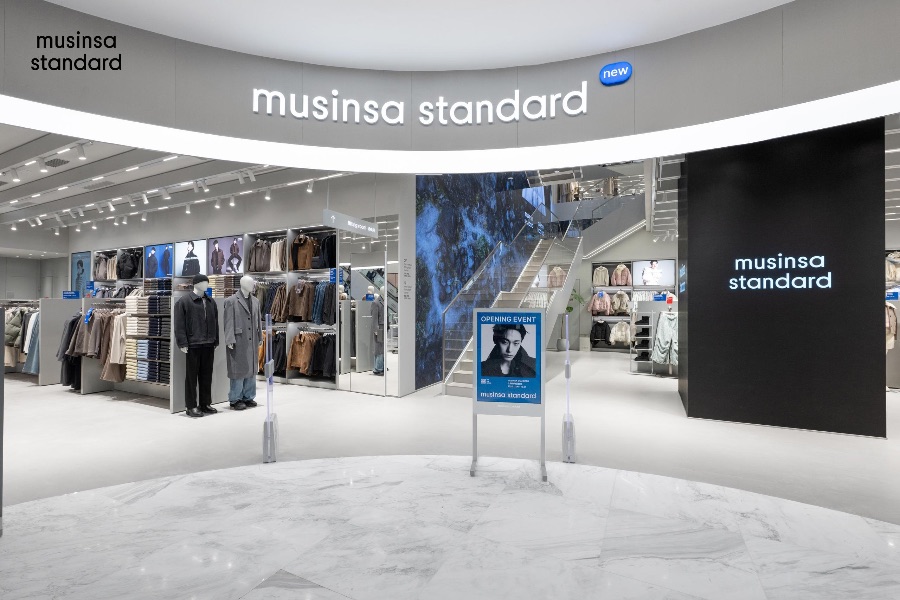
Group 1: Lululemon Financial Performance - Lululemon reported a 7% year-over-year increase in global net revenue to $2.6 billion, but net profit decreased by 12.8% to $307 million [1] - The company experienced a significant 46% year-over-year increase in net revenue from the China market, leading global performance [9] - The CEO Calvin McDonald will step down at the end of January 2026, with interim leadership provided by the CFO and CBO during the search for a new CEO [5] Group 2: Market Developments in Fashion and Retail - Musinsa opened its first overseas flagship store in Shanghai, with plans to expand to over 100 stores in China within five years, targeting a revenue of 1 trillion KRW (approximately 4.78 billion RMB) by 2030 [2] - The opening of the largest Dior store in Beijing signifies a recovery in the luxury market in China, showcasing a blend of retail and art [6] - Marubi plans to list on the Hong Kong Stock Exchange, having shown significant revenue growth in its main brands [10] Group 3: Investment Activities - L'Oréal is increasing its stake in the medical beauty giant Gauderm, raising its total ownership to 20% [14] - Ermenegildo Zegna has made a second investment in the Canadian running brand Norda, indicating a strategic move into the outdoor market [15] - Unilever has spun off its ice cream division into a standalone company, which has successfully listed in Amsterdam, London, and New York, capturing over 20% of the global ice cream market [16]

lululemon athletica Stock: Price Pop Doesn't Mean Sales Recovery Is Near (NASDAQ:LULU)
Seeking Alpha· 2025-12-15 04:59
Core Insights - The article emphasizes the importance of independent judgment in investment decisions and highlights that past performance does not guarantee future results [2][3]. Group 1 - The article serves purely for informational and educational purposes, explicitly stating it is not investment advice [2]. - It mentions that the opinions expressed may not reflect the views of the platform as a whole, indicating a diversity of perspectives among analysts [3]. - There is a clear disclaimer regarding the lack of obligation to update or correct information provided, which underscores the need for investors to conduct their own research [2][3].
lululemon athletica: A Share Price Pop Doesn't Mean Sales Recovery Is Near (Rating Downgrade)
Seeking Alpha· 2025-12-15 04:59
Core Viewpoint - The article emphasizes the importance of independent judgment in investment decisions and highlights that past performance does not guarantee future results [2][3]. Group 1 - The article serves purely for informational and educational purposes, not as investment advice [2]. - It stresses that readers should not rely solely on the opinions expressed and should seek independent financial advice [2][3]. - The content reflects the views of individual authors, which may not represent the overall stance of the platform [3].

Lululemon一号位被「下课」,明星集体变心,谁才是幕后推手?
Xin Lang Ke Ji· 2025-12-15 02:05
Core Insights - Lululemon's CEO Calvin McDonald will step down on January 31, 2024, amid a year of poor performance, with the board seeking a new CEO through a top executive search firm [2] - The company's stock price has halved this year, but surged over 10% in after-hours trading following the leadership change announcement, indicating market consensus on the decline of its growth narrative [2] Group 1: Company Performance - Lululemon's sales in the U.S. market fell by 2% in the latest third-quarter report, marking the fifth consecutive quarter of revenue growth below 10%, a stark contrast to only four quarters of such performance in the previous decade [5] - The management acknowledged challenges in the overall demand for the North American activewear market, with consumers shifting towards cheaper brands and new competitors siphoning off high-end market share [5] - The brand's classic styles, which once drove sales, are no longer stimulating new purchases, leading to a loss of loyal customers [5] Group 2: Competitive Landscape - Alo Yoga has emerged as a significant competitor, capturing market share and consumer interest, particularly among younger demographics and celebrities [11][18] - The brand's revenue has quintupled in three years, reaching the "billion-dollar club" with sales of $1 billion, while Lululemon's market position has weakened [18] - Alo Yoga's pricing strategy, with yoga pants priced around $120-130, is 30% higher than Lululemon's, yet it has successfully positioned itself as a luxury brand among affluent consumers [18] Group 3: Internal Challenges - Chip Wilson, Lululemon's founder, publicly criticized the management for losing the brand's "cool factor" and failing to attract creative talent, attributing the company's decline to a series of strategic errors [9][10] - Wilson's concerns highlight a broader internal struggle, as the company has attempted to diversify into men's apparel and footwear, which some analysts argue has diluted the brand's focus [5][9] - The internal innovation engine has stalled, contributing to a loss of brand appeal and market dominance, leading to a significant drop in market capitalization from a peak of $64 billion to approximately $22 billion [18]

lululemon要换帅,谁会适合?
3 6 Ke· 2025-12-15 00:30
时间拨回2018年8月,Calvin McDonald接手lululemon,此前他曾担任丝芙兰美洲CEO。那时的lululemon 凭借瑜伽服这一超级单品建立起品牌护城河,但本质上仍是一个高度依赖北美市场、品类相对单一的增 长型公司。董事会交给他的任务很明确,带领公司走向全球,把它从一个细分市场的领先者,变成一个 规模更大的综合性的运动品牌。 从纯粹的增长和扩张指标来看,Calvin McDonald交出的成绩单可以称为漂亮。在他任期内,公司年营 收从2018年的33亿美元左右增长到2025财年预计的110亿美元,市值也从他就任初期的约180亿美元,一 度冲高至超过640亿美元的顶峰,但此后便一路回调。 他大力推动的全球化战略成效显著,门店从17个国家和地区扩张至超过30个,尤其把中国市场打造为仅 次于北美的全球第二大引擎,国际收入占比从此前的不到20%提升至40%;产品线上,他主导了积极的 品类扩张,从核心的瑜伽延伸至跑步、训练、高尔夫、网球甚至运动鞋品类。试图将公司从一个细分领 域的专家,重塑为覆盖全场景的运动生活方式品牌。这套以规模化和多元化为核心的组合拳,正好满足 了一家上市公司追求财务数据跨越式增 ...
德芙巧克力与品客薯片成“一家人”;博纳影业回应近日股价大涨丨消费早参
Mei Ri Jing Ji Xin Wen· 2025-12-14 23:08
Group 1 - Bona Film Group is currently in a loss-making state, with a net profit loss of 1.11 billion yuan, a year-on-year increase of 213.11% [1] - The company reported a revenue of 972 million yuan for the first three quarters of 2025, a slight increase of 1.29% compared to the same period last year [1] - The upcoming release of "Avatar 3" is generating high discussion among investors, but its impact on the company's performance is expected to be minimal in the short term [1] Group 2 - Lululemon's stock price surged nearly 10% following the announcement of CEO Calvin McDonald's resignation and the appointment of interim co-CEOs [2] - The company reported a 7% year-on-year increase in global net revenue to 2.57 billion dollars for the third quarter of fiscal year 2025, with international business revenue up 33% [2] - Net profit for the third quarter was 307 million dollars, reflecting a year-on-year decline of approximately 12.8% [2] Group 3 - Jishi Media and Changying Group have reached a capital cooperation agreement to enhance their film and cinema business [3] - The partnership aims to integrate film resources and market operations, transitioning Jishi Media from a cable network operator to a dual-driven model of content and channel [3] - The collaboration is expected to open new revenue and profit growth opportunities if resources are commercialized effectively [3] Group 4 - Mars has completed the acquisition of Kellanova, integrating brands like Pringles and Kellogg's into its snack food division [4] - This acquisition allows Mars to create a comprehensive product matrix combining sweet and savory snacks, enhancing its market presence [4] - The long-term outlook includes improved procurement and logistics capabilities, although high premiums and integration costs may pressure short-term profits [4]
lululemon换掉CEO
Bei Jing Shang Bao· 2025-12-14 15:39
近日,lululemon官网发布公告称,已任职超七年的Calvin McDonald将辞去首席执行官一职。此决定将 于2026年1月31日生效。为确保平稳过渡,Calvin McDonald将在2026年3月31日前担任公司高级顾问。 同日,lululemon还最新发布了2025财年三季度财报。在lululemon宣布领导层变动和季度业绩后,其股 价在盘后交易中上涨了10%。 实际上,lululemon创始人Chip Wilson曾公开批评lululemon董事会和CEO Calvin McDonald,认为他们使 lululemon正逐渐"失去潮流感"(loss of cool)。今年10月,他自费在《华尔街日报》刊登广告,矛头直 指公司管理层:"专注于财务的首席执行官们不知道如何吸引或激励创意人才,更糟糕的事,他们自认 为了解优秀的产品,实则不然。" 对于这些指责,Calvin McDonald在接受《华尔街日报》采访时回应称,早在被公开批评之前,他就已 经开始着手解决问题。比如就美国市场销售额下滑的问题,采取推出新产品和缩短生产周期的措施。而 对于因为拓展至新的非运动品类,被批"沦为Gap",Calvi ...
11月制造台企营收表现分化,lululemon北美仍承压、CEO将于26年1月卸任
GUOTAI HAITONG SECURITIES· 2025-12-14 07:01
Investment Rating - The report assigns an "Accumulate" rating for the industry [4]. Core Insights - The revenue performance of Taiwanese manufacturing companies in November showed divergence, with lululemon's Q3 performance exceeding expectations, particularly in the mainland China market, while the North American market remains under pressure. The CEO of lululemon will resign in January 2026, and it is expected that the proportion of new products for the spring season will reach 35% [2][5]. Summary by Sections Industry Overview - In November 2025, the revenue of Taiwanese manufacturers such as Yuanyuan, Fengtai, Yuchi, Zhiqiang, Laiyi, and Ruhong showed year-on-year changes of -2.4%, -11.8%, +6.6%, +3.1%, -5.8%, and +1.5% respectively. Cumulative revenue from January to November showed year-on-year changes of +0.9%, -4.9%, +21.2%, +14.7%, +6.2%, and +3.8% [5]. Company Performance - For lululemon's Q3 (ending November 2), revenue was $2.57 billion, a year-on-year increase of 7%, surpassing Bloomberg's consensus estimate of $2.48 billion. The net profit attributable to shareholders was $310 million, a year-on-year decrease of 12.8%, also exceeding expectations [5]. - In terms of regional performance, Q3 revenue in the Americas, mainland China, and other regions showed year-on-year changes of -2%, +47%, and +19% respectively [5]. Future Outlook - The report suggests that the performance of the export manufacturing sector is expected to recover in 2026 due to three main factors: the implementation of U.S. tariff policies, reduced burden of tariff costs shared with brands, and improved efficiency from optimized production line allocation [5]. - Recommended companies include Huayi Group, Jiuxing Holdings, Shenzhou International, and Chaoying International Holdings, with a focus on home textiles, luxury goods, and undervalued high-dividend companies [5].


