Workflow
Lyft(LYFT)
icon
Search documents
Does LYFT's Gross Booking Growth Justify a Buy Decision on the Stock?
ZACKS· 2025-12-03 15:46
Core Insights - Lyft is experiencing growth in driver supply and active riders, with gross bookings increasing for 18 consecutive quarters, indicating a strong customer-friendly strategy [1][4]. Q3 2025 Results - Quarterly earnings per share were 26 cents, below the Zacks Consensus Estimate of 30 cents, and down 10.3% year-over-year [3]. - Revenues reached $1.68 billion, missing the consensus estimate of $1.70 billion but showing an 11% year-over-year increase [3]. - Gross bookings hit $4.78 billion, a 16% year-over-year increase, marking an all-time high [4]. - Rides grew by 15% year-over-year to 248.8 million, achieving double-digit growth for the tenth consecutive quarter [4]. - Active riders increased by 18% year-over-year to 28.7 million [4]. - Adjusted EBITDA was $138.9 million, up 29% from the previous year, with an adjusted EBITDA margin of 2.9% compared to 2.6% in the prior year [4]. Q4 2025 Outlook - Lyft anticipates mid-to-high teens year-over-year growth in rides for Q4 2025, driven by strong service levels and rider engagement [6]. - Gross bookings are expected to grow by 17-20% year-over-year, reaching between $5.01 billion and $5.13 billion [7]. - Adjusted EBITDA is projected to be between $135 million and $155 million, with an adjusted EBITDA margin of 2.7-3% [7]. Stock Performance - Lyft's shares have gained in double digits over the past month, outperforming the Zacks Internet Services industry and competitors like Uber and DoorDash [8][10]. Autonomous Vehicle Initiatives - Lyft has partnered with Waymo to introduce fully autonomous ride-hailing services in Nashville by 2026, leveraging its fleet-management capabilities [12][13]. - Additional partnerships with May Mobility, Mobileye Global, and Nexar highlight Lyft's commitment to the autonomous vehicle market [14]. Price Lock Feature - Lyft's Price Lock feature allows users to avoid surge pricing during peak hours for a monthly fee of $2.99, resulting in increased ride frequency among users [15][16]. Share Buyback Program - Lyft has increased its share repurchase program to $750 million, with plans to utilize $500 million within the next 12 months, supported by strong cash flow generation exceeding $1 billion [17]. Earnings Estimates - The Zacks Consensus Estimate for Lyft's 2025 and 2026 sales indicates year-over-year increases of 12.3% and 14.6%, respectively, with EPS estimates reflecting a 25.3% and 25.9% uptick [18]. Valuation - Lyft is trading at a forward price/sales ratio of 1.2, lower than competitors Uber and DoorDash, indicating a compelling valuation [19]. Investment Opportunity - With strong gross bookings momentum, strategic partnerships in the autonomous vehicle market, and appealing valuation metrics, Lyft is positioned as an attractive investment opportunity [22][23].
Oracle initiated, Uber upgraded: Wall Street's top analyst calls
Yahoo Finance· 2025-12-03 14:35
Core Viewpoint - The article highlights significant research upgrades for various companies, indicating a positive shift in investor sentiment and potential growth opportunities in their respective markets [1]. Group 1: Upgrades - Arete upgraded Uber (UBER) to Buy from Neutral with a price target of $125, increased from $82, citing that concerns over competition from autonomous vehicles are overstated [2]. - Arete upgraded Lyft (LYFT) to Neutral from Sell with a price target of $20, up from $10, noting potential partnerships with Amazon's Zoox by 2026 [2]. - Longbow upgraded Garmin (GRMN) to Buy from Neutral with a price target of $250, arguing that the recent 25% decline in shares is an overreaction to anticipated revenue challenges in the automotive sector in early 2026 [2]. - Morgan Stanley upgraded Vertex Pharmaceuticals (VRTX) to Overweight from Equal Weight with a price target of $516, up from $438, reflecting a more optimistic view on the company's kidney franchise pipeline [2]. - William Blair upgraded Driven Brands (DRVN) to Outperform from Market Perform after positive management meetings, indicating improved confidence in the company's leadership stability [2].
Lyft's Customer-Friendly Deals to Boost Revenues: More Upside Ahead?
ZACKS· 2025-12-02 18:31
Core Insights - Lyft is implementing customer-friendly offers and value-driven ride options to increase ride frequency and revenue, benefiting from a rise in driver supply and an 18% year-over-year increase in active riders in Q3 2025 [1][11] Group 1: Strategic Partnerships - Lyft has partnered with Curb to connect its riders with Curb's licensed taxi driver network, enhancing ride efficiency and driver opportunities [2][3] - The partnership allows Lyft riders in Los Angeles to access licensed taxis directly through the Lyft app, with plans for broader rollout across Curb's nationwide network [4] Group 2: Customer Incentives - Lyft has established a deal with United Airlines, enabling eligible users to earn MileagePlus miles on qualifying rides, enhancing customer loyalty and engagement [5][7] - The payout structure includes various miles per dollar based on ride types, with new riders receiving a 1,000-mile bonus after completing two rides within 30 days [6][7] Group 3: Market Performance - Lyft's shares have increased by 42.7% over the past six months, although this is below the industry's 80.3% growth during the same period [9] - The company is trading at a 12-month forward price-to-sales ratio of 1.41X, indicating it is relatively inexpensive compared to its industry peers [13]
3 Risks Lyft Investors Should Not Ignore
The Motley Fool· 2025-12-02 10:17
Core Viewpoint - Lyft is making progress in its turnaround strategy, focusing on operational discipline, cash flow improvement, and strategic expansion through the acquisition of Freenow, while also exploring partnerships in autonomous vehicles and AI [1][15]. Group 1: Competitive Landscape - Lyft faces a significant scale disadvantage compared to Uber, which has a larger rider volume, driver base, and diversified business segments, creating challenges for Lyft in terms of marketing leverage and cross-selling opportunities [3][5]. - The company's narrower focus means that any pricing pressure or driver shortages will have a more pronounced impact, necessitating near-perfect operational discipline to maintain market share [4][5]. - Investors should monitor Lyft's growth in active riders and ride volume in the upcoming quarters, ensuring that it does not sacrifice incentives or margins in the process [5]. Group 2: Regulatory Environment - Regulatory changes pose a major risk, as the ride-hailing industry is influenced by labor laws, transportation policies, and insurance requirements that are subject to frequent changes [6][9]. - Recent legislation in California allows ride-hail drivers to unionize while maintaining contractor status, which could affect Lyft's cost structure and profitability [7][9]. - Lyft's U.S.-centric operations make it more vulnerable to regulatory changes, emphasizing the need for investors to track state-level legislation and driver classification lawsuits closely [9]. Group 3: Freenow Acquisition - The acquisition of Freenow represents a significant step for Lyft, providing international exposure but also introducing integration challenges, such as unifying technology stacks and aligning customer acquisition strategies across diverse markets [10][11]. - The fragmented and heavily regulated European mobility landscape adds complexity to the integration process, requiring strong coordination among local teams and regulatory affairs [11][12]. - Successful integration of Freenow is crucial for Lyft to realize expected synergies; failure to do so could negatively impact margins instead of supporting growth [12][14].
3 Reasons the Bulls Are Excited About Lyft
The Motley Fool· 2025-12-01 14:53
Core Insights - Lyft is showing signs of a comeback, transitioning into a more disciplined and efficient business model, which is attracting long-term investors [2][14] Business Focus and Performance - Lyft's smaller operational footprint has become an advantage, allowing for a more focused and efficient service delivery compared to Uber's sprawling operations [3] - Active riders and ride volume are increasing, with gross bookings reaching a new high, indicating a more stable business environment [4][11] Strategic Growth and Partnerships - Lyft is expanding strategically without reckless spending, exemplified by its acquisition of Freenow, which diversifies revenue and enhances data depth [7][8] - The company is forming partnerships in autonomous vehicles and AI, positioning itself as a distribution channel for AV rides rather than developing its own autonomous technology [9][10] Financial Health and Profitability - Lyft has achieved multiple quarters of positive free cash flow and improved EBITDA margins, indicating a shift towards sustainable profitability [11][13] - The ride-hailing business model allows for significant profit expansion as fixed costs are covered, leading to a favorable cash flow situation [12][13] Investor Sentiment - Investors are recognizing Lyft's maturity and strategic execution, focusing on profitability rather than aggressive market expansion [14][15] - If Lyft maintains its disciplined approach, it has the potential to evolve into a steady, cash-generating platform with significant upside [15]
How Has LYFT Stock Done for Investors?
The Motley Fool· 2025-12-01 03:15
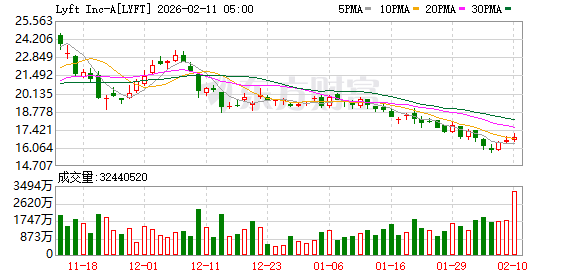
Core Viewpoint - Lyft has experienced significant stock depreciation since its IPO, losing 73% of its value over six years, raising concerns about its long-term viability in the competitive ride-sharing market [2][6]. Revenue Growth - Lyft has shown considerable revenue growth, achieving double-digit growth rates consistently, including an 11% year-over-year increase in Q3 2025 [3]. Profitability - The company has only recently achieved profitability, with free cash flow turning positive on a trailing 12-month basis in 2024 [4][6]. - Lyft has prioritized returning profits to shareholders, repurchasing $400 million in shares in the first three quarters of 2025 [9]. Valuation - The stock is currently trading at a low valuation of 8 times its free cash flow, indicating investor skepticism about Lyft's long-term prospects [6][8]. Competitive Pressures - Lyft faces significant competition from larger platforms like Uber and potential disruptions from advancements in autonomous vehicle technology [6][10]. - The ongoing adoption trends for Lyft's platform suggest a possibility of continued growth, but the company must navigate competitive challenges effectively [10].
X @Wendy O
Wendy O· 2025-11-30 03:39
Given the extremely limited content, a detailed analysis is not possible, but here's a summary based on the provided information: Anecdotal Observation - A Lyft driver made a shocking statement in public [1]
PAR Capital Doubles Down on Lyft: Is it Too Late to Buy?
The Motley Fool· 2025-11-26 18:11
Core Insights - PAR Capital Management has significantly increased its stake in Lyft, acquiring an additional 1,350,000 shares, bringing its total holdings to 3,255,000 shares valued at $71.63 million as of September 30, 2025 [2][9] - Lyft's stock price has doubled over the year, currently priced at $20.68, reflecting a 16% increase over the past year, outperforming the S&P 500 by 2 percentage points [3][4] - Lyft represents 2.1% of PAR Capital's total 13F U.S. equity assets, indicating a growing confidence in the company's future prospects [2][3] Company Overview - Lyft operates one of North America's leading on-demand transportation networks, facilitating millions of rides through its digital platform [5] - The company focuses on expanding mobility options and integrating various modes of transport to serve urban and suburban markets [5][7] - Lyft's revenue generation comes from connecting drivers with riders, vehicle rentals, and offering subscription and enterprise transportation solutions [7] Financial Performance - As of the latest report, Lyft has a market capitalization of $8.26 billion, with trailing twelve months (TTM) revenue of $6.27 billion and net income of $150.7 million [4] - The company generated over $1 billion in free cash flow (FCF), showcasing its ability to scale its network effectively [11] Market Position - Lyft has established itself as the second-largest mobility provider in North America, with 29 million active riders completing 250 million rides in the last quarter [11] - The company is viewed as a competitor to Uber, with a market dynamic resembling a duopoly in the mobility sector [11][10] Investment Sentiment - PAR Capital's increased investment in Lyft, despite the stock's price doubling, reflects a bullish sentiment from institutional investors, suggesting confidence in Lyft's growth potential [9][10] - Analysts believe Lyft is a growth stock trading at a value stock price, currently at 8 times FCF, indicating significant upside potential as it continues to transform the industry alongside Uber [12]
Lyft: The Most Overlooked Beneficiary Of The AV Revolution (NASDAQ:LYFT)
Seeking Alpha· 2025-11-26 04:53
Core Viewpoint - Lyft (LYFT) has shown strong execution, with its stock price increasing approximately 38% since the last coverage, indicating growing market recognition of the company's performance [1] Group 1: Company Performance - Lyft's stock has risen significantly, attributed to effective operational strategies and market catalysts [1] Group 2: Market Sentiment - The recent stock performance suggests that market participants are beginning to take notice of Lyft's potential and operational success [1]
Bridgewater Associates Is Giving Up on Lyft Stock. Should You?
Yahoo Finance· 2025-11-24 19:56
Core Insights - Lyft has seen a significant shift in its stock performance as hedge fund Bridgewater Associates completely sold its 2.48 million shares, marking a 100% reduction in its holdings, coinciding with Lyft's improved profitability and ridership metrics [1] - The mobility and sharing economy landscape has evolved over the past year, driven by increased demand and advancements in autonomous technologies, with Lyft achieving its highest free cash flow and growth in active riders [2] - Lyft's stock has experienced volatility, trading between $9.66 and $25.54 over the past year, but has shown resilience due to rising demand and operational discipline [4] Company Performance - Lyft reported a revenue increase of 11% year-over-year, reaching a new high of $1.7 billion, and gross bookings rose by 16% to $4.8 billion, both setting new records [6] - The company achieved its best profitability results, with a net income of $46.1 million compared to a loss in the previous year, and adjusted EBITDA increased by 29% to $138.9 million [6] Valuation Metrics - Lyft's valuation ratios include a price/sales ratio of 1.36, a forward earnings ratio of 47.96, and a cash flow ratio of 75.59, indicating a premium compared to traditional transport companies [5]