
Pfizer(PFE)

Search documents
Can Pfizer (PFE) Climb 25.14% to Reach the Level Wall Street Analysts Expect?
ZACKS· 2025-05-08 15:02
Group 1 - Pfizer (PFE) closed at $22.79, with a 1.3% gain over the past four weeks, and a mean price target of $28.52 indicating a 25.1% upside potential [1] - The average of 21 short-term price targets ranges from $23 to $35, with a standard deviation of $3.16, suggesting variability in analyst estimates [2] - Analysts have shown increasing optimism about PFE's earnings prospects, with a 3.2% increase in the Zacks Consensus Estimate for the current year and no negative revisions [12][11] Group 2 - The Zacks Rank for PFE is 2 (Buy), placing it in the top 20% of over 4,000 ranked stocks based on earnings estimates [13] - A tight clustering of price targets, indicated by a low standard deviation, suggests a high degree of agreement among analysts regarding the stock's price movement [9] - While price targets can be misleading, the direction implied by them may serve as a useful guide for further research into the stock's potential [10][7]



Dividend Harvesting Portfolio Week 218: $21,800 Allocated, $2,195.04 In Projected Dividends
Seeking Alpha· 2025-05-08 13:00
Group 1 - The focus is on growth and dividend income as a strategy for retirement planning [1] - The portfolio is structured to generate monthly dividend income that grows through reinvestment and annual increases [1] Group 2 - The article expresses personal opinions and is not intended as investment advice [2][3] - It emphasizes the importance of conducting personal research before making investment decisions [2]




制药商囤货导致美国药品进口量激增,爱尔兰对美贸易顺差首超中国
Di Yi Cai Jing· 2025-05-07 09:04
Core Insights - In March 2023, the total value of U.S. pharmaceutical imports exceeded $50 billion, accounting for 20% of the projected total for 2024, with a significant increase of $20 billion primarily from Ireland [1][2] - The surge in imports is attributed to concerns over potential tariffs from the Trump administration, prompting pharmaceutical companies to stockpile inventory [1][3] - Ireland has become a major source of pharmaceutical imports for the U.S., with its trade surplus with the U.S. surpassing that with China for the first time [1] Group 1: Impact of Tariffs - If the U.S. imposes tariffs on imported drugs from Ireland, it could have a substantial impact on the global pharmaceutical industry [2] - The Irish pharmaceutical sector produces drugs valued at nearly €100 billion annually, with a significant portion exported globally [2] - The Trump administration has initiated an investigation into drug imports, citing national security concerns, and may impose tariffs on foreign-produced drugs [2] Group 2: Company Responses - U.S. pharmaceutical companies have been increasing their air shipments of drugs to prepare for potential tariffs [3] - Pfizer's CEO stated that the company has been ramping up inventory levels almost monthly to mitigate risks and maintain a favorable position [3]

Build A 12%+ Yield On Cost By 2035 With May's Top 10 High-Yield Picks
Seeking Alpha· 2025-05-06 22:00
Investment Strategy - The investment strategy focuses on constructing portfolios aimed at generating additional income through dividends, targeting a yield on cost of more than 12% over the next 10 years [1] - Emphasis is placed on identifying companies with significant competitive advantages and strong financials to provide attractive Dividend Yield and Dividend Growth [1] - The approach combines high Dividend Yield and Dividend Growth companies to reduce dependence on broader stock market fluctuations [1] Portfolio Diversification - A well-diversified portfolio across various sectors and industries is recommended to minimize portfolio volatility and mitigate risk [1] - Incorporating companies with a low Beta Factor is suggested to further reduce the overall risk level of the investment portfolio [1] - The suggested investment portfolios typically consist of a blend of ETFs and individual companies, emphasizing broad diversification and risk reduction [1] Total Return Focus - The selection process for high dividend yield and dividend growth companies is meticulously curated, prioritizing total return, which includes both capital gains and dividends [1] - This approach ensures that the portfolio is designed to maximize returns while considering the full spectrum of potential income sources [1] - Leveraging expertise in crafting investment portfolios aims to generate extra income through dividends while reducing risk through diversification [1]





Pfizer Has Unreasonable Whiff Of The Marlboro Man
Seeking Alpha· 2025-05-06 15:47
Core Insights - Lipper Alpha Insight provides daily news and commentary aimed at financial professionals, offering actionable ideas and insights into individual security news and macroeconomic trends [1] Company Analysis - The platform is supported by a team of expert analysts who continuously monitor the financial landscape to keep users informed about the latest market movements [1]
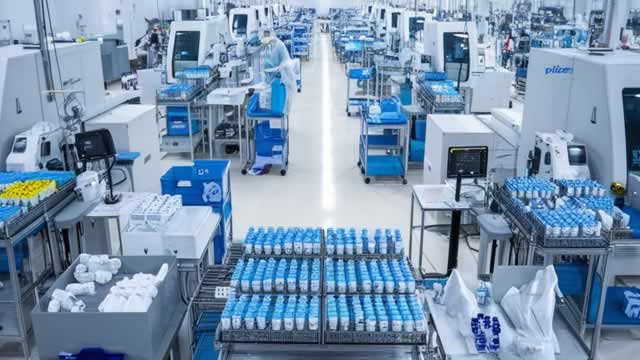
跨国药企CEO年薪晒一晒
Xin Lang Cai Jing· 2025-05-06 09:25
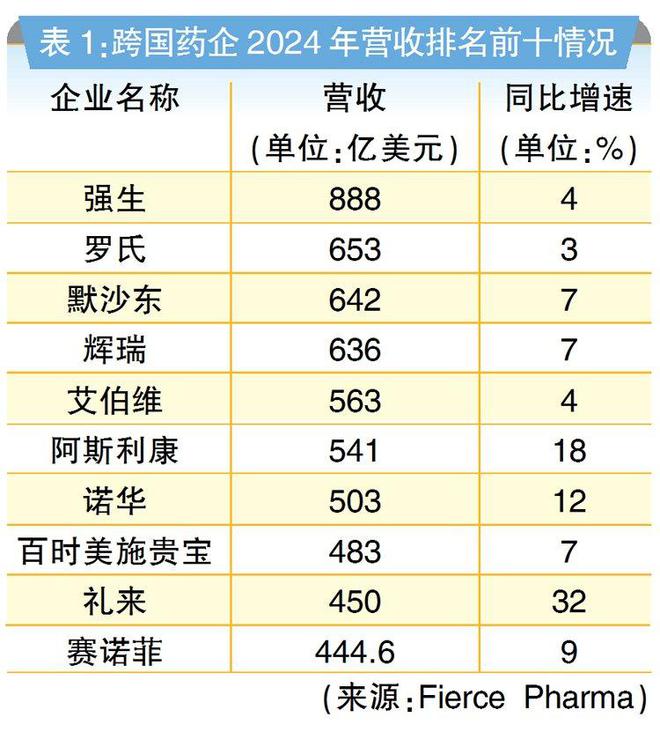
Core Insights - Johnson & Johnson remains the top revenue-generating pharmaceutical company with projected 2024 revenue of $88.8 billion, a 4% year-over-year increase [1][3] - The CEO compensation landscape has shifted, with Eli Lilly's CEO David Ricks now the highest-paid in the industry, earning $29.2 million in 2024, a 10% increase from 2023 [4][6] - The pharmaceutical industry is facing challenges from biosimilars, particularly affecting sales of established drugs like Humira and Stelara [2][1] Revenue Rankings - Johnson & Johnson leads with $88.8 billion in revenue, followed by AbbVie at $65.3 billion and Merck at $64.2 billion [3] - Other notable companies include Pfizer with $63.6 billion, and AstraZeneca with $54.1 billion, showing varying growth rates [3] CEO Compensation - Eli Lilly's David Ricks has surpassed Johnson & Johnson's Joaquin Duato, whose compensation decreased by approximately 14% to $24.6 million in 2024 [4][6] - Pfizer's CEO Albert Bourla earned $24.6 million, reflecting a 14% increase, while Merck's Robert Davis earned $23.2 million, also up by 14% [5][6] - Notably, Bristol Myers Squibb's CEO saw the highest percentage increase in compensation, rising by 122% [4][6] Market Dynamics - AbbVie's Humira faced a 37.6% decline in sales to $8.9 billion due to biosimilar competition, but its successors Skyrizi and Rinvoq are projected to generate over $17 billion in 2024 [2] - Merck's Keytruda and Gardasil are expected to account for approximately 59% of the company's total sales in 2024, highlighting the importance of these products [2]


特朗普要求FDA加大海外药品生产检查力度,进口关税遭跨国药企抵制
Di Yi Cai Jing· 2025-05-06 08:11
Core Viewpoint - Pharmaceutical companies are resisting Trump's plan, citing concerns that tariff threats hinder further investment in R&D and manufacturing in the U.S. [1][2] Group 1: Company Responses - Pfizer's CEO Albert Bourla stated that tariff threats are obstructing the company's ability to invest in R&D and manufacturing in the U.S. [2] - Eli Lilly's CEO Dave Ricks expressed skepticism that tariffs would address national security concerns surrounding the U.S. drug supply chain [2]. Group 2: Industry Trends - The U.S. pharmaceutical manufacturing sector has significantly shrunk over the past few decades, with most active pharmaceutical ingredient production moving to countries like China due to lower labor and production costs [2]. - Approximately 90% of prescription drugs in the U.S. are basic generics, which are difficult to produce domestically due to low prices [2]. Group 3: Economic Implications - Imposing tariffs on generics, which have much lower profit margins than brand-name drugs, could force some generic manufacturers to exit the U.S. market, potentially exacerbating shortages of essential drugs like sterile injectables [2]. - In 2023, the U.S. imported over $200 billion worth of drugs, with 73% coming from Europe, primarily from Ireland, Germany, and Switzerland [2]. - Establishing drug manufacturing facilities in the U.S. may increase production costs and drug prices, raising concerns about drug affordability [2].
Pfizer Stock Up 5% Following Q1 Results: Time to Buy, Sell or Hold?
ZACKS· 2025-05-05 13:11
Core Viewpoint - Pfizer's stock has seen a 5% increase following its first-quarter earnings report, which showed earnings growth but a decline in sales, primarily due to lower revenues from key products and the impact of Medicare Part D redesign [1][2][24]. Financial Performance - Pfizer reported earnings of 92 cents per share, a 12% increase year-over-year, while revenues declined by 6% on an operational basis [1]. - The company maintains its revenue outlook for 2025, projecting total revenues between $61.0 billion and $64.0 billion, with earnings expected in the range of $2.80 to $3.00 per share [2]. - The stock has declined 7.3% year-to-date, underperforming the industry, which has increased by 2.4% [15][17]. Product Sales and Market Trends - Sales of COVID-related products, Comirnaty and Paxlovid, are projected to drop to around $11 billion in 2024 from $56.7 billion in 2022, with similar expectations for 2025 [5]. - Non-COVID operational revenues improved in 2024, driven by key products like Vyndaqel, Padcev, and newly acquired products from Seagen [6][7]. Oncology Segment - Pfizer has a strong position in oncology, with a 7% growth in oncology revenues in the first quarter of 2025, supported by drugs like Xtandi and Padcev [8][9]. - The acquisition of Seagen has further strengthened Pfizer's oncology portfolio, with several candidates entering late-stage development [8][9]. Challenges and Headwinds - Pfizer anticipates a moderate negative impact on revenues from the loss of exclusivity for several key products in 2025, with significant effects expected from 2026 to 2030 [11]. - The company expects an unfavorable impact of approximately $1 billion from the Medicare Part D redesign under the Inflation Reduction Act, particularly affecting higher-priced drugs [12]. - Pfizer has faced setbacks, including the discontinuation of the GLP-1R agonist danuglipron due to safety concerns [13]. Strategic Outlook - Pfizer is focused on cost reductions and internal restructuring, aiming for savings of $7.7 billion by the end of 2027, which should support profit growth [25]. - The company returned $2.4 billion to shareholders through dividends in the first quarter of 2025, with a dividend yield of around 7.1% [26]. - Despite challenges, Pfizer's diversified portfolio and new growth prospects position it well for long-term gains, making it attractive for value and income investors [24][28].
3 No-Brainer Ultra-High-Yield Dividend Stocks That Are Begging to Be Bought in May
The Motley Fool· 2025-05-02 07:51
Core Viewpoint - The article highlights three high-yield dividend stocks with an average yield of 8.63%, presenting them as attractive investment opportunities for income-seeking investors. Group 1: Dividend Stocks Performance - Public companies that regularly pay dividends are typically profitable and capable of long-term growth, supported by historical data [2] - A study by Hartford Funds and Ned Davis Research shows that dividend-paying stocks outperformed non-payers by 9.2% annually over a 51-year period [4] Group 2: Investment Opportunities - Pfizer offers a yield of 7.46%, with sustainable earnings despite concerns over tariff impacts and a decline in COVID-19 therapy sales [7][9] - Verizon Communications has a yield of 6.39%, significantly higher than the S&P 500 average, and is positioned to benefit from the 5G expansion despite facing growth challenges [13][16] - PennantPark Floating Rate Capital boasts a yield of 12.04%, focusing on debt investments in middle-market companies, benefiting from higher market-rate yields due to its variable-rate debt portfolio [20][22] Group 3: Financial Metrics and Growth - Pfizer's revenue increased from $41.9 billion in 2020 to $63.6 billion in 2024, marking a 52% growth [9] - Verizon's broadband connections grew by 13.7% year-over-year, reaching 12.6 million [17] - PennantPark's weighted average yield on debt investments is 10.6%, with a significant portion of its debt securities being first-lien secured [22][23]



美股异动 | FDA拟要求新疫苗必须做安慰剂对照测试 疫苗板块逆市走低
智通财经网· 2025-05-01 15:52
Core Viewpoint - The vaccine sector is experiencing a decline in stock prices following reports of a significant policy change by the FDA, which will require all new vaccines to undergo placebo-controlled clinical trials before approval [1][2]. Group 1: Market Reaction - Major vaccine companies such as GSK, Sanofi, Merck, AstraZeneca, Pfizer, BioNTech, Moderna, and Novavax have seen stock declines ranging from over 1% to more than 3.7% [1]. - Specifically, Moderna's stock dropped over 3.7%, while BioNTech fell more than 2.5% [1]. Group 2: Regulatory Changes - The FDA plans to implement a new policy requiring all new vaccines to include a placebo group in clinical trials, marking a significant shift in the vaccine approval process [1]. - This policy mandates that new vaccines must undergo safety testing with a control group receiving an inactive substance, such as saline, for comparison [1]. Group 3: Scope of the New Policy - There is uncertainty regarding the definition of "new vaccines," but it is reported that the policy is unlikely to apply to flu vaccines, which have a long-established safety record [2]. - The HHS has not clarified whether vaccines that have already completed safety studies will be subject to re-evaluation under this new policy, focusing mainly on COVID-19 vaccines in their response [2].


